
Chef Lupita
Agua de Alfalfa
Ciudad de México's highland market agua fresca, fresh alfalfa blended with pineapple and lime until bright green, strained clean, and poured cold from the vitrolero.
A cooking platform built around craft, culture, and the stories behind what we eat.
Created by
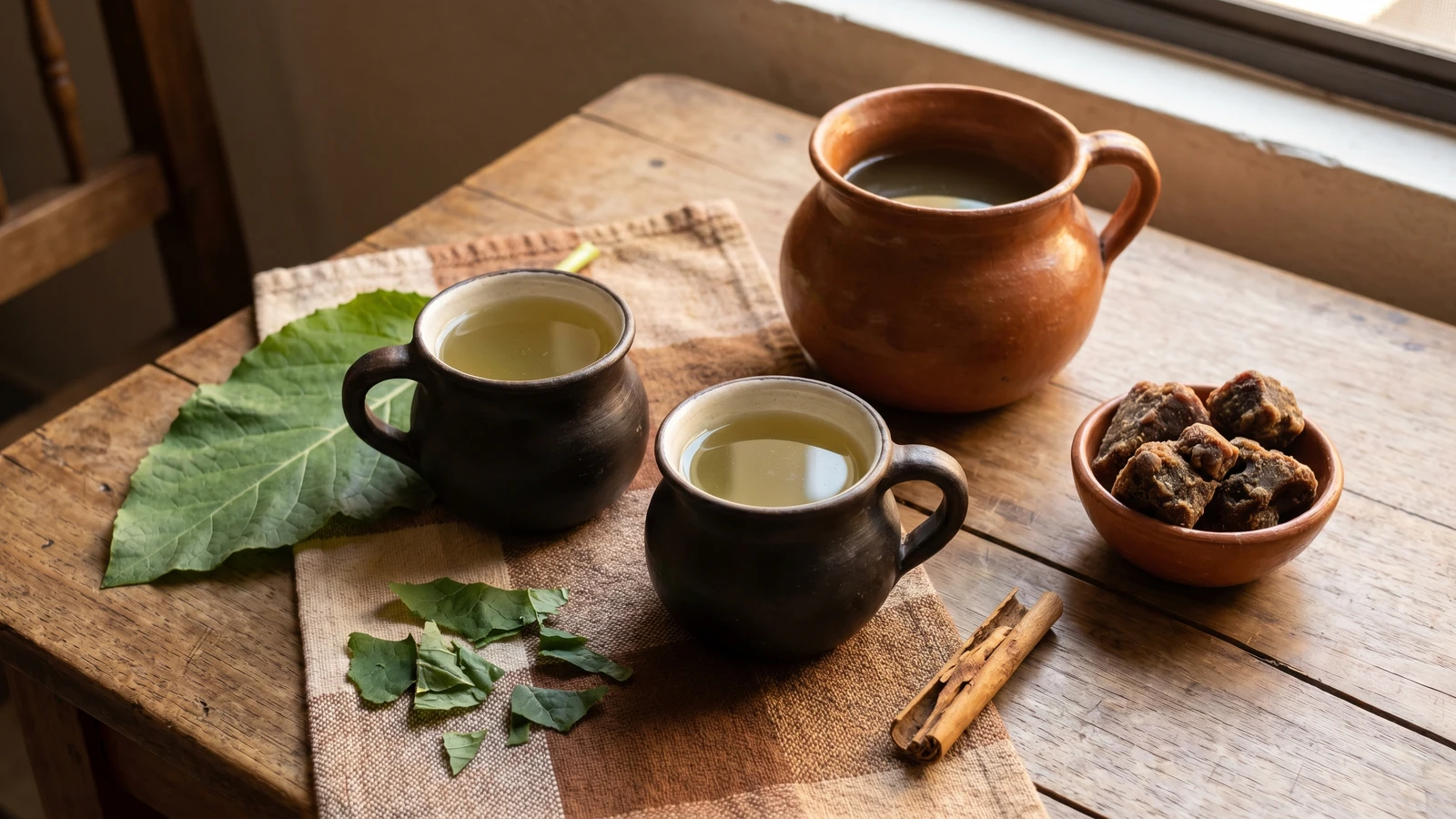
Oaxaca's quiet after-meal infusion, hoja santa leaf steeped with toasted canela and piloncillo into an anise-scented digestive that settles a heavy comida.
Hoja santa is from southern Mexico. The leaf grows wild and cultivated across Oaxaca, Veracruz, Tabasco, and Chiapas, large heart-shaped, the size of a child's open hand, with a perfume that sits between anise, sassafras, and black pepper. In Oaxaca it wraps tamales and flavors mole verde. Late at night, after the comida is cleared, it goes into the pot for tea.
This is not a flashy drink. It is a senora's tea. The kind that comes after a Sunday meal that started at two in the afternoon and ended somewhere after five, when the molcajete is still on the table and somebody is asking for one more tortilla. You serve it warm in a small clay jarrito with a stick of canela and a little piloncillo. It settles the stomach. It takes the heaviness off mole negro, off carnitas, off whatever the cook spent the morning building.
The leaf does the work. Do not overthink the rest. Toast the canela, do not boil the water hard, and steep no longer than the leaf wants to be steeped. My mother kept a hoja santa plant on the patio in Colonia Roma, transplanted from a cousin's garden in Veracruz. She would pick two leaves after a heavy meal and put on the kettle without saying anything. That gesture was the whole recipe. Cada estado, su propia cocina, and this quiet pot belongs to the south.
Hoja santa (Piper auritum) is native to Mesoamerica and was used medicinally and culinarily by the Maya, Zoque, and Zapotec peoples long before the conquest, valued for its digestive properties and applied as both food wrap and infusion. The leaf contains safrole, the same aromatic compound found in sassafras, which gives both the characteristic root-beer note and explains its long-standing use as a post-meal digestive across southern Mexico. Regional names track the linguistic map of the south: hoja santa in Oaxaca and Puebla, acuyo in Veracruz, momo or mumu in Chiapas and Tabasco, tlanepa in Nahuatl-speaking communities, each name carrying its own local cooking tradition.
Quantity
2 large
about the size of an open hand, rinsed
Quantity
4 cups
Quantity
1 stick
about 3 inches
Quantity
2 to 3 tablespoons
chopped, or to taste
Quantity
1 strip
no white pith
| Ingredient | Quantity |
|---|---|
| fresh hoja santa leavesabout the size of an open hand, rinsed | 2 large |
| filtered water | 4 cups |
| Mexican canela (Ceylon cinnamon)about 3 inches | 1 stick |
| piloncillochopped, or to taste | 2 to 3 tablespoons |
| fresh orange peel (optional)no white pith | 1 strip |
Rinse the hoja santa leaves under cold water and pat them dry. Tear each leaf into four or five rough pieces with your hands. Tearing, not cutting. The torn edges release the essential oils more freely than a clean knife cut. Smell what comes off your fingers. That anise-and-sassafras perfume is what you are putting into the water.
Heat a small dry comal over medium heat. Lay the canela stick on it and toast for about 30 seconds per side, just until fragrant. Mexican canela is soft and flaky, not the hard cassia bark sold in most American supermarkets. The toasting wakes up the volatile oils. Skip it and the cinnamon stays one-dimensional in the cup.
Pour the four cups of water into a small clay olla or a saucepan. Add the toasted canela stick and the orange peel if using. Bring to a low simmer over medium heat. The water should move with small bubbles around the edges, never a hard boil. Hard boiling tightens the leaf and turns the tea grassy.
Once the water is at that low simmer, drop in the torn hoja santa leaves. Press them down with a wooden spoon so they are fully submerged. Cover the pot. Lower the heat to its gentlest setting and let the leaves steep for seven to eight minutes. The water will turn a pale green-gold and the kitchen will smell like anise and root beer at the same time. That is the safrole and the eugenol talking. Asi se hace y punto.
Add the chopped piloncillo to the pot while the tea is still hot. Stir until completely dissolved. Taste. Piloncillo is not sugar. It carries molasses, smoke, and a faint mineral edge that white sugar cannot give you. If it tastes flat, add a little more. If you cannot find piloncillo, leave it unsweetened or use a small spoon of dark brown sugar. Honey changes the flavor too much.
Strain the tea through a fine-mesh sieve into small clay jarritos or thick ceramic cups. The leaves and canela have given what they have to give. Serve quietly after a heavy meal: after mole, after carnitas, after a long Sunday comida. This is the tea Oaxacan abuelas pour when the table goes silent and people start to lean back in their chairs. Saber cocinar es saber vivir.
1 serving (about 240g)
Culinary guides, cultural storytelling, and the editorial depth that makes cooking meaningful.
Discover Culinary ExplorerChef Lupita
Ciudad de México's highland market agua fresca, fresh alfalfa blended with pineapple and lime until bright green, strained clean, and poured cold from the vitrolero.
Chef Lupita
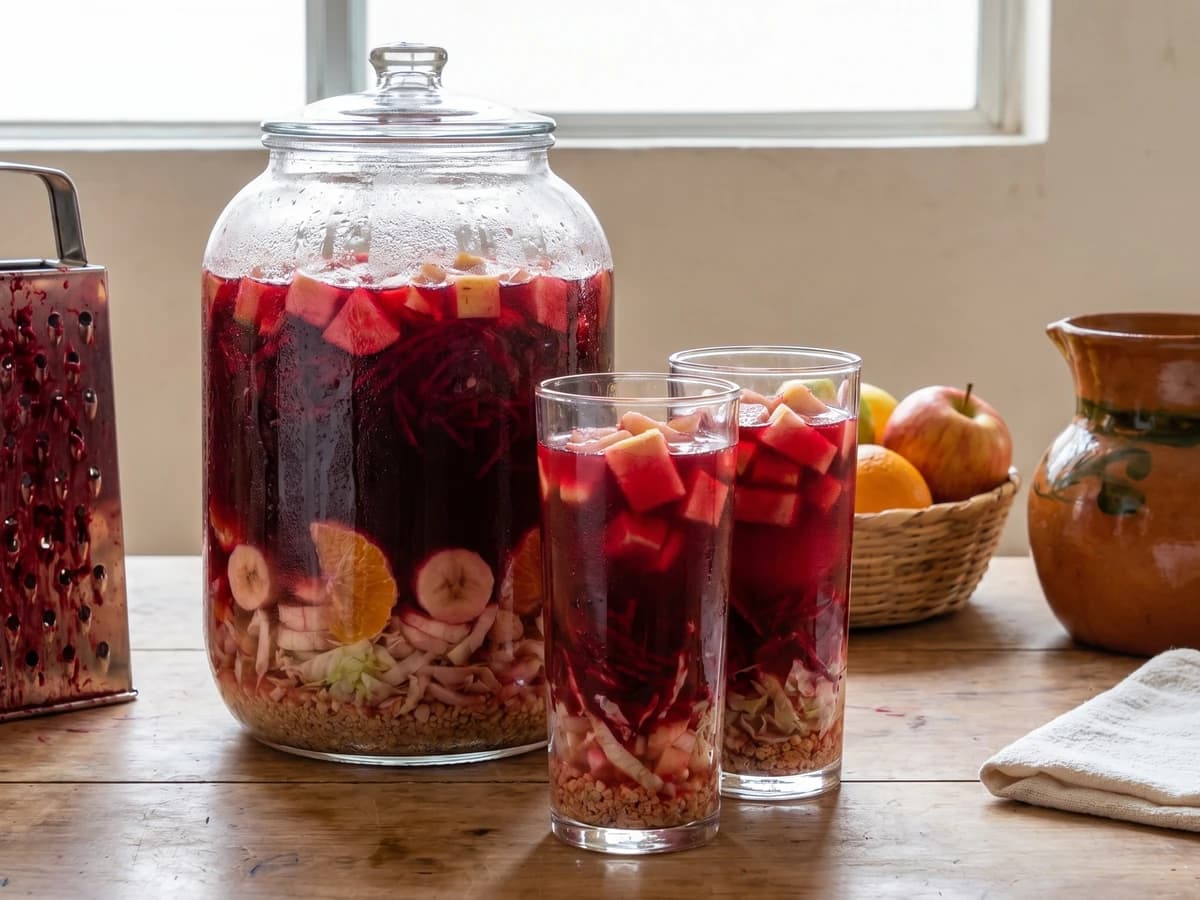
Aguascalientes' Lenten agua fresca, jewel-red from cooked beet and full of apple, banana, orange, lettuce, and ground peanuts, served cold when Holy Week meets the Feria de San Marcos.

Chef Lupita
Sonora and Sinaloa's creamy malted barley water, built on toasted cebada perla, Mexican canela, vanilla from Papantla, and evaporated milk. Pink-beige, rich, and served cold over heavy ice in a heavy glass tumbler. Liquid cookie comfort the northwest way.

Chef Lupita
Yucatán's everyday tonic of boiled chaya leaves blended with lima agria, sugar, and ice. The bright green jarra that sits on every Peninsula table from Mérida to Valladolid.