
Chef Lupita
Agua de Alfalfa
Ciudad de México's highland market agua fresca, fresh alfalfa blended with pineapple and lime until bright green, strained clean, and poured cold from the vitrolero.
A cooking platform built around craft, culture, and the stories behind what we eat.

Created by
Sonora's desert tea brewed from the leaves of the creosote bush, the plant the Yaqui and Mayo curanderos have used for kidney and urinary trouble for generations. Bitter, resinous, and not gentle.
Gobernadora grows across the Sonoran desert from Hermosillo down to the Sea of Cortés and up into Baja California, the Mojave, and the high desert of Chihuahua. The plant is Larrea tridentata, what English calls creosote bush, and what the Yaqui curanderas have brewed into medicine for far longer than there has been a state called Sonora. The name gobernadora, the governing one, comes from the way the plant dominates the desert floor, releasing oils that keep other plants from rooting nearby. The desert pours into the glass.
This is not a tea you make for company. Gobernadora is folk medicine, brewed when the kidneys feel sluggish, when there is burning at the urinary tract, when the body needs the bitter cleanse the curanderos have prescribed for centuries. The active resin is nordihydroguaiaretic acid, the same compound that lets the creosote bush survive a hundred-twenty-degree summer with no rain. You are drinking the desert's own defense.
The technique is the opposite of every other tea. Hot water, not boiling. Five to seven minutes, not ten. A short steep and you have medicine. A long steep and you have something undrinkable. No me vengas con atajos: this is the brewing the hierberas at the Mercado Municipal de Hermosillo will teach you if you ask, and they will tell you the same thing I am telling you now. Quick. Bitter. Honest. Saber cocinar es saber vivir, and in the desert that includes knowing what to drink when your body asks for it.
Larrea tridentata is one of the oldest known living plants on earth; the King Clone ring in the Mojave is estimated at over 11,000 years old, and the species has been used medicinally by Indigenous peoples of the Sonoran and Chihuahuan deserts, including the Yaqui, Mayo, Seri (Comcáac), Tohono O'odham, and Tarahumara, for thousands of years for kidney complaints, urinary infections, wounds, and rheumatic pain. Mexican folk medicine across the north preserves these uses under the name gobernadora or hediondilla, and a 1992 FDA advisory in the United States flagged concerns about hepatotoxicity from concentrated chaparral supplements, though traditional short-steep tea preparation at home doses has been used safely in northern Mexican households for generations. The plant's Spanish name reflects its allelopathic behavior in the desert: gobernadora, the one that governs the ground around it.
Quantity
2 cups
Quantity
1 tablespoon
lightly crushed between the fingers
Quantity
1 teaspoon, small piece
to soften the bitterness
Quantity
1 small strip
| Ingredient | Quantity |
|---|---|
| cold water | 2 cups |
| dried gobernadora leaves and small stems (Larrea tridentata)lightly crushed between the fingers | 1 tablespoon |
| piloncillo (optional)to soften the bitterness | 1 teaspoon, small piece |
| lime peel (optional) | 1 small strip |
Pour the dried gobernadora onto a clean plate and look at it. You want small olive-green leaves, dry brittle stems, and a strong resinous smell when you crush a piece between your fingers. The smell should be unmistakable: medicinal, tarry, like the desert after a rainstorm. If it smells like nothing, it has lost its medicine. Find a different vendor. The hierberos at the mercado in Hermosillo and Caborca know what good gobernadora looks like. So should you.
Bring the cold water to a near-boil in a small enamel or stainless pot. You want it hot, not at a hard rolling boil. Boiling water cooks the resins too aggressively and the tea turns acrid past what gobernadora already is. Hot, just at the first bubbles, then pull it off the heat.
Drop the crushed gobernadora into the hot water. Add the piloncillo and lime peel if you are using them. Cover and steep for five to seven minutes. No longer. The first sign the tea is ready is the color: a clear amber, like weak black tea with a green cast. Past ten minutes the brew turns oily, dark, and impossible to drink. This is medicine, not a tisane. Time it.
Strain through a fine-mesh sieve into a heavy glass tumbler or a clay jarrito. The tea should be clear amber, smelling of resin and damp creosote bush. Drink it warm, in small sips, on an empty stomach if you are taking it for kidney or urinary trouble. The bitterness is the point. The piloncillo will soften the first sip but the medicine sits underneath. This is not a tea you sip for pleasure. This is a tea you drink because the desert taught your great-grandmother to drink it.
1 serving (about 485g)
Culinary guides, cultural storytelling, and the editorial depth that makes cooking meaningful.
Discover Culinary ExplorerChef Lupita
Ciudad de México's highland market agua fresca, fresh alfalfa blended with pineapple and lime until bright green, strained clean, and poured cold from the vitrolero.
Chef Lupita
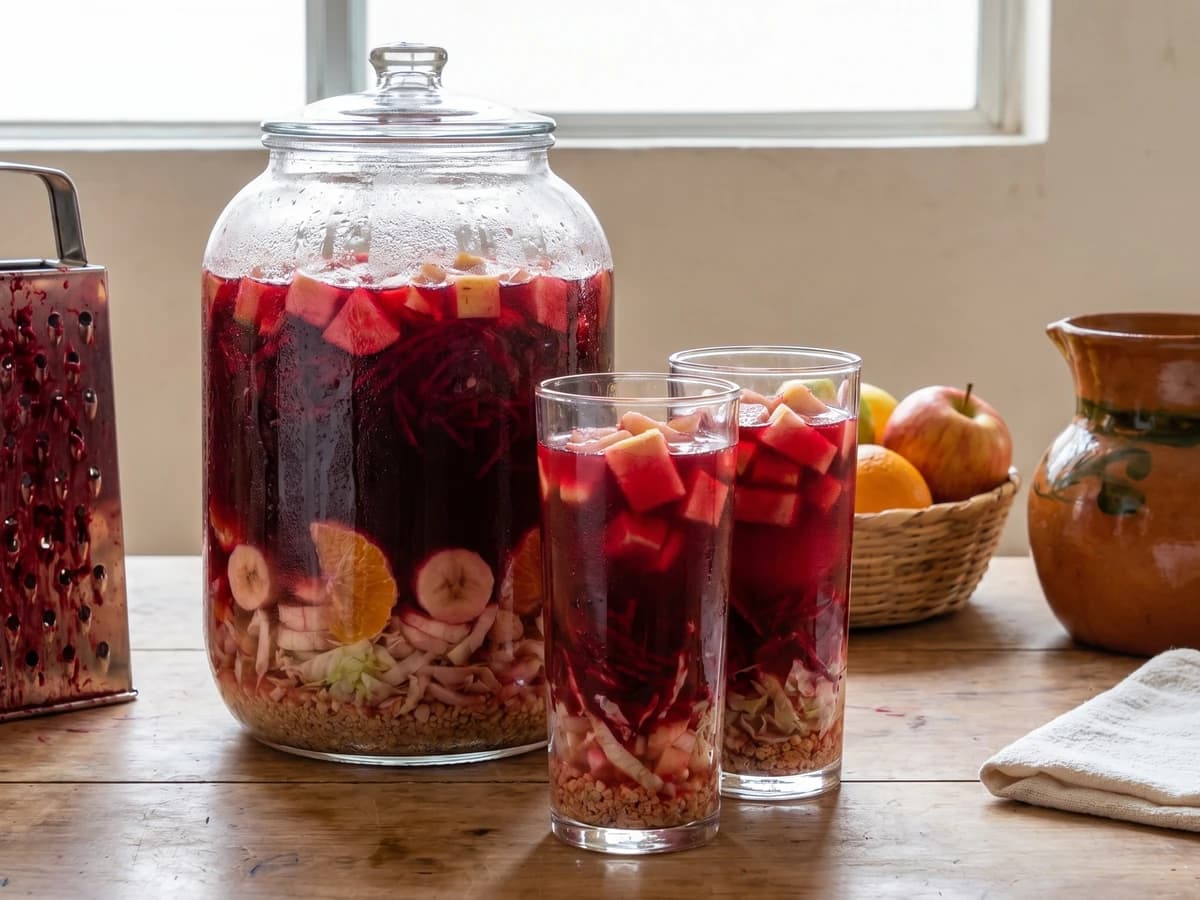
Aguascalientes' Lenten agua fresca, jewel-red from cooked beet and full of apple, banana, orange, lettuce, and ground peanuts, served cold when Holy Week meets the Feria de San Marcos.

Chef Lupita
Sonora and Sinaloa's creamy malted barley water, built on toasted cebada perla, Mexican canela, vanilla from Papantla, and evaporated milk. Pink-beige, rich, and served cold over heavy ice in a heavy glass tumbler. Liquid cookie comfort the northwest way.

Chef Lupita
Yucatán's everyday tonic of boiled chaya leaves blended with lima agria, sugar, and ice. The bright green jarra that sits on every Peninsula table from Mérida to Valladolid.