
Chef Lupita
Agua de Alfalfa
Ciudad de México's highland market agua fresca, fresh alfalfa blended with pineapple and lime until bright green, strained clean, and poured cold from the vitrolero.
A cooking platform built around craft, culture, and the stories behind what we eat.
Created by
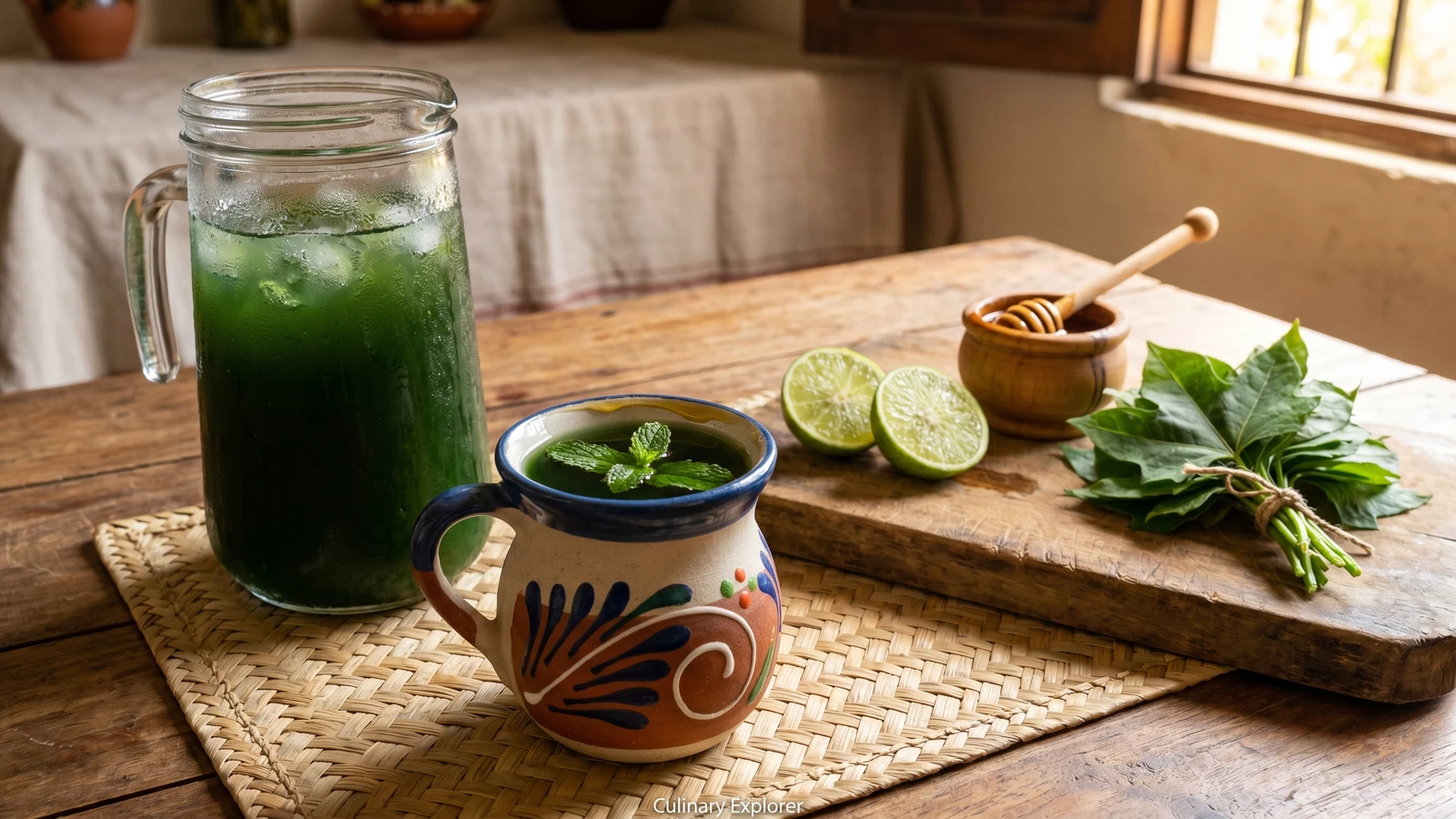
Yucatán's restorative infusion of chaya leaves and yerbabuena, boiled fifteen minutes to release the iron and finished with Melipona honey. A Maya tonic that has held its place on the peninsula for centuries.
Chaya is a Yucatán plant. It grows in the back patios of houses from Mérida to Valladolid, in the milpas of Maya farmers in Quintana Roo and Campeche, and along the roads of the peninsula where almost no other green will thrive. The Maya call it chay or chaay. The Spanish called it tree spinach. Both names undersell it. Chaya has more iron, more calcium, and more protein than almost any leaf you can grow in a Mexican garden, and Maya women have been brewing it into a daily tea for at least a thousand years.
The rule with chaya is simple and absolute: you must boil it. The fresh leaf carries small amounts of hydrocyanic compounds that cook off in fifteen minutes of simmer. Raw chaya is not food. Cooked chaya is medicine. The señoras in the Mercado Lucas de Galvez in Mérida sell it in tied bundles and they will look at you sideways if you ask about juicing it raw the way the foreign wellness magazines suggest. Esto no es comida de un solo México, and chaya is not kale.
The yerbabuena and the Melipona honey are what make this a Yucatecan drink and not just a leaf tea. Yerbabuena, Mexican spearmint, grows in pots on every back patio in the peninsula. Melipona honey comes from the stingless bee that the Maya have kept in hollowed logs since long before the conquest, and the flavor is unlike any honey from a European bee, floral, slightly sour, with a depth that ordinary honey cannot reach. My notebook has a page from a doña in Maní who served me this tea after a long morning of recording her recipe for relleno negro. She said her mother served it to her in the mornings when she was a child, and her mother's mother before that. La cocina no es decoración, es trabajo, and so is the medicine that comes out of it.
Chaya (Cnidoscolus aconitifolius) is one of the few indigenous Mesoamerican leafy greens that survived as a daily staple from the Pre-Classic Maya period to the present, cultivated continuously in the Yucatán Peninsula for an estimated two thousand years. Colonial-era documents from Franciscan friars in 16th-century Yucatán describe chaya as a primary green of the Maya household garden, often consumed as a medicinal infusion for postpartum recovery, anemia, and digestive ailments. The pairing with Melipona honey, produced by the native stingless bee Melipona beecheii, reflects a uniquely Maya beverage tradition: the Melipona has been kept by Yucatecan beekeepers in hollowed logs called jobones since pre-Columbian times, and its honey was sacred enough to be used in temple offerings recorded in the Madrid Codex.
Quantity
10 leaves (about 2 ounces)
stems removed
Quantity
1 liter
Quantity
1 small bunch, about 12 sprigs
Quantity
3 tablespoons, plus more to taste
Quantity
1
halved (or 1 Persian lime plus a small piece of grapefruit peel)
Quantity
pinch
Quantity
for serving cold
| Ingredient | Quantity |
|---|---|
| fresh chaya leavesstems removed | 10 leaves (about 2 ounces) |
| cold water | 1 liter |
| fresh yerbabuena (Mexican spearmint) | 1 small bunch, about 12 sprigs |
| Melipona honey | 3 tablespoons, plus more to taste |
| lima agriahalved (or 1 Persian lime plus a small piece of grapefruit peel) | 1 |
| sea salt from Las Coloradas | pinch |
| ice (optional) | for serving cold |
Rinse the chaya leaves under cold water. Do not tear them with bare hands if you have sensitive skin. The fresh leaves carry tiny stinging hairs and a small amount of hydrocyanic compounds that are neutralized only by cooking. Use a wooden spoon or tongs to move the leaves into the pot. This is the rule in every Yucateco kitchen and it is not negotiable. No me vengas con atajos.
Bring the liter of cold water to a boil in a clay olla or a non-reactive saucepan. Do not use aluminum. Chaya reacts with aluminum and turns the infusion off. Add the chaya leaves and a pinch of sea salt. Reduce the heat to a steady simmer. Cook for a full fifteen minutes, uncovered. The water will turn a deep, vegetal green and smell like wet earth and spinach. That color is the iron and the chlorophyll leaving the leaf and entering the water. This is the whole point of the tea.
Pull the pot off the heat. Add the yerbabuena sprigs directly into the hot chaya water, pushing them down with a spoon so the leaves submerge. Cover the pot and let the mint steep for five minutes. Off the heat, not on it. Yerbabuena boiled hard turns bitter and grassy. Steeped gently it gives you that cool, clean menthol that lifts the heaviness of the chaya. Así se hace y punto.
Strain the infusion through a fine-mesh sieve into a glass jarra or a clay pitcher. Press lightly on the chaya leaves with the back of a spoon to extract the last of the liquid. Discard the cooked leaves, or save them for a soup the next day, the Yucatecan cooks do not waste them. Stir in the Melipona honey while the tea is still warm enough to dissolve it. Taste. Adjust with more honey if you want it sweeter, but the chaya should still come through.
Squeeze the lima agria into the jarra just before serving. Lima agria is not regular lime. It is the sour citrus of the peninsula and it has a perfume that no other lime carries. If you only have Persian lime, use it with a strip of grapefruit peel to mimic the bitterness. Serve hot in clay jarritos in the morning as a restorative, or pour over ice in a tall glass for the afternoon heat. Saber cocinar es saber vivir.
1 serving (about 250g)
Culinary guides, cultural storytelling, and the editorial depth that makes cooking meaningful.
Discover Culinary ExplorerChef Lupita
Ciudad de México's highland market agua fresca, fresh alfalfa blended with pineapple and lime until bright green, strained clean, and poured cold from the vitrolero.
Chef Lupita
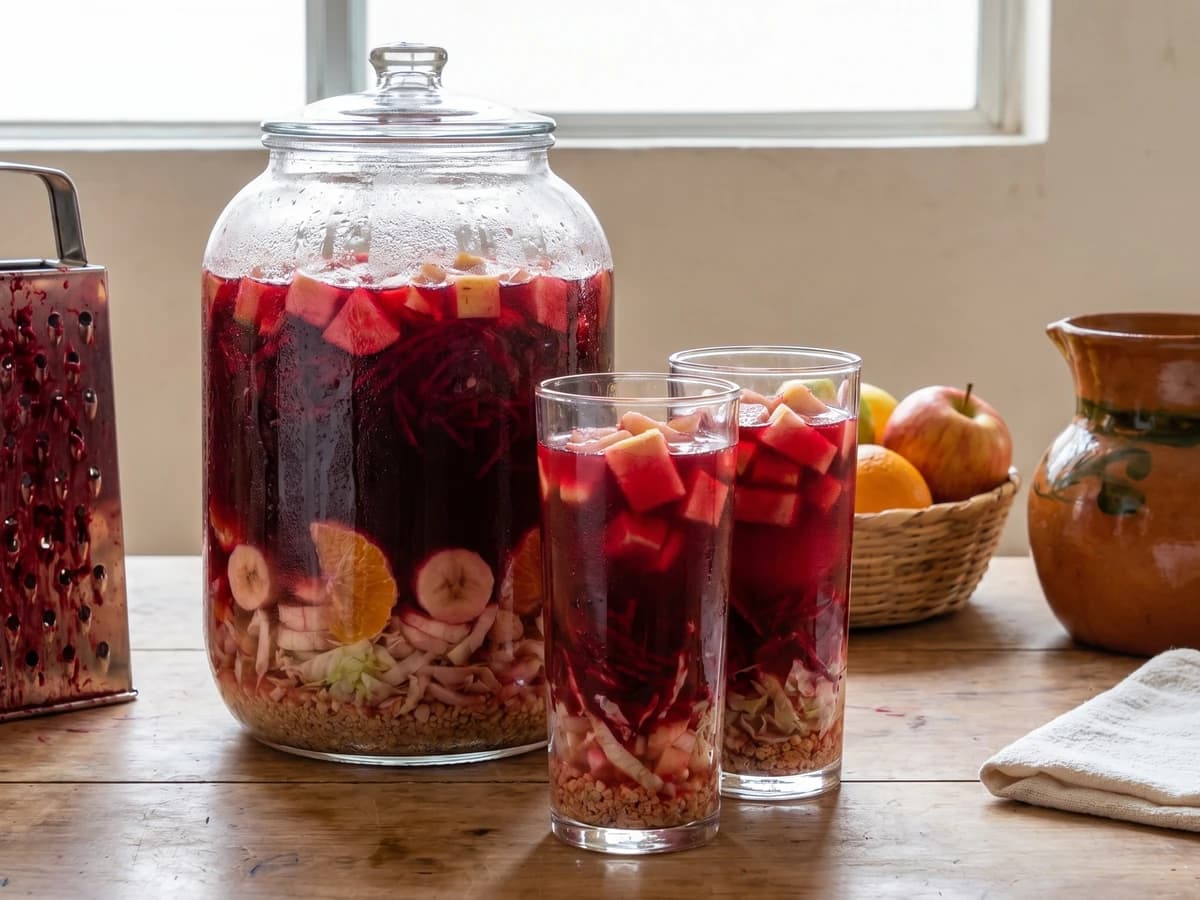
Aguascalientes' Lenten agua fresca, jewel-red from cooked beet and full of apple, banana, orange, lettuce, and ground peanuts, served cold when Holy Week meets the Feria de San Marcos.

Chef Lupita
Sonora and Sinaloa's creamy malted barley water, built on toasted cebada perla, Mexican canela, vanilla from Papantla, and evaporated milk. Pink-beige, rich, and served cold over heavy ice in a heavy glass tumbler. Liquid cookie comfort the northwest way.

Chef Lupita
Yucatán's everyday tonic of boiled chaya leaves blended with lima agria, sugar, and ice. The bright green jarra that sits on every Peninsula table from Mérida to Valladolid.