
Chef Lupita
Agua de Alfalfa
Ciudad de México's highland market agua fresca, fresh alfalfa blended with pineapple and lime until bright green, strained clean, and poured cold from the vitrolero.
A cooking platform built around craft, culture, and the stories behind what we eat.

Created by
Puebla's central-highland canelita, whole Ceylon cinnamon boiled until deep amber and sweetened with piloncillo, the first pot many families make when cold weather enters the house.
Puebla, the central highlands, especially the cold kitchens of the Sierra Norte and the neighborhoods around the city where morning air gets into your bones. Té de canela lives there, and in Tlaxcala, Estado de México, Hidalgo, all through the altiplano. I am placing this version in Puebla because the talavera cup, the piloncillo from nearby cane country, and the habit of serving it before bread or atole feel right together.
This is not fancy tea. It is canelita. Whole Ceylon cinnamon, water, piloncillo. That is the dish. The mistake people make is treating it like a tea bag. No. You boil the canela until the water turns deep amber and the flavor comes out of the bark. Powdered cinnamon is for other things. Here it makes mud.
My mother used to make this when someone coughed twice at breakfast. She did not ask questions. She put the olla on the stove, broke the cinnamon with her hands, and shaved piloncillo with a knife that had done harder work. Saber cocinar es saber vivir. Some recipes feed hunger. Some feed the household's nerves.
Cinnamon reached Mexico through Spanish colonial trade, including the Manila galleon route that connected Asia, Acapulco, and the interior markets of New Spain from the late 16th century onward. Mexican kitchens came to prefer true Ceylon cinnamon, canela de Ceilán, for its soft bark and sweet fragrance, and it became central to atoles, arroz con leche, café de olla, moles, and household infusions. Té de canela is not the monument of one state like mole poblano, but in the cold central highlands it became a practical home remedy and breakfast drink tied to piloncillo, clay ollas, and pan dulce.
Quantity
4 cups
Quantity
3 sticks, about 3 inches each
Quantity
2 ounces
grated or chopped
Quantity
1 small strip
Quantity
1 teaspoon
| Ingredient | Quantity |
|---|---|
| water | 4 cups |
| whole Ceylon cinnamon sticks (canela de Ceilán) | 3 sticks, about 3 inches each |
| piloncillograted or chopped | 2 ounces |
| Mexican lime peel (optional) | 1 small strip |
| fresh Mexican lime juice (optional) | 1 teaspoon |
Break the Ceylon cinnamon sticks once or twice with your hands. Do not use powdered cinnamon. Powder muddies the drink and leaves grit at the bottom of the cup. Whole canela gives you a clean infusion, warm and woody, the way the señoras make it before anyone in the house has properly woken up.
Put the water and broken cinnamon sticks in a small clay olla or saucepan. Bring it to a gentle boil over medium heat, then reduce to a steady simmer. The water will begin pale gold, then deepen slowly. Let the cinnamon work. No me vengas con atajos.
Add the chopped piloncillo and stir until it dissolves. Simmer 12 to 15 minutes more, until the tea is deep amber and the kitchen smells like canela and warm sugar. The piloncillo should round the cinnamon, not bury it. Taste before adding more.
If using lime peel, add it for the final minute only, then remove it. Strain the tea into warm jarritos or talavera cups. Add a few drops of lime juice only if you are serving it for a cough. It should taste of cinnamon first, piloncillo second, and lime only as a small edge. Así se hace y punto.
1 serving (about 240g)
Culinary guides, cultural storytelling, and the editorial depth that makes cooking meaningful.
Discover Culinary ExplorerChef Lupita
Ciudad de México's highland market agua fresca, fresh alfalfa blended with pineapple and lime until bright green, strained clean, and poured cold from the vitrolero.
Chef Lupita
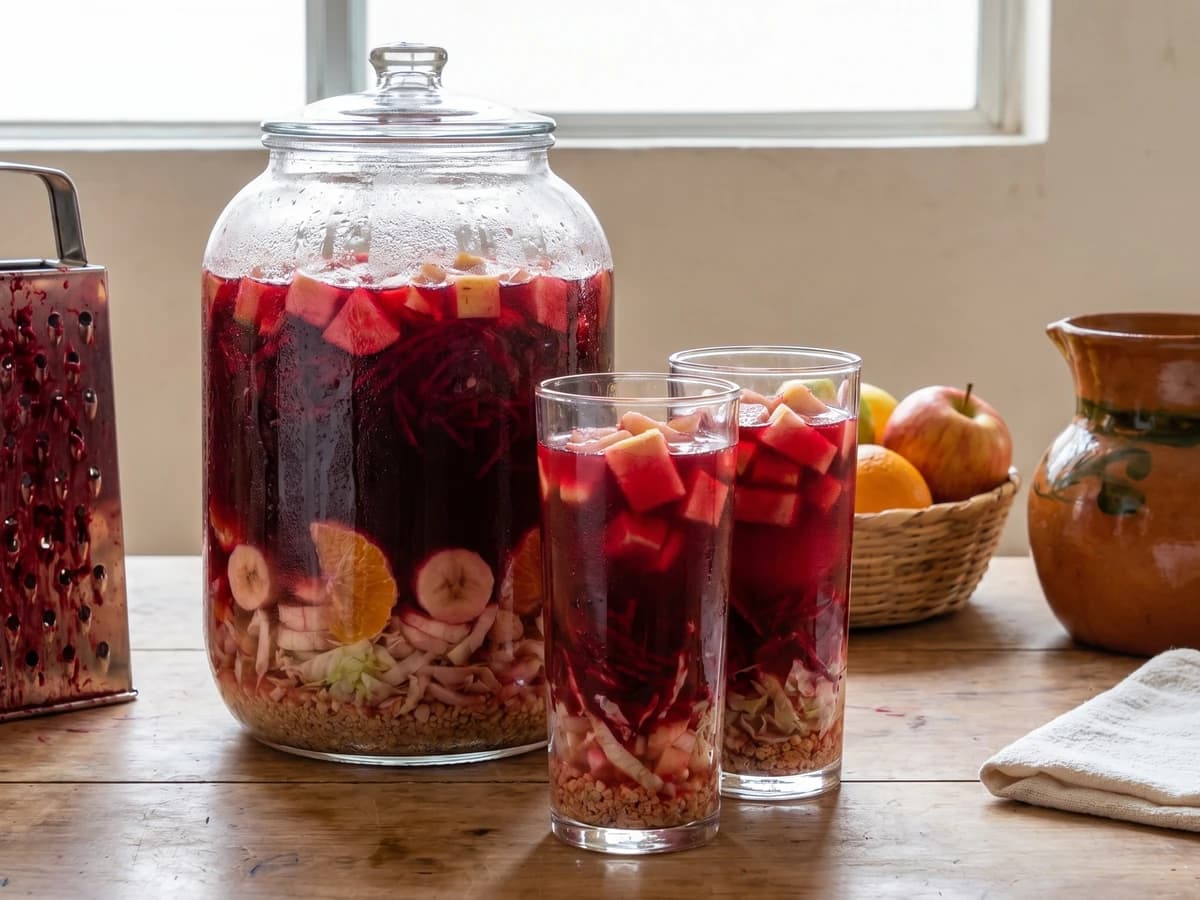
Aguascalientes' Lenten agua fresca, jewel-red from cooked beet and full of apple, banana, orange, lettuce, and ground peanuts, served cold when Holy Week meets the Feria de San Marcos.

Chef Lupita
Sonora and Sinaloa's creamy malted barley water, built on toasted cebada perla, Mexican canela, vanilla from Papantla, and evaporated milk. Pink-beige, rich, and served cold over heavy ice in a heavy glass tumbler. Liquid cookie comfort the northwest way.

Chef Lupita
Yucatán's everyday tonic of boiled chaya leaves blended with lima agria, sugar, and ice. The bright green jarra that sits on every Peninsula table from Mérida to Valladolid.