
Chef Dean
Bacon Egg and Cheese on a Roll
The iconic New York bodega breakfast: shattering-crisp bacon, a golden-yolked fried egg, and molten American cheese tucked into a soft kaiser roll. This is the sandwich that built a city.
A cooking platform built around craft, culture, and the stories behind what we eat.
Created by
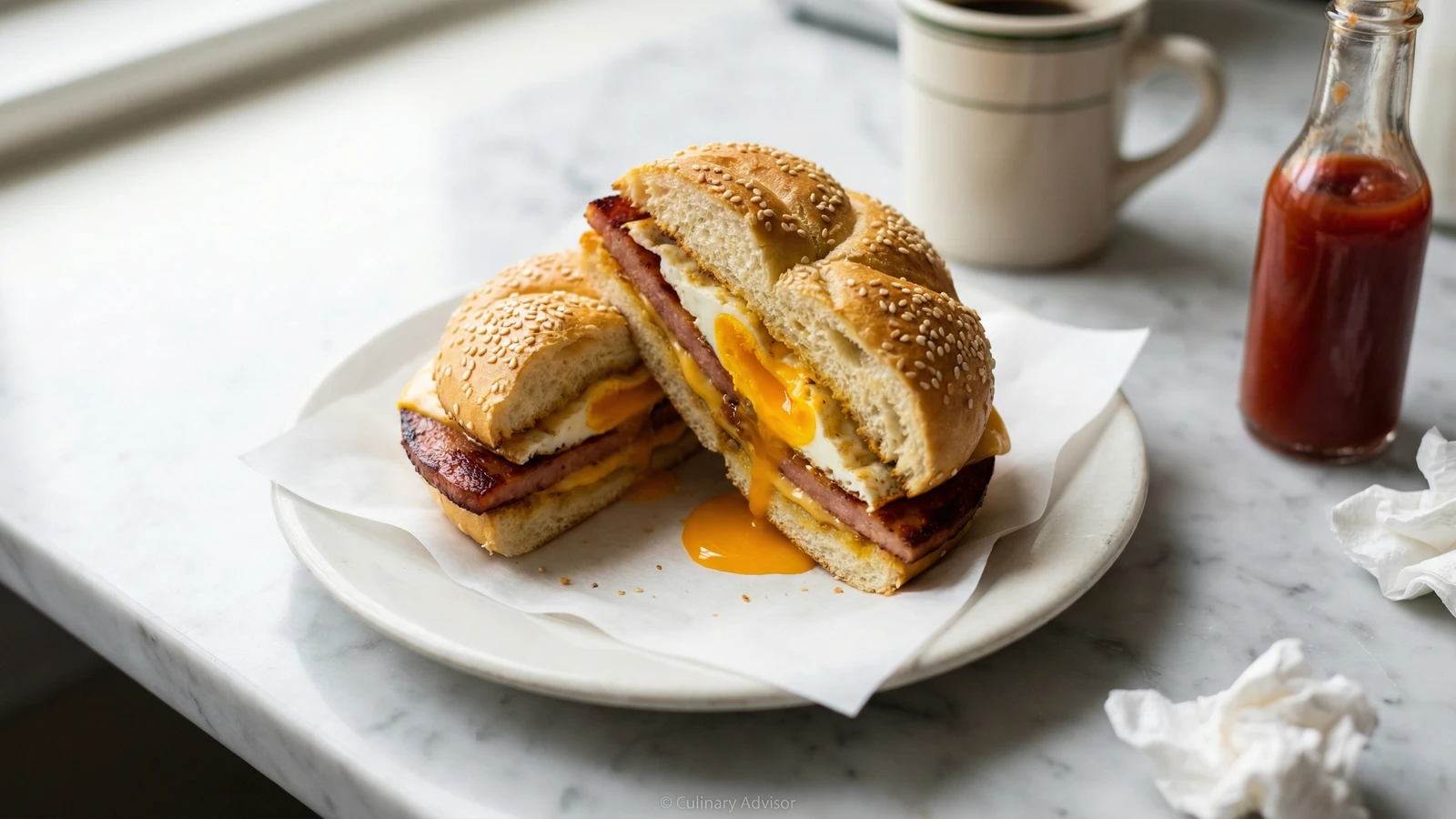
The Garden State's most treasured morning ritual: salty, crispy-edged pork roll nestled against a runny-yolked egg and molten American cheese, all cradled in a fresh kaiser roll that knows its place is to absorb the glorious mess.
No sandwich in America sparks more heated debate than this one. Call it Taylor Ham north of Trenton, pork roll to the south, and watch otherwise reasonable people turn into passionate defenders of regional honor. The argument has raged since 1906 when a labeling law forced the Taylor Provision Company to drop "ham" from their product name. South Jersey complied. North Jersey refused. A century later, the battle continues at every deli counter and diner from the Meadowlands to Cape May.
The sandwich itself transcends the naming war. It is New Jersey's answer to bacon and eggs, perfected through decades of diner culture and bodega breakfast lines. The pork roll must be scored before cooking, four cuts radiating from the center like compass points. Without this, the slices cup and buckle in the pan, cooking unevenly and looking amateurish. Score it right and each slice lies flat, developing those mahogany-crisp edges while staying tender at the center.
I've eaten this sandwich at dawn on the Jersey Shore, at truck stops on the Turnpike, and at greasy spoons where the counterman knew my order before I sat down. Every version worth remembering shares the same fundamentals: pork roll cooked until the edges sing with caramelization, an egg with a yolk that runs when you bite through, American cheese melted to the point of surrender, all on a kaiser roll fresh enough to compress without crumbling. This is not health food. This is honest food, made for people who work hard and eat accordingly.
Quantity
6 slices
about 1/8-inch thick
Quantity
2
Quantity
2 slices
Quantity
2
split
Quantity
2 tablespoons
divided
Quantity
to taste
Quantity
to taste
freshly ground
Quantity
for serving
| Ingredient | Quantity |
|---|---|
| Taylor ham (pork roll)about 1/8-inch thick | 6 slices |
| large eggs | 2 |
| American cheese | 2 slices |
| kaiser rollssplit | 2 |
| unsalted butterdivided | 2 tablespoons |
| kosher salt | to taste |
| black pepperfreshly ground | to taste |
| ketchup (optional) | for serving |
Make four evenly spaced cuts from the edge of each pork roll slice toward the center, stopping about half an inch from the middle. These cuts should radiate like spokes on a wheel. This isn't fussiness. The casing shrinks faster than the meat when heated, causing unscored slices to dome upward and cook only at the edges. Scored slices lie flat and crisp evenly across their entire surface.
Heat a large skillet or griddle over medium heat. Spread about half a tablespoon of butter on the cut sides of each roll. Place the rolls cut-side down in the dry pan and toast until golden brown, about two minutes. The butter creates a barrier against the coming flood of egg yolk and pork fat. Set the toasted rolls aside.
Add half a tablespoon of butter to the same skillet over medium heat. Once it foams and subsides, add the scored pork roll slices in a single layer. You'll hear them sizzle immediately. Cook without moving until the edges turn deep reddish-brown and slightly crispy, about two minutes. The fat will render and the kitchen will smell like a proper New Jersey diner. Flip and cook another minute until both sides have color. The slices will puff slightly at the scored sections. Remove to a plate and loosely tent with foil.
Add the remaining butter to the skillet, still over medium heat. Crack both eggs into the pan, keeping them separate if space allows. Season immediately with salt and pepper. Cook until the whites are set and opaque but the yolks remain liquid and jiggly, about three minutes. For the authentic Jersey experience, the yolk must run when you bite the sandwich. If you prefer a firmer yolk, flip the eggs gently and cook another thirty seconds, but know that something essential is lost.
Place a slice of American cheese over each egg during the last minute of cooking. Cover the pan briefly to trap steam and accelerate melting. The cheese should drape over the egg like a soft blanket, edges going translucent and gooey. American cheese is not negotiable here. Its engineered meltability is precisely the point. Fancy cheese has no place on this sandwich.
Place the bottom half of each toasted roll on a plate. Layer three slices of the crispy pork roll on each, overlapping slightly. Use a spatula to transfer the cheese-draped egg on top. The yolk should still be liquid beneath its cheese blanket. Crown with the top half of the roll. Press down gently. The yolk will begin its beautiful migration through the layers.
This sandwich waits for no one. Serve with ketchup on the side if you're from that school of thought. Some purists consider condiments heresy. Others wouldn't dream of eating it any other way. Both camps are welcome at my table. Eat over a plate. You'll need it.
1 sandwich (about 335g)
Culinary guides, cultural storytelling, and the editorial depth that makes cooking meaningful.
Discover Culinary ExplorerChef Dean
The iconic New York bodega breakfast: shattering-crisp bacon, a golden-yolked fried egg, and molten American cheese tucked into a soft kaiser roll. This is the sandwich that built a city.

Chef Dean
Buffalo's proudest sandwich: silky rare roast beef mounded on a crusty roll showered with caraway and coarse salt, the top dipped in warm jus, the whole thing demanding horseradish and a cold beer.

Chef Dean
Shatteringly crisp beer-battered halibut piled on a buttery bun with tangy homemade tartar sauce and crunchy coleslaw. This is the Pacific Northwest on a plate, the kind of sandwich worth driving to the coast for.

Chef Dean
A pork cutlet pounded thin as a playing card, coated in seasoned cracker crumbs, and fried until it sprawls gloriously past the edges of its bun. This is Indiana on a plate.