
Chef Makoa
ʻOtai (Tongan Watermelon and Coconut Cooler)
Tonga's ʻotai is grated meleni, watermelon, stirred with fresh lolo, coconut milk, and ice until the whole bowl turns cold, creamy, and ready for one more cousin.
A cooking platform built around craft, culture, and the stories behind what we eat.
Created by
Tonga's Taumafa Kava is the chiefly bowl: cool water kneaded through pounded root, served plain from the carved tānoʻa bowl with rank and care, while faikava, the evening circle, keeps talking.
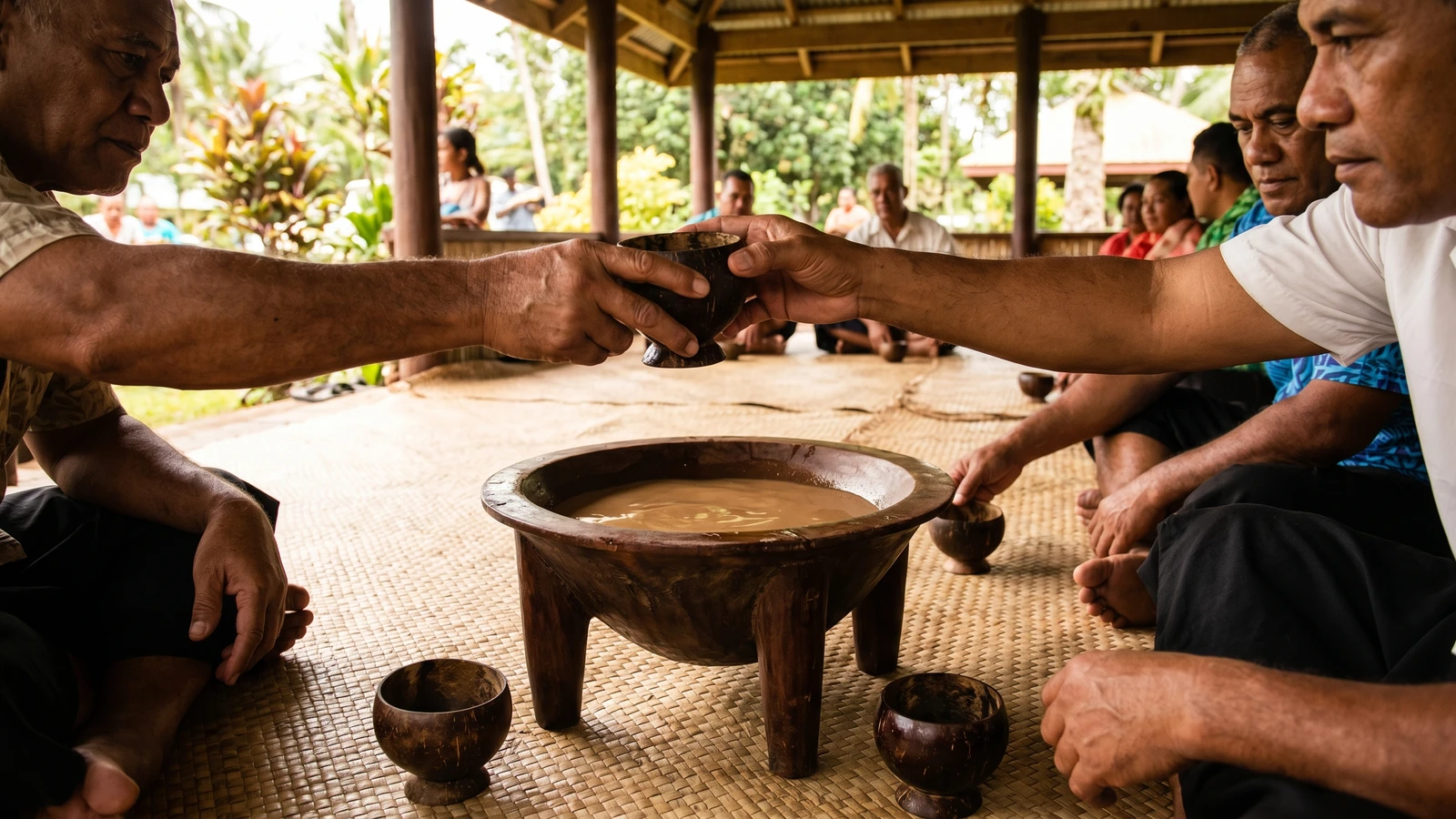
The first time I was allowed near a Tongan kava circle, I learned by keeping my mouth smaller than my ears. The room had its own tide: the tānoʻa (carved wooden kava bowl) in the center, the ipu kava (coconut-shell cup) waiting low, the names called in order. This is Tonga's Taumafa Kava, the royal kava ceremony, and I no pretend the sacred protocol is mine to teach.
Kava comes up from the fonua (land and people), but once it enters the bowl it is also genealogy, rank, and relationship. Kava has cousins across the Triangle, though not every island holds it the same way: Sāmoan ʻava with its own ceremony, Hawaiian ʻawa back home as a chiefly and healing root, and Tongan faikava (everyday kava circle), where talk and song can carry deep into the night. One ocean, one canoe, one root, but Tonga's royal bowl is Tonga's.
So this is the drink, not the ceremony. Use clean noble Tongan kava, cool water, a cloth bag, and your hands. Knead until the water goes cloudy tan and the smell comes up dry-earth and peppery; stir before each cup because the root settles like silt after rain. Serve it plain, no fruit, no sweetener, no alcohol, and if you want the royal protocol, go sit with Tongan elders, with the matāpule (talking chiefs) and the ʻeiki (chiefs and nobles). They should tell their own story.
In Tonga, Taumafa Kava is the royal kava ceremony, a chiefly gathering where kava is mixed in the tānoʻa and served in strict order to the king, nobles, matāpule, and attendants. During King Tupou VI's 2015 coronation in Nukuʻalofa, Taumafa Kava was held as a public sign that monarchy, fonua, and chiefly rank still meet inside the kava circle. Kava has relatives across the Triangle, including Sāmoan ʻava and Hawaiian ʻawa, but Tonga's royal round belongs to Tonga, and its protocol should be learned from Tongan elders and ʻeiki.
Quantity
1 cup (about 4 ounces)
dried and finely pounded
Quantity
6 cups
plus more to lighten the bowl if needed
| Ingredient | Quantity |
|---|---|
| noble Tongan kava root powderdried and finely pounded | 1 cup (about 4 ounces) |
| cool filtered waterplus more to lighten the bowl if needed | 6 cups |
Wash your hands, rinse the tānoʻa or a wide clean bowl, and set the ipu kava close by. If you have a woven pola or fala, a Tongan mat, lay it down first. This home kitchen version prepares the drink only. The royal seating, calls, claps, and order of Taumafa Kava belong to Tongan elders, matāpule, and ʻeiki.
Put the kava powder into a clean kava straining bag or doubled muslin and close it loosely, leaving room for the water to move through the root. Good kava smells earthy, dry, and peppery. If it smells moldy, perfumed, or chemical, stop there. Sourcing first, always.
Pour 4 cups cool filtered water into the bowl. Lower the bag into the water and knead it with both hands for 8 to 10 minutes, squeezing and folding until the water turns cloudy tan, like wet clay, and fine root sediment moves through the bowl. Cool water keeps the drink clean and steady; hot water pulls it rough.
Lift the bag and squeeze it firmly, then add the remaining 2 cups cool water and knead 3 to 5 minutes more. Press the root until it feels spent and light in the cloth. Taste a spoonful: it should be earthy and bitter, with a peppery numbness touching the mouth. If it is too strong, add a little more cool water. If it is pale, knead another minute.
If grit remains, pour the kava through the clean straining bag once more into the bowl. Stir slowly with a ladle or clean hand. Kava settles quickly, so before every cup, sweep the bottom of the bowl gently so each serving carries the same strength.
Ladle small 3 to 4 ounce servings into the ipu kava or small cups. Serve it to adults who choose it, plain and sober: no alcohol, no citrus, no sweetener, no party dress-up. Drink slowly, let the mouth feel that light numbness, and keep water and food nearby. At a Tongan table, cups move by rank. At home, keep the respect and let Tongans lead the protocol.
1 serving (about 180g)
Culinary guides, cultural storytelling, and the editorial depth that makes cooking meaningful.
Discover Culinary ExplorerChef Makoa
Tonga's ʻotai is grated meleni, watermelon, stirred with fresh lolo, coconut milk, and ice until the whole bowl turns cold, creamy, and ready for one more cousin.

Chef Makoa
Tonga's ʻotai is watermelon shredded into fresh coconut milk and ice, sweet, cold, and generous, the drink that cools the kāinga when the ʻumu runs hot.

Chef Makoa
A soft Tongan cup from young coconut, simmered low in its own sweet water until mild and creamy, the kind of drink an auntie sets down when somebody needs care.

Chef Juliette
Bavaroise turns the ribbon stage into a drink: yolks and sugar, boiling tea and milk, and Kirsch whisked into a light crown of foam. Keep the whisk moving, and the café comes home.