
Chef Lupita
Agua de Alfalfa
Ciudad de México's highland market agua fresca, fresh alfalfa blended with pineapple and lime until bright green, strained clean, and poured cold from the vitrolero.
A cooking platform built around craft, culture, and the stories behind what we eat.

Created by
Chiapas's cold cacao and toasted maize drink, red from achiote and fragrant with canela, made into a powder that waits in the pantry for the weeknight glass.
Chiapas, especially Los Altos around San Cristobal de las Casas, keeps tascalate in the kitchen the way other places keep coffee. A jar of powder sits ready: toasted maize, cacao, achiote, canela, sugar, and sometimes pinones. You whisk it into cold water or milk and it turns brick red, creamy, and foamy at the top.
The red color is achiote, not chile. Learn that now. Not every Mexican drink needs heat, and not every red thing in this cuisine comes from guajillo or ancho. The cacao carries the depth, the maize gives body, the achiote stains the drink with that Chiapas color you see on fingers, cutting boards, and market cloth.
I first drank tascalate from a clay cup in the mercado in San Cristobal, poured from a plastic pitcher by a woman who had ground the powder at dawn. She told me the maize must be toasted until it smells nutty, not burned, and the cacao must be roasted enough to speak through the milk. Si no conoces el mercado, no conoces la cocina.
This is weeknight food because the work is done ahead. Make the powder once, store it well, and every glass after that takes two minutes. Saber cocinar es saber vivir.
Tascalate belongs to Chiapas's long cacao and maize drinking tradition, rooted in pre-Columbian Mesoamerican beverages that mixed ground corn with cacao and achiote for color and body. The name is commonly linked to the Nahuatl 'tlaxcalli' and 'atl,' tortilla or maize cake plus water, though the drink itself is strongly identified with Chiapas and its Maya and Zoque foodways. In Chiapas markets today, especially in San Cristobal de las Casas and Tuxtla Gutierrez, tascalate is sold as both a ready drink and a dry powder for home kitchens.
Quantity
2 cups
cleaned
Quantity
1 cup
Quantity
1/2 cup, plus more to taste
Quantity
1/4 cup
Quantity
2 tablespoons
Quantity
1
broken into pieces
Quantity
1/4 teaspoon
Quantity
4 cups
for serving
Quantity
for serving
| Ingredient | Quantity |
|---|---|
| dried field corn or cacahuazintle corncleaned | 2 cups |
| cacao nibs or peeled roasted cacao beans | 1 cup |
| granulated sugar | 1/2 cup, plus more to taste |
| pinones or blanched almonds | 1/4 cup |
| achiote seeds | 2 tablespoons |
| Mexican canela stickbroken into pieces | 1 |
| fine sea salt | 1/4 teaspoon |
| cold water or cold whole milkfor serving | 4 cups |
| ice (optional) | for serving |
Heat a dry comal or heavy skillet over medium. Add the dried maize and toast, stirring often, for 12 to 15 minutes, until the kernels smell nutty and show golden spots. Do not let them blacken. Burned maize makes a bitter drink, and no amount of sugar fixes laziness.
Move the maize to a tray to cool. Add the cacao nibs or cacao beans to the same comal and toast for 3 to 5 minutes, stirring constantly, until the aroma turns deep and chocolaty. If you are using whole roasted cacao beans with skins, rub off the loose skins after toasting. The cacao should taste round, not scorched.
Toast the achiote seeds for 30 to 45 seconds, just until fragrant and brick red. Watch them closely. Achiote gives tascalate its Chiapas color, but scorched achiote tastes dusty. Add the canela pieces for the last 20 seconds so the bark warms and releases its perfume.
Working in batches, grind the toasted maize, cacao, achiote, canela, pinones, sugar, and salt in a molino, spice grinder, or high-powered blender until fine. Stop and scrape often. You want a sandy powder that smells of toasted corn, cacao, and warm canela. A metate gives the finest texture, but a blender works if you are patient. No me vengas con atajos, grind it properly.
Pass the powder through a fine-mesh sieve. Regrind anything coarse and sift again. Store the tascalate in a clean jar with a tight lid. Keep it in a cool pantry for up to two weeks, or refrigerate it for a month because cacao fat can turn stale. The powder should stay dry and fragrant.
For each serving, put 3 to 4 tablespoons tascalate powder in a tall glass or clay jarro. Add 1 cup cold water or cold whole milk. Whisk hard with a molinillo, small whisk, or blender until the drink turns red-brown and foamy on top. Taste for sugar now. Serve over ice if the day is hot.
1 serving (about 130g)
Culinary guides, cultural storytelling, and the editorial depth that makes cooking meaningful.
Discover Culinary ExplorerChef Lupita
Ciudad de México's highland market agua fresca, fresh alfalfa blended with pineapple and lime until bright green, strained clean, and poured cold from the vitrolero.
Chef Lupita
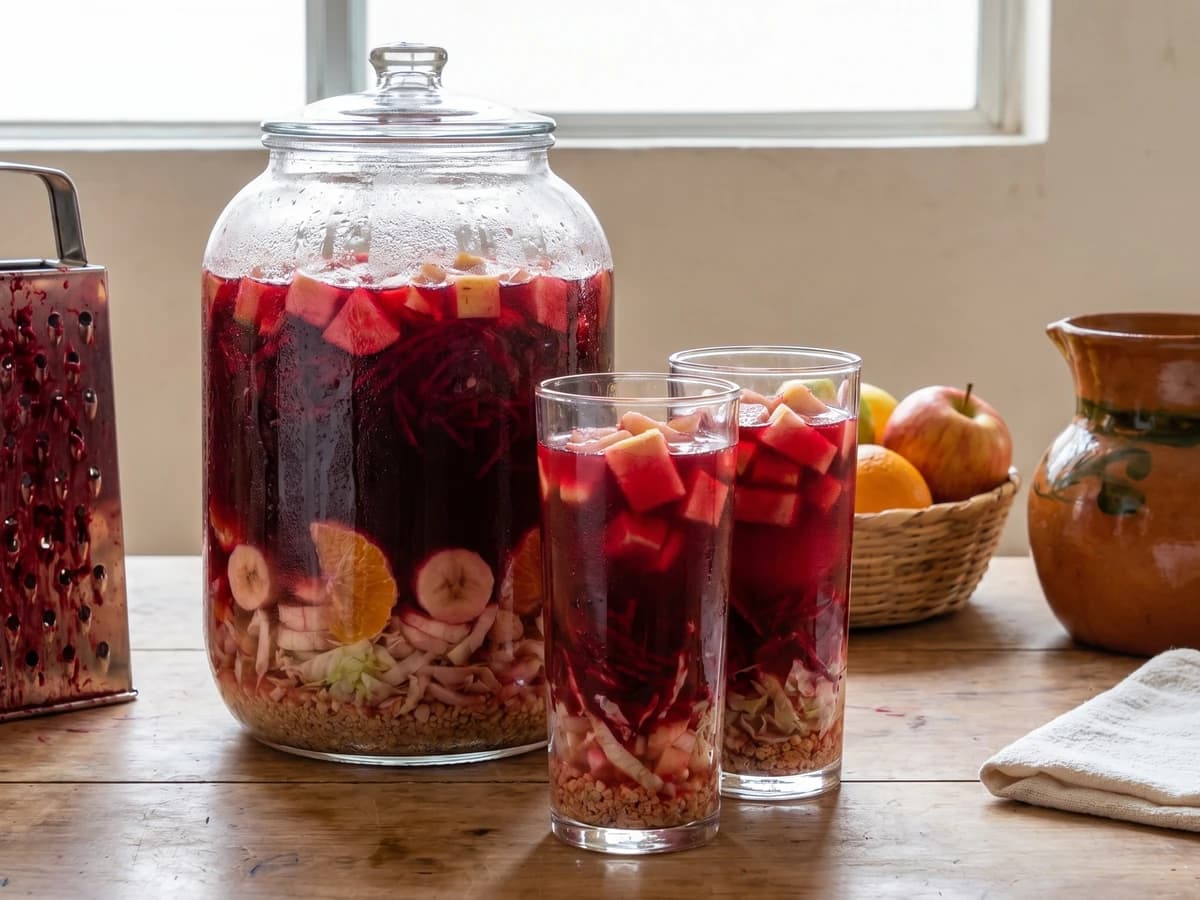
Aguascalientes' Lenten agua fresca, jewel-red from cooked beet and full of apple, banana, orange, lettuce, and ground peanuts, served cold when Holy Week meets the Feria de San Marcos.

Chef Lupita
Sonora and Sinaloa's creamy malted barley water, built on toasted cebada perla, Mexican canela, vanilla from Papantla, and evaporated milk. Pink-beige, rich, and served cold over heavy ice in a heavy glass tumbler. Liquid cookie comfort the northwest way.

Chef Lupita
Yucatán's everyday tonic of boiled chaya leaves blended with lima agria, sugar, and ice. The bright green jarra that sits on every Peninsula table from Mérida to Valladolid.