
Chef Makoa
Kumara (Rapa Nui Sweet Potato)
Rapa Nui kumara, the sweet potato of stone gardens and salt wind, roasted tender in a home oven or boiled for the weeknight table, the daily bread of the far corner.
A cooking platform built around craft, culture, and the stories behind what we eat.
Created by
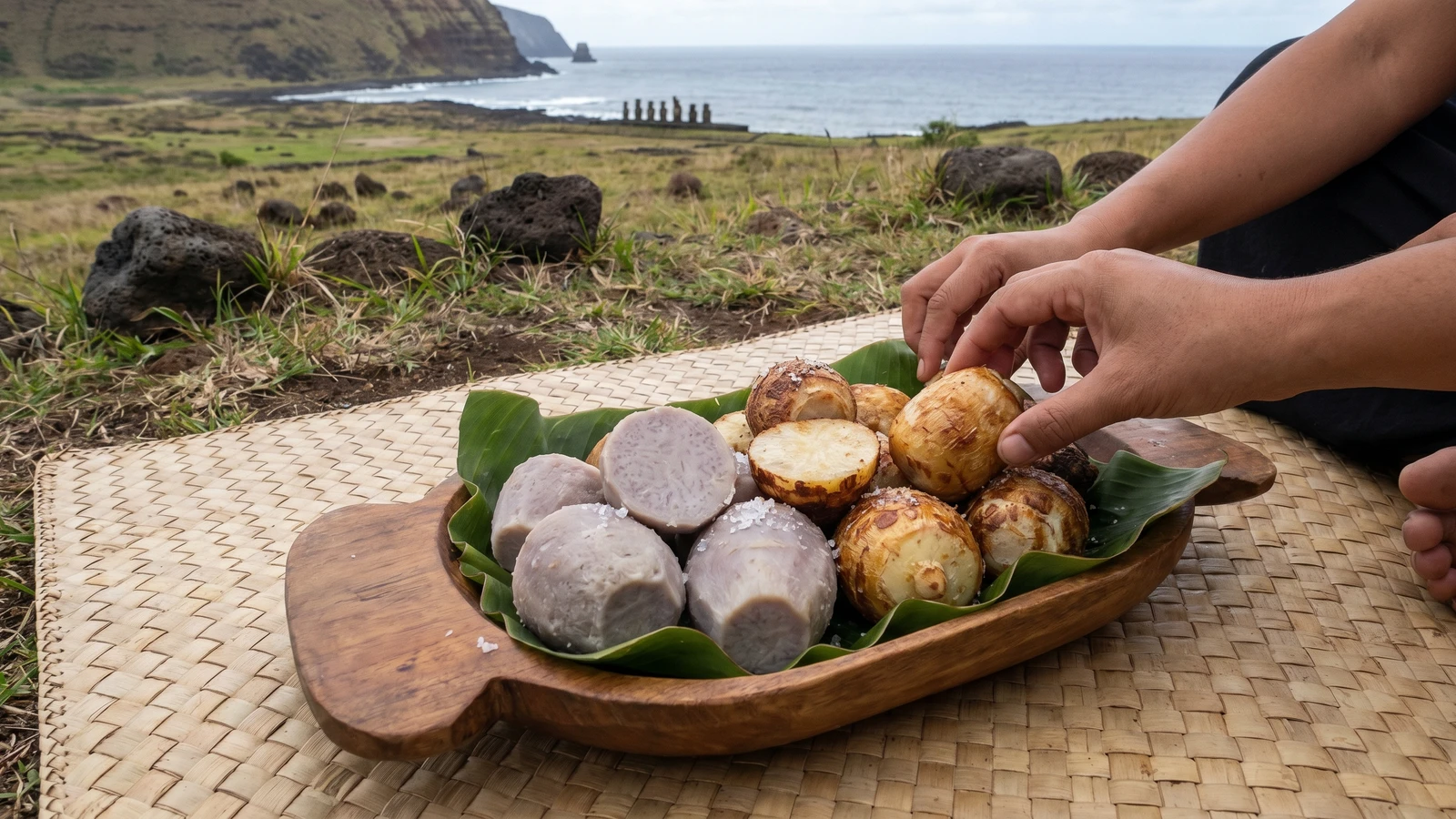
Rapa Nui's quiet taro, boiled whole or roasted after boiling until the edges crisp, served as the old canoe-crop starch beside fish, greens, or the food of the week.
At the far corner of the Triangle, Rapa Nui keeps the root in hard wind and volcanic ground. That island is not a garnish on somebody else's story. It has its own hand, its own old people, its own table, and this taro sits there quiet, the starch beside fish, greens, chicken, or whatever the day gives.
Back home in Hawaiʻi I was taught to meet kalo as Hāloa, our elder brother. On Rapa Nui the taro came by canoe too, one ocean, one canoe, one root, carried with kumara, banana, and the other foods that helped a people live on a small island far from any continent. The cousins know this same root in Sāmoa and Tonga as talo, in Tahiti and the Cooks as taro, in Aotearoa alongside kūmara and aruhe. Same family, different ground.
This preparation is plain on purpose. Boil the corms until the hard heart gives up, peel them warm, then eat them salted, or roast them after boiling so the outside takes a crisp edge. No need make it precious. Deep food is not fancy. It's land, people, food, and enough on the table for one more.
For the ceremonial parts of Rapa Nui food, the umu pae, the stone earth oven, and the gatherings that carry meaning deeper than a weeknight pot, I send you to Rapa Nui elders and cooks. They should tell their own story. I cook this open-handed, as a cousin at the edge of the table.
Rapa Nui, also called Easter Island, sits at the eastern point of the Polynesian Triangle, where voyagers carried canoe crops such as taro, kumara, banana, and sugarcane into a dry volcanic island ecology. The Rapa Nui earth oven, the umu pae, uses stone-lined heat in the same broad Polynesian oven family as the Hawaiian imu, Sāmoan and Tongan umu, Tahitian ahimaʻa, Cook Islands umukai, and Māori hāngī. On an island later marked by colonial disruption, disease, sheep ranching, and food dependence, these older starches remain a deep-food memory of people feeding themselves from their own ground.
Quantity
2 pounds
scrubbed well
Quantity
1 tablespoon
plus more for finishing
Quantity
2 tablespoons
for the roasted version
Quantity
1 to 2 tablespoons
for reheating if made ahead
Quantity
as needed
for serving
| Ingredient | Quantity |
|---|---|
| small taro cormsscrubbed well | 2 pounds |
| sea saltplus more for finishing | 1 tablespoon |
| coconut oil or neutral oilfor the roasted version | 2 tablespoons |
| water or coconut milk (optional)for reheating if made ahead | 1 to 2 tablespoons |
| banana leaf or parchment (optional)for serving | as needed |
Scrub the taro well under running water, keeping the skin on. Don't peel it raw if your hands are sensitive, because taro carries that itchy bite until heat settles it down. Cook it first, then the skin slips away easy.
Put the taro in a pot, cover with cold water by an inch, and add the sea salt. Bring it to a steady boil, then lower to a strong simmer for 35 to 45 minutes, until a skewer slides through the thickest corm with no hard center. No blame the taro if it's taking longer. Some roots are stubborn.
Drain the taro and let it sit until you can handle it. Peel off the skin with your fingers or a small knife, keeping the corms whole or halving the big ones. The flesh should be pale, dense, and quiet, with that clean mineral smell of earth after rain.
For the boiled table, lay the warm taro on banana leaf or a plain platter and finish with a little sea salt. Eat it beside grilled fish, chicken, greens, or whatever the week gave you. Eat what you have. The taro is the center, not the decoration.
For the roasted version, heat the oven to 425F. Toss the boiled, peeled taro with coconut oil and a pinch more salt, then roast on a sheet pan for 20 to 25 minutes, turning once, until the edges turn golden and crisp and the cut sides have a dry, nutty crust.
If you made it ahead, warm the boiled taro covered with a spoonful of water or coconut milk so it stays tender. Roasted taro comes back best in a hot oven, uncovered, until the edges wake up again.
1 serving (about 165g)
Culinary guides, cultural storytelling, and the editorial depth that makes cooking meaningful.
Discover Culinary ExplorerChef Makoa
Rapa Nui kumara, the sweet potato of stone gardens and salt wind, roasted tender in a home oven or boiled for the weeknight table, the daily bread of the far corner.

Chef Makoa
Boiled potatoes under a warm, creamy shrimp sauce, the kind of Rapa Nui comfort plate that tells the truth: old canoe roots beside Chilean overlay, ocean food made weeknight-simple.
Chef Makoa
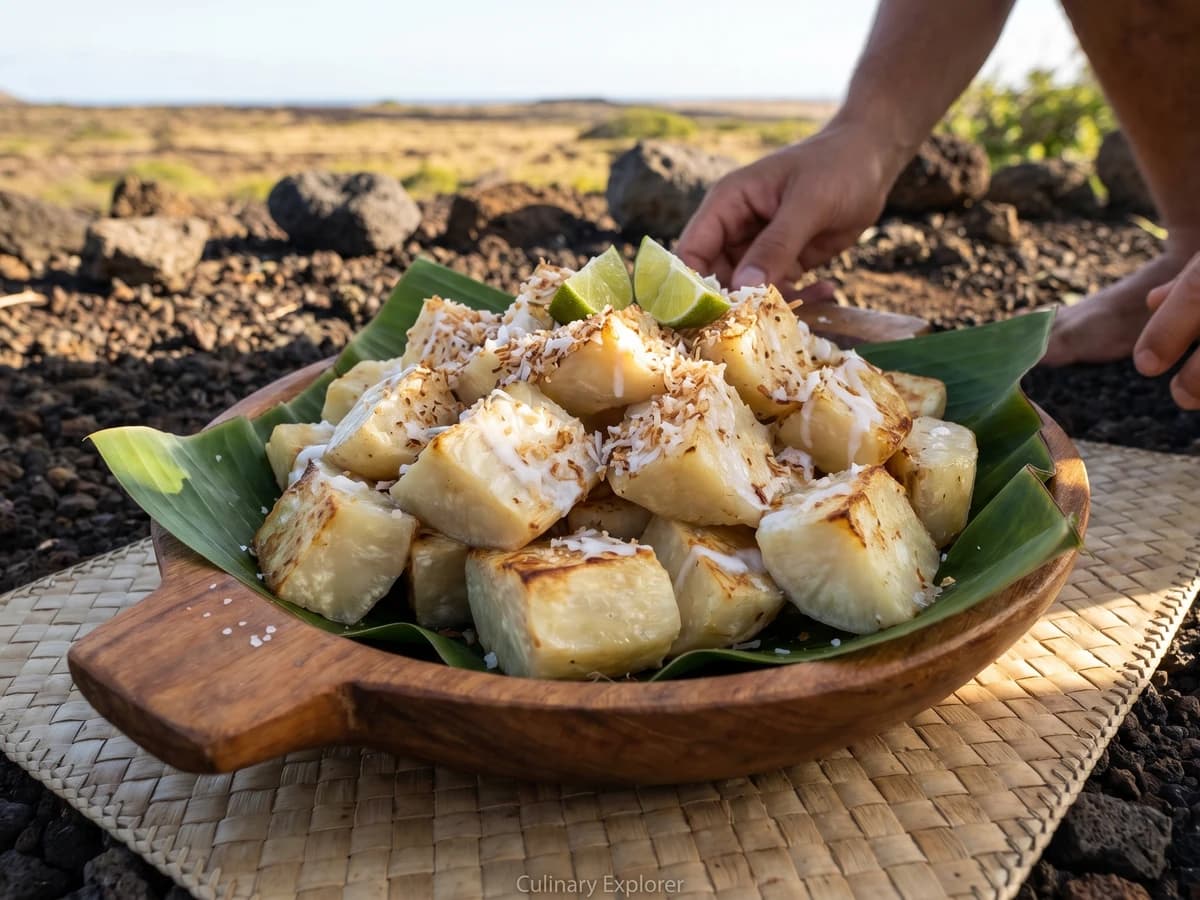
Rapa Nui uhi, the old white yam of the far eastern corner, boiled tender, roasted at the edges, and finished simply with coconut, salt, and lime.
Chef Juliette
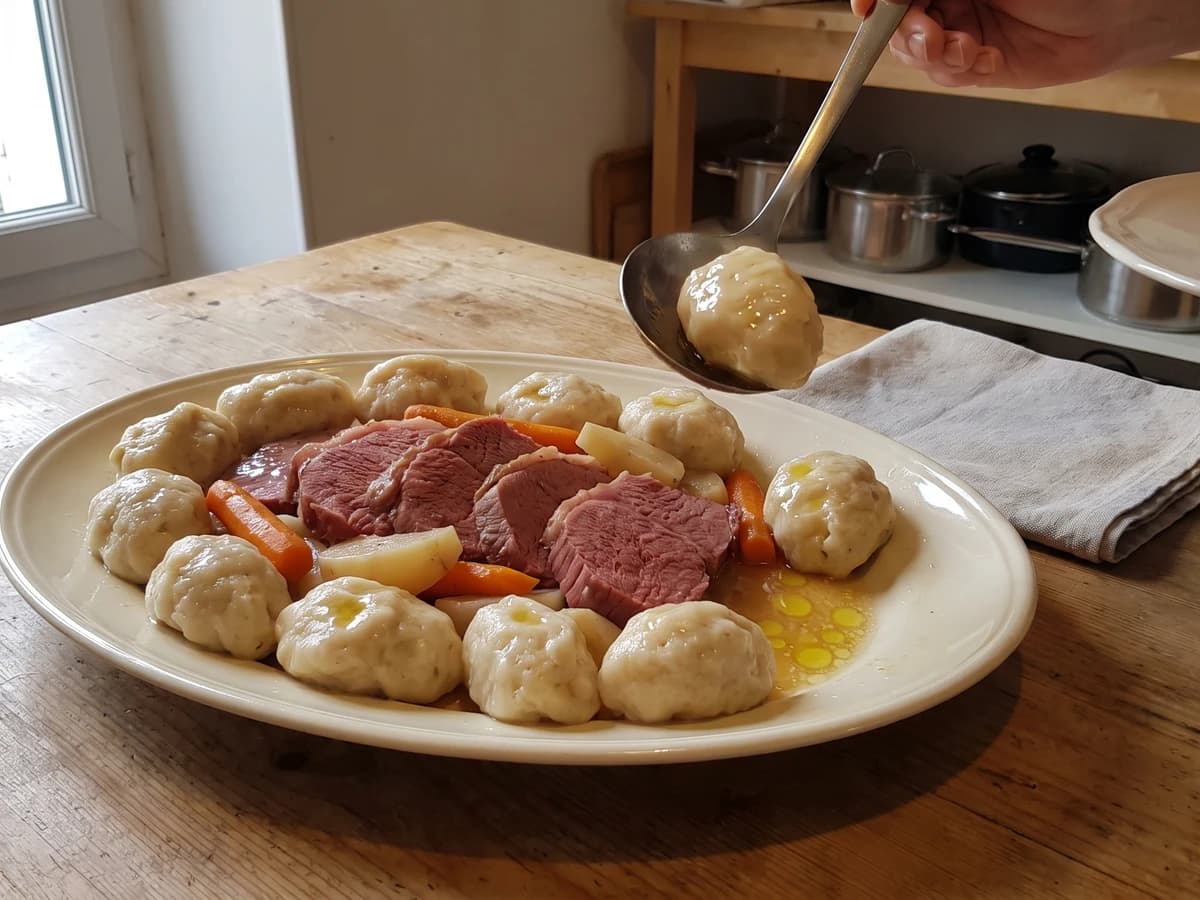
Boulettes au suif, poached beside salt beef, turn equal weights of flour and finely chopped suet into tender, rich dumplings. Keep the beef liquor at a bare tremble and the old garnish works beautifully at home.