Culinary Explorer
A cooking platform built around craft, culture, and the stories behind what we eat.
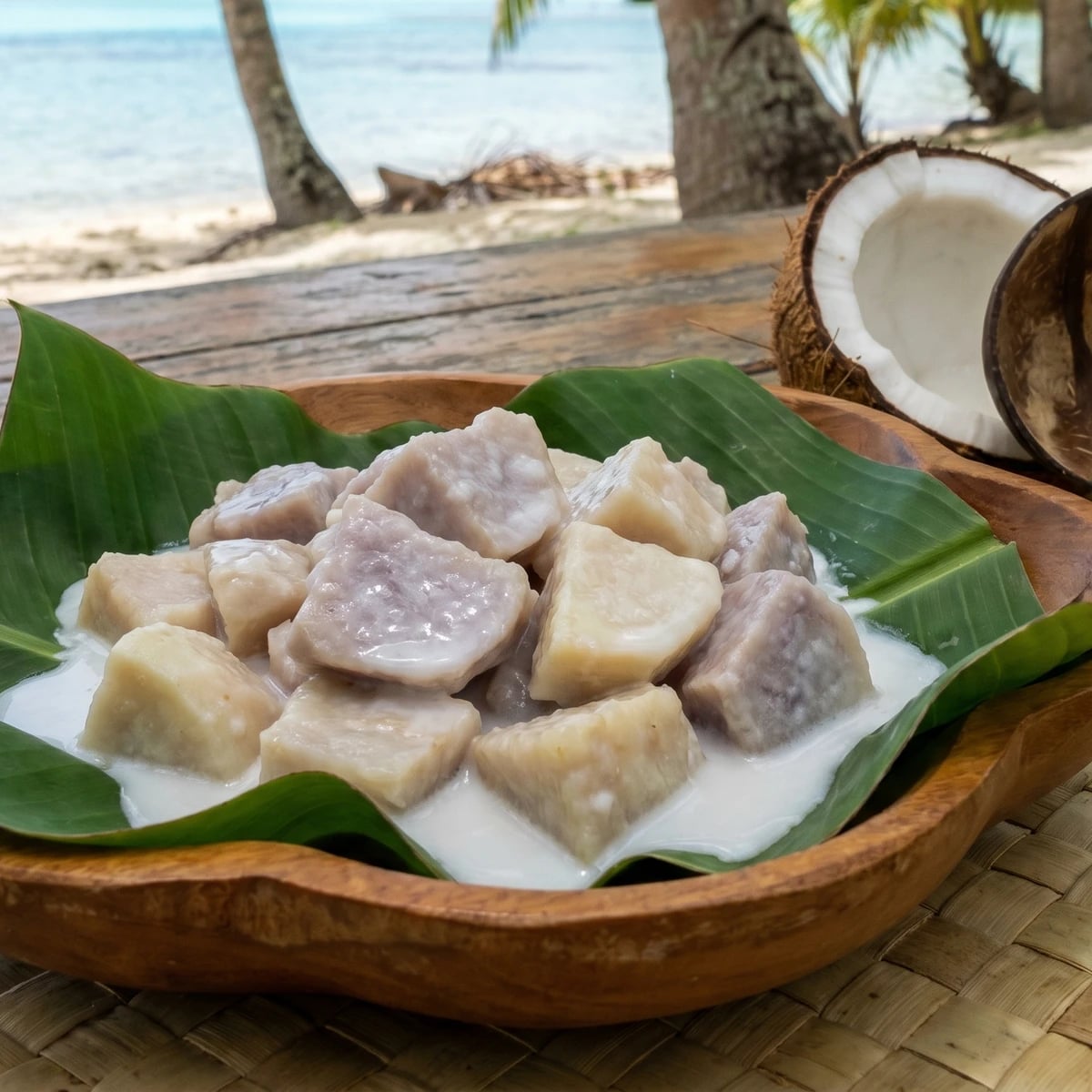
Taro au Lait de Coco (Tahitian Taro in Coconut Milk)
Created by Chef Makoa
Tahitian taro boiled soft, salted gently, and bathed warm in coconut milk until every piece shines. The fenua feeds first, the coconut finishes, and the bowl stays open.
The canoe carried the elder brother before it carried most of what people now call dinner. In Tahiti, the fenua, the land, gives taro in that old canoe-crop line, and this dish keeps it plain: boiled until the corm gives, then covered with coconut milk so the root drinks back richness from the tree beside it. One ocean, one canoe, one root.
I learned this kind of bowl by sitting quiet at other people's tables, which is the only smart thing for a Hawaiian man to do when the dish belongs to Tahiti. Back home I know Hāloa as our elder brother, and I know poi from the stone. In Tahiti the hand is different. The taro stays in pieces, soft and warm, and the coconut milk wraps it like kindness. Sāmoa has its faʻalifu talo, taro simmered with coconut cream. Tonga has talo with lolo. The Cooks, Hawaiʻi, Aotearoa, all of us keep the root close, but each island speaks it its own way.
So don't make this precious. Peel carefully, cook patiently, salt enough to wake the coconut, and serve it beside fish, roast pork, chicken, greens, or whatever your table already has. Eat what you have. The deep food can sit right next to the everyday plate, no shame in that. The respect is in knowing whose bowl this is, and in not rushing the taro when it is trying to come soft.
Ingredients
taro
Quantity
2 pounds
peeled and cut into 2-inch chunks
sea salt
Quantity
1 tablespoon
plus more to taste
water
Quantity
enough to cover the taro
| Ingredient | Quantity |
|---|---|
| taropeeled and cut into 2-inch chunks | 2 pounds |
| sea saltplus more to taste | 1 tablespoon |
| water | enough to cover the taro |
Where cooking meets culture.
Culinary guides, cultural storytelling, and the editorial depth that makes cooking meaningful.
Discover Culinary Explorer