Chef Fai
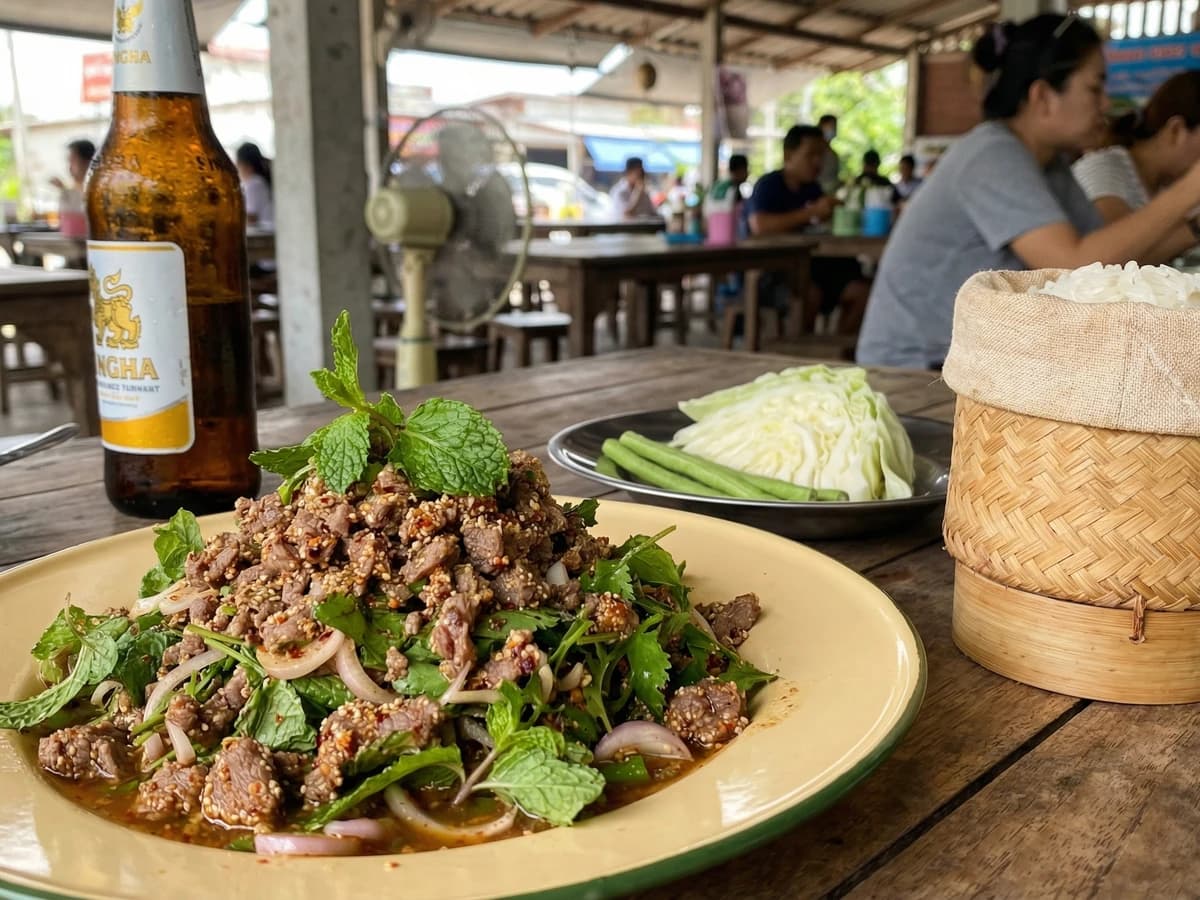
Isan Beef Larb (Larb Nua)
No sugar. That's the rule. Isan larb strips Thai cuisine down to three pillars: nam pla for salt, manao for sour, prik for heat, bound by the smoky crunch of freshly pounded khao khua. The absence defines the dish.
A cooking platform built around craft, culture, and the stories behind what we eat.
Created by
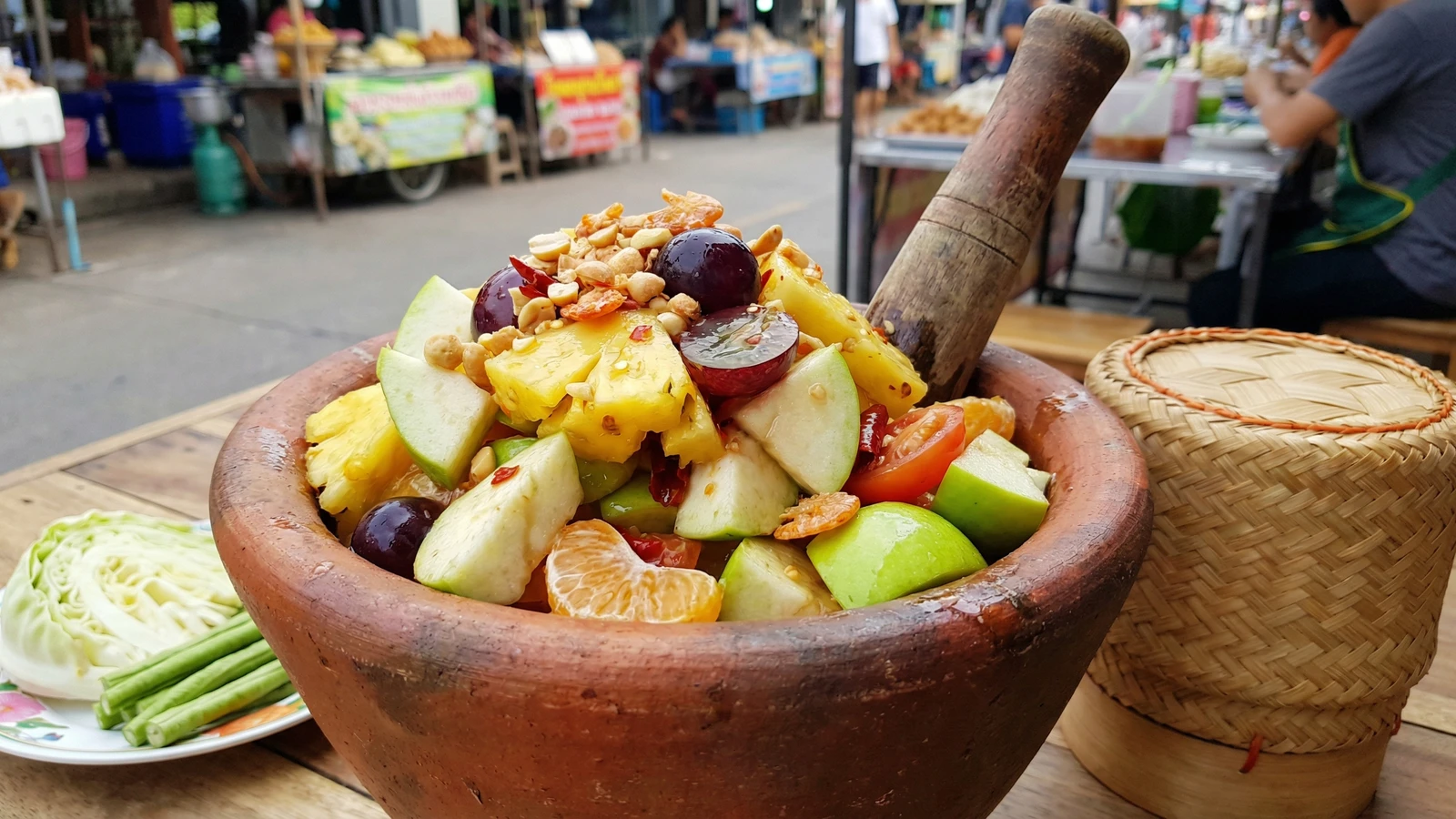
The same mortar, the same four pillars, the same technique. Swap green papaya for ripe tropical fruit and the system still holds: fish sauce for salt, palm sugar for sweet, lime for sour, chili for heat. Tam ponlamai is the proof.
Every tam starts the same way. Garlic and chilies into the krok din. Pound. That aromatic base is the foundation of every pounded salad in the som tam family, whether you're making papaya, corn, mango, or this one. Fruit. The ingredient changes. The principle doesn't.
Tam ponlamai is the dish people order when they think they can't handle the pla ra or the raw crab. It's the sweet one, the friendly one, the one your friend who's never eaten Isan food points at on the menu. And that's fine. Because here's the thing: it still follows every rule. Fish sauce for salt. Palm sugar for sweet. Lime for sour. Chili for heat. The four pillars don't care whether you're pounding green papaya or ripe guava. The system is the system.
What makes tam ponlamai work is the tension between sweet fruit and the savory dressing. Pineapple, green apple, guava, grape, tangerine. All of them carry natural sugars. When you hit them with fish sauce and lime and chili, those sugars don't disappear. They collide. You get salty-sweet-sour-spicy in every single bite, and the fruit's juice mixes with the dressing inside the mortar to create something no tossed salad could ever replicate. The krok bruises the fruit just enough to release juice without turning it to pulp. That irregular texture, some pieces crushed, some whole, that's the mortar doing what a bowl and spoon never could.
Ajarn always said the mortar teaches your hands what the food needs. With green papaya, you pound harder because the strands need to soften. With fruit, you hold back. Lighter strikes. More tossing, less crushing. The pestle asks different questions of different ingredients. Same tool, same principles, different conversation. That's what makes the tam family brilliant. It's one technique with infinite variations, and every single one proves that Thai food is a system, not a menu.
Tam ponlamai emerged as a natural extension of the Isan som tam tradition, where vendors began applying the pounded salad technique to whatever seasonal produce was abundant. The leap from shredded green papaya to ripe fruit is a distinctly Thai-market innovation, likely popularized in Bangkok som tam stalls during the 1990s as vendors competed to offer broader menus. The dish is sometimes called "som tam ponlamai" but the prefix "som" (sour) is technically inaccurate here because the fruit's sweetness, not sourness, is the dominant note. Purists in Isan simply call it "tam ponlamai" to distinguish it from the sour-forward papaya original.
Quantity
1 cup
cut into bite-sized wedges
Quantity
1/2 cup
cut into small chunks
Quantity
1/2 cup
cut into bite-sized wedges
Quantity
1/4 cup
halved
Quantity
3
membranes removed
Quantity
3 cloves
Quantity
3
Quantity
5
halved
Quantity
2
cut into 1-inch pieces
Quantity
2 tablespoons
Quantity
1 tablespoon
Quantity
2 tablespoons
Quantity
2 tablespoons
Quantity
3 tablespoons (about 2 limes)
Quantity
for serving
| Ingredient | Quantity |
|---|---|
| green apple (farang)cut into bite-sized wedges | 1 cup |
| fresh pineapple (sapparot)cut into small chunks | 1/2 cup |
| guava (farang)cut into bite-sized wedges | 1/2 cup |
| seedless grapes (a-ngun)halved | 1/4 cup |
| tangerine segments (som)membranes removed | 3 |
| garlic | 3 cloves |
| bird's eye chilies (prik khi nu) | 3 |
| cherry tomatoeshalved | 5 |
| long beans (thua fak yao)cut into 1-inch pieces | 2 |
| dried shrimp (goong haeng) | 2 tablespoons |
| unsalted roasted peanuts | 1 tablespoon |
| fish sauce (nam pla) | 2 tablespoons |
| palm sugar (nam tan pip) | 2 tablespoons |
| lime juice (nam manao) | 3 tablespoons (about 2 limes) |
| sticky rice (khao niew) | for serving |
Drop the garlic and bird's eye chilies into your clay mortar (krok din). Pound them to a rough paste. Chunks are fine. You want the garlic crushed open, the chilies split and releasing their heat. This is the same starting point for every tam in the family. The aromatic base is the kreung tam of the pounded salad world. It sets the foundation for everything that follows.
Add the long bean pieces to the mortar. Give them three or four firm strikes to crack them open. They should split slightly, not shatter. Then add the cherry tomato halves and press them with the pestle just enough to burst their skins and release juice. That tomato juice becomes part of the dressing. It's not decoration. It's structural.
Toss in the dried shrimp and peanuts. A few light strikes to crack them open. The peanuts should split, not crumble. The dried shrimp should fray apart, releasing that briny, concentrated ocean smell into the mortar. This is where the umami layer comes from. Don't skip it.
Add the palm sugar, fish sauce, and lime juice directly into the mortar. Use the pestle to stir and dissolve the sugar into the liquid. Taste this dressing before the fruit goes in. It should be: sweet first (this is tam ponlamai, sweetness leads), then sour from the lime, then salty from the fish sauce, then the chili heat building at the back of the throat. The fruit will add its own sugars, so don't worry if the dressing feels slightly sharp right now. It'll balance out.
Now add all the fruit: the apple wedges, pineapple chunks, guava wedges, grape halves, and tangerine segments. Here's where the technique changes from regular som tam. You are NOT pounding hard. Light strikes. More tossing than crushing. Use the pestle to press gently and your spoon to fold the fruit through the dressing. The goal is bruised, not broken. Some pieces should stay nearly intact. Others will crack and release juice into the dressing. That irregular texture, some crushed, some whole, is the signature of the krok. Ten to twelve gentle strikes with constant tossing. The fruit should glisten with dressing, the colors should be bright, and each piece should taste dressed all the way through.
Taste a piece of fruit with some dressing. The balance should be: sweet from the fruit and palm sugar, sour from the lime, salty from the fish sauce, spicy from the chili, with the crunch of peanuts and the brininess of dried shrimp threading through. If it's too sweet, add more lime. Too sour, a pinch more palm sugar. Too flat, a splash more fish sauce. Spoon the tam onto a plate or serve it straight from the mortar. Eat it with sticky rice (khao niew) and raw vegetables. Serve immediately. The fruit releases water every minute it sits. Five minutes and the dressing is diluted. Tam ponlamai waits for nobody.
1 serving (about 395g)
Culinary guides, cultural storytelling, and the editorial depth that makes cooking meaningful.
Discover Culinary ExplorerChef Fai
No sugar. That's the rule. Isan larb strips Thai cuisine down to three pillars: nam pla for salt, manao for sour, prik for heat, bound by the smoky crunch of freshly pounded khao khua. The absence defines the dish.
Chef Fai
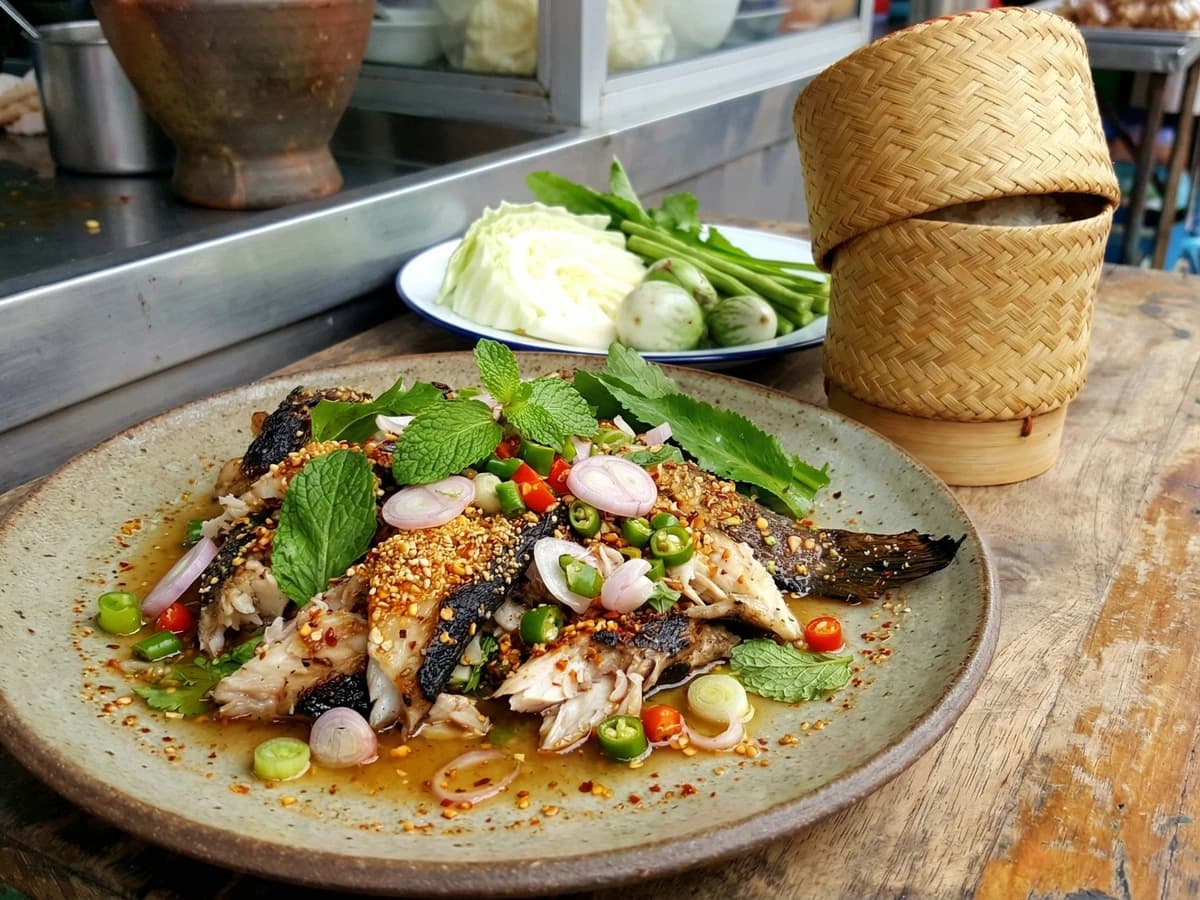
No sugar. That's the line between Isan and Central Thai larb. Grilled catfish flaked while warm, dressed with nam pla, manao, khao khua, prik pon, and a storm of fresh herbs. The plateau on a plate.
Chef Fai
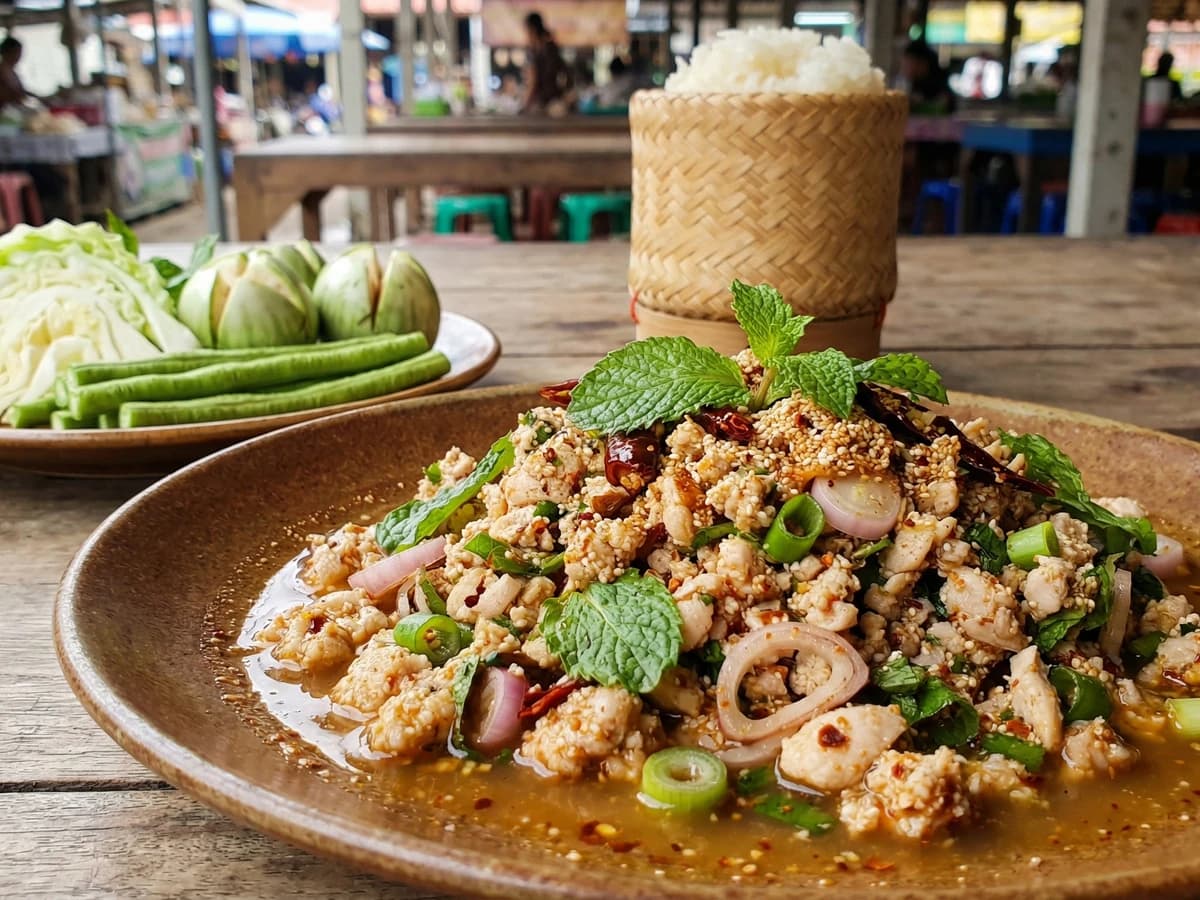
No sugar. That's the rule. Isan larb strips Thai cuisine down to three pillars: nam pla for salt, manao for sour, prik for heat, with khao khua tying it together in a way nothing else can.
Chef Fai
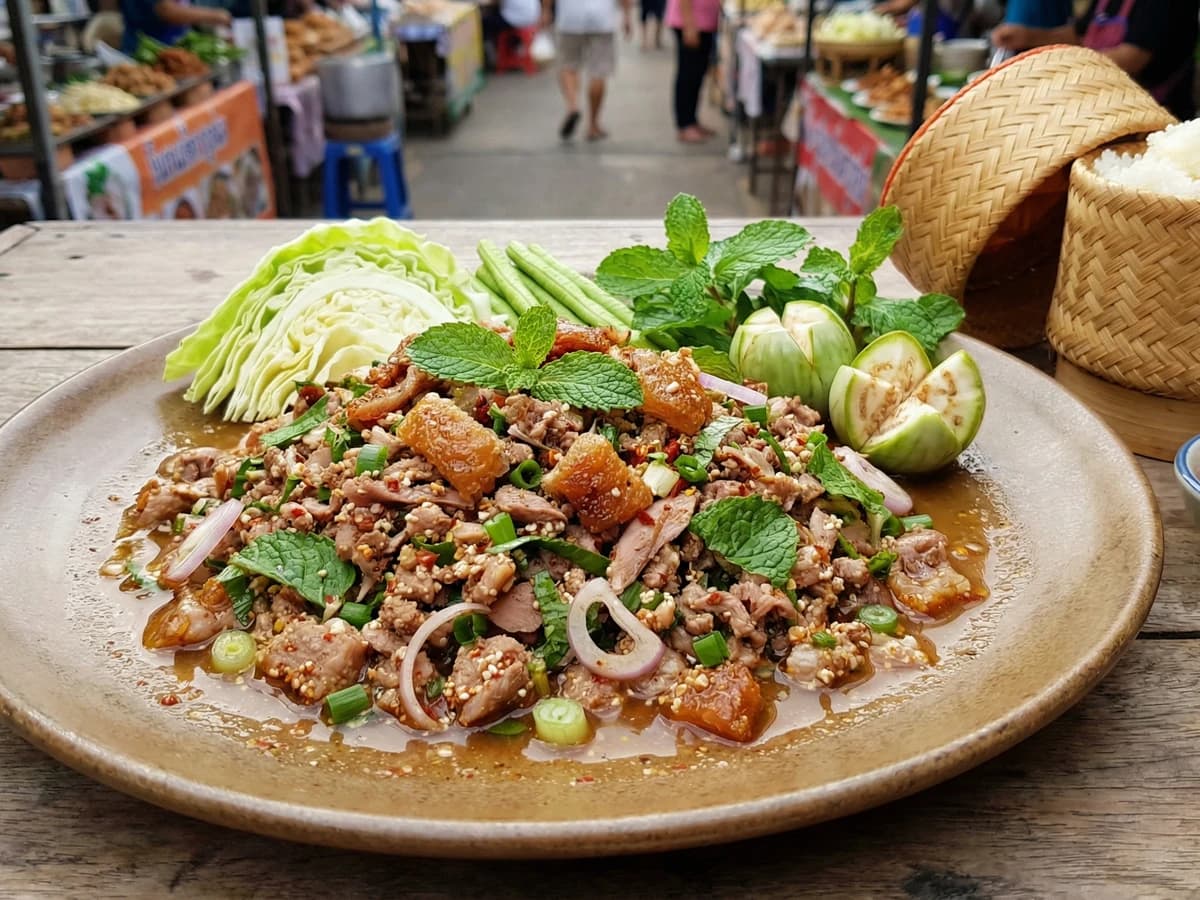
Duck brings gamey depth to the Isan larb formula. No sugar. Lime, fish sauce, khao khua, prik pon, and a wall of fresh herbs. This is the celebration table standard, and the governing rule is restraint.