Chef Fai
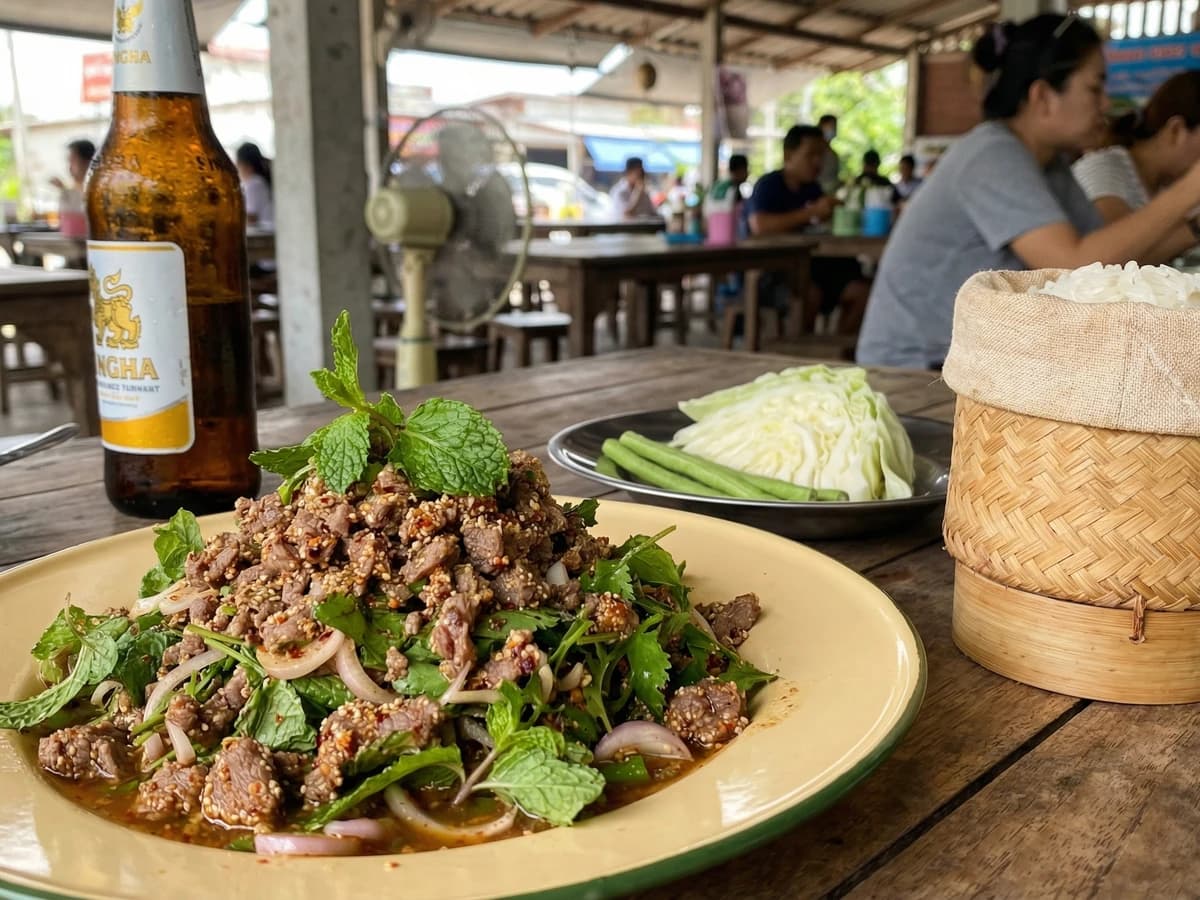
Isan Beef Larb (Larb Nua)
No sugar. That's the rule. Isan larb strips Thai cuisine down to three pillars: nam pla for salt, manao for sour, prik for heat, bound by the smoky crunch of freshly pounded khao khua. The absence defines the dish.
A cooking platform built around craft, culture, and the stories behind what we eat.

Created by
Fresh corn kernels pounded in the krok din, the natural sweetness of the corn doing half the four-pillar work. Less palm sugar, more lime. The tam technique carries anything, and seasonal corn might be its sweetest proof.
The tam technique is a principle, not a recipe. Garlic and chilies pounded first. Long beans and tomatoes bruised in. Main ingredient added last, pounded just enough to absorb the dressing without losing its identity. Fish sauce for salt. Palm sugar for sweet. Lime for sour. Chili for heat. That's the law. It works with green papaya. It works with green mango, glass noodles, dried squid, fruit. And it works brilliantly with fresh corn.
Tam khao pod is the dish that proves the system is flexible. Corn brings something papaya doesn't: sweetness. Real, natural, milky sweetness from a kernel that bursts when you bite it. That changes the balance. You pull back the palm sugar because the corn is doing that job already. The lime comes forward. The fish sauce gets sharper against all that sweetness. The chili cuts through. The four pillars are all present, but the ratios shift because the ingredient demands it. Ajarn always said: "If you understand the why, the how takes care of itself." This is what he meant.
I love teaching this dish at the Fai Thai workshops because it clicks for people. They've just spent thirty minutes learning som tam, they understand the mortar, they understand the rhythm. Then I hand them fresh corn and say: same technique, different ingredient, adjust the balance. You can see the moment it stops being a recipe and starts being a system. That's the whole point.
The pounding is gentle here. Corn kernels are fragile compared to green papaya. You want some to burst and release their starchy milk into the dressing, creating that slightly creamy quality that makes tam khao pod unique. But you want most of them whole, popping between your teeth. Bruise, don't pulverize. The texture should be irregular: wet, glossy, chunky, alive. If it looks uniform, you've gone too far.
Tam khao pod emerged from Isan street stalls as a seasonal variation during the corn harvest months (roughly June through September in Thailand's northeast), when fresh sweet corn floods the markets. The tam family of pounded salads is fundamentally an Isan and Lao tradition, and local vendors have always adapted the technique to whatever seasonal produce is available: unripe mango, cucumber, pomelo, even fruits like guava and apple. Corn became a favorite variation because its natural sweetness provided a counterpoint to the aggressive sour-salty-spicy dressing, making it approachable for customers who found the standard pla ra versions too intense.
Quantity
2 ears
kernels cut from the cob
Quantity
3 cloves
Quantity
3-5
Quantity
5
halved
Quantity
2
cut into 1-inch pieces
Quantity
2 tablespoons
Quantity
1 tablespoon
Quantity
1 1/2 tablespoons
Quantity
1 tablespoon
Quantity
2 tablespoons (about 2 limes)
Quantity
for serving
Quantity
for eating alongside
| Ingredient | Quantity |
|---|---|
| fresh sweet corn (khao pod)kernels cut from the cob | 2 ears |
| garlic | 3 cloves |
| bird's eye chilies (prik khi nu) | 3-5 |
| cherry tomatoeshalved | 5 |
| long beans (thua fak yao)cut into 1-inch pieces | 2 |
| dried shrimp (goong haeng) | 2 tablespoons |
| unsalted roasted peanuts | 1 tablespoon |
| fish sauce (nam pla) | 1 1/2 tablespoons |
| palm sugar (nam tan pip) | 1 tablespoon |
| lime juice (nam manao) | 2 tablespoons (about 2 limes) |
| sticky rice (khao niew) | for serving |
| raw cabbage, long beans, and fresh herbs | for eating alongside |
Shuck the corn and cut the kernels from the cob. You want fresh, raw kernels. If the corn is truly sweet and in season, use it raw. If it's starchy or off-season, blanch the ears in boiling water for two minutes, shock in cold water, then cut. The goal is kernels that pop when you bite them, juicy and firm. Canned corn is not an option. Don't even think about it. Fresh is the whole point of this dish.
In your clay mortar (krok din) with the wooden pestle, pound the garlic and chilies to a rough paste. Not a purée. You want crushed chunks, garlic cracked open, chilies split so the seeds scatter. The heat and the fragrance should hit you immediately. That's the aromatic base. Every tam starts here. Every single one.
Add the long bean pieces to the mortar. Give them four or five firm strikes. You're cracking them, not destroying them. They should split and soften slightly but hold their shape. The irregular texture matters. Some pieces cracked open, some just bruised. That's how tam works.
Drop in the dried shrimp and peanuts. A few light pounds to crack them open. The peanuts should split in half or into rough pieces. The dried shrimp should fray slightly, releasing their salty funk into the mortar. Don't pulverize. Three or four strikes.
Add the fish sauce, palm sugar, and lime juice to the mortar. Stir with the pestle to dissolve the sugar. Taste the dressing right now, before the corn goes in. Sour should lead. Salty right behind. Sweet barely there, because the corn is about to bring its own sweetness. If the dressing is already sweet, cut the palm sugar back. The corn does half the work for you. That's the beauty of this dish.
Add the corn kernels and halved cherry tomatoes to the mortar. Now the real work begins. Pound and toss. Strike down with the pestle, fold with a long spoon in your other hand. You're bruising the corn, not crushing it. Some kernels should burst and release their milky liquid into the dressing. Some should stay whole and pop when you bite them. The tomatoes should split and bleed juice into the mix. Ten to twelve strikes. Toss between each one. The dressing should coat everything. The mortar should look messy: glossy, irregular, alive.
Taste. Adjust. More lime if it's flat. More fish sauce if it needs salt. More chili if you want fire. The balance is yours. Serve directly from the mortar or scrape onto a plate. Eat immediately with sticky rice, raw cabbage, and long beans on the side. Tear off a piece of khao niew, pinch some tam on top, add a cabbage leaf. That's a bite. Tam khao pod does not hold. The corn will leach water within fifteen minutes and the dressing thins out. Pound it, eat it. That's the rule.
1 serving (about 250g)
Culinary guides, cultural storytelling, and the editorial depth that makes cooking meaningful.
Discover Culinary ExplorerChef Fai
No sugar. That's the rule. Isan larb strips Thai cuisine down to three pillars: nam pla for salt, manao for sour, prik for heat, bound by the smoky crunch of freshly pounded khao khua. The absence defines the dish.
Chef Fai
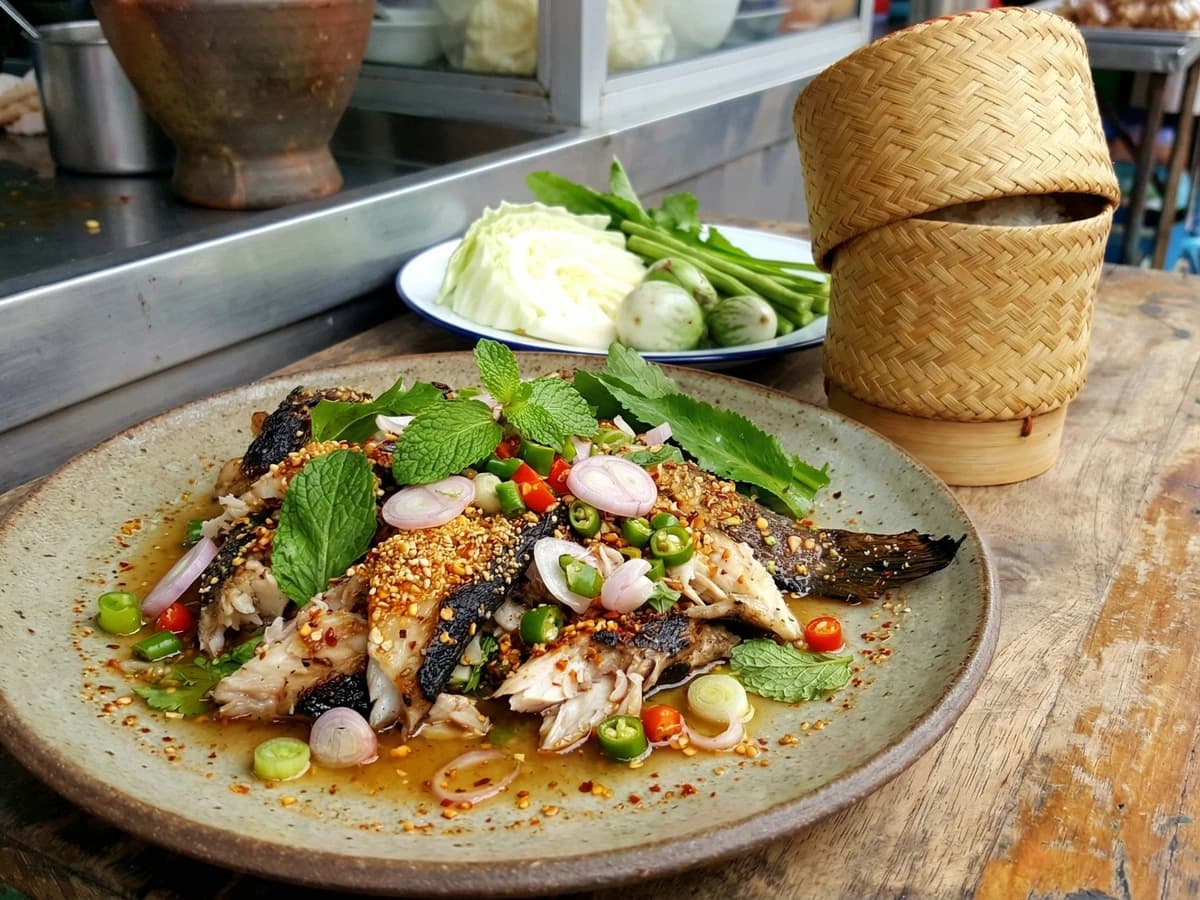
No sugar. That's the line between Isan and Central Thai larb. Grilled catfish flaked while warm, dressed with nam pla, manao, khao khua, prik pon, and a storm of fresh herbs. The plateau on a plate.
Chef Fai
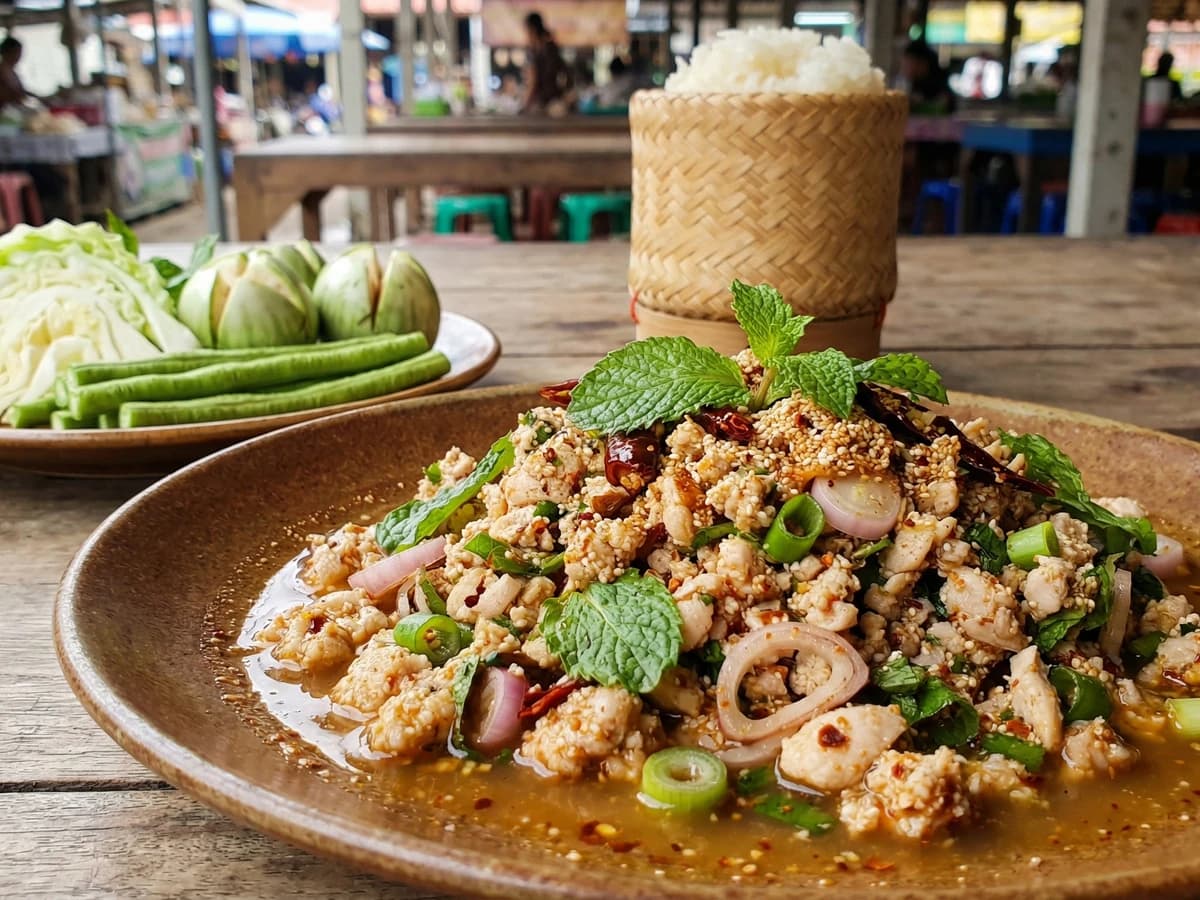
No sugar. That's the rule. Isan larb strips Thai cuisine down to three pillars: nam pla for salt, manao for sour, prik for heat, with khao khua tying it together in a way nothing else can.
Chef Fai
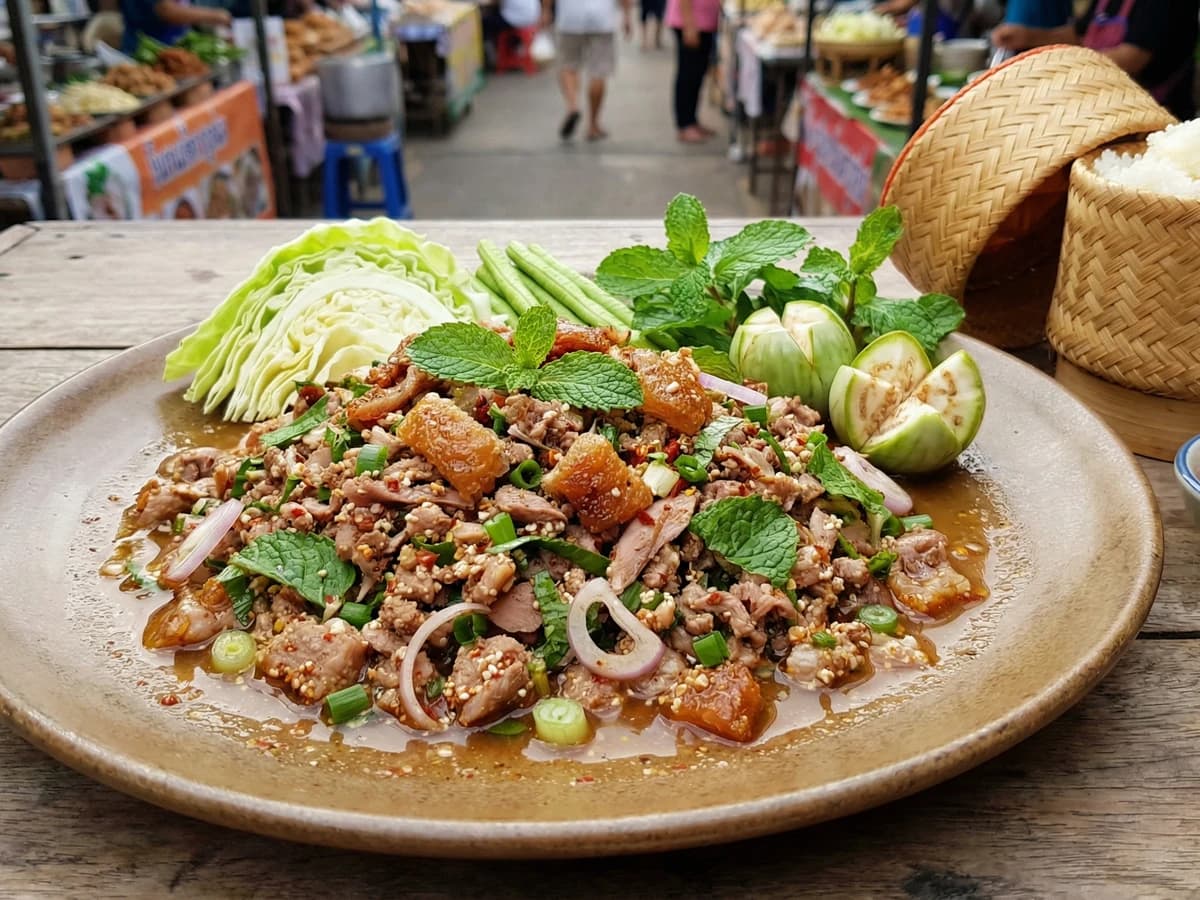
Duck brings gamey depth to the Isan larb formula. No sugar. Lime, fish sauce, khao khua, prik pon, and a wall of fresh herbs. This is the celebration table standard, and the governing rule is restraint.