
Chef Makoa
Popoi Mā (Marquesan Fermented Breadfruit Paste)
Marquesan popoi starts as mā, breadfruit kept sour in the old pit tradition, then pounded smooth with coconut cream until it sits soft, tangy, and ready for the whole table.
A cooking platform built around craft, culture, and the stories behind what we eat.

Created by
Niue's takihi layers the elder taro with ripe pawpaw and coconut cream, then bakes it slow until the starch softens, the fruit melts, and the whole pan turns glossy and gentle.
The canoe carried the root first, and every island learned to answer it with what that land could give. On Niue, that raised coral island between the western cousins and the Cooks, the answer is takihi: taro layered with ripe pawpaw, coconut cream poured over, then baked until sweet and savory sit in the same mouthful.
This is Niuean food, not a plain "Polynesian" plate. Same elder brother under the hand, but a different bowl from Hawaiian poi, Sāmoan palusami, Tongan lū, Cook Islands rukau, or Tahitian fāfā. Niue's hand here is quiet and smart: slice the taro thin so it cooks all the way through, let the pawpaw soften into the coconut, and give the bake enough time that no hard white heart stays in the root.
I cook this open-handed, because Niue's deep telling belongs first to tagata Niue, the Niuean people, and their old people should speak the ceremony. In a home oven, no shame. Eat what you have. The leaf, the coconut, the patience, those still carry the meaning.
Takihi belongs to Niue, a Polynesian raised coral island where taro, coconut, and pawpaw became a layered bake commonly served for family meals, church gatherings, and special occasions. Taro is one of the canoe crops carried through the voyaging migrations, while pawpaw arrived later and was folded into island cooking without shame, the way living foodways keep moving. The dish sits beside the wider Polynesian taro family, but it is Niue's own hand, not the Cook Islands, not Hawaiʻi, and not a nameless ocean plate.
Quantity
2 pounds
peeled and sliced 1/8 to 1/4 inch thick
Quantity
2
peeled, seeded, and sliced 1/4 inch thick
Quantity
2 cups
fresh-squeezed if possible
Quantity
1 teaspoon
Quantity
1 tablespoon
only if the pawpaw is not very sweet
Quantity
enough to line the dish
Quantity
1 tablespoon
for the dish
| Ingredient | Quantity |
|---|---|
| taropeeled and sliced 1/8 to 1/4 inch thick | 2 pounds |
| ripe but firm pawpaws (papayas)peeled, seeded, and sliced 1/4 inch thick | 2 |
| thick coconut creamfresh-squeezed if possible | 2 cups |
| sea salt | 1 teaspoon |
| raw sugar or brown sugar (optional)only if the pawpaw is not very sweet | 1 tablespoon |
| banana leaves or parchment | enough to line the dish |
| neutral oil or coconut oilfor the dish | 1 tablespoon |
Heat the oven to 350F. Oil a 9 by 13 inch baking dish, then line it with banana leaf if you have it, or parchment if you don't. The leaf gives a soft green smell and helps the edges stay gentle.
Peel the taro and slice it thin, no thicker than a quarter inch. Taro has to cook fully, all the way soft, or it can bite the throat and sit heavy. No blame the taro. If the slice is too thick, that's on our knife.
Lay down a shingled layer of taro, then a layer of pawpaw, then keep going until the dish is full, finishing with pawpaw on top where you can. Stir the salt into the coconut cream, add the sugar only if the fruit needs help, and pour it slowly over the layers so it slips down into the corners.
Cover the dish tight with banana leaf and foil, or parchment and foil, and bake for 60 minutes. The cover matters. It gives the taro time to soften before the top dries out.
Uncover and bake 20 to 30 minutes more, until a knife slides through the taro with no hard center, the pawpaw has slumped soft, and the coconut cream is glossy around the edges. Let it rest 15 minutes so the layers settle before you cut.
Spoon or cut the takihi into generous pieces and serve it warm or room temperature. It belongs beside roasted meat, fish, greens, or a simple plate of rice. Deep food is not precious. It feeds the table.
1 serving (about 225g)
Culinary guides, cultural storytelling, and the editorial depth that makes cooking meaningful.
Discover Culinary ExplorerChef Makoa
Marquesan popoi starts as mā, breadfruit kept sour in the old pit tradition, then pounded smooth with coconut cream until it sits soft, tangy, and ready for the whole table.

Chef Makoa
Whole taro roasted firm the Marquesan way, peeled warm, salted simply, and served beside fish with fresh miti haari, the coconut sauce that keeps the table generous.

Chef Makoa
Whole Sāmoan ʻulu cooked in the umu until the skin chars black and the flesh goes golden and soft. One ocean, one canoe, one root, brought home to the table.
Chef Juliette
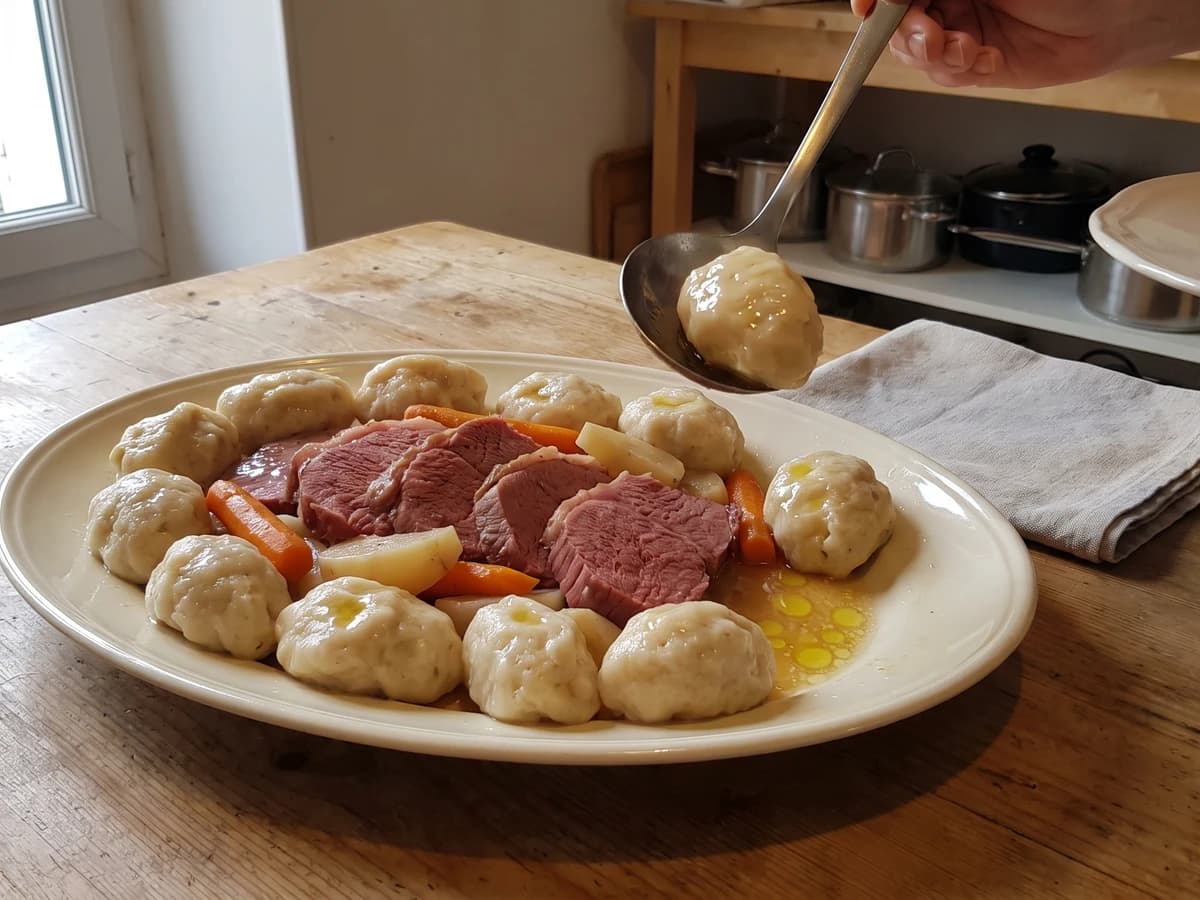
Boulettes au suif, poached beside salt beef, turn equal weights of flour and finely chopped suet into tender, rich dumplings. Keep the beef liquor at a bare tremble and the old garnish works beautifully at home.