Culinary Explorer
A cooking platform built around craft, culture, and the stories behind what we eat.
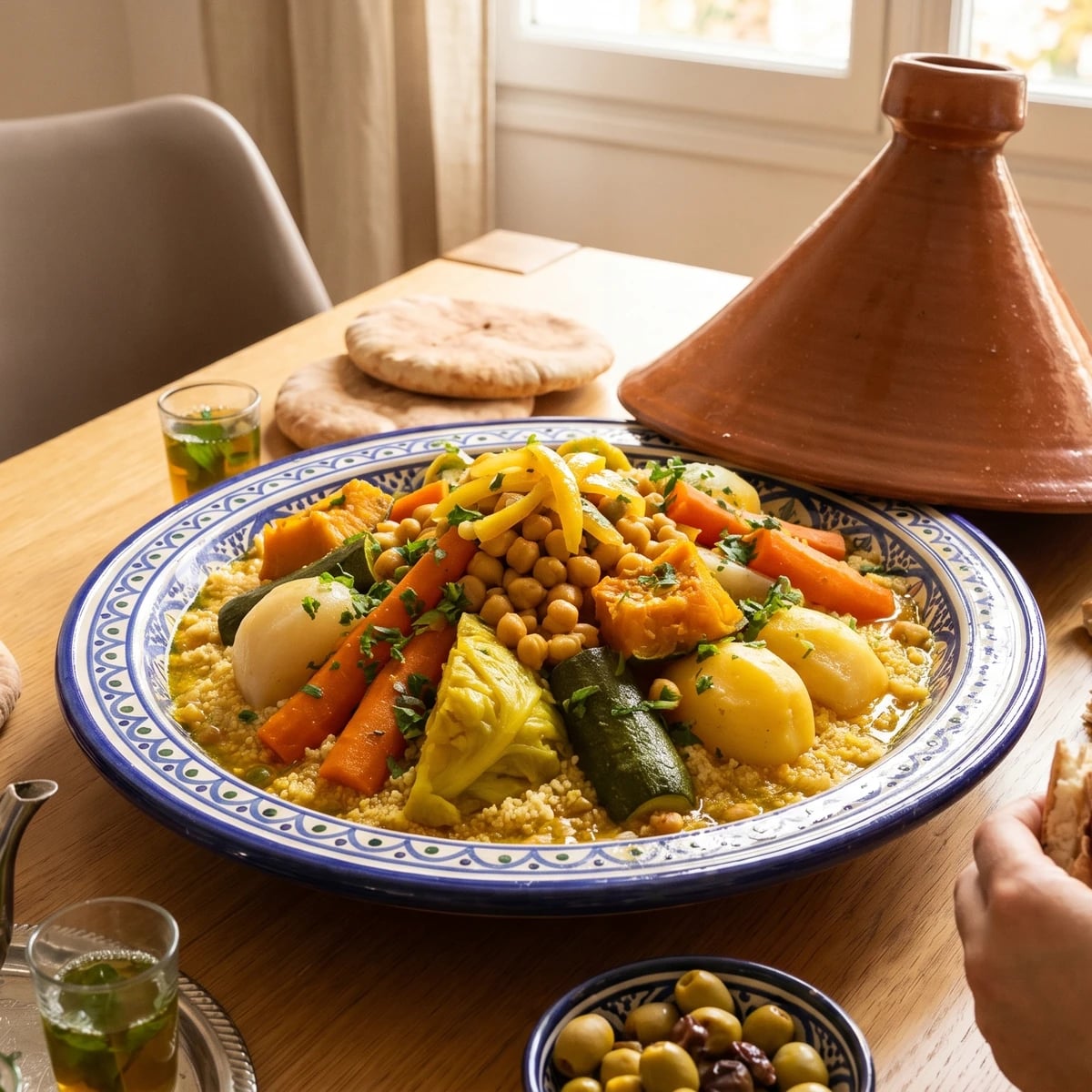
Tagine de Légumes
Created by Chef Zohra
A meatless vegetable tagine where carrots, turnips, zucchini, pumpkin, cabbage, and chickpeas settle into saffron broth, then meet couscous steamed in passes, the grain loose enough to pour.
I don't ask this tagine to be the same in January and July. The market would laugh at me. In cold months, carrots, turnips, potatoes, and pumpkin carry the pot; when the stalls turn green, zucchini comes in softer and later. The number seven is a blessing and a rhythm, not a police officer with a notebook.
Get the vegetables honest first. No gesture rescues a tired turnip or powdered yellow pretending to be saffron. Bloom real saffron threads, use preserved lemon for its salt and perfume, and let the ras el hanout be small but true, from a merchant who'll tell you what is in it. Avec le ras el hanout, on ne triche pas, with ras el hanout, you don't cheat.
Build the tagine like a little mountain: onions and tomatoes below, firm vegetables closest to the broth, tender zucchini and pumpkin higher where they soften without drowning. If you're serving couscous, steam the grain in passes over the broth. Never boil it. Boil it and you make porridge, steam it and every grain keeps its dignity.
This is weeknight food in my house, but it feeds like welcome. Put the couscous in the middle, spoon the vegetables over it, tear the khobz anyway, and leave room for one more person. Une table, c'est une porte qu'on laisse ouverte, a table is a door you leave open.
Ingredients
medium-grain couscous
Quantity
500g
not instant
olive oil
Quantity
4 tbsp
divided
saffron threads
Quantity
1 large pinch
bloomed in 3 tbsp warm water
| Ingredient | Quantity |
|---|---|
| medium-grain couscousnot instant | 500g |
| olive oildivided | 4 tbsp |
| saffron threadsbloomed in 3 tbsp warm water | 1 large pinch |
Where cooking meets culture.
Culinary guides, cultural storytelling, and the editorial depth that makes cooking meaningful.
Discover Culinary Explorer