
Chef Lupita
Birria Tacos with Consome
Jalisco's goat birria, born around Cocula and carried into Guadalajara's markets, slow-braised in ancho, guajillo, cascabel, and chile de arbol, then tucked into corn tortillas crisped in its own red fat.
A cooking platform built around craft, culture, and the stories behind what we eat.
Created by
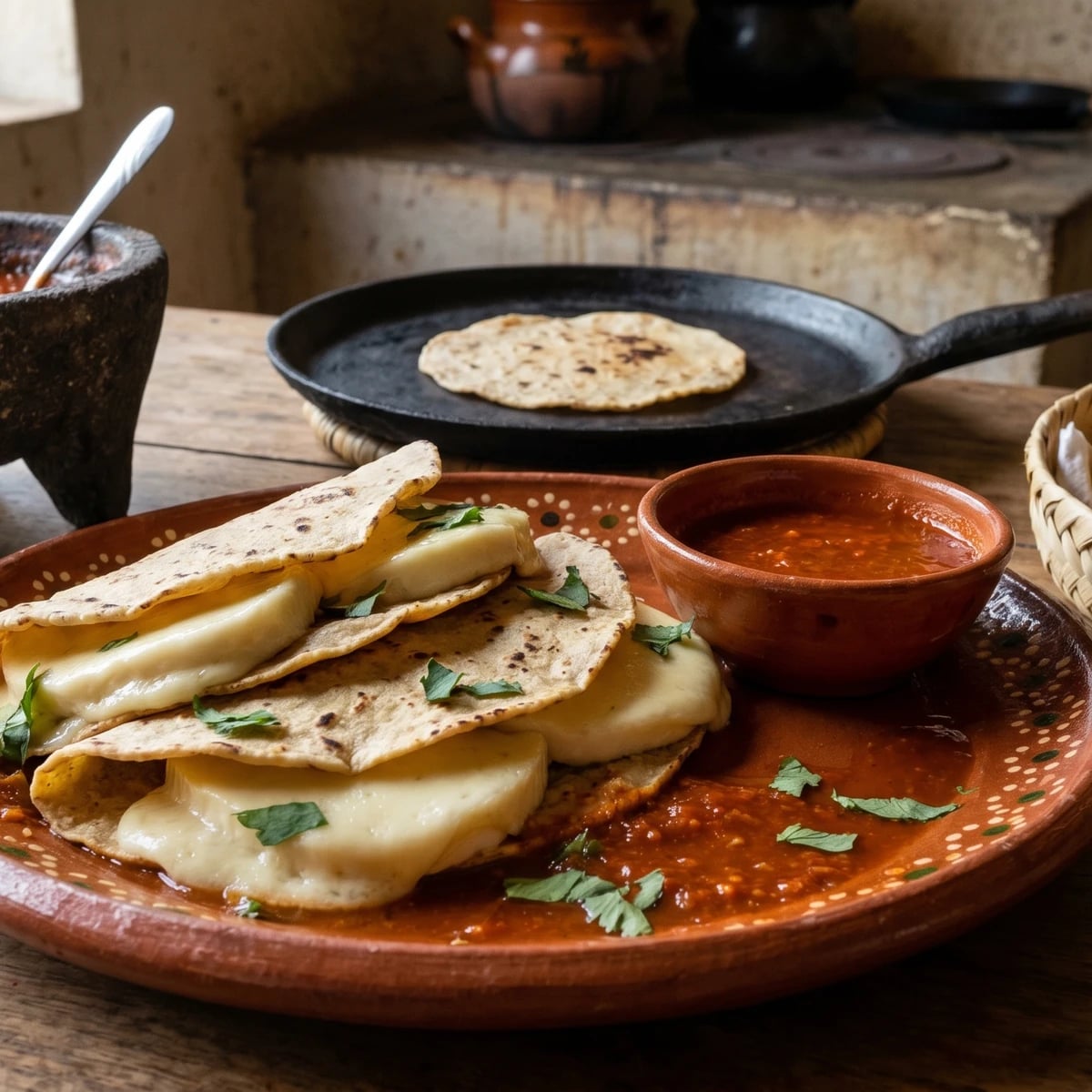
From Chiapas, the Ocosingo taco is hand-pressed corn, a slab of double-cream cheese softened on the comal, and chile simojovel salsa that cuts the richness cleanly.
Chiapas, the Ocosingo valley where Los Altos start dropping toward the Selva Lacandona, owns this taco. The cheese tells you where you are before the tortilla even hits the comal. Queso de Bola de Ocosingo has a firm rind and a creamy double-cream center, made from the milk of local cattle. It is not Yucatán's Edam ball and it is not supermarket melting cheese. Cada estado, su propia cocina.
In Ocosingo I watched women in market kitchens cut the cheese in thick slices, not grated into nothing, and lay it on hand-pressed corn tortillas until the center softened and the edges took a little color. The salsa was chile simojovel from the north of Chiapas, toasted fast, ground with roasted tomato, garlic, and salt. That chile is small but it speaks clearly. It cuts the richness without turning the taco into a dare.
This is weeknight food, but do not confuse quick with careless. The tortilla must be corn and the comal must be hot. The cheese should slump, not leak into oil. The salsa should taste of chile first, tomato second. No me vengas con atajos. If you know the market, this taco takes less than an hour and tastes like the road between San Cristóbal and Ocosingo.
Queso de Bola de Ocosingo developed in the 20th century from the cattle ranching economy of eastern Chiapas, where small dairies shaped a double-cream cow's milk cheese with a firm aged shell and a soft center. Local producers later organized around the name as a collective mark to distinguish it from Yucatán's imported-style queso de bola, which is Edam and belongs to a different food history. Chile simojovel comes from Simojovel de Allende in northern Chiapas, a region better known for amber, and its use in table salsas shows how one state can carry several pantry identities at once.
Quantity
12
stemmed; shake out some seeds for less heat
Quantity
3, about 12 ounces
Quantity
1/4 medium
peeled
Quantity
2
unpeeled
Quantity
3/4 teaspoon, plus more to taste
for the salsa
Quantity
1 teaspoon
only if the tomatoes taste flat
Quantity
1 pound
kept covered
Quantity
2 cups
use only if fresh masa is unavailable
Quantity
1 1/2 cups
for masa harina dough
Quantity
1/2 teaspoon
for the masa
Quantity
12 ounces
cut into 1/4-inch slices, firm rind left on if tender
Quantity
8
torn
Quantity
1 tablespoon
softened
Quantity
for serving
| Ingredient | Quantity |
|---|---|
| dried chile simojovelstemmed; shake out some seeds for less heat | 12 |
| ripe Roma tomatoes or Chiapas tomate riñón | 3, about 12 ounces |
| white onionpeeled | 1/4 medium |
| garlic clovesunpeeled | 2 |
| kosher saltfor the salsa | 3/4 teaspoon, plus more to taste |
| fresh lime juice (optional)only if the tomatoes taste flat | 1 teaspoon |
| fresh nixtamalized corn masakept covered | 1 pound |
| masa harina (optional)use only if fresh masa is unavailable | 2 cups |
| warm water (optional)for masa harina dough | 1 1/2 cups |
| fine sea saltfor the masa | 1/2 teaspoon |
| Queso de Bola de Ocosingocut into 1/4-inch slices, firm rind left on if tender | 12 ounces |
| fresh epazote leavestorn | 8 |
| manteca de cerdosoftened | 1 tablespoon |
| lime halves (optional) | for serving |
If you have fresh nixtamalized corn masa, knead in the fine sea salt with a teaspoon or two of warm water if the masa feels dry. If you are using masa harina, mix it with the warm water and fine sea salt, knead for two minutes, then cover and rest for ten minutes. The masa should feel soft, like your earlobe, not sticky and not cracked. Corn is the body of this taco. Flour tortillas belong to another geography.
Heat a dry comal over medium-high heat. Roast the tomatoes, onion, and unpeeled garlic, turning them until the tomatoes have blackened spots, the onion softens at the edges, and the garlic gives when pressed. This takes 8 to 10 minutes. The char is not decoration. It gives the salsa the cooked depth that a raw blender salsa will not have.
Lower the comal to medium. Toast the chile simojovel for 5 to 8 seconds per side, just until the color deepens and the smell turns nutty. Do not walk away. These chiles are small and they burn fast. Put them in a bowl and cover with hot water for ten minutes, then drain.
Peel the roasted garlic. In a molcajete, grind the garlic with the kosher salt until it becomes a paste. Add the softened chile simojovel and grind until the skins break down. Work in the onion and tomatoes, crushing them into a rough salsa with body. If you use a blender, pulse, do not puree it into baby food. Taste. Add the lime juice only if the tomatoes are dull. The salsa should taste first of chile, then roasted tomato, then salt.
Divide the masa into 8 balls. Press each one between plastic in a tortilla press until it is about 5 1/2 inches wide. Cook each tortilla on the hot comal for 30 seconds, flip, cook 45 seconds, then flip once more until it puffs in spots and shows light brown freckles. Keep the tortillas wrapped in a servilleta so they stay flexible.
Rub the comal with a very thin film of manteca de cerdo. Place two cooked tortillas on the comal, lay slices of Queso de Bola de Ocosingo on one half of each tortilla, and scatter a torn epazote leaf over the cheese. Fold the tortillas and cook 60 to 90 seconds per side, pressing lightly with a spatula, until the cheese softens and the tortilla takes on deeper brown spots. The cheese should slump, not run away from you.
Serve the tacos immediately on a warm clay plate with the chile simojovel salsa in a molcajete and lime halves on the side. Spoon the salsa over the taco as you eat, not so early that the tortilla turns soggy. This is quick food, yes, but quick does not mean careless. Así se hace y punto.
1 serving (about 265g)
Culinary guides, cultural storytelling, and the editorial depth that makes cooking meaningful.
Discover Culinary Explorer
Chef Lupita
Jalisco's goat birria, born around Cocula and carried into Guadalajara's markets, slow-braised in ancho, guajillo, cascabel, and chile de arbol, then tucked into corn tortillas crisped in its own red fat.

Chef Lupita
Sonora's working morning burrito: chicharrón de cáscara stewed in chile colorado with diced potato, rolled tight in a paper-thin tortilla sobaquera and eaten standing up at the carreta.

Chef Lupita
Mocorito's pork chilorio, shredded and confited in lard with chile ancho and pasilla, rolled into a thin handmade flour tortilla. The burrito Sinaloa sends out into the world.

Chef Lupita
Sonora's morning burrito of mashed pinto frijoles puercos and melted queso asadero, wrapped in a paper-thin sobaquera and seared on the comal until the cheese pulls in long strings.