Culinary Explorer
A cooking platform built around craft, culture, and the stories behind what we eat.
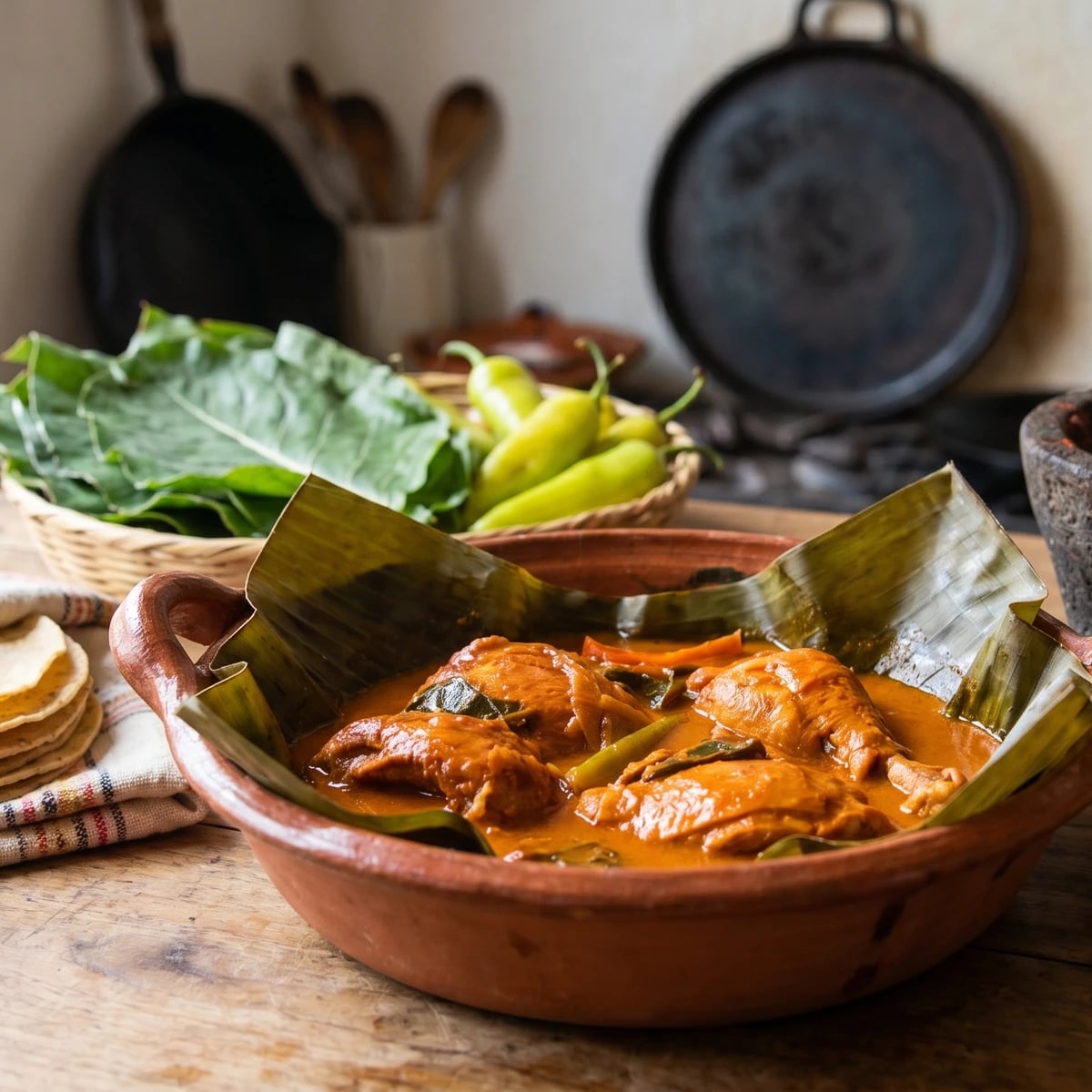
Tabasco Turkey in Banana Leaf (Mone de Pavo)
Created by Chef Lupita
Tabasco's Chontal turkey parcel, stained red with achiote and wrapped with hoja de momo in banana leaf, steamed until the masa catches the juices and the meat yields.
This is Tabasco, the wet lowland, especially the Chontalpa and the Yokot'an towns around Nacajuca, Jalpa de Mendez, and Centla. Mone de pavo lives where banana leaves grow behind the house, where hoja de momo is not a garnish but a kitchen tool, and where the wrapped parcel goes into the steamer for a holiday table without anyone needing to announce it.
The flavor is not about fire. Not all Mexican food is trying to burn your mouth. Here the authority comes from achiote, naranja agria, chile dulce tabasqueno, tomato, and the perfume of hoja de momo, also called hoja santa or acuyo in other states. The chile amashito gives bite if you want it, but the dish belongs to the leaf and the lowland.
I learned this style from women who folded banana leaves as if they were sewing cloth. Tight corners. No leaking. No careless tearing. The masa is not there to make a tamal; it is there to drink the turkey juices and turn them into a thick red sauce inside the parcel. If you skip the leaf, you lose the dish. If you skip the momo, you lose Tabasco. Cada estado, su propia cocina.
My mother was from Jalisco, so she did not make mone. But in her notebook she wrote one line under a Tabasco recipe: "la hoja manda." The leaf commands. She was right. Saber cocinar es saber vivir.
Ingredients
bone-in turkey thighs and drumsticks
Quantity
4 1/2 pounds
cut into large serving pieces
kosher salt
Quantity
2 1/2 teaspoons, divided, plus more to taste
achiote paste (recado rojo)
Quantity
6 tablespoons
| Ingredient | Quantity |
|---|---|
| bone-in turkey thighs and drumstickscut into large serving pieces | 4 1/2 pounds |
| kosher salt | 2 1/2 teaspoons, divided, plus more to taste |
| achiote paste (recado rojo) | 6 tablespoons |
Where cooking meets culture.
Culinary guides, cultural storytelling, and the editorial depth that makes cooking meaningful.
Discover Culinary Explorer