
Chef Lesia
Banosh (банош, Carpathian cornmeal porridge)
Cornmeal and sour cream go over the flame pale and separate, then suddenly turn glossy, yellow, and almost stubborn. Stir one way only, the shepherds say, and listen.
A cooking platform built around craft, culture, and the stories behind what we eat.
Created by
Curd has a grain, and zapikanka teaches you to respect it. Rub it smooth first, let the semolina swell, and the slice turns golden-edged, tender, and clean.
Curd cheese looks soft until you bake it badly. Then every little grain announces itself. Rub the syr, our fresh curd cheese, through a sieve first and it changes character: no lumps, no wet pockets, just a pale, even crumb that cuts clean but still trembles a little on the spoon.
This is breakfast, after-school food, budget food, comfort food, the thing you bake when there is curd in the fridge and no one has the patience to stand at the pan making syrnyky one by one. The semolina matters because it drinks what the curd gives off. Let it sit before baking, and the batter thickens from loose and glossy to something that falls from the spoon slowly. Aunt Nadia wrote only "leave it until it knows itself," which was unhelpful and also correct.
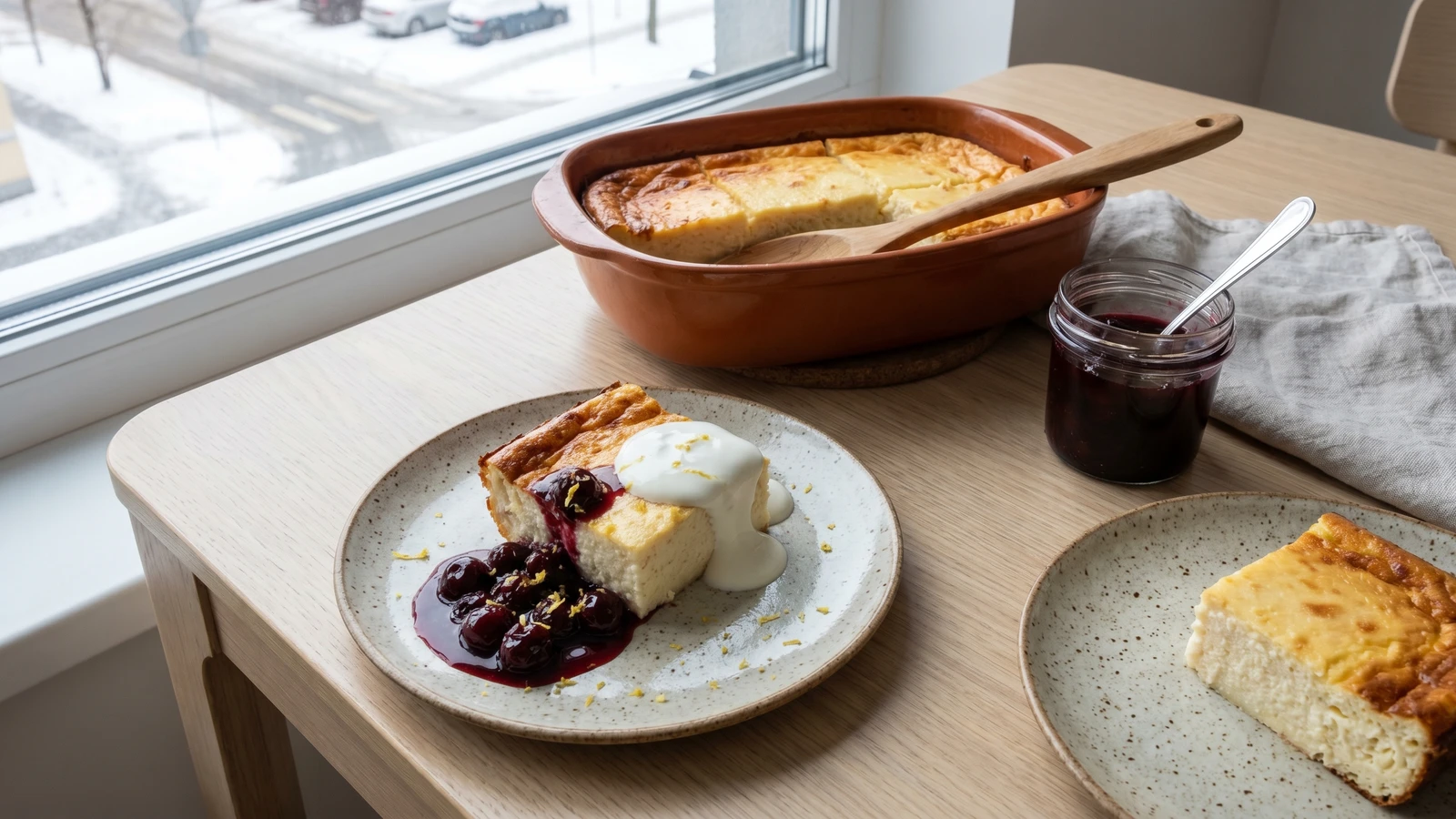
Serve it warm or cold, with smetana and sour cherry preserves if you have them. If one edge browns more than the other, give that piece to the person who hovers in the kitchen. They earned it.
Syrna zapikanka belongs to Ukraine's long fresh-curd tradition, where soured milk was drained into syr for everyday dishes from pan-fried syrnyky to baked puddings. Soviet-era canteens made zapikanka famous as a standardized nursery and school breakfast, but home versions stayed softer and more generous, often with raisins, sour cherries, or lemon depending on the region and season.
Quantity
800g
well drained
Quantity
3 large
Quantity
100g
Quantity
80g
Quantity
150g, plus more to serve
Quantity
50g, plus more for the dish
melted and cooled
Quantity
1 teaspoon
Quantity
1 teaspoon
finely grated
Quantity
1/2 teaspoon
Quantity
80g
soaked and drained
Quantity
1 tablespoon
for dusting the dish
Quantity
to serve
| Ingredient | Quantity |
|---|---|
| full-fat fresh curd cheese or farmer's cheesewell drained | 800g |
| eggs | 3 large |
| sugar | 100g |
| semolina | 80g |
| smetana or sour cream | 150g, plus more to serve |
| unsalted buttermelted and cooled | 50g, plus more for the dish |
| vanilla sugar or vanilla extract | 1 teaspoon |
| lemon zestfinely grated | 1 teaspoon |
| fine sea salt | 1/2 teaspoon |
| raisins (optional)soaked and drained | 80g |
| semolina or fine breadcrumbsfor dusting the dish | 1 tablespoon |
| sour cherry preserves, honey, or extra smetana (optional) | to serve |
If your curd cheese looks wet, set it in a sieve lined with a clean cloth and let it drain until it no longer weeps whey into the bowl. It should feel damp and soft, not soupy. Too much water makes the zapikanka slump instead of slice.
Push the curd through a fine sieve or work it briefly with a potato masher until the grains soften. This is the step that decides the crumb. Leave the curd rough and the pudding bakes patchy; smooth it first and it sets evenly, tender from edge to middle.
Beat the eggs with the sugar until the bowl looks pale and loose, then stir in the smetana, melted butter, vanilla, lemon zest, and salt. Fold this into the curd, then stir in the semolina and raisins if you're using them. The batter should be thick but still spoonable.
Leave the bowl covered for about twenty minutes, until the semolina has drunk from the curd and the mixture falls from the spoon more slowly. Watch the texture, not the clock. It should look settled, glossy, and a little heavier than when you mixed it.
Butter a medium baking dish and dust it with semolina or fine breadcrumbs, tipping out the excess. Spoon in the curd mixture and smooth the top with the back of a wet spoon. Don't press it flat like plaster; just settle it into the corners.
Bake at 180C until the edges are golden, the middle is set with a small wobble, and the smell changes from milky to warm and cake-like. If you tap the dish gently, the center should tremble, not slosh. Let it rest before cutting so the crumb gathers itself.
Cut into big squares and serve warm, room temperature, or cold from the fridge. Spoon smetana over the top, add sour cherry preserves or honey if you like, and let the plate look like breakfast rather than a pastry case. Enough for eight guests or one hungry Ukrainian.
1 serving (about 160g)
Culinary guides, cultural storytelling, and the editorial depth that makes cooking meaningful.
Discover Culinary ExplorerChef Lesia
Cornmeal and sour cream go over the flame pale and separate, then suddenly turn glossy, yellow, and almost stubborn. Stir one way only, the shepherds say, and listen.

Chef Lesia
A benderyk is a crepe taught to hold its corners: soft pancake, peppery meat, egg-dipped edges fried crisp, and the same triangular confidence my hands learned at the varenyky table.

Chef Lesia
Raw potato turns sly the moment you grate it: wet, starchy, already darkening. Deruny reward speed, hot oil, and the courage to leave the edges alone until they crisp.

Chef Lesia
Pumpkin goes into the pot pale and stubborn, then gives itself up slowly to milk and millet until the whole breakfast turns deep orange, sweet, and spoon-thick.