
Chef Dean
Classic Potato Latkes
Shatteringly crisp potato pancakes with lacy golden edges and tender, onion-flecked centers. This is the latke your grandmother made if she knew her way around a box grater and a heavy skillet.
A cooking platform built around craft, culture, and the stories behind what we eat.

Created by
Burnished orange latkes with lacey crisp edges and tender centers, honoring the Hanukkah tradition of foods fried in oil while bringing the natural sweetness of American sweet potatoes to the holiday table.
The latke carries centuries of meaning in a single crisp bite. Jewish cooks across Eastern Europe transformed humble potatoes into something celebratory, frying them in oil to commemorate the miracle of Hanukkah. The tradition traveled to American shores, where it met our native sweet potato and something wonderful happened.
Sweet potato latkes are not a departure from tradition. They're an extension of it. The same technique applies: grate, squeeze dry, bind with egg and a whisper of flour, then fry until the edges turn golden and the centers stay tender. What changes is the color, that gorgeous sunset orange, and a natural sweetness that plays beautifully against sour cream or applesauce.
I've made these for gatherings of six and gatherings of sixty. The secret to serving a crowd without losing your mind is understanding what can be done ahead. Grate your sweet potatoes, squeeze them bone-dry, and hold them covered for several hours. Fry in batches, keeping finished latkes warm on a wire rack in a low oven. They'll stay crisp while you work through the rest. This is food meant to bring people together. The cook should be at the table too, not chained to the stove.
One note on ingredients: sweet potatoes contain more moisture and sugar than russet potatoes. Both affect how they fry. You'll need to be more aggressive about squeezing out liquid, and watch your oil temperature carefully. Sugar burns. Keep your heat steady at 350 degrees and you'll produce latkes that are crisp without bitterness.
Quantity
2 pounds (about 3 medium)
Quantity
1 medium
Quantity
2
lightly beaten
Quantity
3 tablespoons
Quantity
1 teaspoon
Quantity
1/2 teaspoon
Quantity
1/4 teaspoon
Quantity
pinch
Quantity
1 1/2 cups
for frying
Quantity
for serving
Quantity
for serving
Quantity
for garnish
| Ingredient | Quantity |
|---|---|
| sweet potatoes | 2 pounds (about 3 medium) |
| yellow onion | 1 medium |
| large eggslightly beaten | 2 |
| all-purpose flour or matzo meal | 3 tablespoons |
| kosher salt | 1 teaspoon |
| freshly ground black pepper | 1/2 teaspoon |
| ground cinnamon | 1/4 teaspoon |
| cayenne pepper | pinch |
| vegetable oilfor frying | 1 1/2 cups |
| sour cream | for serving |
| applesauce | for serving |
| fresh chives (optional) | for garnish |
Peel the sweet potatoes and grate them on the large holes of a box grater. Work quickly. Sweet potatoes oxidize faster than white potatoes, turning grayish if left exposed to air. As you finish each potato, transfer the shreds to a large bowl of cold water to prevent discoloration.
Grate the onion on the same large holes. The onion serves two purposes: flavor and chemistry. Its sulfur compounds slow oxidation in the sweet potato, and its sharp bite balances all that sweetness. Add the grated onion to the sweet potatoes.
Drain the sweet potato and onion mixture and transfer it to a clean kitchen towel or several layers of cheesecloth. Gather the corners and twist firmly over the sink, squeezing out as much liquid as possible. This takes muscle. Keep squeezing until barely any liquid drips out. The mixture should feel like damp sand, not wet pulp. This step determines whether your latkes fry crisp or steam into soggy disappointment.
Transfer the squeezed mixture to a large bowl. Add the beaten eggs, flour, salt, black pepper, cinnamon, and cayenne. Mix thoroughly with your hands until everything is evenly distributed and the mixture holds together when compressed. If it seems too wet, add another tablespoon of flour. The batter should be cohesive but not pasty.
Pour oil into a large cast iron or heavy-bottomed skillet to a depth of about 1/4 inch. Heat over medium-high until a small shred of sweet potato sizzles immediately when dropped in, about 350 degrees on an instant-read thermometer. The oil should shimmer but not smoke. Patience here prevents burned latkes later.
Scoop about 2 tablespoons of batter per latke. Press gently between your palms to form a compact patty about 3 inches across and 1/2 inch thick. Carefully slide into the hot oil. Don't crowd the pan. Three or four latkes at a time is plenty. More than that drops the oil temperature and leads to greasy results.
Fry until the edges turn deep golden brown, about 3 to 4 minutes per side. Resist the urge to press down or move them around. Let the oil do its work. The latke will release from the pan when ready to flip. If it sticks, give it another 30 seconds. Turn once and fry the second side until equally golden. The finished latke should be crisp throughout with no soft spots.
Transfer fried latkes to a wire rack set over a sheet pan. Season immediately with a pinch of salt while the surface is still glistening with oil. The wire rack keeps the bottoms from steaming and going soft. Paper towels absorb oil but trap steam. Avoid them if crispness matters to you.
If serving immediately, hold finished latkes in a 250 degree oven on the wire rack while you fry the remaining batches. They'll stay crisp for up to 30 minutes this way. Check your oil temperature before each new batch and adjust the heat as needed to maintain 350 degrees.
Arrange warm latkes on a platter and serve with cold sour cream and applesauce on the side. Let guests choose their own combination. Scatter snipped chives over the top for color and a mild onion bite that echoes the latkes themselves. These are best eaten within minutes of frying, while the edges still shatter and the centers stay tender.
1 serving (about 345g, typically 3 latkes)
Culinary guides, cultural storytelling, and the editorial depth that makes cooking meaningful.
Discover Culinary ExplorerChef Dean
Shatteringly crisp potato pancakes with lacy golden edges and tender, onion-flecked centers. This is the latke your grandmother made if she knew her way around a box grater and a heavy skillet.

Chef Dean
A golden-topped casserole of tender egg noodles bound in sweet custard, studded with plump raisins, and crowned with a shattering cinnamon streusel that fills the kitchen with warmth.
Chef Dean
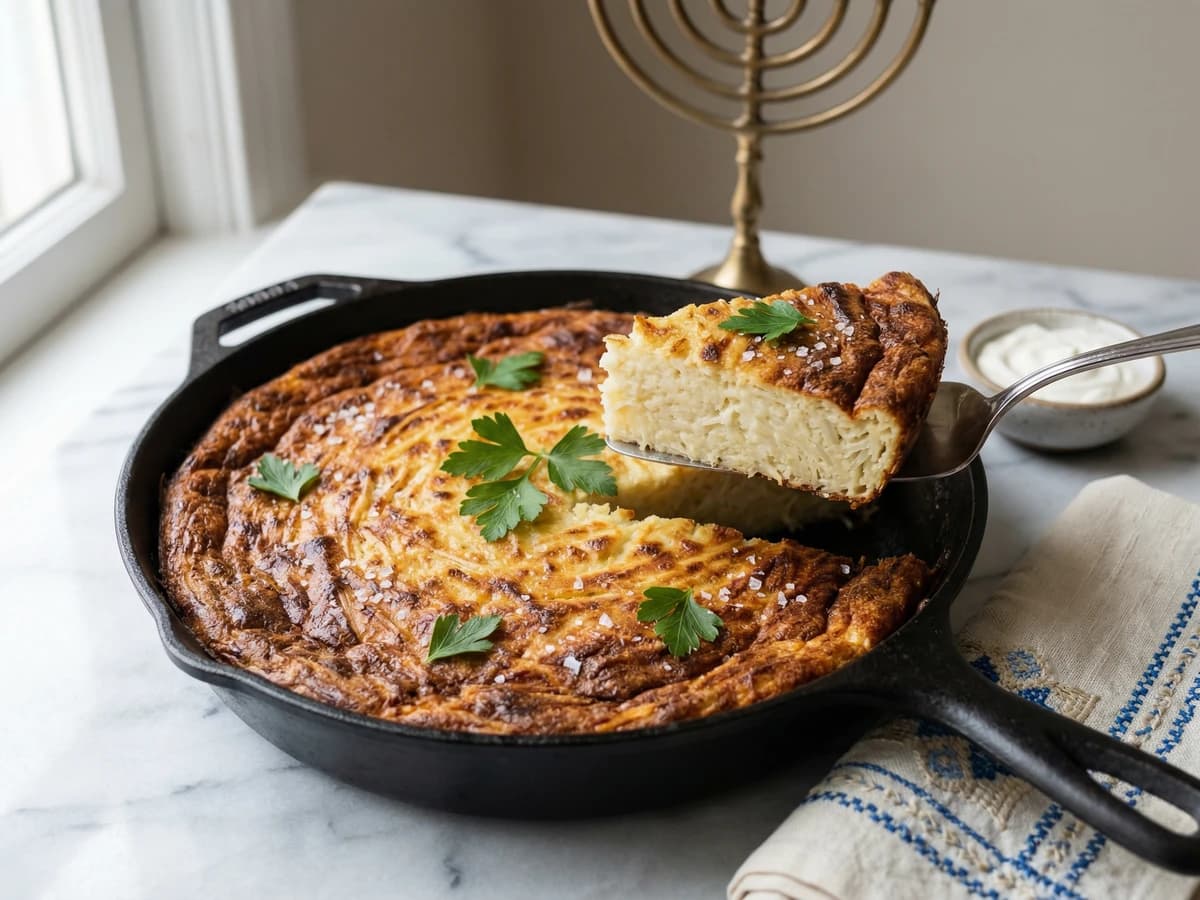
Golden-crusted potato casserole with crispy edges and a tender, onion-laced interior. This is the kugel that silences a table of relatives, the one they'll ask you to bring every year.

Chef Dean
Tender carrots and plump prunes braised low and slow in honey and warm spices, a dish that honors generations of Jewish grandmothers who understood that sweetness is both flavor and blessing.