Culinary Explorer
A cooking platform built around craft, culture, and the stories behind what we eat.
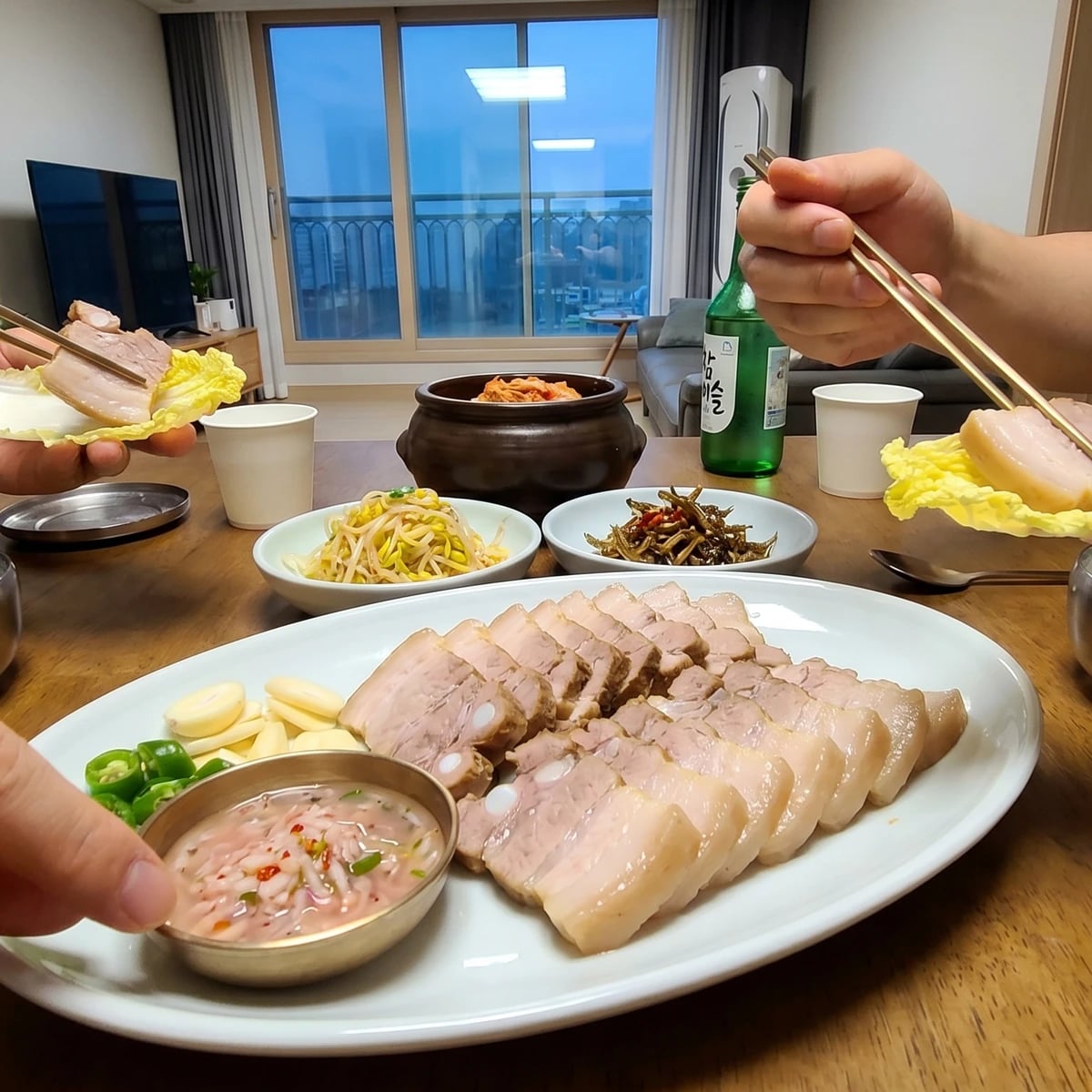
Suyuk (Boiled Sliced Pork)
Created by Chef Jeong-sun
Pork belly or shoulder simmered gently with doenjang, ginger, garlic, and scallion, then sliced thick and eaten with salted shrimp, raw garlic, and rice, the plain table before bossam gets dressed.
Suyuk lives or dies in the simmer. People hear boiled pork and let the pot thrash, then blame the meat when it comes out tight and gray. My teacher would have tapped the lid once and said nothing. That was worse than a scolding. The water should move, not fight.
This is the quiet ancestor sitting inside bossam. Bossam names the wrap and the full table around it; suyuk is the meat itself, plain boiled pork sliced thick and trusted to taste like pork. Doenjang (fermented soybean paste) goes into the water to clear the smell and season lightly, not to turn the pot into stew. Garlic, ginger, onion, scallion, and a splash of soju do their work in the background.
Tonight this dish asks for good pork, enough liquid, a gentle pot, and a sharp knife. Belly gives soft layers. Shoulder gives a cleaner, meatier bite. Do not bury either one under sweet sauce. Saeujeot (salted shrimp) is the right companion because pork fat wants salt and fermentation, not noise.
손맛 is real; I measure it anyway, so it can be handed on. Two tablespoons of doenjang for this pot. Two tablespoons of salted shrimp for the sauce. Write those down the day your table goes quiet for the first bite.
Ingredients
pork belly or boneless pork shoulder
Quantity
900g
kept in one thick piece
water
Quantity
10 cups
plus more if needed to cover
doenjang (Korean fermented soybean paste)
Quantity
2 tablespoons
| Ingredient | Quantity |
|---|---|
| pork belly or boneless pork shoulderkept in one thick piece | 900g |
| waterplus more if needed to cover | 10 cups |
| doenjang (Korean fermented soybean paste) | 2 tablespoons |
Where cooking meets culture.
Culinary guides, cultural storytelling, and the editorial depth that makes cooking meaningful.
Discover Culinary Explorer