
Chef Thomas
A Proper Roast Chicken
A whole bird rubbed with butter, stuffed with lemon and thyme, roasted until the skin crackles and the kitchen smells like the kind of evening you want to sit down and stay in.
A cooking platform built around craft, culture, and the stories behind what we eat.

Created by Chef Thomas
Three eggs, a knob of butter, a handful of good cheddar and whatever herbs are growing by the back door, folded into the quickest, most honest supper you can put on a plate.
Some evenings arrive already decided. You walk into the kitchen and there's nothing planned, nothing defrosted, nothing that wants three hours of your attention. The fridge has eggs. There's a stub of cheddar in the door. The chives outside the back door are doing well enough. That's an omelette. That's supper sorted.
I've made more omelettes than I could ever count, and the best ones were always the least considered. Three eggs, a fork, a pan you trust. The cheese goes in while the eggs are still soft, so it half-melts into something yielding and rich. The herbs go on at the end, torn or snipped, because heat dulls them and you want that green, peppery freshness against the warm egg. Folded, not flat. On a plate within two minutes of the eggs hitting the butter.
There's a confidence to a good omelette that I admire. It doesn't pretend to be more than it is. It doesn't ask you to shop or plan or think very hard. It asks only that you pay attention for about ninety seconds, and in return it gives you something genuinely good to eat. A recipe is a conversation, not a contract, and this one is the shortest conversation I know. We're only making dinner.
I wrote it down in the notebook years ago. Just the once. "Omelette. Cheddar. Chives. Tuesday. Tired." It didn't need anything else.
Quantity
3
Quantity
15g
Quantity
about 40g
grated
Quantity
a small handful
chives snipped, parsley or tarragon leaves torn
Quantity
to taste
Quantity
to taste
Quantity
to serve
Quantity
to serve
| Ingredient | Quantity |
|---|---|
| large eggs | 3 |
| unsalted butter | 15g |
| mature cheddargrated | about 40g |
| soft herbschives snipped, parsley or tarragon leaves torn | a small handful |
| fine sea salt | to taste |
| black pepper | to taste |
| good bread | to serve |
| green salad | to serve |
Crack three eggs into a bowl and beat them with a fork. Not a whisk. You want them loosely combined, the yolk and white still visible in streaks, not whipped into uniformity. Season with a good pinch of salt and a few grinds of pepper. Grate your cheese and have it ready. Snip or tear the herbs and set them aside. Once the pan is hot, everything happens quickly and you won't have time to rummage.
Put a 20cm pan over a medium-high heat. A well-seasoned or non-stick pan is the only thing that matters here. Add the butter. Let it melt and foam. When the foam subsides and the butter smells warm and nutty, that's the moment. If it starts to brown, you've gone slightly past it, but carry on. The eggs will forgive you.
Pour in the eggs. They should sizzle gently, not violently. Leave them alone for ten seconds, then use a fork or spatula to draw the cooked edges into the centre, tilting the pan so the raw egg flows into the gaps. Do this two or three times. The whole thing takes about a minute. You want the base set and golden but the top still slightly soft, almost creamy. This is the part where most people overcook it. Stop sooner than feels safe. The residual heat finishes the job.
Scatter the grated cheddar across one half of the omelette while the surface is still glossy and yielding. The cheese should start to soften but not fully melt. That happens on the plate. Use your spatula to fold the bare half over the cheese, then tilt the pan and slide the omelette onto a warm plate, seam sidedown. It should look pale gold, plump, slightly imperfect. If it's brown all over, the pan was too hot. If it's perfect, you probably overworked it.
Scatter the herbs over the top. Snipped chives, a few torn parsley leaves, a frond of tarragon if you have it growing. A final grind of pepper. Eat it straight away with bread and a green salad dressed with oil and lemon. An omelette waits for nobody. There are few better feelings than sitting down to something this simple and knowing it's exactly right.
1 serving (about 185g)
Culinary guides, cultural storytelling, and the editorial depth that makes cooking meaningful.
Discover Culinary ExplorerChef Thomas
A whole bird rubbed with butter, stuffed with lemon and thyme, roasted until the skin crackles and the kitchen smells like the kind of evening you want to sit down and stay in.
Chef Thomas
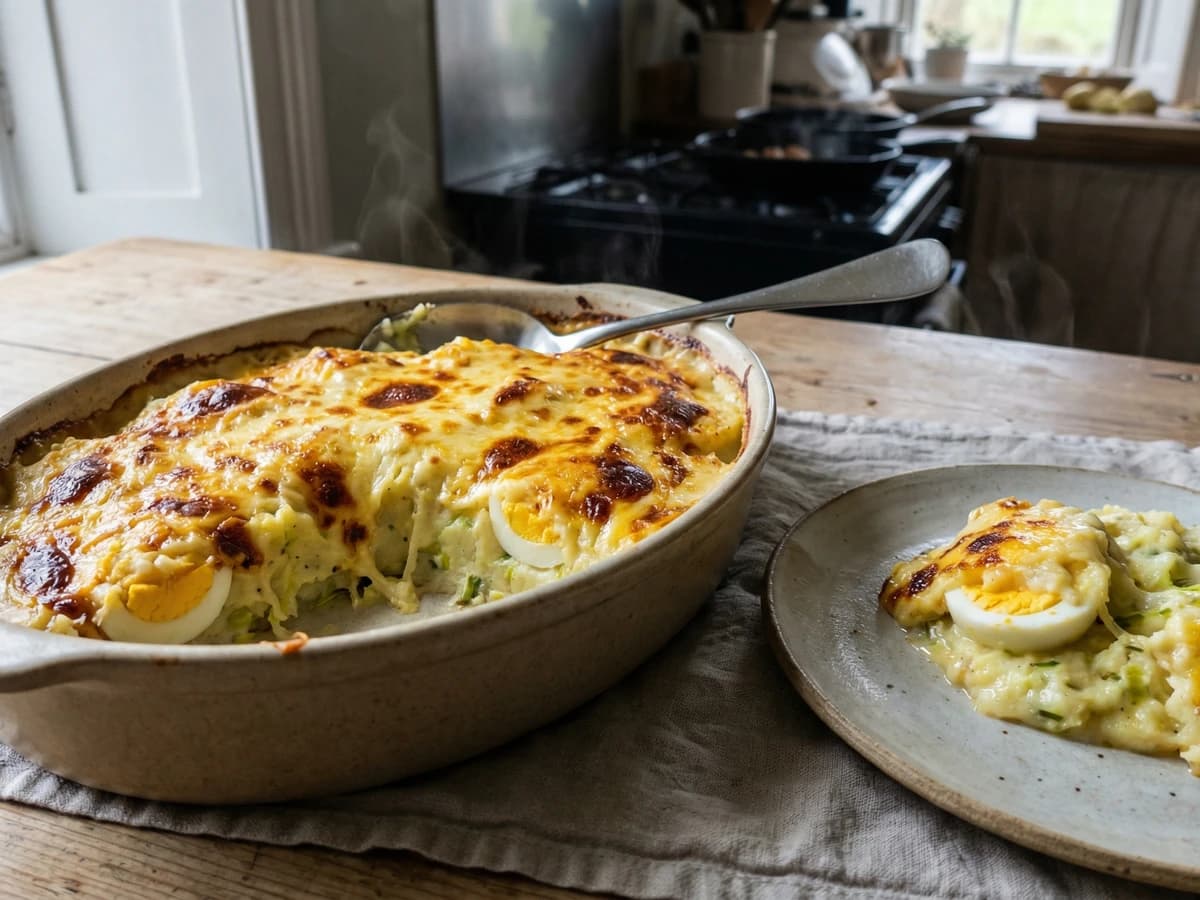
Eggs bedded into leek-flecked mash under a blanket of sharp cheese sauce, baked until golden and bubbling. A Welsh supper dish that proves the simplest things are usually the best.

Chef Thomas
A cold evening carbonara made with good smoked back bacon, eggs, Parmesan, and more black pepper than seems reasonable, tossed together in the time it takes to boil the pasta.

Chef Thomas
Thick bacon chops, bronzed in butter and slicked with a mustard and honey glaze that catches and caramelises under a hot grill. Twenty minutes, two plates, a very good Tuesday.