Chef Makoa
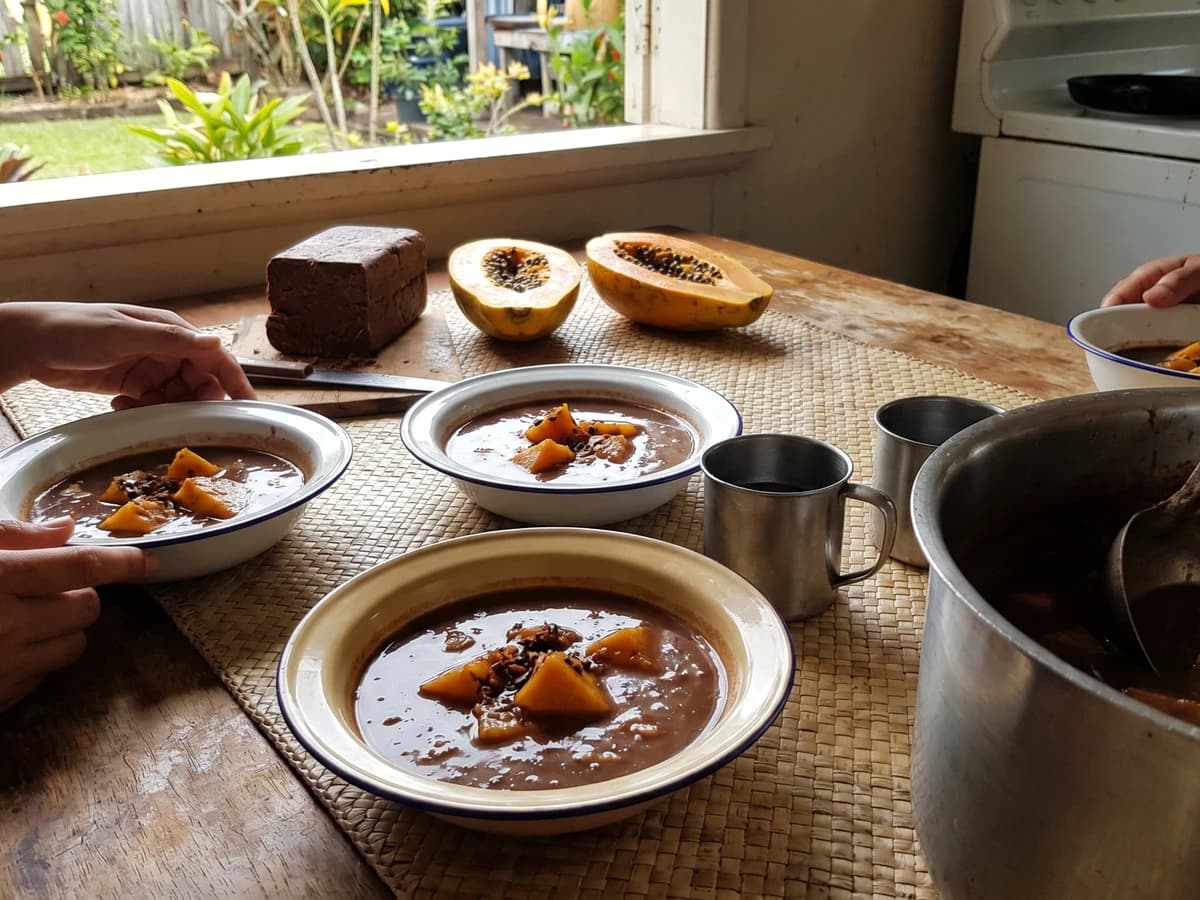
Koko Esi (Sāmoan Cacao-Papaya Soup)
A Sāmoan building-up bowl of ripe esi simmered with roasted Koko Sāmoa, softened with fresh peʻepeʻe, and served warm for elders, children, new mothers, and anybody who needs steady care.
A cooking platform built around craft, culture, and the stories behind what we eat.

Created by
Sāmoa's supo kapisi, pork bones simmered with ginger until the broth turns rich, then peppery watercress folded in dark and tender for a bowl that builds you back up.
That first recovery bowl I was handed at a Sāmoan table came before any talk-story. You eat, then talk, the auntie said, and she meant it. This is Sāmoa's supo kapisi, watercress soup: pork bones, fresh ginger, onion, tomato, and bundles of peppery greens simmered until the broth tastes like somebody stayed close to the stove because you needed feeding.
It is building-up food for the aiga (family), the sick and elderly, new mothers, children coming in tired from school, the cousin who says he's fine and doesn't look fine. The pork bones give body, the ginger wakes the bowl, and the kapisi goes in near the end so it wilts dark and glossy but keeps its green backbone. Not fancy. Not precious. Just somebody taking care.
Across the Triangle the comfort has cousins, but each pot has its own hand. In Aotearoa (New Zealand), Māori boil-up carries pork bones with pūhā (sow thistle), watercress, and kūmara (sweet potato); back home in Hawaiʻi, local families make pork watercress soup from a plantation-era pantry; Tongan tables know pork-bone and watercress soups too. Same comfort, different pots. No need blur them.
This one is Sāmoan, weeknight and real. The old story is one ocean, one canoe, one root, but the living table has a soup pot too. Serve it with rice if that's what you have, or with talo (taro), faʻi (green banana), or ʻulu (breadfruit) when the canoe crops are on your table. Eat what you have. The broth is there to build the family back up, and the bowl should feel like a hand on your shoulder.
Supo is the Sāmoan form of soup, and supo kapisi sits on the living, everyday side of Sāmoan foodways rather than the older canoe-crop dishes like talo, ʻulu, and palusami. Pigs had a place in Polynesian ovens long before Europe arrived, but the soup pot of pork bones with watercress, onion, tomato, and ginger shows the pantry that grew through trade, mission, plantation, and migration from village kitchens in Upolu and Savaiʻi to church halls in Auckland. That is part of the story too: deep food and everyday food share one table, and the aiga (family) keeps both alive.
Quantity
2 1/2 pounds
cut into 2- to 3-inch pieces
Quantity
10 cups
plus more as needed
Quantity
1 large
halved and sliced
Quantity
4
smashed
Quantity
1 (3-inch) piece
scrubbed and sliced into coins
Quantity
2 teaspoons
plus more to taste; use 1 teaspoon if adding bouillon
Quantity
1/2 teaspoon
Quantity
1 cube or 1 teaspoon
Quantity
2 medium
roughly chopped
Quantity
3 large bunches
tough lower stems trimmed, washed well
Quantity
for serving
| Ingredient | Quantity |
|---|---|
| meaty pork neck bones, rib bones, or hock piecescut into 2- to 3-inch pieces | 2 1/2 pounds |
| cold waterplus more as needed | 10 cups |
| yellow onionhalved and sliced | 1 large |
| garlic clovessmashed | 4 |
| fresh gingerscrubbed and sliced into coins | 1 (3-inch) piece |
| sea saltplus more to taste; use 1 teaspoon if adding bouillon | 2 teaspoons |
| freshly ground black pepper | 1/2 teaspoon |
| chicken bouillon cube or stock powder (optional) | 1 cube or 1 teaspoon |
| tomatoesroughly chopped | 2 medium |
| fresh watercress (kapisi)tough lower stems trimmed, washed well | 3 large bunches |
| cooked white rice, talo, faʻi, or ʻulu (optional) | for serving |
Rinse the pork bones under cold water and set them in a heavy pot with the 10 cups cold water. Bring it up slowly over medium-high heat, then lower to a lively simmer and skim the grey foam that rises for the first 10 minutes. That's just the broth clearing itself. No need fuss, but don't stir that foam back in.
Add the onion, garlic, ginger, salt, pepper, and bouillon if you're using it. Keep the pot partly covered at a gentle simmer for 1 hour 15 minutes to 1 hour 30 minutes, adding a splash more water if the bones start sitting high. The meat should loosen from the bone, and the broth should smell round, porky, and ginger-warm.
While the pot works, pick through the kapisi, the watercress. Trim away only the woody lower stems and keep the tender stems, because they give the soup its peppery bite. Wash it in two or three changes of water, lifting the greens out each time so the grit stays behind.
Stir in the tomatoes and simmer 10 minutes, until they slump into the broth. Taste now. It should be savory before the greens go in. Add the watercress by big handfuls, pressing it under the broth, and simmer 5 to 8 minutes, until the leaves turn dark and glossy and the tender stems bend without snapping.
Turn off the heat and let the pot sit 10 minutes so the broth settles and the pork relaxes. Taste again for salt and pepper. Ladle bones, meat, greens, and broth into deep bowls, and serve with rice or with talo, faʻi, or ʻulu. Spoon the broth over the starch. This is building-up food: simple, salty, ginger-warm, enough for one more.
1 serving (about 590g)
Culinary guides, cultural storytelling, and the editorial depth that makes cooking meaningful.
Discover Culinary ExplorerChef Makoa
A Sāmoan building-up bowl of ripe esi simmered with roasted Koko Sāmoa, softened with fresh peʻepeʻe, and served warm for elders, children, new mothers, and anybody who needs steady care.

Chef Makoa
A clear Sāmoan fish soup softened with peʻepeʻe, fresh coconut cream, made for the aiga when somebody needs feeding now: clean fish, onion, chili, salt, and no showing off.

Chef Makoa
A gentle Sāmoan broth of bone-in chicken, firm green esi, onion, fish sauce, and greens, the kind of bowl an āiga sets down when somebody needs building back up.

Chef Makoa
Sāmoa's supoesi, ripe esi and tapioca pearls softened into fresh peʻepeʻe coconut cream, the gentle golden soup Sāmoan families feed to children, elders, new mothers, and anybody coming back to strength.