
Chef Juliana
Água de Coco
You think opening a coconut belongs to the beach vendor. It doesn't. Chill the fruit, shave the cap, tap a small door, and you've solved the cold drink beside your pê-efe.
A cooking platform built around craft, culture, and the stories behind what we eat.
Created by
You don't need a juice shop, a secret machine, or powdered nonsense. Read the polpa label, blend the real fruit with cold water, and sweeten only enough to let cupuaçu speak.
You see the frozen fruit pulps lined up in the market freezer and think, quietly, isso não é pra mim. It is. The freezer aisle is just another part of the kitchen, and a gente learns to read it the same way we learn rice, beans, and the refogado that solves dinner.
Cupuaçu tastes like it was invented to confuse anyone who wants fruit to behave politely. It's creamy, tart, perfumed, somewhere near cocoa, pineapple, and pear, but not obedient to any of them. That's why the method stays simple. Real polpa, cold water, sugar to taste. No powder pretending to be the Amazon in a packet. Anota aí: comida de verdade can come from the freezer when the ingredient is just fruit.
This isn't the center of the pê-efe, but it belongs beside it beautifully. Rice, beans, a piece of fish or meat or an egg, something green, and a cold glass of cupuaçu after, sharp enough to wake the plate back up. That's everyday Brazilian food doing what it does best: feeding you without making a spectacle of itself.
The trick is balance, not talent. Start with less water so the juice has body, blend until smooth, then adjust. Sweeten after tasting, because every batch of polpa is different. Cozinhar não é dom, é um aprendizado, even when the stove stays off.
Cupuaçu, Theobroma grandiflorum, is a close relative of cacao native to the Amazon, strongly associated with Pará and widely used there in juices, creams, sweets, sorbets, and fillings. The pulp is the prize in home kitchens: pale, fragrant, and tart, while the seeds can be processed into a chocolate-like cupulate. In the early 2000s, a foreign trademark dispute over the word cupuaçu became a public reminder that Amazonian ingredients come with people, places, and knowledge already attached.
Quantity
1 cup, about 200g
broken into chunks
Quantity
3 cups, plus more as needed
Quantity
2 to 4 tablespoons
to taste
Quantity
1 small pinch
| Ingredient | Quantity |
|---|---|
| frozen unsweetened cupuaçu pulpbroken into chunks | 1 cup, about 200g |
| cold water | 3 cups, plus more as needed |
| sugarto taste | 2 to 4 tablespoons |
| salt (optional) | 1 small pinch |
Check the package before it goes near the blender. You want polpa de cupuaçu, ideally unsweetened, with cupuaçu as the ingredient. Not polpa de bacuri, not a mixed nectar, not a powdered drink. If sugar is already in the pack, use less sugar later, because the factory has already put its spoon in your glass.
Let the frozen pulp sit on the counter for 5 minutes, or run the sealed pack under water just until you can bend it. Break it into chunks before blending. Smaller pieces catch the blade faster, so you get a smooth juice without adding too much water and washing out the fruit.
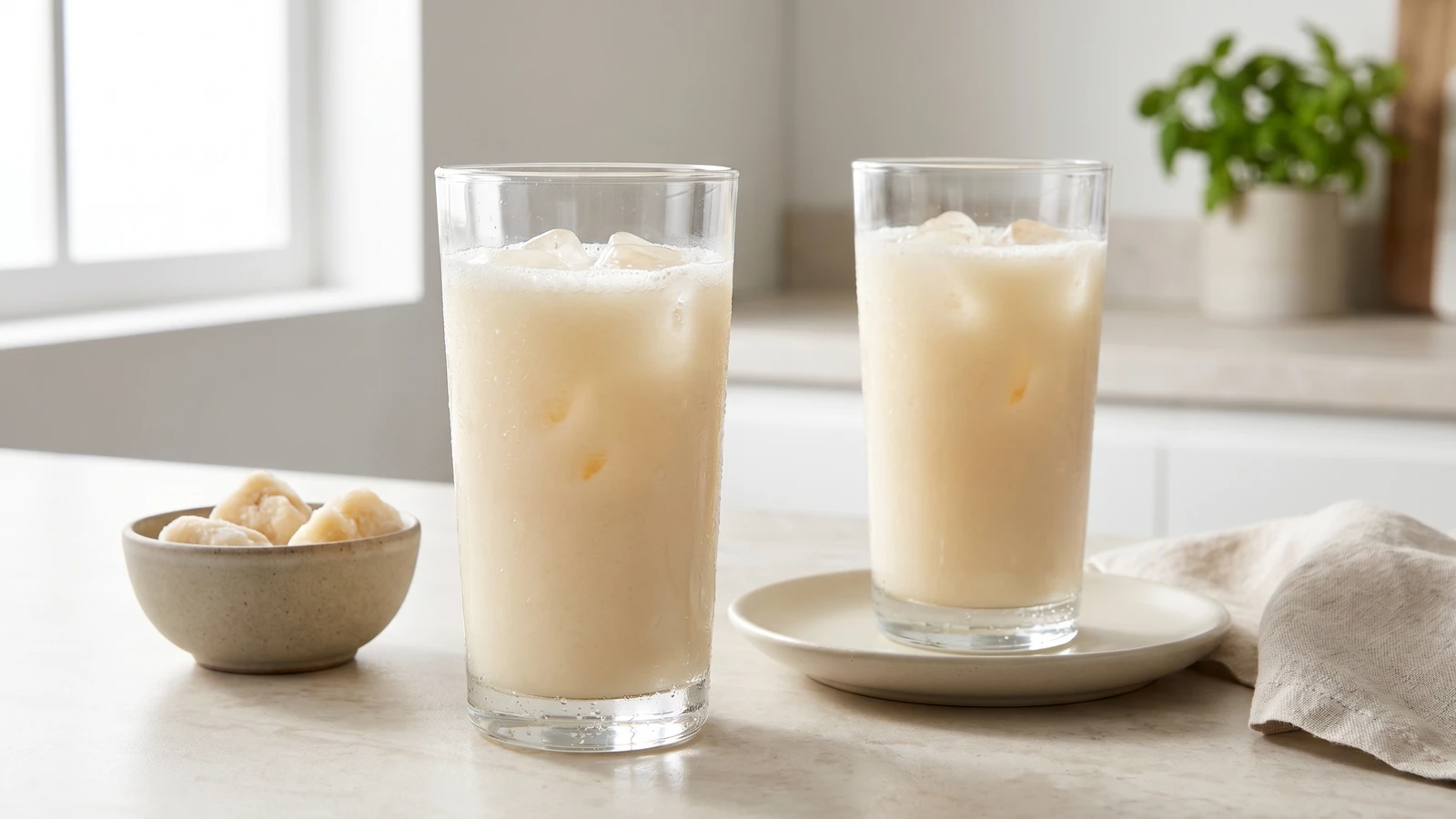
Put the cupuaçu pulp and 3 cups cold water in the blender. Blend until the liquid turns pale ivory, creamy-looking, and smooth, about 30 to 45 seconds. Cupuaçu has natural body, so don't drown it at the start. You can always thin a juice. You cannot politely ask watery juice to become fruit again.
Taste before adding sugar. Add 2 tablespoons sugar and the tiny pinch of salt, if using, then blend for 10 seconds and taste again. Add more sugar 1 tablespoon at a time only until the sharp edge softens. The goal is bright and tart, not candy. The salt is optional, but it makes the fruit taste more like itself.
If the juice feels too thick, blend in cold water 1/4 cup at a time until it pours easily but still coats the glass lightly. Serve immediately over ice, or chill for up to 1 hour and stir before pouring. Cupuaçu settles because it's real fruit, not a lab trick. Stir it and move on with your life.
1 serving (about 235g)
Culinary guides, cultural storytelling, and the editorial depth that makes cooking meaningful.
Discover Culinary ExplorerChef Juliana
You think opening a coconut belongs to the beach vendor. It doesn't. Chill the fruit, shave the cap, tap a small door, and you've solved the cold drink beside your pê-efe.

Chef Juliana
Nobody is scared of a blender. Cachaça, coconut milk, condensed milk, and ice go in, and thirty seconds later the churrasco drink is solved.

Chef Juliana
You don't need a bar kit. Fresh maracujá, cachaça, condensed milk, and thirty honest seconds in the blender make a cold Brazilian toast that tastes bright, tart, and grown-up.

Chef Juliana
You don't need a machine to make coffee that smells like a Brazilian kitchen. Hot water, fresh grounds, a clean coador de pano, and the patience to pour like you mean it.