
Chef Klaus
Bethmännchen
Frankfurt's Advent marzipan ball is small, pale gold, and exacting: real almond paste, rosewater, three almond halves pressed on firmly, then a short bake for gloss.
A cooking platform built around craft, culture, and the stories behind what we eat.
Created by
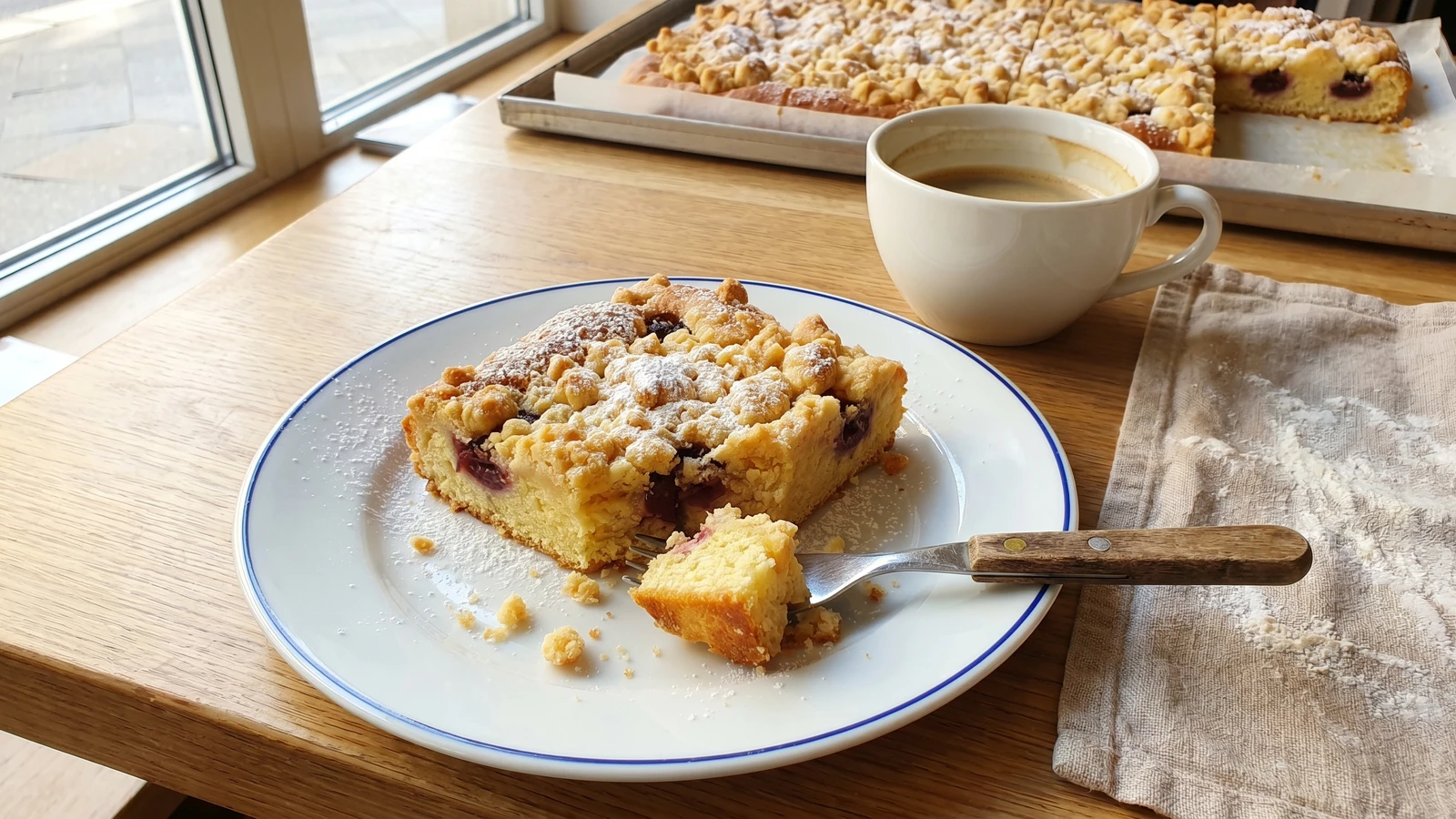
A German coffee-table sheet cake lives or dies by cold butter crumbs on a risen yeast base: soft underneath, crisp and sandy on top.
Streuselkuchen sits on the German coffee table, cut from a Blech, the baking sheet, and carried to church coffee, a workplace birthday, or Sunday at three. Saxony and old Silesia claim the plain yeast version hardest: a soft base under a thick rubble of butter, sugar, and flour. In the Rhineland you'll see fruit more often, in the south quark or plums sneak in, and some bakers use a richer cake base. Im Norden anders, im Süden anders. I keep this one Saxon and Silesian: yeast dough, butter crumbs, no fuss.
The technique that decides it is the temperature of the streusel. Cold butter makes crumbs that hold their shape in the oven; soft butter melts into paste, and paste bakes into a hard lid. Rub the butter in until you have uneven gravel, some peas, some sand, then chill it while the dough rises. The cake wants contrast, not a neat blanket.
The base gets one good rise and a short second rest on the sheet, because yeast dough needs time to relax or it pulls back and bakes tight. Das braucht seine Zeit, not a whole day, but enough. If rhubarb is in season, use it. If sour cherries are in the larder, use them drained. Out of season, leave the cake plain and let the streusel do its work.
Bake until the edges are pale gold and the crumbs are dry and crisp at the top. Don't chase dark colour. This isn't a roast. Schön ist, was schmeckt.
Streuselkuchen belongs especially to Saxon and Silesian Blechkuchen baking, where a yeast sheet cake could feed a large coffee table from one oven tray. The word Streusel comes from streuen, to scatter, and by the 19th century the crumbled butter-sugar-flour topping was common in German household baking. After 1945, Silesian families displaced westward carried Schlesischer Streuselkuchen with them, which is one reason the cake is now found far beyond its eastern home.
Quantity
500g
plus more for dusting
Quantity
7g instant / 21g fresh
Quantity
220ml
lukewarm
Quantity
70g
Quantity
1
Quantity
80g
softened
Quantity
1 teaspoon
Quantity
1 teaspoon vanilla sugar / 1/2 teaspoon extract
Quantity
500g rhubarb / 350g cherries
rhubarb cut into 2cm pieces
Quantity
250g
Quantity
150g
cubed
Quantity
150g
Quantity
1 teaspoon
Quantity
1 pinch
Quantity
2 tablespoons
for brushing
Quantity
to dust
| Ingredient | Quantity |
|---|---|
| plain flourplus more for dusting | 500g |
| instant yeast or fresh yeast | 7g instant / 21g fresh |
| whole milklukewarm | 220ml |
| sugar | 70g |
| egg | 1 |
| unsalted buttersoftened | 80g |
| fine salt | 1 teaspoon |
| vanilla sugar or vanilla extract | 1 teaspoon vanilla sugar / 1/2 teaspoon extract |
| rhubarb or drained sour cherries (optional)rhubarb cut into 2cm pieces | 500g rhubarb / 350g cherries |
| plain flour for streusel | 250g |
| cold unsalted butter for streuselcubed | 150g |
| sugar for streusel | 150g |
| vanilla sugar for streusel | 1 teaspoon |
| fine salt for streusel | 1 pinch |
| cream or milkfor brushing | 2 tablespoons |
| icing sugar (optional) | to dust |
Warm the milk to blood heat, about 35C, because hot milk kills yeast and cold milk makes it sulk. Stir in the yeast and a spoon of the sugar, then leave it for 10 minutes until it looks creamy and alive. If nothing happens, start again. Flour is cheaper than a dead cake.
Mix the flour, remaining sugar, egg, softened butter, salt, vanilla, and yeast milk into a soft dough, then knead for 8 to 10 minutes until smooth and elastic. The dough should pull from the bowl but stay tender; too much flour makes the base dry, and Streuselkuchen needs a soft underlayer to carry the crumbs.
Cover the bowl and leave the dough in a warm place until doubled, about 60 to 75 minutes. Give it time because yeast builds flavour while it lifts the dough, and a rushed base bakes flat and breadlike instead of light.
Rub the cold butter into the streusel flour, sugar, vanilla sugar, and salt with your fingertips until you have uneven crumbs, from sandy bits to pea-sized pieces. Keep the butter cold because cold crumbs stay distinct in the oven; warm butter turns the topping into paste. Chill the bowl while the dough finishes rising.
Line a 30x40cm rimmed baking sheet and roll or press the dough to fit it, pushing it into the corners without tearing it. Brush with cream or milk so the fruit and crumbs grip the surface instead of sliding off. If using rhubarb or cherries, scatter them evenly now; rhubarb brings spring sharpness, cherries bring the larder when the fresh season is shut.
Scatter the chilled streusel thickly over the dough, squeezing a few handfuls lightly so some larger clumps form. Leave the cake to rest 20 minutes on the sheet because the dough needs to relax after shaping; skip this and it bakes tight under the topping.
Bake at 180C for 25 to 30 minutes, until the edges are pale gold, the base is set, and the streusel feels dry and crisp when tapped. Don't bake it dark for drama. Butter and sugar go bitter if you push them too far, and this cake should taste of milk dough and browned crumbs, not scorched sugar.
Cool the cake on the tray for at least 30 minutes before cutting, because hot yeast crumb tears and makes the slices ragged. Dust with icing sugar only after cooling if you want it; put it on warm cake and it melts into a wet film. Cut into squares for Kaffee und Kuchen, coffee and cake, and put the crumbs that fall from the knife back on the pieces. Weggeworfen wird nichts.
1 serving (about 110g)
Culinary guides, cultural storytelling, and the editorial depth that makes cooking meaningful.
Discover Culinary ExplorerChef Klaus
Frankfurt's Advent marzipan ball is small, pale gold, and exacting: real almond paste, rosewater, three almond halves pressed on firmly, then a short bake for gloss.
Chef Klaus
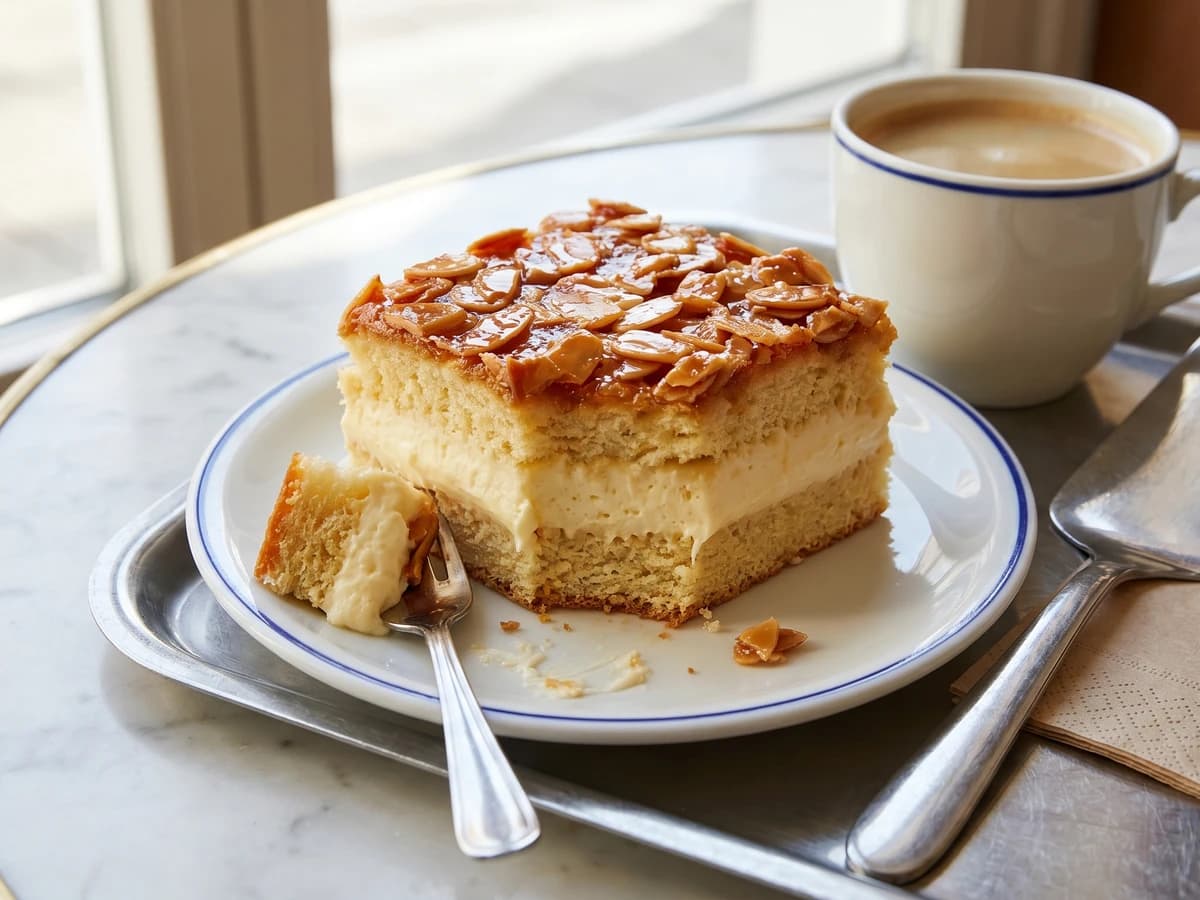
Bienenstich works when the almond top caramelises without burning and the yeast cake cools before the cream goes in. Rush either one and the bee has stung you.

Chef Klaus
North Germany's Freud-und-Leid-Kuchen, the cake for joy and sorrow both: a yeast sheet pressed full of cold butter, sugar, and almonds until the top turns crisp.
Chef Klaus
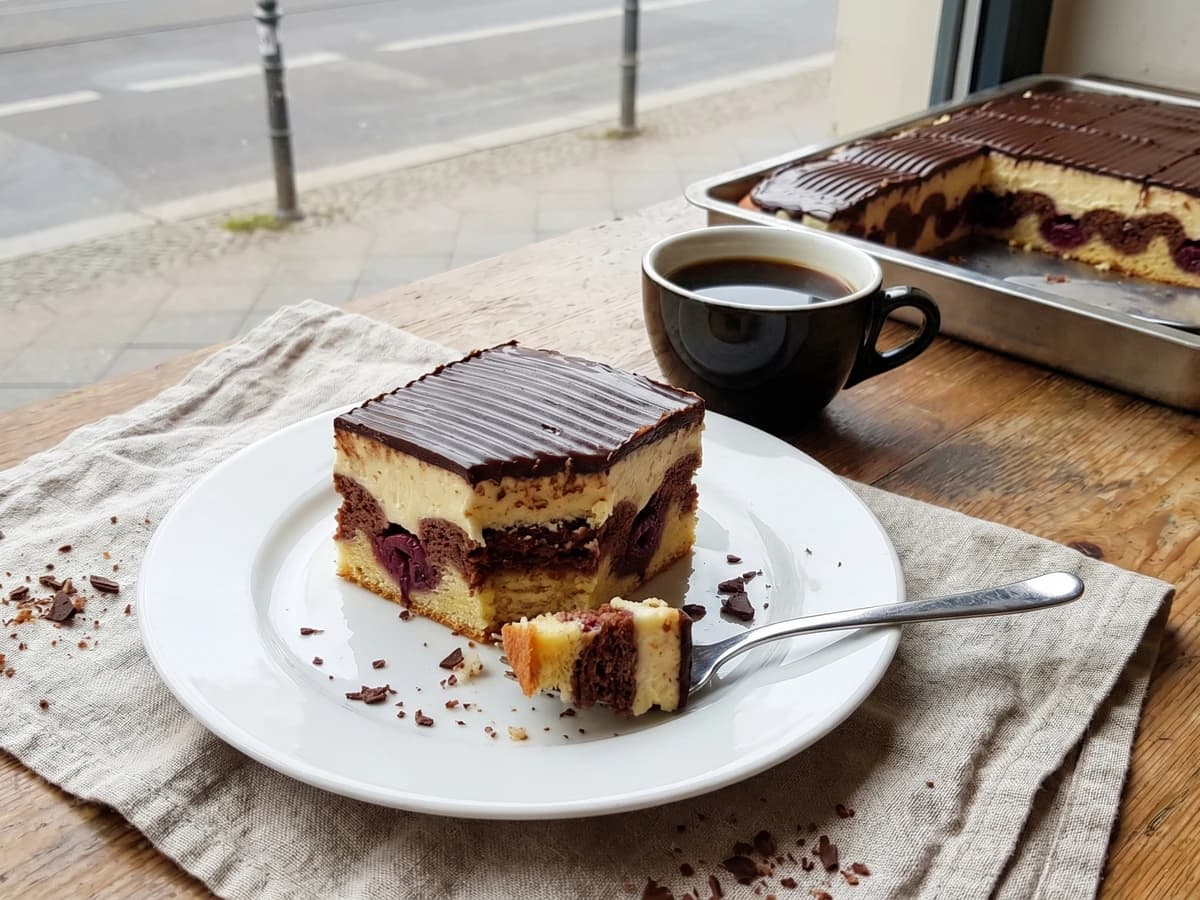
A German coffee-table cake built in layers: pale and cocoa batter, sour cherries sinking into the wave, cool buttercream, and dark chocolate combed like the Danube.