Culinary Explorer
A cooking platform built around craft, culture, and the stories behind what we eat.
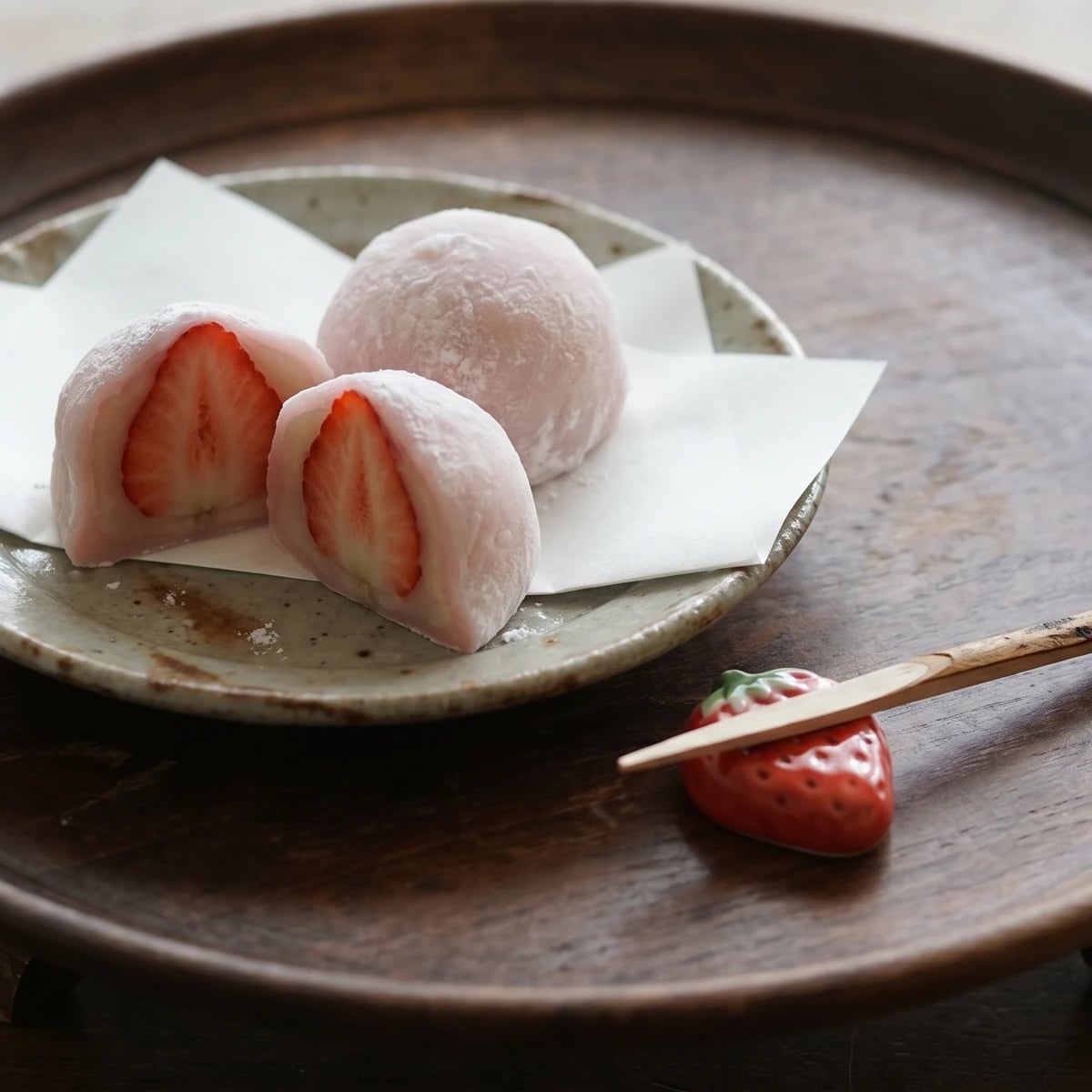
Strawberry Daifuku (いちご大福, Ichigo Daifuku)
Created by Chef Takumi
One bright strawberry, a thin coat of white-bean paste, and soft mochi pulled around it while warm. Ichigo daifuku is modern wagashi with an old lesson: freshness decides everything.
A winter strawberry is a small, dangerous thing to hide inside mochi. Too soft and it leaks. Too tart and the sweet bean paste turns clumsy. Choose one that's glistening fresh, fragrant, and firm at the shoulder, and the confection is already leaning toward honmono, the real thing.
The fear is the mochi. People imagine it as some secret sweet-shop substance, when really it's rice flour, sugar, water, and heat. The one detail that decides it is timing: wrap while the mochi is warm and stretchy, because once it cools it stiffens and fights you like a polite but stubborn aunt. Dust your hands well with katakuriko, potato starch, and work calmly.
We coat the strawberry first in shiroan, smooth white-bean paste, not to be decorative, but to make a dry, even layer between fruit and mochi. The paste absorbs a little juice and gives your fingers something round to wrap. Keep the point of the berry upward, pinch the mochi closed underneath, and set it seam-side down. Leave it room on the plate. This is celebration food, but it should still have quiet manners.
Ingredients
small firm strawberries
Quantity
6
hulled and dried completely
shiroan (sweet white-bean paste)
Quantity
240g
shiratamako (glutinous rice flour)
Quantity
100g
| Ingredient | Quantity |
|---|---|
| small firm strawberrieshulled and dried completely | 6 |
| shiroan (sweet white-bean paste) | 240g |
| shiratamako (glutinous rice flour) | 100g |
Where cooking meets culture.
Culinary guides, cultural storytelling, and the editorial depth that makes cooking meaningful.
Discover Culinary Explorer