
Chef Freja
Danablu Mad med Rå Æggeblomme
Danish blue cheese layered on dark rye with a raw egg yolk nestled on top, red onion rings, and chives. The last piece at a Danish lunch, and the one that stays with you longest.
A cooking platform built around craft, culture, and the stories behind what we eat.
Created by Chef Freja
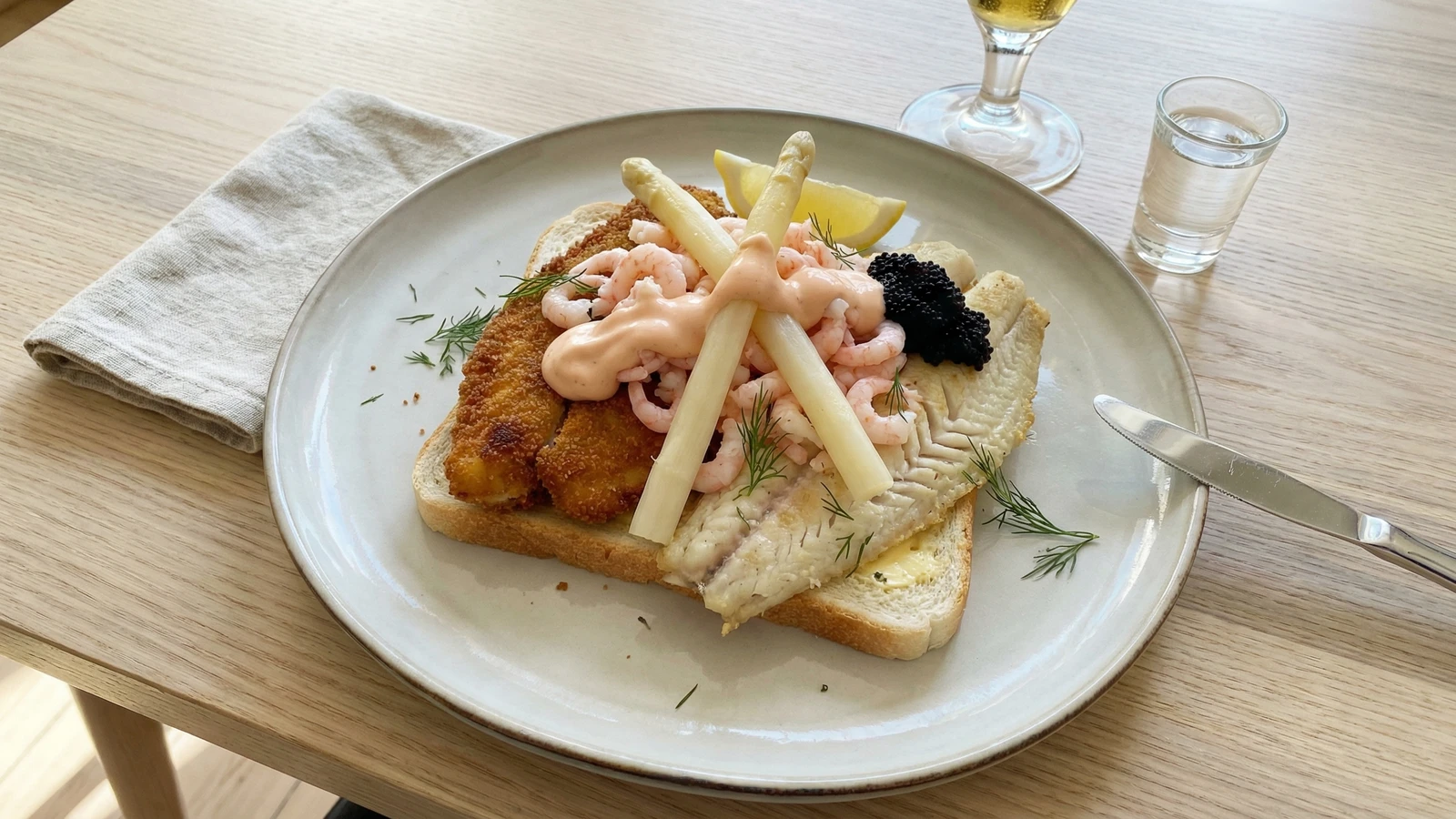
The crown jewel of the Danish cold kitchen. Fried and steamed plaice under a cascade of shrimp, white asparagus, caviar, and Marie Rose sauce on buttered bread. The piece you save for when it matters.
There are pieces of smorrebrod you eat on a Tuesday, and there are pieces of smorrebrod you eat on a Saturday when the asparagus has finally come in and someone you love is coming over. Stjerneskud belongs firmly to the second category. It is the piece the old lunch restaurants put at the top of their menus, the piece a smorrebrodsjomfru would finish with a flourish, the piece you order when the occasion is worth the asking.
The name means shooting star, and once you've seen it on the plate you'll understand why. Two fillets of plaice, one fried in breadcrumbs until the crust crackles and one steamed until it flakes at a touch, sit side by side on buttered white bread. Over them goes a handful of sweet pink shrimp, two spears of white asparagus crossed at the top, a ribbon of pale coral Marie Rose sauce, a spoonful of dark lumpfish roe, and a frond of dill. It shoots off the plate. That is the whole idea.
White asparagus is the season that decides this dish. It arrives in Danish markets in May and stays through June, the spears pale and thick and almost buttery when cooked right. You can make stjerneskud outside the asparagus weeks, and many restaurants do, but the version where the asparagus is fresh and local is the one worth waiting for. The joy of waiting is a real part of Danish cooking, and this is a dish that rewards it.
I'll walk you through every step so that nothing feels uncertain. The sauce first, because it needs to rest. The asparagus next, then the steamed fish, then the breaded and fried fish last so the crumb is still crisp when you assemble. Build in order, work quickly at the end, and bring it to the table straight away. You'll know when it's right. The plate will look like a small celebration, because that's exactly what it is.
Stjerneskud is a product of the Copenhagen lunch restaurants of the mid-twentieth century, when the smorrebrod menus of places like Ida Davidsen and Slotskaelderen had swollen to over a hundred pieces and the competition between houses pushed the cold kitchen toward ever more theatrical compositions. Unlike most smorrebrod, which is built on rugbrod, stjerneskud is always served on white franskbrod because the delicate flavors of plaice and North Sea shrimp would be overwhelmed by dark rye. The dish combines the two fundamental plaice preparations of the Danish kitchen, stegt and dampet, on a single piece of bread, which is why it became known as the flagship of the smorrebrod menu and why it still carries the highest price on most Danish lunch cards today.
Quantity
4 small
skinned and pin-boned
Quantity
2
skinned and pin-boned
Quantity
4 thick slices
crusts trimmed
Quantity
50g
softened
Quantity
300g
peeled, the small pink North Sea kind
Quantity
8 spears
peeled and trimmed
Quantity
4 teaspoons
Quantity
1
half juiced, half cut into wedges
Quantity
small bunch
fronds picked
Quantity
100g, for dredging
Quantity
2 large
beaten
Quantity
150g
Quantity
to taste
Quantity
to taste
Quantity
60g
Quantity
2 tablespoons
Quantity
150ml
Quantity
1 tablespoon
Quantity
1 teaspoon
Quantity
squeeze
Quantity
pinch
| Ingredient | Quantity |
|---|---|
| plaice fillets (for frying)skinned and pin-boned | 4 small |
| plaice fillets (for steaming)skinned and pin-boned | 2 |
| good white bread (franskbrod)crusts trimmed | 4 thick slices |
| unsalted butter (for the bread)softened | 50g |
| cold-water shrimppeeled, the small pink North Sea kind | 300g |
| white asparaguspeeled and trimmed | 8 spears |
| lumpfish roe (stenbiderrogn) | 4 teaspoons |
| lemonhalf juiced, half cut into wedges | 1 |
| fresh dillfronds picked | small bunch |
| plain flour | 100g, for dredging |
| eggsbeaten | 2 large |
| fine dry breadcrumbs | 150g |
| fine sea salt | to taste |
| white pepper | to taste |
| unsalted butter (for frying) | 60g |
| neutral oil | 2 tablespoons |
| good mayonnaise | 150ml |
| tomato ketchup | 1 tablespoon |
| Cognac or brandy (optional) | 1 teaspoon |
| lemon juice | squeeze |
| cayenne | pinch |
Stir the mayonnaise, ketchup, Cognac, lemon juice, and a pinch of cayenne together in a small bowl. Taste it. It should be pale coral, gently sweet, and lifted by the acid. This is the sauce that ties the whole piece together, so give it the attention it deserves. Cover and chill while you work.
Bring a wide pan of well-salted water to a gentle simmer. Slide the peeled white asparagus in and cook for four to six minutes, depending on thickness, until the tip of a knife slides in with no resistance. White asparagus is firmer than green and needs longer than you think. Lift them out and lay them on a tray to cool. Don't shock them in ice water. You want them cool, not cold, so they don't chill the whole piece when assembled.
Season the two plain fillets lightly with salt. Set them on a plate that fits inside a steamer or over a pan of simmering water. Cover and steam for three to four minutes, until the flesh turns from translucent to opaque white and flakes gently when pressed. Lift them off the heat and let them rest. Steamed plaice is the quiet half of stjerneskud. It's there for tenderness, not for crunch, and it carries the shrimp and the sauce.
Set out three shallow bowls: flour seasoned with salt and white pepper, beaten eggs, and breadcrumbs. Take the four fillets for frying and press each one first into the flour, then the egg, then the breadcrumbs. Press gently so the crumbs stick in an even layer. Any bare patches will go soggy in the pan. The crumb is what gives stjerneskud its architecture, the crisp base that holds the rest.
Heat the butter and oil together in a large frying pan over medium-high heat. When the butter is foaming and smells of hazelnuts, lay the breaded fillets in. Don't crowd them. Fry for two minutes on each side until the crumbs are deep gold and the fish is just cooked through. Lift them onto kitchen paper to drain. Butter alone would burn before the crumbs coloured. Oil alone would taste of nothing. Together they give you the golden crust and the nutty richness that makes the whole piece sing.
Spread each slice of white bread generously with softened butter, right to the edges. Not a thin layer. A proper one. The butter isn't seasoning, it's the seal that keeps the bread from going wet under the sauce and the fish. This is one of the non-negotiable rules of smorrebrod. Bread, butter, then everything else.
Lay a fried plaice fillet on each slice of buttered bread, running the length of the bread. Tear the two steamed fillets into four pieces and lay them alongside the fried ones, so each slice carries both textures. The fried half is the crunch. The steamed half is the softness. Stjerneskud only works when both are there.
Pile a generous handful of cold-water shrimp over the fish on each piece, letting them heap up in the centre. Lay two spears of white asparagus across the top at a slight angle, like crossed swords. Spoon a ribbon of Marie Rose sauce over the shrimp, not drowning them, just dressing. Finish with a teaspoon of lumpfish roe at one end, a small sprig of dill, and a lemon wedge at the side. This is where the dish gets its name. The asparagus and the sauce and the caviar make it look like it's shooting off the plate.
Bring the plates to the table straight away. Stjerneskud is eaten with a knife and fork, never picked up, and it never waits. The fried crumb softens under the sauce within minutes, so the window between finishing the last piece and sitting down to eat should be short. A cold beer and a small glass of aquavit alongside, if the occasion calls for it. Tak for mad.
1 serving (about 390g)
Culinary guides, cultural storytelling, and the editorial depth that makes cooking meaningful.
Discover Culinary ExplorerChef Freja
Danish blue cheese layered on dark rye with a raw egg yolk nestled on top, red onion rings, and chives. The last piece at a Danish lunch, and the one that stays with you longest.

Chef Freja
Thick-sliced Danbo on properly buttered rugbrod with sweet pepper rings and a crown of garden cress. The cheese smorrebrod that lives in every Danish lunchbox, from the first day of school to the last day at the office.

Chef Freja
Copenhagen's most storied smorrebrod: leverpostej, cold salt beef, trembling aspic, onion rings, and fresh cress on dark rugbrod. Invented at Oskar Davidsen's in the 1880s for a hungry veterinarian and still one of the great pieces of the Danish lunch table.

Chef Freja
Pungent Esrom from North Zealand on dark rye with paper-thin radish and fresh chives. The cheese course that closes a proper Danish smorrebrod spread, one of the quietest, most satisfying bites in the whole tradition.