
Chef Lupita
Aguascalientes Beef Tongue Pozole (Pozole de Lengua)
Aguascalientes' Bajio pozole de lengua, built with cacahuazintle hominy, tender beef tongue, chile ancho and guajillo, with xoconostle brightness and table garnishes.
A cooking platform built around craft, culture, and the stories behind what we eat.
Created by
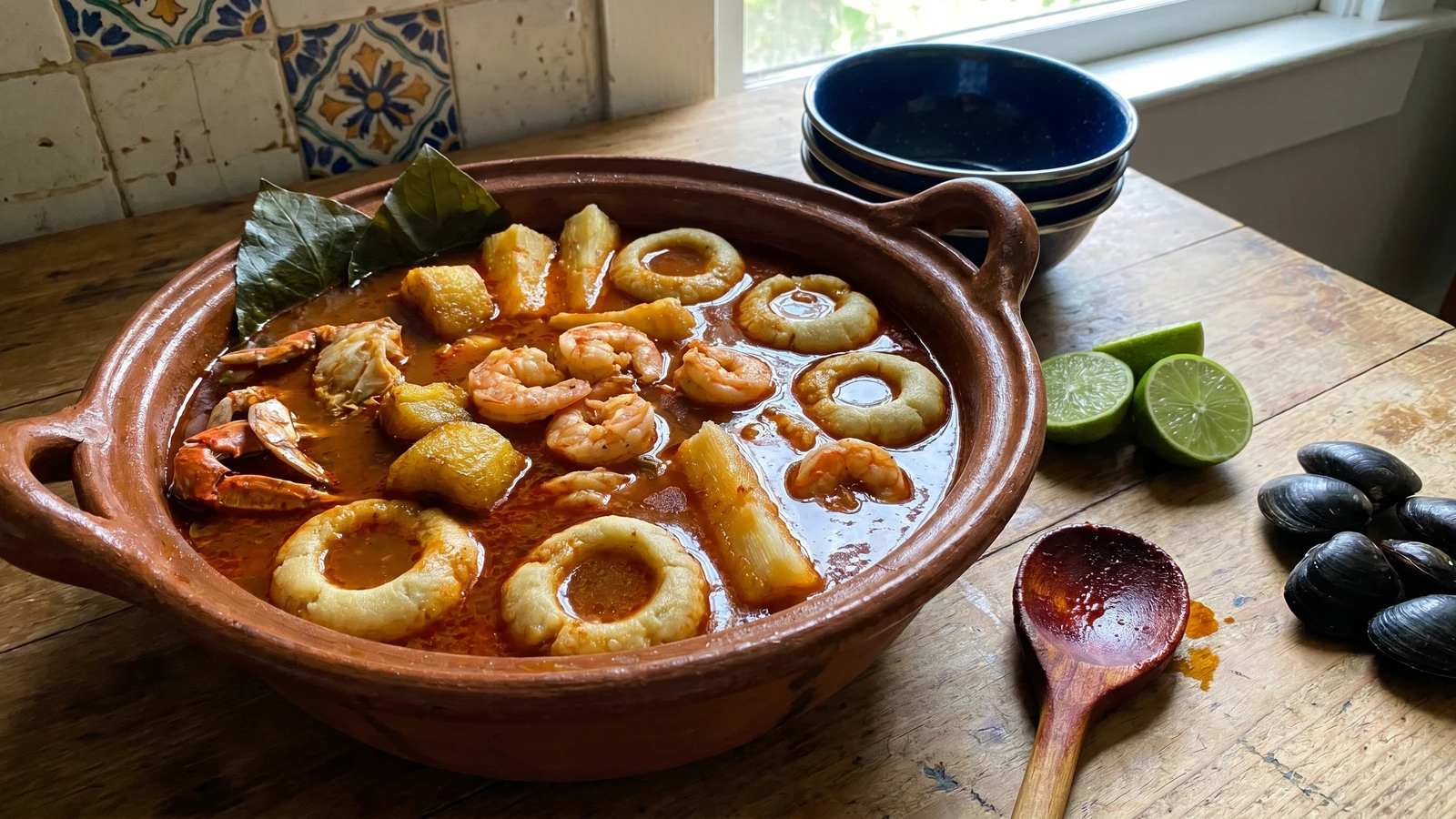
Veracruz Sotavento chilpachole, built from shrimp shells, charred tomato, chipotle, guajillo, chile costeño, and masa chochoyotes that thicken the red broth properly.
Veracruz Sotavento is where this chilpachole lives, along the river towns of Tlacotalpan and the humid green edge of Los Tuxtlas, where the Gulf gives shrimp, jaiba, and the kind of kitchen knowledge nobody learns from a package. This is a coastal pot, Afro-Mexican in memory and practice, one branch of the third root that runs with Veracruz Sotavento, Costa Chica Oaxaca, and Costa Chica Guerrero. Name the corridors. Visibility is not decoration, it is correction.
The broth begins with shrimp shells, charred tomato, garlic, onion, chile guajillo, chipotle, and chile costeño. Then come the ingredients that tell you where the pot has traveled: plátano macho, yuca, epazote, hoja santa, masa shaped into chochoyotes, and manteca de cerdo to fry the chile paste. Chilpachole is thickened with masa, not flour. No me vengas con atajos.
I have eaten versions in peltre bowls near the port and in clay cazuelas where the spoon stands heavy from the masa and shellfish. Some cooks add jaiba because the shell gives the caldo a deeper backbone. Good. Use it if you have it. But do not use canned broth and do not dump powdered chile into water. Ask the women at the fish stall. Si no conoces el mercado, no conoces la cocina.
The chochoyotes are not garnish. They are little masa anchors, pressed with the thumb so the broth catches in the hollow. When they float, the pot is ready. Serve it in a clay bowl with lime on the side, a hoja santa leaf tucked into the caldo, and enough pride to say exactly where it comes from. Cada estado, su propia cocina.
Chilpachole is a Gulf Coast seafood stew from Veracruz, especially associated with crab and shrimp in the Sotavento, and its masa-thickened body connects it to older corn-based soup traditions rather than European flour-thickened soups. Afro-Mexican communities in Veracruz Sotavento, Costa Chica Oaxaca, and Costa Chica Guerrero carry coastal ingredient ecologies shaped by African, Indigenous, and Spanish histories; Mexico constitutionally recognized Afro-Mexican people as the nation's third root only in 2020. Mondongo jarocho carries the Atlantic slave-trade lineage into the port of Veracruz, while Guerrero's chilate must be named carefully: the chicken stew belongs to this coastal cooking conversation, the cacao-rice-cinnamon beverage is a different drink, and Costa Chica wet barbacoa is a plated stew, not taqueria barbacoa; tichindas are black-shell mangrove mussels from Laguna de Chacahua and Corralero, not generic mussels.
Quantity
2 pounds
peeled and deveined, shells reserved
Quantity
1
cleaned and split
Quantity
8 cups
Quantity
1 medium
half for broth and half for salsa
Quantity
5
divided
Quantity
2
Quantity
1 teaspoon, plus more to taste
Quantity
4 medium
ripe
Quantity
3
stemmed and seeded
Quantity
2
stemmed and seeded
Quantity
1
stemmed
Quantity
1
Quantity
2 tablespoons
for frying the chile paste
Quantity
1 small
peeled and cut into 1-inch chunks
Quantity
10 ounces
peeled, woody core removed, cut into 1-inch chunks
Quantity
2 large sprigs
Quantity
2 large
one torn for the pot and one left whole for serving
Quantity
1 1/2 cups
Quantity
2 tablespoons
for the chochoyotes
Quantity
1/2 teaspoon
for the chochoyotes
Quantity
1/4 cup
only if needed for the masa
Quantity
2
halved, for serving
Quantity
for serving
| Ingredient | Quantity |
|---|---|
| shell-on large shrimppeeled and deveined, shells reserved | 2 pounds |
| whole jaiba or blue crab (optional)cleaned and split | 1 |
| cold water | 8 cups |
| white onionhalf for broth and half for salsa | 1 medium |
| garlic clovesdivided | 5 |
| bay leaves | 2 |
| kosher salt | 1 teaspoon, plus more to taste |
| Roma tomatoesripe | 4 medium |
| dried chile guajillostemmed and seeded | 3 |
| dried chile costeñostemmed and seeded | 2 |
| dried chipotle chilestemmed | 1 |
| canned chipotle in adobo (optional) | 1 |
| pork lard (manteca de cerdo)for frying the chile paste | 2 tablespoons |
| ripe plantain (plátano macho)peeled and cut into 1-inch chunks | 1 small |
| yucapeeled, woody core removed, cut into 1-inch chunks | 10 ounces |
| fresh epazote | 2 large sprigs |
| hoja santa leavesone torn for the pot and one left whole for serving | 2 large |
| fresh masa or prepared masa harina dough | 1 1/2 cups |
| pork lardfor the chochoyotes | 2 tablespoons |
| kosher saltfor the chochoyotes | 1/2 teaspoon |
| warm water (optional)only if needed for the masa | 1/4 cup |
| limes (optional)halved, for serving | 2 |
| warm corn tortillas (optional) | for serving |
Put the reserved shrimp shells, the split jaiba if using, 8 cups cold water, half the onion, 2 garlic cloves, bay leaves, and 1 teaspoon salt into a heavy pot. Bring it to a low simmer and cook 30 minutes, skimming the foam in the first 10 minutes. Do not boil it hard. Shellfish broth turns harsh when you beat it up. Strain and keep the broth warm. You should have about 6 cups.
Set a comal over medium heat. Char the tomatoes, remaining onion half, and 3 garlic cloves until the tomato skins blister and blacken in spots, the onion edges brown, and the garlic softens inside its skin. This is the Sotavento flavor base: char first, blend later. A raw tomato salsa makes a thin, bright soup. Chilpachole needs depth.
Toast the guajillo, costeño, and dried chipotle on the dry comal for a few seconds per side, just until fragrant and flexible. The guajillo should smell fruity, the costeño sharper, the chipotle smoky and dark. If a chile blackens, throw it out. Burned chile makes bitter caldo, and no amount of shrimp will save it.
Cover the toasted chiles with hot water and let them soften for 15 minutes. Drain them. Peel the garlic from the comal and blend the chiles with the charred tomatoes, charred onion, charred garlic, and 1 cup of the shrimp broth until completely smooth. Strain through a fine-mesh sieve. The skins stay behind. The flavor goes into the pot.
Melt 2 tablespoons lard in a wide clay cazuela or heavy pot over medium heat. Add the strained chile-tomato paste. It will sputter, so stir with a wooden spoon and stand like you mean it. Cook 8 to 10 minutes, until the paste darkens to brick red and the fat begins to separate at the edges. La manteca es el sabor. This is where the broth gets its spine.
Pour in 5 cups of the warm shrimp broth and scrape the bottom of the pot. Add the yuca, plantain, epazote, and the torn hoja santa leaf. Simmer gently 20 to 25 minutes, until the yuca is tender but not collapsing and the plantain has sweetened the broth. Taste for salt now. The caldo should taste slightly stronger than you think it should, because the masa will soften it.
While the pot simmers, knead the masa with 2 tablespoons lard and 1/2 teaspoon salt until soft and smooth. If it cracks, add warm water one tablespoon at a time. Roll into balls about the size of a large marble. Press your thumb into the center of each one to make a little hollow. That hollow catches broth. Without it, you made masa balls, not chochoyotes. Así se hace y punto.
Lower the chochoyotes into the simmering broth one at a time. Do not dump them in a pile. Simmer 12 to 15 minutes, until they float and feel tender when pressed with a spoon. The masa will thicken the chilpachole lightly. If the broth tightens too much, add the remaining shrimp broth a little at a time. Chilpachole is masa-thickened, not paste-thickened and not flour-thickened.
Add the peeled shrimp and simmer 3 to 4 minutes, just until they curl and turn opaque. Pull the pot off the heat immediately. Overcooked shrimp gets rubbery, and rubbery shrimp tells everyone you stopped paying attention. If you used jaiba for broth and want it in the bowl, return the cooked pieces to the pot now.
Ladle the chilpachole into deep clay bowls, making sure each serving gets shrimp, yuca, plantain, and chochoyotes half-submerged in the red caldo. Lay a small piece of hoja santa on top and put lime halves on the table. Serve with warm corn tortillas. The surface should show a red oil sheen from the fried chiles and lard, with masa body underneath. Recetas probadas y garantizadas.
1 serving (about 480g)
Culinary guides, cultural storytelling, and the editorial depth that makes cooking meaningful.
Discover Culinary ExplorerChef Lupita
Aguascalientes' Bajio pozole de lengua, built with cacahuazintle hominy, tender beef tongue, chile ancho and guajillo, with xoconostle brightness and table garnishes.

Chef Lupita
Veracruz's Gulf coast rice from Alvarado, built with seafood stock, tomato, chile chipotle, epazote, shrimp, fish, jaiba, and pulpo, served loose and brothy in a clay cazuela.

Chef Lupita
Costa Chica's wet salt-beef stew, built from chile costeño, guajillo, tomato, manteca, yuca, plantain, and masa dumplings, the ranching pot of Cuajinicuilapa and Pinotepa.

Chef Lupita
Michoacán's P'urhépecha atápakua is a masa-thickened sauce and stew at once, built with pork, chile guajillo, and hierbabuena added only at the end.