
Chef Margarida
Açorda de Bacalhau
Two Portuguese icons meet in one humble bowl: the bread soup of Alentejo embracing flakes of salt cod. Peasant genius that proves scarcity breeds invention, that pão and bacalhau together can feed the soul.
A cooking platform built around craft, culture, and the stories behind what we eat.
Created by
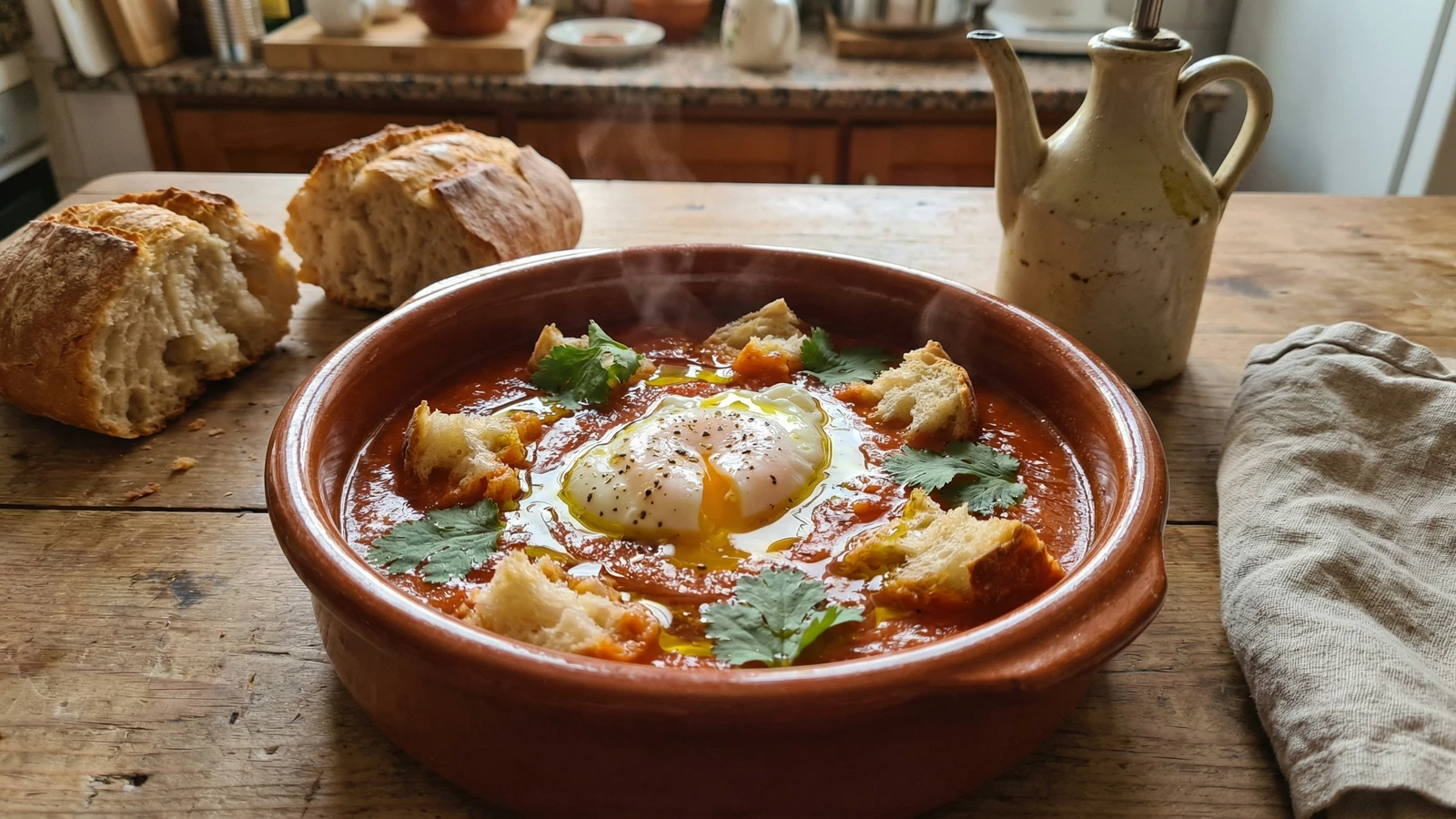
Alentejo's answer to summer abundance, when tomatoes are so ripe they nearly burst and the only sensible thing is to make soup. Eggs poached in the broth, bread waiting at the bottom. Peasant genius.
In August, when the heat in Alentejo makes you want to lie down and never move, this is what you eat. It sounds wrong. Hot soup in the hottest month. But the grandmothers knew what they were doing. They always do.
Avó Leonor made this soup when the tomatoes from her garden were threatening to take over the kitchen. Too many to eat fresh, too perfect to waste. She'd pile them on the counter, red and heavy with juice, and by evening they'd be transformed into this: a sweet, garlicky broth with eggs floating on top like little gifts.
The bread at the bottom is not a garnish. It's the soul of the dish. It drinks the tomato broth, catches the runny yolk when you break it, becomes something entirely new. Pão, tomate, ovo. Bread, tomato, egg. The simplest things, treated right.
At Mesa da Avó, I serve this in clay bowls that hold the heat. People look skeptical at first. Tomato soup with eggs? But then they taste it. They break the yolk and watch it run golden through the red broth. They fish out bread soaked through with everything good. And then they understand. This is summer in a bowl. This is Alentejo. This is who we are.
Sopa de tomate emerged in Alentejo after tomatoes arrived from the Americas in the 16th century and flourished in the region's scorching summers. The addition of poached eggs transformed a simple vegetable soup into a complete meal for workers returning from the fields. The dish represents the Alentejano philosophy of abundance: when you have too much of something good, you find a way to celebrate it.
Quantity
1 kg
roughly chopped
Quantity
1 large
diced
Quantity
4
smashed
Quantity
1/2 cup, plus more for drizzling
Quantity
1 teaspoon
Quantity
1
Quantity
1 teaspoon
Quantity
1 teaspoon, plus more to taste
Quantity
4 cups
Quantity
4 large
Quantity
4 thick slices (about 300g)
Quantity
1 small bunch
roughly chopped
Quantity
freshly ground, to taste
| Ingredient | Quantity |
|---|---|
| very ripe tomatoesroughly chopped | 1 kg |
| oniondiced | 1 large |
| garlic clovessmashed | 4 |
| extra virgin olive oil (azeite) | 1/2 cup, plus more for drizzling |
| sweet paprika (pimentão doce) | 1 teaspoon |
| bay leaf | 1 |
| sugar (optional) | 1 teaspoon |
| sea salt | 1 teaspoon, plus more to taste |
| water | 4 cups |
| eggs | 4 large |
| day-old crusty bread | 4 thick slices (about 300g) |
| fresh cilantro (coentros)roughly chopped | 1 small bunch |
| black pepper | freshly ground, to taste |
In a heavy pot, warm the olive oil over medium-low heat. Add the onion and cook slowly, stirring occasionally, until it softens and turns golden, about 12 minutes. Add the garlic and cook another minute until fragrant. Não tenhas pressa. This slow start is everything. The onion should practically melt before you add anything else.
Add the chopped tomatoes, paprika, bay leaf, sugar (if using), and salt. Stir well and let the tomatoes collapse over medium heat, about 10 minutes. They should break down completely, releasing all their juice. The kitchen will smell like summer. Press on any large pieces with your spoon to help them along.
Add the water and bring to a gentle simmer. Let it bubble softly for 15 minutes. Taste and adjust the salt. The broth should be sweet from the tomatoes, savory from the refogado, with a gentle warmth from the paprika. If your tomatoes were acidic, add a pinch more sugar. If they were perfect August tomatoes, you won't need it.
Place a thick slice of day-old bread in the bottom of each deep bowl. The bread must be stale enough to hold its shape but soft enough to drink the broth. If your bread is too fresh, toast it lightly. Fresh soft bread turns to paste. We don't want paste.
Remove the bay leaf. Reduce the heat so the soup barely simmers. Create four small wells in the surface and crack an egg into each one. Cover the pot and let the eggs poach gently for 3 to 4 minutes, until the whites are set but the yolks remain runny. Don't stir. Don't peek too often. Trust the process.
Ladle the hot soup over the bread in each bowl, carefully placing one poached egg on top. Scatter coentros generously. Drizzle with your best olive oil. Finish with black pepper. Serve immediately with spoons for the soup and forks for breaking the egg. The yolk should run into the broth when pierced. That moment is the whole point.
1 serving (about 500g)
Culinary guides, cultural storytelling, and the editorial depth that makes cooking meaningful.
Discover Culinary ExplorerChef Margarida
Two Portuguese icons meet in one humble bowl: the bread soup of Alentejo embracing flakes of salt cod. Peasant genius that proves scarcity breeds invention, that pão and bacalhau together can feed the soul.

Chef Margarida
Dogfish shark marinated in vinha d'alhos, simmered and ladled over thick bread. Coastal Alentejo in a bowl. A dish the grandmothers made that we're in danger of forgetting.

Chef Margarida
The lamb trotter soup of Alentejo, where nothing was wasted and everything was transformed. Collagen-rich broth, sharp with garlic and coentros, bread to drink it all in. Offal cooking at its finest.

Chef Juliette
Marseille's great fish stew, saffron-gold and garlic-scented, proves that a hard boil can be the careful choice: it binds olive oil into broth before the whole pot meets bread.