
Chef Lupita
Aguascalientes Beef Tongue Pozole (Pozole de Lengua)
Aguascalientes' Bajio pozole de lengua, built with cacahuazintle hominy, tender beef tongue, chile ancho and guajillo, with xoconostle brightness and table garnishes.
A cooking platform built around craft, culture, and the stories behind what we eat.
Created by
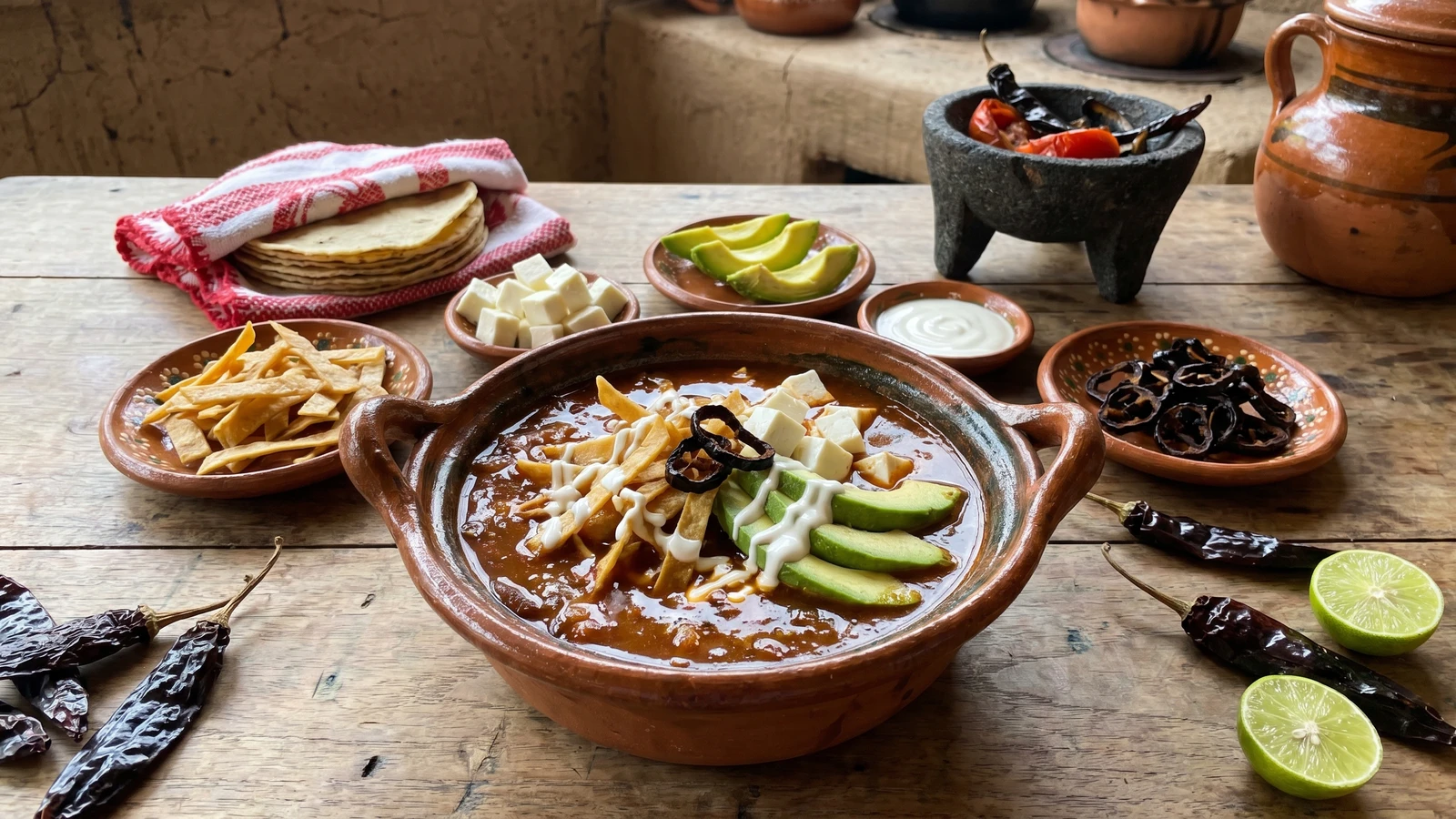
Ciudad de México's smoky pasilla-and-tomato broth, finished at the table with crispy tortilla strips, cubes of queso panela, avocado, crema, and a crackling ring of fried pasilla on top.
This is a Ciudad de México dish. The capital claims it, and although you will find tortilla soups across the central highlands of Mexico, the version with chile pasilla, fresh epazote, queso panela, and crema is chilanga through and through. The dish has a name some people use, sopa azteca, and a name others prefer, sopa de tortilla. They are the same soup. The argument about which name is right is a chilango pastime.
The chile here is pasilla, not ancho, not guajillo. Pasilla is what makes this soup what it is. Dark, almost black, thin-skinned, with a smoky-raisin sweetness that turns the broth the color of wet adobe. You will use the pasilla twice: toasted and soaked into the broth, then sliced into rings and flash-fried as a garnish. Two textures, same chile. That double use is the signature of the dish, and any version that leaves off the fried pasilla rings on top is missing its crown.
The broth is built on the holy trinity of the central highlands kitchen: tomato, onion, garlic, charred on a comal until the skins blister and blacken. Then it is blended with the soaked pasilla, strained, and fried in lard until the puree darkens and the fat separates. That frying step is not optional. It is the step that separates a thin tortilla soup from a serious sopa azteca. La manteca es el sabor.
Everything else happens at the table. The tortilla strips go in first, then queso panela, avocado, crema, the fried chile rings, a squeeze of lime. The diner builds their own bowl in the order they like. That ritual is part of the soup. My mother used to make this on cold nights in Colonia Roma when the rain came down sideways off the volcanoes and the city smelled of wet stone and woodsmoke. She would set the garnishes in small dishes around the table and tell us not to put the tortillas in until the broth was already in front of us. The tortilla must crunch. Soggy tortilla is not sopa azteca, it is a mistake. Saber cocinar es saber vivir.
Sopa azteca is a 20th-century dish despite its name, which gestures at a pre-Columbian heritage the soup does not actually possess; the Mexica did not eat sopas in the European sense, since the concept of a brothy course served from a bowl was a colonial introduction. What the soup does inherit from pre-Columbian cooking is its core trio of corn, chile, and tomato, three of the foundational crops of Mesoamerican agriculture, alongside epazote (Dysphania ambrosioides), a native herb whose use long predates the conquest. The modern sopa azteca took shape in Ciudad de México sometime in the mid-20th century as a creative reuse for stale tortillas, the kind of frugal household dish that became elegant once it left the home kitchen and entered the restaurants of Colonia Condesa and Roma.
Quantity
12
day-old, cut into thin strips
Quantity
8
stemmed and seeded (4 for the broth, 4 for the garnish)
Quantity
1 1/2 pounds
Quantity
1/2 medium, plus 1/4 onion for the broth
Quantity
3
unpeeled
Quantity
2 tablespoons, plus more for frying
Quantity
6 cups
homemade if you have it
Quantity
2 large sprigs
Quantity
1 teaspoon, plus more to taste
Quantity
for frying the tortilla strips
Quantity
1
sliced
Quantity
6 ounces
cubed
Quantity
1/2 cup
Quantity
for serving
| Ingredient | Quantity |
|---|---|
| corn tortillasday-old, cut into thin strips | 12 |
| dried chile pasillastemmed and seeded (4 for the broth, 4 for the garnish) | 8 |
| ripe Roma tomatoes | 1 1/2 pounds |
| white onion | 1/2 medium, plus 1/4 onion for the broth |
| garlic clovesunpeeled | 3 |
| manteca de cerdo (pork lard) | 2 tablespoons, plus more for frying |
| chicken brothhomemade if you have it | 6 cups |
| fresh epazote | 2 large sprigs |
| kosher salt | 1 teaspoon, plus more to taste |
| neutral oil (or more lard) | for frying the tortilla strips |
| ripe Hass avocado (optional)sliced | 1 |
| queso panela or queso fresco (optional)cubed | 6 ounces |
| Mexican crema (optional) | 1/2 cup |
| lime wedges (optional) | for serving |
Cut the tortillas into thin strips, about a quarter inch wide. Spread them on a sheet pan and let them sit out for at least 30 minutes while you work. Day-old tortillas fry crisp. Fresh tortillas absorb oil and turn limp. If your tortillas are too fresh, dry the strips in a low oven (200F) for 15 minutes before frying. The texture of this soup lives in the tortilla. Do not skip this.
Heat a dry comal or heavy skillet over medium. Take 4 of the pasillas and toast them gently, about 20 seconds per side. The chile pasilla is thin and dark. It burns faster than guajillo or ancho. Watch it. The skin will puff and the smell will fill the kitchen, smoky, raisin-dark, almost like dried fruit. Set these aside for the broth. Take the other 4, slice them into thin rings, and reserve them for frying as a garnish. Two uses, same chile, two textures on the plate.
On the same comal, place the tomatoes whole, the half onion cut side down, and the unpeeled garlic cloves. Char them over medium-high heat, turning as they blacken in patches. The tomato skins should split and blister. The onion should darken at the edges. The garlic should soften inside its papery skin, about 10 minutes total. This is how the broth gets its smoky depth. Without the char, you have tomato soup. With it, you have sopa azteca.
Place the 4 toasted pasillas in a heatproof bowl and cover with hot tap water. Hot water, not boiling. Boiling water cooks the skin and turns the broth bitter. Soak for 15 minutes until soft. Peel the charred garlic. Transfer the soaked pasillas, charred tomatoes (skins and all), charred onion, garlic, and 1 cup of chicken broth to a blender. Blend until completely smooth. Strain through a fine-mesh sieve, pressing on the solids. You want a clean, deep red-brown puree, the color of wet adobe.
In a heavy 4-quart pot or cazuela, melt 2 tablespoons of lard over medium heat. When the lard shimmers, pour in the strained puree. It will sputter and spit, that is correct. Cook for 8 to 10 minutes, stirring often, until the puree darkens and the fat begins to separate around the edges. This step is the one most home cooks skip. Do not skip it. Frying the puree concentrates the flavor and is the difference between a thin broth and a serious one. La manteca es el sabor.
Pour in the remaining 5 cups of chicken broth. Add the quarter onion and the epazote sprigs. Bring to a gentle simmer and cook uncovered for 20 minutes so the flavors marry. Taste for salt. The broth should taste assertive, smoky from the chile, sweet from the tomato, with the unmistakable green-resinous note of epazote running through it. If you cannot find epazote, the soup is not the same. Do not substitute cilantro. Cilantro is not epazote.
While the broth simmers, heat about half an inch of neutral oil or lard in a wide skillet over medium-high. When the oil shimmers, fry the tortilla strips in batches. Do not crowd the pan. Stir with a slotted spoon. They will turn golden in about a minute. Lift them out the second they are crisp and pale gold. They keep cooking on the rack. Drain on paper towels and salt them lightly while still hot.
Lower the heat under the same oil to medium. Drop in the reserved pasilla rings and fry for no more than 5 seconds. Five. They turn from dark brown to almost black in a blink and they go bitter just as fast. Lift them out the moment they crisp and drain on paper towels. These are the crown of the dish, the bittersweet, crackling ring on top of the broth that tells the eater they are eating something serious.
Fish out the epazote and onion from the broth. Ladle the hot broth into wide clay bowls. At each place setting, the diner builds their own: a handful of tortilla strips dropped into the bowl, cubes of queso panela, slices of avocado, a spoonful of crema, and a scatter of fried pasilla rings on top. A squeeze of lime if they want it. Eat it the moment it is built, while the tortillas still have crunch. Así se hace y punto.
1 serving (about 530g)
Culinary guides, cultural storytelling, and the editorial depth that makes cooking meaningful.
Discover Culinary ExplorerChef Lupita
Aguascalientes' Bajio pozole de lengua, built with cacahuazintle hominy, tender beef tongue, chile ancho and guajillo, with xoconostle brightness and table garnishes.

Chef Lupita
Veracruz's Gulf coast rice from Alvarado, built with seafood stock, tomato, chile chipotle, epazote, shrimp, fish, jaiba, and pulpo, served loose and brothy in a clay cazuela.

Chef Lupita
Costa Chica's wet salt-beef stew, built from chile costeño, guajillo, tomato, manteca, yuca, plantain, and masa dumplings, the ranching pot of Cuajinicuilapa and Pinotepa.

Chef Lupita
Michoacán's P'urhépecha atápakua is a masa-thickened sauce and stew at once, built with pork, chile guajillo, and hierbabuena added only at the end.