
Chef Lupita
Aguascalientes Beef Tongue Pozole (Pozole de Lengua)
Aguascalientes' Bajio pozole de lengua, built with cacahuazintle hominy, tender beef tongue, chile ancho and guajillo, with xoconostle brightness and table garnishes.
A cooking platform built around craft, culture, and the stories behind what we eat.
Created by
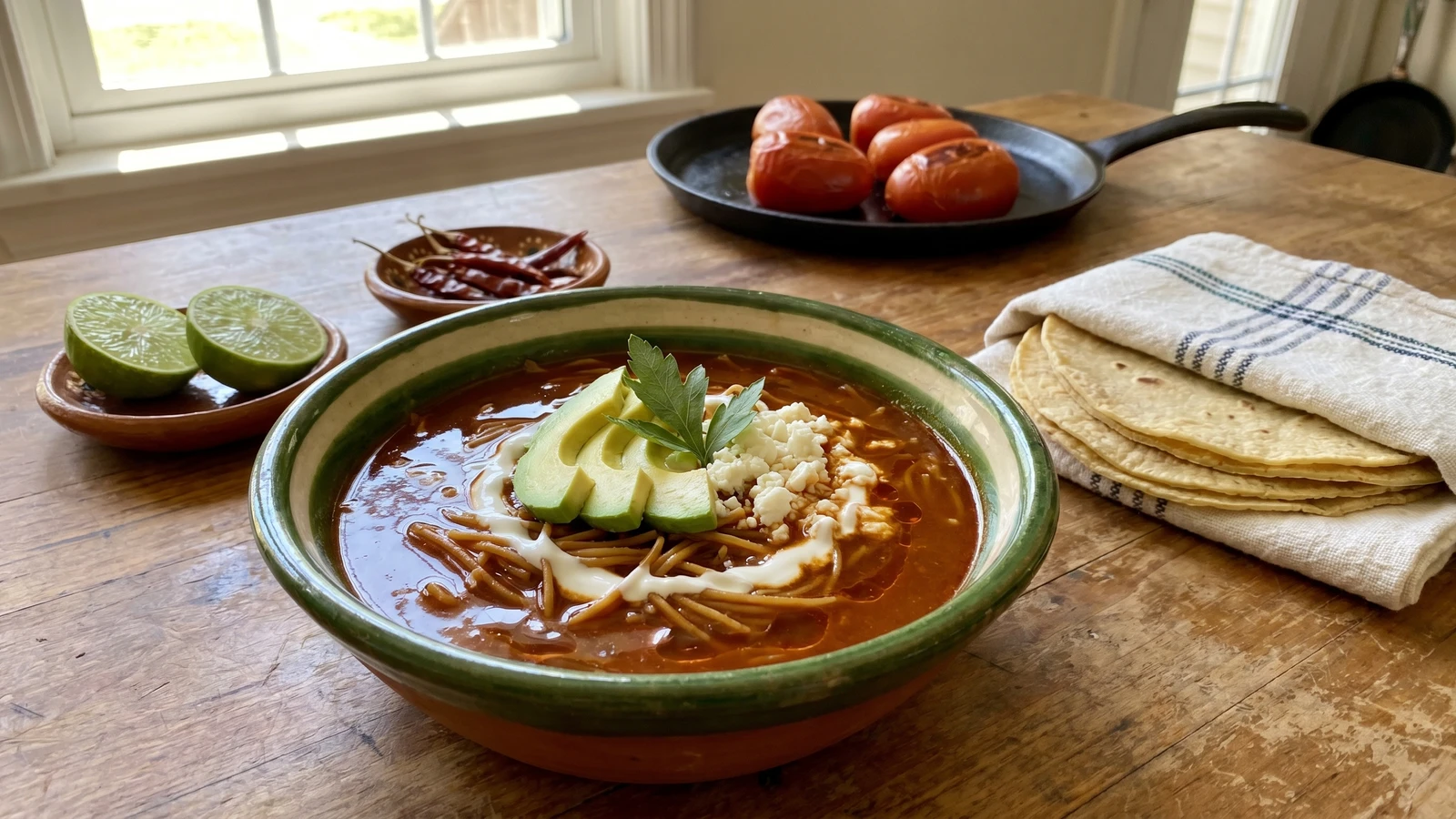
Ciudad de Mexico's everyday sopa aguada, toasted fideo simmered in a charred roma-tomato caldo and finished with crema, queso fresco, and avocado. The first plate of every comida corrida in the capital.
This is a Ciudad de Mexico dish. Not a generic Mexican one. Sopa aguada de fideo is the first plate of the comida corrida, the three-peso lunch set that has fed the working capital for a century, and you will not walk into a fonda in Roma, Doctores, or San Rafael at one in the afternoon without finding a steaming pot of it on the line.
The technique is short and it is non-negotiable. You toast the fideo in lard until it turns amber. You char the romas and the garlic on a comal until the skins blister. You fry the blended salsa into the toasted pasta until the fat separates. Then the caldo goes in and the epazote does its quiet work. Skip the toasting and you have pale, starchy pasta water. Skip the charring and the salsa tastes raw. These two steps are the recipe. Everything else is just simmering.
My mother made this once a week, every week, for as long as I lived at home in Colonia Roma. It was the soup of a Tuesday when there was no money for meat and no time for a slow stew. A package of fideo, four romas, half a chicken carcass for broth, a sprig of epazote from the pot on the window. She finished it with crema and queso fresco and slices of aguacate when there was aguacate, and with nothing but a squeeze of lime when there was not. La cocina no es decoracion, es trabajo. This is that soup. Cada estado, su propia cocina, and this one belongs to the capital.
Fideo arrived in Mexico with the Spanish, who had inherited the noodle from the Moorish 'fidaws' tradition of the Iberian Peninsula, itself rooted in the broader medieval Mediterranean pasta culture. Mexican cooks in the central highlands adapted it to the local pantry by frying it in lard before simmering, a technique borrowed from the way rice was prepared in the sopa seca tradition, transforming a European wheat noodle into a recognizably Mexican preparation. By the late 19th century, sopa aguada de fideo had become a fixed first course of the comida corrida format that defined working-class urban dining in Mexico City, and the standardized small package of fideo (200 grams, enough for one family pot) remains one of the most consistent sellers in the country's tiendas de abarrotes.
Quantity
7 ounces (one standard Mexican package, about 200 grams)
Quantity
2 tablespoons
Quantity
4 medium (about 1 pound)
cored
Quantity
1/4 medium, plus 2 tablespoons finely diced for the caldo
Quantity
2
peeled
Quantity
1
stemmed
Quantity
6 cups
Quantity
2 sprigs
Quantity
1 1/2 teaspoons, plus more to taste
Quantity
1
sliced
Quantity
1/2 cup
Quantity
1/2 cup
crumbled
Quantity
for serving
Quantity
for serving
warmed
| Ingredient | Quantity |
|---|---|
| dried fideo | 7 ounces (one standard Mexican package, about 200 grams) |
| manteca de cerdo (pork lard) or neutral oil | 2 tablespoons |
| roma tomatoescored | 4 medium (about 1 pound) |
| white onion | 1/4 medium, plus 2 tablespoons finely diced for the caldo |
| garlic clovespeeled | 2 |
| fresh chile serrano (optional)stemmed | 1 |
| homemade chicken caldo or good-quality unsalted chicken broth | 6 cups |
| fresh epazote | 2 sprigs |
| kosher salt | 1 1/2 teaspoons, plus more to taste |
| ripe Hass avocado (optional)sliced | 1 |
| crema mexicana (optional) | 1/2 cup |
| queso fresco (optional)crumbled | 1/2 cup |
| lime wedges (optional) | for serving |
| hand-pressed corn tortillas (optional)warmed | for serving |
Melt the lard in a wide, heavy pot over medium heat. Add the dry fideo straight from the package. Stir constantly with a wooden spoon. The pasta will turn from pale yellow to gold to a deep amber over four or five minutes. Do not walk away. Toasted fideo is the entire point of this soup. Pale fideo gives you a flat, starchy caldo. Properly toasted fideo gives you the nutty, browned-butter flavor that defines a sopa aguada capitalina.
While the fideo toasts, char the romas, the quarter onion, the garlic, and the serrano on a dry comal over medium-high heat. Turn them until the skins blister and blacken in patches, about eight minutes. The char is flavor. A raw tomato salsa makes a thin caldo. A roasted tomato salsa gives the soup its body and color. Transfer everything to the blender and blend until completely smooth.
Once the fideo is amber, push it to the sides of the pot to make a small well in the center. Add the diced onion to the well and let it soften for one minute. Pour the blended tomato salsa directly over the toasted fideo. It will hiss and sputter. Stir to coat every strand. Cook for three to four minutes, stirring often, until the salsa darkens from bright red to a deeper brick color and the fat begins to separate around the edges. This frying step is what makes a Mexican sopa aguada different from any other pasta soup. The raw tomato has to lose its sharp edge before the broth goes in.
Pour in the chicken caldo. Add the epazote sprigs and the salt. Bring to a gentle simmer, never a hard boil. Hard boiling turns the fideo to mush and clouds the caldo. Cook uncovered for eight to ten minutes, until the fideo is tender but still has a slight bite at the center. Taste for salt. The caldo should be assertive, not timid. This is the broth that has to wake up an entire comida corrida.
Pull the epazote sprigs out, or leave them in if your family fights over them like mine did. Ladle the sopa into deep bowls. Each diner crowns their own: a generous swirl of crema, a handful of crumbled queso fresco, three or four slices of avocado, a wedge of lime, and a warm tortilla on the side. Eat it the moment it hits the table. Sopa aguada de fideo is meant to be the first thing on the comida, the dish that tells your stomach to get ready. Saber cocinar es saber vivir.
1 serving (about 500g)
Culinary guides, cultural storytelling, and the editorial depth that makes cooking meaningful.
Discover Culinary ExplorerChef Lupita
Aguascalientes' Bajio pozole de lengua, built with cacahuazintle hominy, tender beef tongue, chile ancho and guajillo, with xoconostle brightness and table garnishes.

Chef Lupita
Veracruz's Gulf coast rice from Alvarado, built with seafood stock, tomato, chile chipotle, epazote, shrimp, fish, jaiba, and pulpo, served loose and brothy in a clay cazuela.

Chef Lupita
Costa Chica's wet salt-beef stew, built from chile costeño, guajillo, tomato, manteca, yuca, plantain, and masa dumplings, the ranching pot of Cuajinicuilapa and Pinotepa.

Chef Lupita
Michoacán's P'urhépecha atápakua is a masa-thickened sauce and stew at once, built with pork, chile guajillo, and hierbabuena added only at the end.