
Chef Jeong-sun
Agwi-jjim (Braised Monkfish with Bean Sprouts)
Firm monkfish buried under crisp soybean sprouts, minari, and a red gochugaru sauce thickened at the end; Masan's market dish asks for heat, timing, and a steady hand.
A cooking platform built around craft, culture, and the stories behind what we eat.
Created by
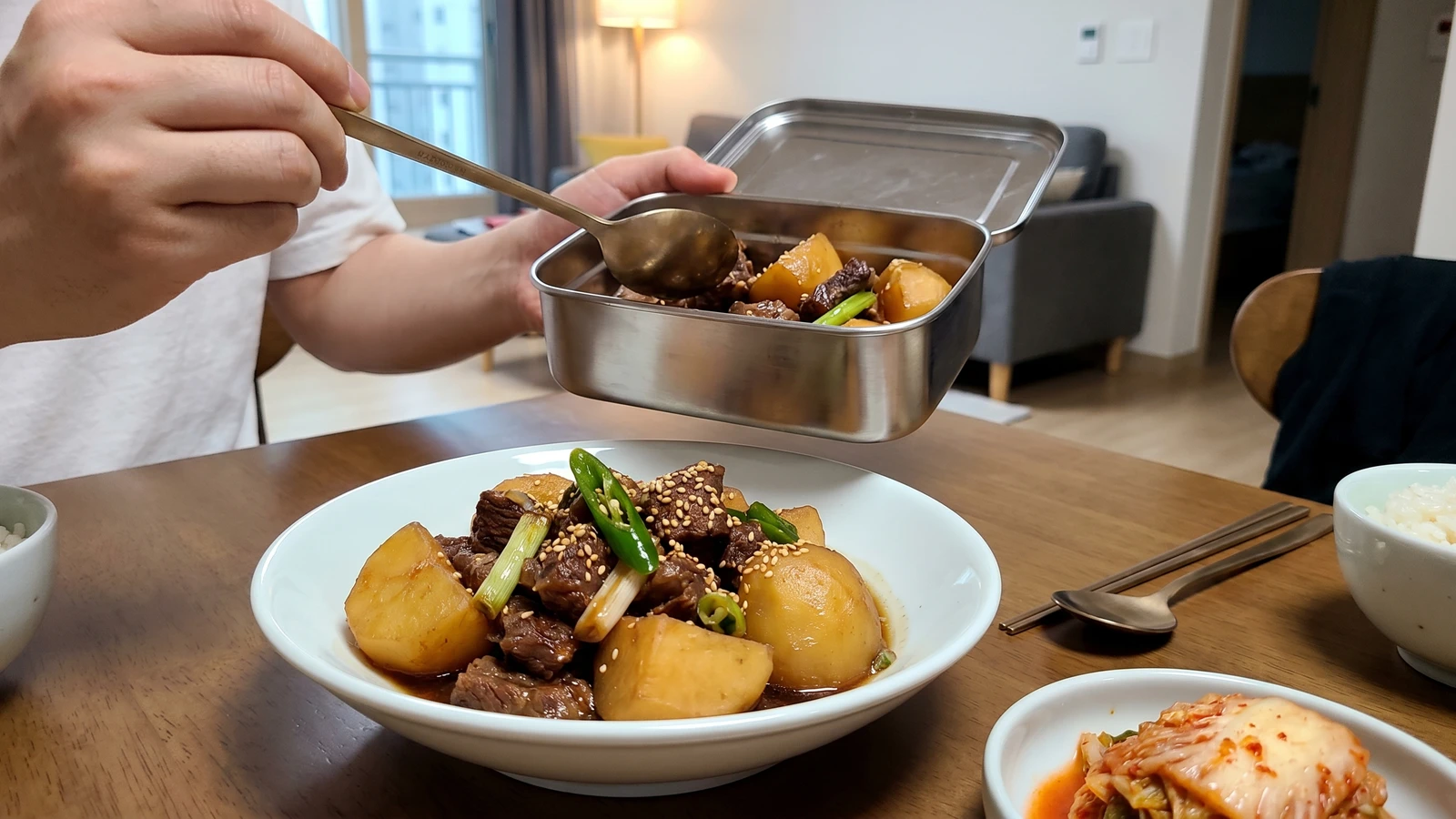
Tender beef and large-cut potatoes simmered until the soy braise turns glossy and clings, a weeknight jorim made for rice, lunchboxes, and tomorrow's table.
Gamja-jorim was the lunchbox dish that made children trade, and the beef version meant someone in the house was being generous with the meat. It is not grand food. It is rice food: sweet-salty, glossy, sturdy enough to sit beside kimchi, egg, and a few greens without asking for attention.
The dish lives or dies by sequence. Beef needs time before the potato goes in, and potato needs to be cut larger than your hand wants to cut it. Small cubes collapse and cloud the sauce. Large chunks hold their corners, drink the soy, and still taste like potato. Let it taste like itself.
Notebook 18 says this much soy for this much beef and potato: 5 tablespoons ganjang (soy sauce), 1 tablespoon sugar, 1 tablespoon rice syrup, and no more. Too much sweetness turns jorim into candy, and too much soy makes the potato harsh. 손맛 is real, the hand-taste your grandmother trusted; I measure it anyway, so it can be handed on.
Jorim is a Korean braising method built around simmering ingredients in soy sauce until the liquid reduces and seasons the food all the way through. Potatoes became common in Korea after their introduction in the nineteenth century and grew especially important in colder, mountainous regions where they were reliable and filling. Sogogi-gamja-jorim belongs to the everyday home table and lunchbox tradition, where a small amount of beef could season a whole pot of potatoes and make rice feel complete.
Quantity
450g
cut into 1 1/2-inch pieces
Quantity
600g
peeled and cut into large 1 1/2-inch chunks
Quantity
1/2 medium
thickly sliced
Quantity
1 small
cut into 1-inch chunks
Quantity
2 cloves
minced
Quantity
1 thin slice, about 5g
Quantity
1 1/2 cups
Quantity
5 tablespoons
Quantity
1 tablespoon
Quantity
1 tablespoon
Quantity
1 tablespoon
Quantity
1/4 teaspoon
freshly ground
Quantity
2
cut into 1-inch lengths
Quantity
1 green chili or 6 kkwari-gochu
pierced
Quantity
1 teaspoon
Quantity
1 teaspoon
| Ingredient | Quantity |
|---|---|
| beef chuck or brisketcut into 1 1/2-inch pieces | 450g |
| waxy potatoespeeled and cut into large 1 1/2-inch chunks | 600g |
| onionthickly sliced | 1/2 medium |
| carrot (optional)cut into 1-inch chunks | 1 small |
| garlicminced | 2 cloves |
| fresh ginger | 1 thin slice, about 5g |
| water | 1 1/2 cups |
| ganjang (Korean soy sauce) | 5 tablespoons |
| sugar | 1 tablespoon |
| rice syrup or corn syrup | 1 tablespoon |
| mirin or rice wine | 1 tablespoon |
| black pepperfreshly ground | 1/4 teaspoon |
| scallionscut into 1-inch lengths | 2 |
| green chili or kkwari-gochu (shishito peppers) (optional)pierced | 1 green chili or 6 kkwari-gochu |
| toasted sesame oil | 1 teaspoon |
| toasted sesame seeds | 1 teaspoon |
Put the cut potatoes in cold water for 10 minutes, then drain. This rinses off excess surface starch so the braising liquid stays clear and glossy instead of turning pasty. Keep the pieces large, about 1 1/2 inches, because they need to survive a real simmer.
Put the beef in a pot, cover with cold water, and bring just to a boil. Drain, rinse the beef under warm water, and wash the pot. This is not fussing. It removes blood foam and gives you a cleaner jorim sauce, the kind that shines instead of muddies.
Return the beef to the clean pot with 1 1/2 cups water, the soy sauce, sugar, rice syrup, mirin, garlic, ginger, onion, and black pepper. Bring to a boil, then lower to a steady simmer and cook uncovered for 20 minutes. The beef gets its head start now, because potato cannot wait 45 minutes and still keep its shape.
Add the drained potatoes and carrot if using. Turn the pieces gently so they meet the sauce, then simmer uncovered 18 to 22 minutes, turning once halfway through. Do not stir hard. Potatoes bruise, and once their edges break, the sauce thickens for the wrong reason.
When the potatoes are tender enough for a chopstick to enter cleanly, raise the heat to medium and spoon the sauce over the top for 4 to 6 minutes. The liquid should reduce to about 1/3 cup and cling to the beef and potato in a shiny coat. Watery jorim is unfinished. Burnt jorim is impatience. Stay by the pot.
Add the scallions and pierced chili or kkwari-gochu, if using, and cook 1 minute so they soften but keep their color. Turn off the heat, remove the ginger slice, and fold in the sesame oil. Scatter sesame seeds over the top. Let the pot stand 10 minutes before serving; jorim tastes better after it has had a little time to settle.
1 serving (about 300g)
Culinary guides, cultural storytelling, and the editorial depth that makes cooking meaningful.
Discover Culinary ExplorerChef Jeong-sun
Firm monkfish buried under crisp soybean sprouts, minari, and a red gochugaru sauce thickened at the end; Masan's market dish asks for heat, timing, and a steady hand.

Chef Jeong-sun
A quick Korean rice bowl built on contrast: warm rice, cold popping flying-fish roe, chopped vegetables, gim, sesame oil, and the crisp rice bottom a hot stone bowl gives you.

Chef Jeong-sun
Andong's guest noodles, wheat and roasted soybean flour rolled thin, boiled and rinsed cold, then set in a clear chilled anchovy broth with careful strips of beef, egg, and cucumber.

Chef Jeong-sun
Andong's ritual-table rice served on an ordinary day: separate soy-sesame namul, warm rice, and clear radish soup, mixed without gochujang so every vegetable keeps its own voice.