
Chef Jeong-sun
Aehobak-guk (애호박국, Korean Zucchini Soup)
A clean summer soup of Korean zucchini and salted shrimp, built on quick anchovy-kelp broth and finished before the half-moons lose their shape on a weeknight table.
A cooking platform built around craft, culture, and the stories behind what we eat.

Created by
A winter market bowl made from ox head boiled slowly until the broth turns milky and clean, served with rice, sliced head meat, scallion, salt, and kkakdugi.
Soemeori-gukbap belongs to the market, especially in cold weather, when a person has been standing too long and needs a bowl that fills the body from the inside. It is not a glamorous cut. That is the point. The head gives cheek, tongue, tendon, and skin, each with its own texture, and a broth with more body than plain beef bone soup if you treat it patiently.
The dish lives or dies by cleaning and skimming. If you rush the soaking, the first boil, or the slow skim, the broth tastes muddy and smells tired. If you do the plain work, rinse, blanch, wash the pot, simmer low, skim often, you get a white-gold broth that tastes of beef, not grease. My teacher made us skim with a spoon until our shoulders complained. She was right. 눈동냥, 귀동냥, borrowing with the eyes and ears, teaches you when the surface has changed from foam to fat.
Tonight this asks time from you, not cleverness. Buy a split, cleaned ox head if your butcher can get it, or use beef head meat with marrow bones and a little shank if you cannot. That is an honest modern vessel for an old market bowl. Do not shorten the cleaning, do not season the whole pot heavily, and slice the meat thin enough that a spoon can carry it with rice. Each person should finish the bowl with salt, pepper, scallion, and a little saeu-jeot (salted shrimp) if they like. 손맛 is real. I still measure it, so it can be handed on.
Soemeori-gukbap is part of Korea's market-day gukbap tradition, where soup houses near cattle markets and butcher stalls made filling meals from inexpensive cuts that rewarded long boiling. Gonjiam in Gwangju, Gyeonggi-do, became especially known for ox-head soup, serving traders, drivers, and travelers a bowl built from head meat, broth, and rice rather than expensive muscle cuts. This is not palace food dressed down; it is market food recorded with the same care because that is where many Korean soups lived.
Quantity
1, about 3 to 4 kg
ask the butcher to split and clean it
Quantity
1.2 kg head meat, 1.5 kg bones, 500 g shank
Quantity
as needed
for soaking and blanching
Quantity
5 liters
for the main broth
Quantity
1 large, about 500 g
peeled and cut into 3 large pieces
Quantity
1 large
halved
Quantity
1 head
halved crosswise
Quantity
30 g
sliced
Quantity
2 large
cut into 4-inch lengths
Quantity
2 tablespoons
Quantity
2 teaspoons, plus more for serving
Quantity
1/2 teaspoon, plus more for serving
Quantity
6 to 8 cups
Quantity
4
thinly sliced, for serving
Quantity
2 tablespoons
minced, for serving
Quantity
to serve
Quantity
about 1/4 cup
mixed from gochugaru, broth, garlic, and soup soy sauce
| Ingredient | Quantity |
|---|---|
| cleaned split ox headask the butcher to split and clean it | 1, about 3 to 4 kg |
| mixed beef head meat, marrow bones, and beef shank (optional) | 1.2 kg head meat, 1.5 kg bones, 500 g shank |
| waterfor soaking and blanching | as needed |
| cold waterfor the main broth | 5 liters |
| Korean radishpeeled and cut into 3 large pieces | 1 large, about 500 g |
| onionhalved | 1 large |
| garlichalved crosswise | 1 head |
| fresh gingersliced | 30 g |
| scallions, white partscut into 4-inch lengths | 2 large |
| cheongju or rice wine | 2 tablespoons |
| kosher salt | 2 teaspoons, plus more for serving |
| freshly ground black pepper | 1/2 teaspoon, plus more for serving |
| cooked short-grain rice | 6 to 8 cups |
| scallionsthinly sliced, for serving | 4 |
| saeu-jeot (salted shrimp) (optional)minced, for serving | 2 tablespoons |
| kkakdugi (cubed radish kimchi) | to serve |
| gochugaru seasoning paste (optional)mixed from gochugaru, broth, garlic, and soup soy sauce | about 1/4 cup |
Put the ox head, or the head meat, bones, and shank, in a large basin and cover with cold water by 2 inches. Soak 1 hour, changing the water once after 30 minutes. This pulls out blood that would cloud the broth and give it a heavy taste. Drain well.
Put the soaked meat and bones in a stockpot and cover with fresh cold water. Bring to a hard boil and boil 10 minutes. Drain everything, discard the water, rinse the meat under warm running water, and scrub any dark clots from the bones and creases. Wash the pot before the real broth begins. This is not fussy work; it is the difference between clean soup and a pot you keep apologizing for.
Return the cleaned meat and bones to the clean pot. Add 5 liters cold water, the radish, onion, garlic, ginger, scallion whites, and rice wine. Bring slowly to a boil over medium heat, then lower to a bare simmer. Skim the foam as it rises for the first 30 minutes. Do not stir hard, because stirring breaks the scum back into the broth.
Simmer gently for 3 to 4 hours, partly covered, until the cheek and tongue are tender enough for a chopstick to slide through with little resistance. Keep the water level just covering the meat, adding boiling water as needed. A rolling boil makes the fat rough and the broth dull; a patient simmer gives body without harshness.
Lift the tender meat onto a tray. When cool enough to handle, separate cheek, tongue, skin, and tendon. Peel the rough outer skin from the tongue if using it. Slice the meat thinly, about 3 mm thick, across the grain where you can see one. Thin slices matter because this soup is eaten by spoon with rice, not carved at the table like roast meat.
Strain the broth through a fine strainer into a clean pot. Press nothing through; let the liquid pass on its own. For the cleanest bowl, chill the broth until the fat firms on top, then lift off most of it, leaving 2 to 3 tablespoons for body. If serving the same day, skim the surface carefully with a ladle instead.
Bring the strained broth back to a simmer. Add 2 teaspoons kosher salt and 1/2 teaspoon black pepper, then taste. Stop there unless the broth is truly flat. Soemeori-gukbap is finished at the table, and if you salt the whole pot like restaurant soup, the second bowl will punish you.
Put 3/4 to 1 cup cooked rice in each deep bowl or ttukbaegi. Lay 80 to 100 g sliced head meat over the rice. Ladle 1 1/2 to 2 cups hot broth over the top and let the rice loosen in the bowl. Scatter with sliced scallion.
Serve with salt, black pepper, minced saeu-jeot, and the optional gochugaru paste on the side, plus kkakdugi. Each person should season their own bowl: start with 1/4 teaspoon salt or 1/2 teaspoon minced saeu-jeot, taste, then adjust. The broth should taste clean and beefy first, seasoned second.
1 serving (about 850g)
Culinary guides, cultural storytelling, and the editorial depth that makes cooking meaningful.
Discover Culinary ExplorerChef Jeong-sun
A clean summer soup of Korean zucchini and salted shrimp, built on quick anchovy-kelp broth and finished before the half-moons lose their shape on a weeknight table.

Chef Jeong-sun
A Masan coast monkfish stew with firm white meat, gelatin at the bones, soybean sprouts for crunch, and a red broth seasoned to carry the fish, not bury it.
Chef Jeong-sun
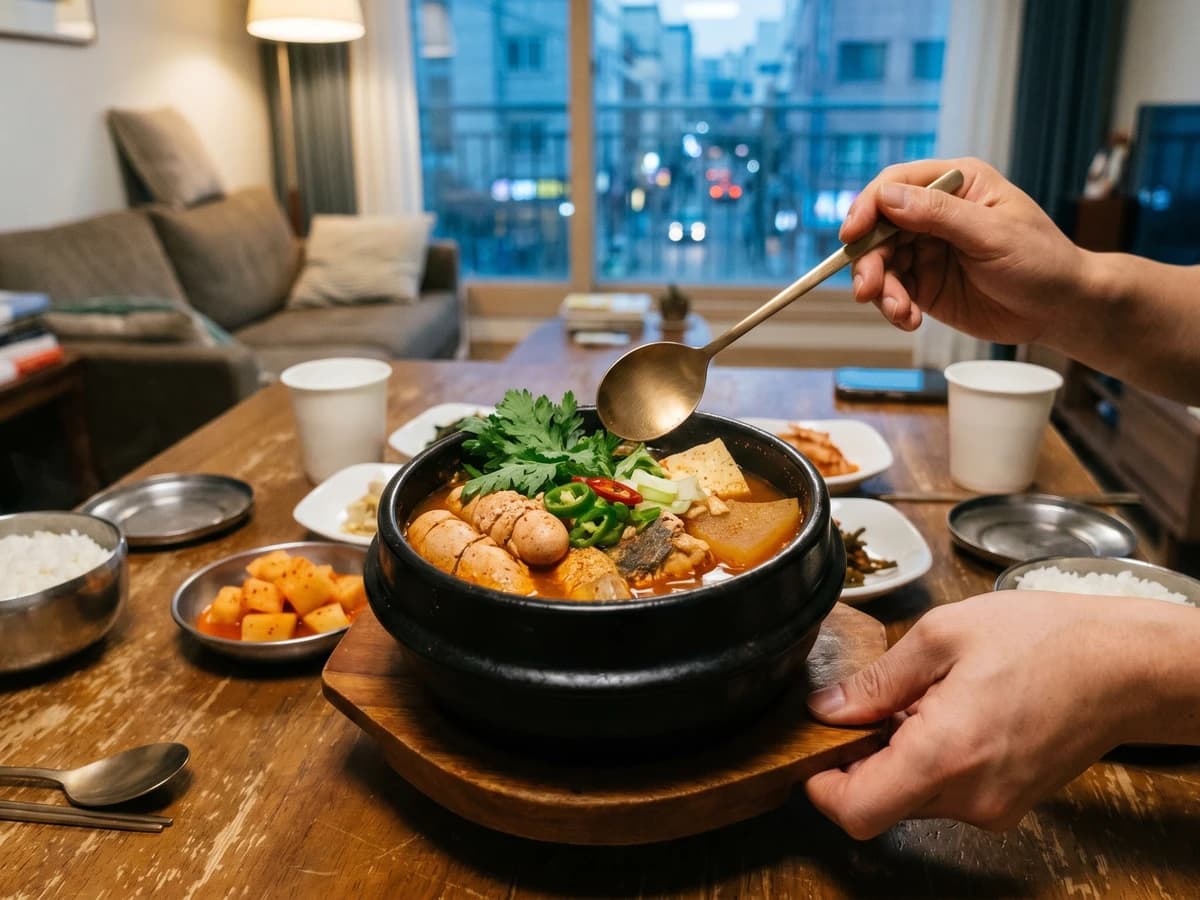
A weeknight fish roe stew with radish and crown daisy in a clean spicy broth, where the whole success depends on adding the roe late enough that it sets tender, not chalky.

Chef Jeong-sun
Late-summer mallow leaves rubbed with salt until the bitter green water runs off, then simmered in a clean doenjang broth with dried shrimp, the quiet soup a Korean weeknight deserves.