
Chef Freja
Danablu Mad med Rå Æggeblomme
Danish blue cheese layered on dark rye with a raw egg yolk nestled on top, red onion rings, and chives. The last piece at a Danish lunch, and the one that stays with you longest.
A cooking platform built around craft, culture, and the stories behind what we eat.
Created by Chef Freja
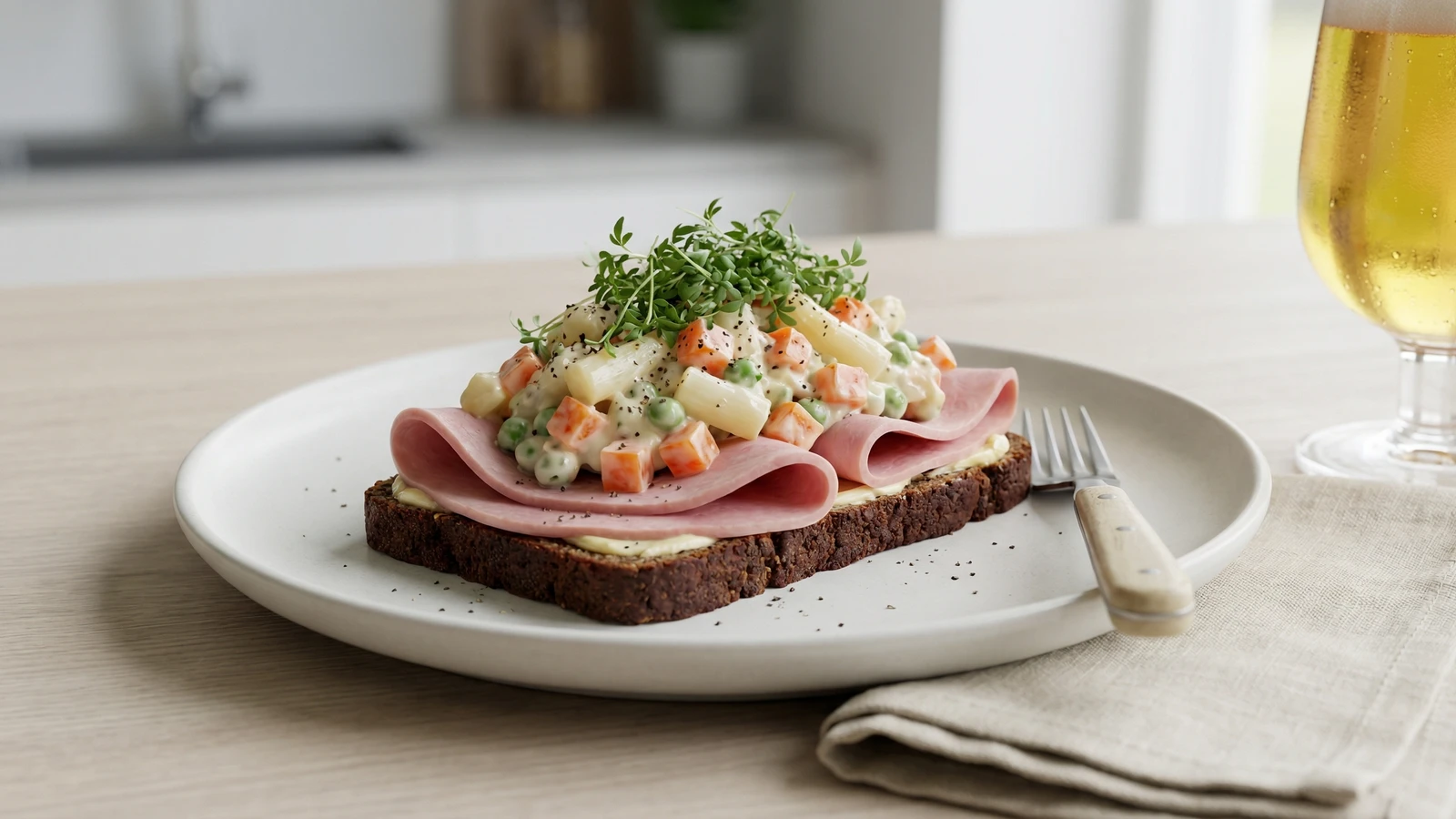
Boiled ham on buttered rugbrod with a generous spoonful of creamy Italian salad and a tuft of fresh cress. Clean, light, and loved at every Danish frokost.
Every Danish frokost table has a piece of skinkemad somewhere on it. Not as the star, never as the star. As the quiet anchor between the herring and the cheese, the piece you reach for when your mouth needs something gentler after the vinegar and the smoke. This is the smorrebrod of everyday kindness.
Italiensk salat has nothing to do with Italy, by the way. It's a Danish invention from the cold kitchen, carrots and peas and asparagus bound in a light mayonnaise, named for reasons that have been lost to time. Somebody in Copenhagen decided it sounded elegant a hundred years ago and the name stuck. It belongs to the deli counters of the Danish lunch tradition, and on a piece of rye with ham, it finds its proper home.
The dish is simple enough that every detail matters. Butter the bread like you mean it, so the rye stays firm under the salad. Cut the vegetables small and even, because italiensk salat is a lesson in uniformity. Fold the ham, don't lay it flat. And don't skip the cress, even though it looks like a garnish. That peppery green on top is what wakes the whole thing up. Every element has a reason, and I'll walk you through each one so you never have to guess. This is smorrebrod at its most forgiving: quick enough for a weeknight, good enough for a Sunday lunch with guests.
Italiensk salat first appears in Danish cookbooks at the turn of the twentieth century, part of a wave of continental borrowings that swept through the Copenhagen lunch restaurants of the Belle Epoque. The name was aspirational rather than geographic, borrowed to lend a touch of southern glamour to a salad that was, in every ingredient, thoroughly Danish. By the 1920s it had become a fixture at the deli counters, and the smorrebrodsjomfru, the formally trained women of the Danish cold kitchen, paired it with boiled ham almost as a matter of course. The combination has sat in the middle of the frokost repertoire ever since, never flashy, never out of place.
Quantity
4 thick slices
Quantity
30g
softened
Quantity
8 thin slices
Quantity
2 medium
peeled
Quantity
150g
fresh or frozen
Quantity
150g
fresh or from a good jar
Quantity
3 tablespoons
Quantity
2 tablespoons
Quantity
1 teaspoon
Quantity
1 teaspoon
Quantity
to taste
Quantity
freshly ground, to taste
Quantity
small punnet
Quantity
freshly ground, to finish
| Ingredient | Quantity |
|---|---|
| dark rugbrod | 4 thick slices |
| good unsalted buttersoftened | 30g |
| good-quality boiled ham | 8 thin slices |
| carrotspeeled | 2 medium |
| green peasfresh or frozen | 150g |
| white asparagusfresh or from a good jar | 150g |
| full-fat mayonnaise | 3 tablespoons |
| creme fraiche | 2 tablespoons |
| Dijon mustard | 1 teaspoon |
| white wine vinegar | 1 teaspoon |
| fine sea salt | to taste |
| white pepper | freshly ground, to taste |
| fresh garden cress | small punnet |
| black pepper (optional) | freshly ground, to finish |
Cut the peeled carrots into small, neat cubes, no larger than the peas themselves. This matters. Italiensk salat is about uniformity, where every spoonful holds the same mix of colors and textures. If the carrots are too big they take over, and the salad loses its balance. Cut the asparagus into short pieces the same size as the carrots. If you're using fresh white asparagus, peel the lower halves of the stalks first; the outer skin is woody and won't soften.
Bring a small pot of salted water to the boil. Drop in the carrot cubes and cook for two minutes, then add the asparagus and peas and give them one more minute together. You want everything tender but still holding its shape and color. Drain and immediately plunge into a bowl of ice water. Cold stops the cooking and locks in the green of the peas and the clean white of the asparagus. Drain again and pat dry on a clean tea towel. Wet vegetables water down the dressing and the salad goes sad.
In a bowl, whisk together the mayonnaise, creme fraiche, mustard, and vinegar until smooth. Season with salt and white pepper. The dressing should taste a little sharper than you think it needs, because the vegetables will mellow it as soon as they go in. Creme fraiche lightens the mayonnaise and gives the salad a gentle tang that keeps it from feeling heavy, which is exactly what you want under a piece of ham.
Add the dried, cooled vegetables to the dressing and fold them through gently with a spoon. Don't stir aggressively. The peas split and the salad turns muddy. You want each piece coated but still distinct. Taste, adjust the salt, and let the salad sit in the fridge for at least ten minutes. A short rest lets the flavors settle into each other.
This is the step people skip, and they shouldn't. Spread each slice of rugbrod with a generous, even layer of softened butter, going right to the edges. The butter isn't decoration. It's the waterproof barrier that keeps the rye from soaking up the moisture of the salad and turning soft. Without it, the smorrebrod falls apart in minutes. With it, it holds together beautifully until the last bite. Use real butter, and use enough. This is not a place to be shy.
Drape two slices of ham over each piece of buttered rugbrod in soft folds, not flat. Folded ham catches the light and looks alive on the bread. Flat ham looks like a supermarket sandwich. Let the edges of the ham rest naturally over the sides of the rye, so the bread shows at the corners. That visible frame of dark rye is part of the architecture of smorrebrod, and you want to see it.
Spoon a generous heap of the italiensk salat onto the centre of each piece, right on top of the folded ham. Don't spread it flat. You want a mound, so the cross-section has height and layers when someone cuts into it. Scatter the fresh cress over the top in a loose tuft. Grind a little black pepper across the finished piece and serve at once. Smorrebrod is eaten with a knife and fork, never picked up. That is the grammar of the dish, and you'll know when it's right because every layer holds its place. Tak for mad.
1 serving (about 150g)
Culinary guides, cultural storytelling, and the editorial depth that makes cooking meaningful.
Discover Culinary ExplorerChef Freja
Danish blue cheese layered on dark rye with a raw egg yolk nestled on top, red onion rings, and chives. The last piece at a Danish lunch, and the one that stays with you longest.

Chef Freja
Thick-sliced Danbo on properly buttered rugbrod with sweet pepper rings and a crown of garden cress. The cheese smorrebrod that lives in every Danish lunchbox, from the first day of school to the last day at the office.

Chef Freja
Copenhagen's most storied smorrebrod: leverpostej, cold salt beef, trembling aspic, onion rings, and fresh cress on dark rugbrod. Invented at Oskar Davidsen's in the 1880s for a hungry veterinarian and still one of the great pieces of the Danish lunch table.

Chef Freja
Pungent Esrom from North Zealand on dark rye with paper-thin radish and fresh chives. The cheese course that closes a proper Danish smorrebrod spread, one of the quietest, most satisfying bites in the whole tradition.