
Chef Zohra
Atay b Chiba (Moroccan Wormwood Tea)
The cold-evening cousin of mint tea: gunpowder green tea brewed with chiba, the bitter winter herb Moroccans use when na'na is scarce and the house needs warming.
A cooking platform built around craft, culture, and the stories behind what we eat.
Created by
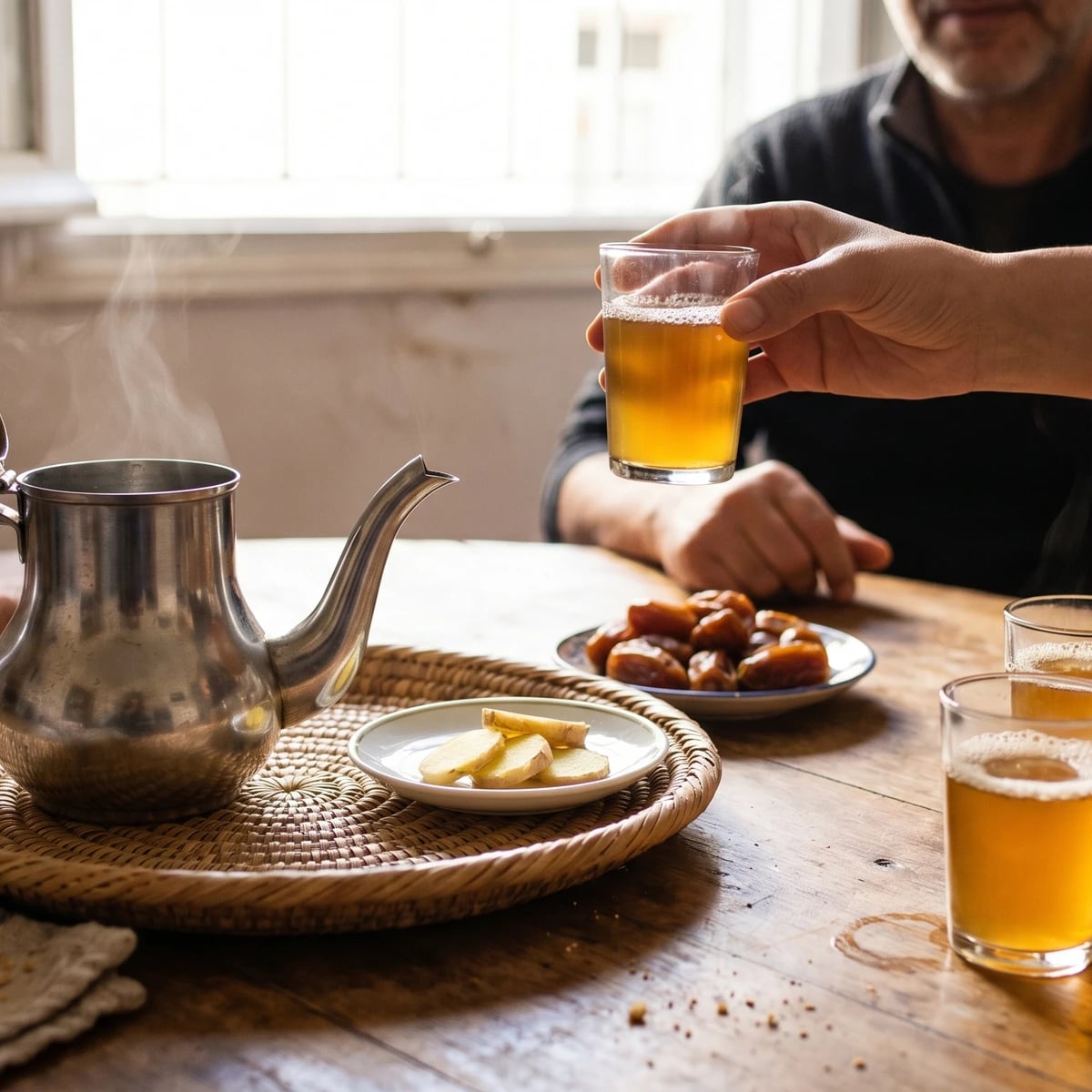
Fresh ginger bites first, then the green tea comes behind it: strong, sweet, peppery, and poured when the house needs warmth more than ceremony.
The ginger tells you what this drink is before the glass reaches your mouth. It bites the nose, warms the throat, and wakes a tired body without asking permission. Skinjbir is not the polite mint tea you pour for a long visit. It is the cup you make when someone comes in chilled, coughing, or carrying the grey day on their shoulders.
Use fresh ginger and bruise it well. That is the gesture that matters. Thin slices look pretty, but crushed ginger gives itself to the water, and this tea needs that peppery strength. The green tea brings tannin and body, the sugar rounds the sharpness, and together they make a small kitchen medicine that still belongs at the table.
Brew it strong, but don't punish the tea leaves. Rinse them quickly, then let the ginger work in the hot water before the final steep. Serve it in small glasses, refill without making a speech, and keep one chair ready. Une table, c'est une porte qu'on laisse ouverte.
Skinjbir takes its name from the Moroccan Arabic word for ginger, rooted in the older Arabic zanjabil, a spice known across North Africa through medieval Indian Ocean and Saharan trade routes. Green tea entered Moroccan daily life much later, especially in the 18th and 19th centuries through Atlantic trade, so this drink joins an older medicinal spice habit to the newer national tea ritual. Its exact regional origin is not firmly dated, and families from Oujda to Casablanca make it by memory rather than by a written canon.
Quantity
1 tbsp
Quantity
25g
scrubbed and lightly crushed
Quantity
3 to 4 tbsp, or to taste
Quantity
600ml
| Ingredient | Quantity |
|---|---|
| Chinese gunpowder green tea | 1 tbsp |
| fresh gingerscrubbed and lightly crushed | 25g |
| sugar | 3 to 4 tbsp, or to taste |
| water | 600ml |
Scrub the ginger well and cut it into thin coins, then press each coin with the flat of a knife or a pestle until it cracks. Don't mince it. Cracked ginger gives the water its heat and perfume while staying easy to strain.
Put the green tea in a small teapot, cover it with a splash of just-boiled water, swirl for a few seconds, and pour that water away. This quick rinse takes off the first harsh bitterness so the ginger can be strong without the tea turning rough.
Bring the 600ml water to a boil in a small pot, add the crushed ginger, lower the heat, and let it tremble gently for 5 minutes. The water should turn pale gold and smell sharp and warm.
Pour the hot ginger water over the rinsed tea leaves in the teapot. Add the sugar, stir, and steep for 3 to 4 minutes. Taste once. La balance est dans les yeux, and in the mouth: add sugar if the ginger bites too hard, or a splash of hot water if the tea has gone too stern.
Strain into small glasses and serve at once, amber and clear, with the ginger heat sitting at the back of the throat. If the first glass tastes stronger than the last, pour it back into the pot once and serve again so every guest receives the same cup.
1 serving (about 150g)
Culinary guides, cultural storytelling, and the editorial depth that makes cooking meaningful.
Discover Culinary Explorer
Chef Zohra
The cold-evening cousin of mint tea: gunpowder green tea brewed with chiba, the bitter winter herb Moroccans use when na'na is scarce and the house needs warming.

Chef Zohra
Atay is Morocco's welcome made liquid: green tea rinsed clean, mint pressed into the pot, sugar dissolved into the whole house, then poured high into small glasses.

Chef Zohra
The plain daily cup of the Moroccan café: short, dark, and unsweetened unless your hand reaches for sugar, served with water and enough time for talk.

Chef Zohra
Whole lemons, mint, sugar, and cold water, blended briefly and strained. This is the summer glass of Moroccan homes and juice counters, tart enough to wake you up.