
Chef Jeong-sun
Aehobak-guk (애호박국, Korean Zucchini Soup)
A clean summer soup of Korean zucchini and salted shrimp, built on quick anchovy-kelp broth and finished before the half-moons lose their shape on a weeknight table.
A cooking platform built around craft, culture, and the stories behind what we eat.

Created by
A quiet weeknight guk of spinach and doenjang, where the broth stays light, the greens keep their sweetness, and the cook learns restraint by measuring the paste.
Spinach is not a year-round promise, no matter what the supermarket says. In the cold months, the leaves grow low and sweet, and a bunch from the market can season a whole pot of guk if you do not smother it. Cook the month you are standing in: this soup is at its best from late autumn through spring, and in tired summer spinach I would rather make eolgari-baechu-doenjang-guk (young cabbage soybean paste soup) than pretend the season does not matter.
Sigeumchi-doenjang-guk is the weeknight soup that sits beside rice, kimchi, and one small banchan when nobody has the strength for a louder meal. My mother made it thin, not like jjigae, and Master Seong-nyeo would tap the spoon against the pot if I reached for more paste. Two tablespoons for six cups of broth. Taste after it simmers, then decide. That is how the spinach still reads green and sweet.
Tonight it asks only three honest things: wash the spinach until the basin is clean, pull the kelp before bitterness starts, and stop cooking once the greens relax into the broth. 손맛 is real; I measure it anyway, because a mild soup is where guessing most often goes wrong.
Doenjang-based soups belong to the everyday guk tradition, the clear or lightly clouded soups set beside rice rather than the thicker jjigae served from a shared pot. Doenjang comes from Korea's long jang-making culture, recorded from the Three Kingdoms period, where meju (fermented soybean blocks) were brined for ganjang (soy sauce) and the remaining solids became paste in onggi crocks. Spinach was known in Tang China by the seventh century as a Persian vegetable and later settled into Korean cold-season cooking, where it appears more often in namul and mild guk than in grand banquet records.
Quantity
6 cups
Quantity
8
heads and guts removed
Quantity
1 piece, about 4 inches square
Quantity
300g
root ends trimmed and rinsed very well
Quantity
1 teaspoon
for blanching water
Quantity
2 tablespoons, plus 1 teaspoon more only if needed
Quantity
1 clove
minced
Quantity
1 teaspoon
for final seasoning
Quantity
1
thinly sliced on the diagonal
| Ingredient | Quantity |
|---|---|
| water | 6 cups |
| large dried anchovies (myeolchi)heads and guts removed | 8 |
| dried kelp (dasima) | 1 piece, about 4 inches square |
| fresh spinach (sigeumchi)root ends trimmed and rinsed very well | 300g |
| fine sea saltfor blanching water | 1 teaspoon |
| doenjang (Korean fermented soybean paste) | 2 tablespoons, plus 1 teaspoon more only if needed |
| garlicminced | 1 clove |
| guk-ganjang (Korean soup soy sauce) (optional)for final seasoning | 1 teaspoon |
| scallionthinly sliced on the diagonal | 1 |
Fill a large bowl with cold water and swish the spinach hard, especially near the root end where grit hides. Lift the spinach out, pour away the sandy water, and repeat 2 or 3 times until the water is clear. If the small pink root crowns are tender and clean, split them into quarters and keep them. They are sweet, and old cooks knew better than to throw sweetness away.
Bring a pot of water to a boil and add 1 teaspoon fine sea salt. Drop in the spinach stems first, then the leaves, and blanch 30 seconds for small cold-weather spinach or 45 seconds for thick bunches. Drain, rinse under cold water, and squeeze gently until it is no longer dripping but not dry. Cut into 2-inch lengths. This keeps the broth clean and removes the raw grassy edge without cooking the spinach to dullness.
Put 6 cups water, the dried anchovies, and the kelp in a 3-quart pot over medium heat. When the water comes to a gentle simmer, pull the kelp out right away, before it turns the broth slick and bitter. Simmer the anchovies 8 minutes more, then strain them out. You should have about 5 1/2 cups of clear savory broth; add a splash of water if it reduced too far.
Bring the broth back to a gentle simmer. Put 2 tablespoons doenjang in a fine strainer, lower it into the broth, and rub it through with a spoon until the paste dissolves. Discard the coarse skins left in the strainer, unless your family likes them. Simmer 2 minutes so the raw edge of the paste softens. This is guk (soup), not jjigae (stew), so the doenjang should season the broth without thickening it.
Add the blanched spinach and minced garlic. Simmer 2 to 3 minutes, just until the spinach loosens back into the broth and the garlic rounds out. Do not boil it hard. Spinach turns tired quickly, and this soup should still taste green and sweet.
Taste before you season. If the broth needs salt but already tastes enough of soybean paste, add 1 teaspoon guk-ganjang. If it needs more depth, add only 1 teaspoon more doenjang and simmer 30 seconds. Scatter the scallion over the top, turn off the heat, and serve at once with white rice and kimchi.
1 serving (about 410g)
Culinary guides, cultural storytelling, and the editorial depth that makes cooking meaningful.
Discover Culinary ExplorerChef Jeong-sun
A clean summer soup of Korean zucchini and salted shrimp, built on quick anchovy-kelp broth and finished before the half-moons lose their shape on a weeknight table.

Chef Jeong-sun
A Masan coast monkfish stew with firm white meat, gelatin at the bones, soybean sprouts for crunch, and a red broth seasoned to carry the fish, not bury it.
Chef Jeong-sun
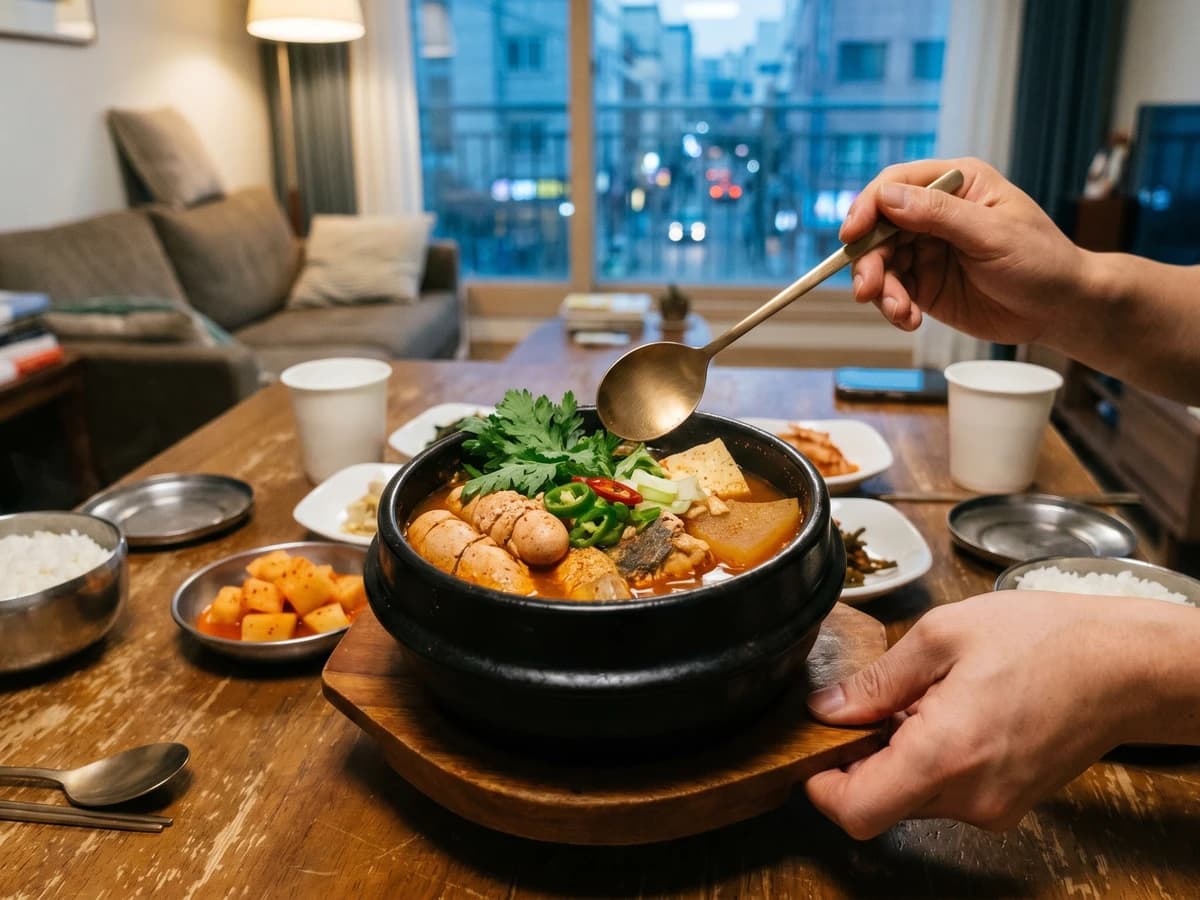
A weeknight fish roe stew with radish and crown daisy in a clean spicy broth, where the whole success depends on adding the roe late enough that it sets tender, not chalky.

Chef Jeong-sun
Late-summer mallow leaves rubbed with salt until the bitter green water runs off, then simmered in a clean doenjang broth with dried shrimp, the quiet soup a Korean weeknight deserves.