
Chef Graziella
Arrosto di Maiale alle Erbe Aromatiche
Bone-in pork loin rubbed with fennel, rosemary, and sage, roasted until the herbs form a crackling crust and the meat stays pink and succulent. This is the roast that brings Sunday to life.
A cooking platform built around craft, culture, and the stories behind what we eat.
Created by
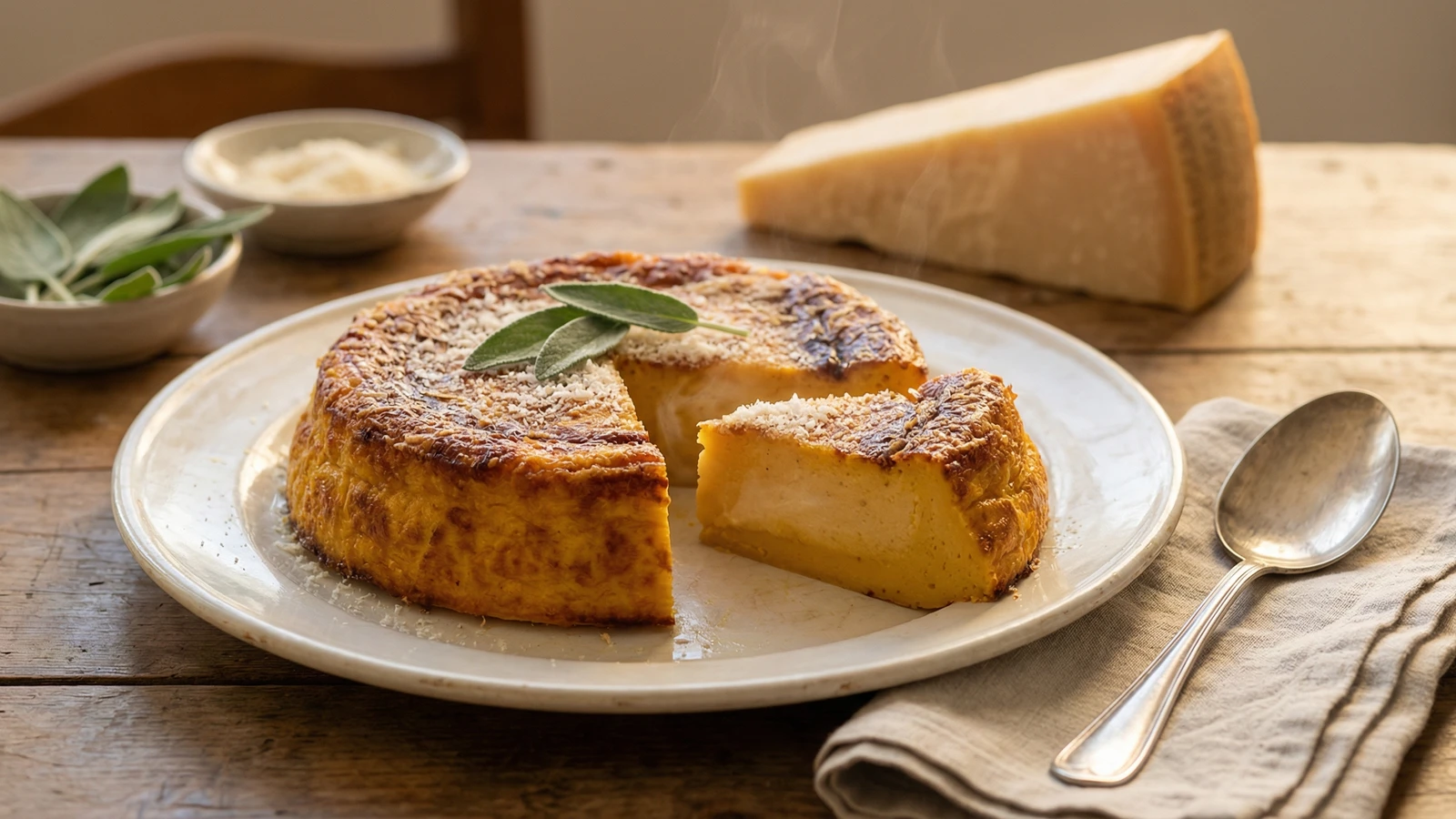
The elegant vegetable custard of Northern Italy, where winter squash transforms through roasting, binding, and baking into something worthy of the finest table. Simple ingredients, precise technique, profound results.
Asformato is not a soufflé. Americans confuse the two because both involve eggs and baking, but the resemblance ends there. A soufflé demands immediate attention, collapsing within minutes of leaving the oven. A sformato waits patiently. It can rest. It can be reheated. It rewards the cook who plans ahead.
The word means 'unmolded,' though you need not unmold it at all. In homes across Emilia-Romagna and Piedmont, sformati appear at Sunday tables and holiday gatherings, turned out golden and trembling from their dishes or served simply with a spoon. The technique is the same whether you use squash, spinach, artichokes, or cauliflower: roast or cook the vegetable until concentrated, bind it with eggs and Parmigiano, bake it gently until set.
What you keep out matters as much as what you put in. There is no béchamel here, though some recipes call for it. There is no cream sauce ladled over the top. The squash speaks for itself, sweet and earthy, with nutmeg and Parmigiano providing the only counterpoint. When your ingredients are this simple, each one must be perfect.
Sformati emerged from the aristocratic kitchens of Northern Italy during the Renaissance, when wealthy households employed cooks trained in the elaborate molded dishes of French cuisine. Italian cooks adapted these techniques to local vegetables and cheeses, creating something distinctly their own. The vegetable sformato became a marker of bourgeois cooking by the 19th century, appearing in Artusi's foundational cookbook as a refined way to serve humble produce.
Quantity
3 pounds (about 2 medium)
Quantity
4 tablespoons, plus more for the dish
Quantity
1 small
diced fine
Quantity
1/2 cup, plus more for the dish
freshly grated
Quantity
4
Quantity
1/2 cup
Quantity
1/4 teaspoon
freshly grated
Quantity
1 teaspoon
Quantity
1/4 teaspoon
freshly ground
Quantity
2 tablespoons
| Ingredient | Quantity |
|---|---|
| butternut squash | 3 pounds (about 2 medium) |
| unsalted butter | 4 tablespoons, plus more for the dish |
| yellow oniondiced fine | 1 small |
| Parmigiano-Reggianofreshly grated | 1/2 cup, plus more for the dish |
| large eggs | 4 |
| heavy cream | 1/2 cup |
| nutmegfreshly grated | 1/4 teaspoon |
| kosher salt | 1 teaspoon |
| white pepperfreshly ground | 1/4 teaspoon |
| fine dry breadcrumbs | 2 tablespoons |
Heat your oven to 400°F. Cut the butternut squash in half lengthwise and scoop out the seeds. Place cut-side down on a parchment-lined baking sheet. Roast until completely tender when pierced with a knife, 45 minutes to one hour depending on size. The flesh should offer no resistance whatsoever. Set aside until cool enough to handle.
Reduce oven temperature to 350°F. Generously butter a 2-quart baking dish or eight individual ramekins. Combine the breadcrumbs with two tablespoons of grated Parmigiano and coat the interior of the dish, tapping out any excess. This creates a delicate crust that helps the sformato release and adds texture.
Melt the butter in a small skillet over medium-low heat. Add the diced onion and cook slowly, stirring occasionally, until completely soft and pale gold, about 15 minutes. The onion must not brown. You want its sweetness to complement the squash, not compete with it. Set aside to cool slightly.
Scoop the roasted squash flesh from its skin and place in a food processor. You should have about three cups of flesh. Add the cooked onion with its butter. Process until completely smooth, scraping down the sides as needed. The puree should be silky, with no lumps or fibers remaining.
Transfer the squash puree to a large bowl. Add the eggs one at a time, beating well after each addition. Stir in the cream, the half cup of Parmigiano, nutmeg, salt, and white pepper. Taste the mixture. It should be well-seasoned and fragrant with nutmeg. The eggs will dull the seasoning slightly during baking, so err toward more salt rather than less.
Pour the squash mixture into the prepared dish. Place the dish in a larger roasting pan and carefully pour hot water into the roasting pan until it reaches halfway up the sides of the baking dish. This water bath ensures gentle, even cooking. Bake until the sformato is set around the edges but still has a slight wobble in the center, 45 to 55 minutes for a large dish, 25 to 30 minutes for individual ramekins.
Remove from the water bath and let rest at least 15 minutes before serving. The sformato continues to set as it cools. You may serve it directly from the dish, spooning out portions, or unmold it onto a serving platter if you coated the dish properly. Run a thin knife around the edges, place a plate over the top, and invert with confidence.
1 serving (about 165g)
Culinary guides, cultural storytelling, and the editorial depth that makes cooking meaningful.
Discover Culinary ExplorerChef Graziella
Bone-in pork loin rubbed with fennel, rosemary, and sage, roasted until the herbs form a crackling crust and the meat stays pink and succulent. This is the roast that brings Sunday to life.

Chef Graziella
The ancient technique of salt-baking creates a sealed chamber where the fish steams in its own moisture. What emerges is flesh of remarkable purity, seasoned perfectly, ready for nothing but your best olive oil.

Chef Graziella
The ugly fish that cooks like veal, braised in tomatoes until the firm white flesh absorbs the briny sweetness of olives and capers. Fishermen's wives along the Adriatic knew its worth before restaurants discovered it.

Chef Graziella
A fifteen-minute lesson in restraint: pork chops, butter, sage, and the understanding that what you leave out matters as much as what you put in.