
Chef Remy
Alligator Sauce Piquante
Chunks of tender gator swimming in a brick-red tomato sauce with enough heat to make you reach for your sweet tea, spooned over rice the way the old Cajun trappers ate it after a long day on the bayou.
A cooking platform built around craft, culture, and the stories behind what we eat.
Created by Chef Remy
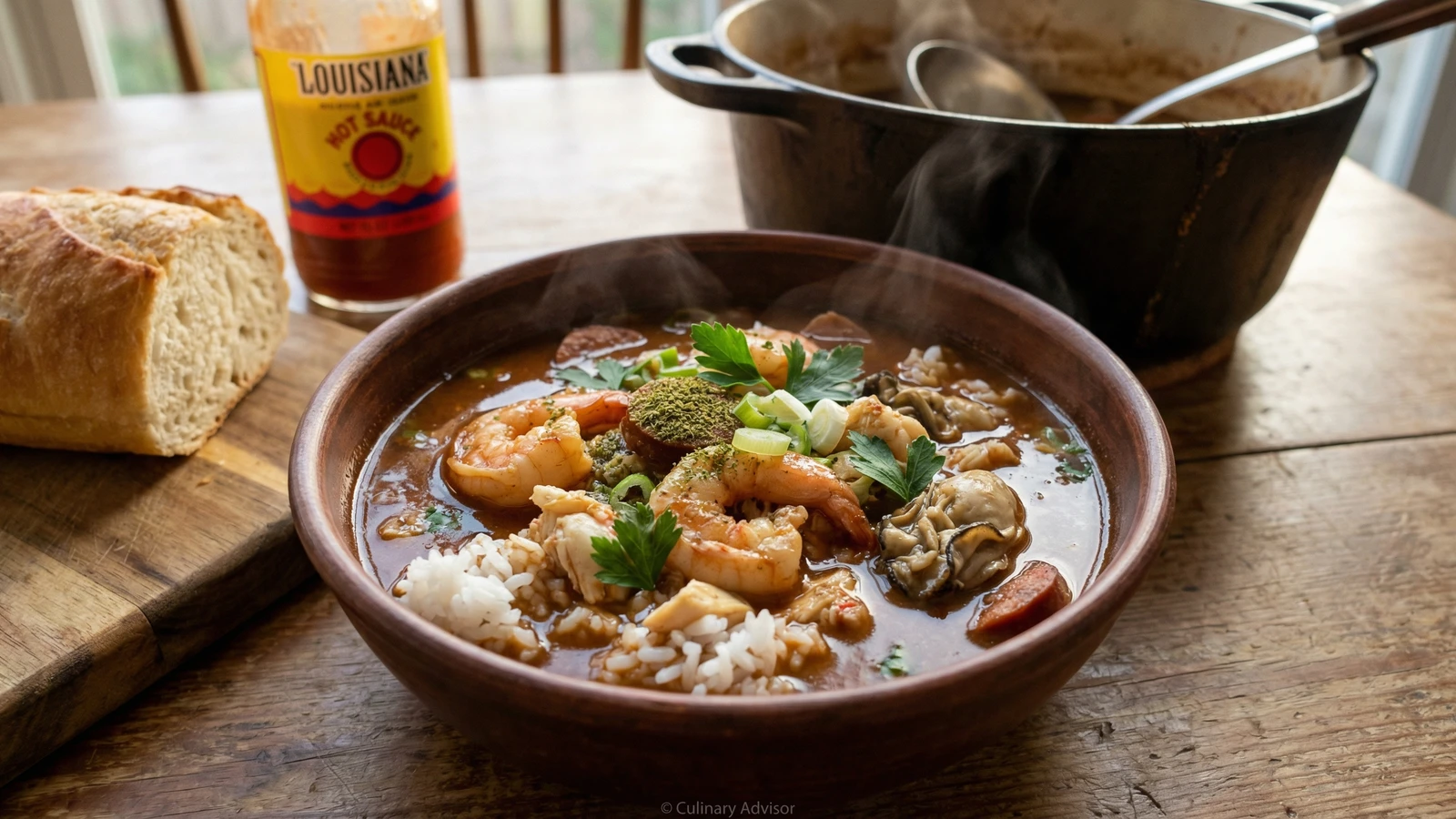
Sweet Gulf shrimp, blue crab, and plump oysters swimming in a brick-red roux so rich and complex it took four generations of Louisiana cooks to perfect, ladled generous over steaming white rice.
The roux is everything. You can have the freshest Gulf shrimp money can buy, crab pulled from the trap that morning, oysters so briny they taste like the ocean itself. None of it matters if your roux is pale and timid. A seafood gumbo demands a dark roux, the color of milk chocolate, cooked slow and stirred constant until your arm burns and your kitchen smells like toasted pecans.
My grandmother Evangeline taught me this standing at her wood-burning stove in Lafayette Parish. She never owned a thermometer, never set a timer. She watched the color shift from white to blond to peanut butter to that deep brick-red that means you're almost there. Forty-five minutes of stirring, sometimes longer. That's the price of admission. You pay it gladly because nothing else gives gumbo that depth, that richness, that soul.
At Lagniappe, we serve this gumbo every Friday. The line starts forming at eleven. People drive across the city for a bowl because they know what they're getting: seafood so fresh it was swimming that morning, a roux stirred by hand the way my grandmother did it, and enough love in the pot to feed body and spirit both. This is not restaurant food dressed up for tourists. This is the real thing, the bayou way, exactly like we make it at home.
Quantity
3/4 cup
Quantity
3/4 cup
Quantity
2 cups
diced
Quantity
1 cup
diced
Quantity
1 cup
diced
Quantity
6 cloves
minced
Quantity
1 pound
sliced into half-moons
Quantity
2 quarts
Quantity
1 can (14.5 oz)
drained
Quantity
2
Quantity
1 tablespoon
Quantity
1 teaspoon
Quantity
1 teaspoon
Quantity
2 teaspoons, plus more to taste
Quantity
1 teaspoon
freshly ground
Quantity
1/2 teaspoon
Quantity
1/2 teaspoon, plus more to taste
Quantity
1 teaspoon
Quantity
1 1/2 pounds
peeled and deveined
Quantity
1 pound
picked clean of shells
Quantity
1 pint
Quantity
4
sliced thin, whites and greens separated
Quantity
1/4 cup
chopped
Quantity
2 tablespoons
Quantity
for serving
Quantity
for serving
Quantity
for serving
| Ingredient | Quantity |
|---|---|
| vegetable oil | 3/4 cup |
| all-purpose flour | 3/4 cup |
| yellow oniondiced | 2 cups |
| celerydiced | 1 cup |
| green bell pepperdiced | 1 cup |
| garlicminced | 6 cloves |
| andouille sausagesliced into half-moons | 1 pound |
| seafood stock or shrimp stock | 2 quarts |
| diced tomatoesdrained | 1 can (14.5 oz) |
| bay leaves | 2 |
| Worcestershire sauce | 1 tablespoon |
| dried thyme | 1 teaspoon |
| dried oregano | 1 teaspoon |
| kosher salt | 2 teaspoons, plus more to taste |
| black pepperfreshly ground | 1 teaspoon |
| white pepper | 1/2 teaspoon |
| cayenne pepper | 1/2 teaspoon, plus more to taste |
| smoked paprika | 1 teaspoon |
| large Gulf shrimppeeled and deveined | 1 1/2 pounds |
| lump crab meatpicked clean of shells | 1 pound |
| fresh oysters with liquor | 1 pint |
| green onionssliced thin, whites and greens separated | 4 |
| fresh parsleychopped | 1/4 cup |
| cold unsalted butter | 2 tablespoons |
| filé powder (optional) | for serving |
| cooked white rice | for serving |
| hot sauce (optional) | for serving |
Season the peeled shrimp with a pinch of salt, black pepper, and cayenne. Toss gently and refrigerate while you build the gumbo. This is the first layer of seasoning, and it matters. Bland shrimp dropped into flavorful broth still taste bland. Season them now and the flavor goes all the way through.
Heat the oil in a large cast iron Dutch oven over medium heat until it shimmers. Add the flour all at once and whisk immediately to combine. Now begins the real work. Stir constantly with a wooden spoon or flat-edged spatula, scraping the bottom and edges of the pot. The roux will progress from white to blond to peanut butter to brick-red to dark chocolate. This takes 40 to 50 minutes. Do not walk away. Do not answer the phone. The roux will burn the moment you stop paying attention, and burned roux means starting over.
A finished dark roux smells like toasted pecans with a hint of smokiness. The color should be deep brick-red, the shade of milk chocolate. It will be thinner than when you started because the flour proteins have broken down. When you see wisps of smoke just beginning to rise from the surface, you're there. This is the moment of truth.
Add the diced onion, celery, and bell pepper to the roux all at once. The mixture will sizzle and steam violently. Stir immediately and continuously. The vegetables will stop the roux from cooking further and begin to soften in that beautiful fat. Cook for 8 to 10 minutes, stirring often, until the onions turn translucent and the kitchen smells like Louisiana.
Stir in the minced garlic and cook for one minute until fragrant. Add the andouille slices and cook another 3 to 4 minutes, letting them release their smoky fat into the pot. The andouille isn't just protein here. It's seasoning. That rendered fat carries flavor through every spoonful of the finished gumbo.
Pour in the seafood stock slowly, stirring to incorporate the roux smoothly. Add the drained tomatoes, bay leaves, Worcestershire, thyme, oregano, salt, black pepper, white pepper, cayenne, and paprika. Stir to combine. The white pepper is important here: it gives a lingering warmth that builds as you eat. Bring to a simmer, then reduce heat to maintain a gentle bubble.
Let the gumbo simmer uncovered for 45 minutes to an hour. The roux will thicken the broth gradually, and the flavors will marry into something greater than their parts. Stir occasionally to prevent sticking. Taste at the halfway point. Adjust salt, add more cayenne if you want more heat. This is the bayou way: taste, taste, taste.
Add the white parts of the green onions. Gently fold in the crab meat, taking care not to break up the lumps. Add the seasoned shrimp and the oysters with their liquor. Simmer for 5 to 7 minutes, just until the shrimp turn pink and curl and the oysters plump and their edges ruffle. Do not overcook. Rubbery seafood is a tragedy.
Remove the pot from heat. Fish out the bay leaves and discard. Stir in the cold butter until it melts and disappears into the gumbo, giving it that restaurant gloss. Add the green onion tops and parsley. Taste one final time and adjust seasoning. The gumbo should be rich, complex, with layers of flavor that unfold as you eat.
Mound hot white rice in the center of deep bowls. Ladle the gumbo around and over the rice, making sure each bowl gets plenty of shrimp, crab, oysters, and andouille. Offer filé powder at the table for those who want it (stir it in after serving, never into the pot). Put hot sauce within reach. When the last bite is as good as the first, you've done it right.
1 serving (about 550g)
Culinary guides, cultural storytelling, and the editorial depth that makes cooking meaningful.
Discover Culinary ExplorerChef Remy
Chunks of tender gator swimming in a brick-red tomato sauce with enough heat to make you reach for your sweet tea, spooned over rice the way the old Cajun trappers ate it after a long day on the bayou.
Chef Remy
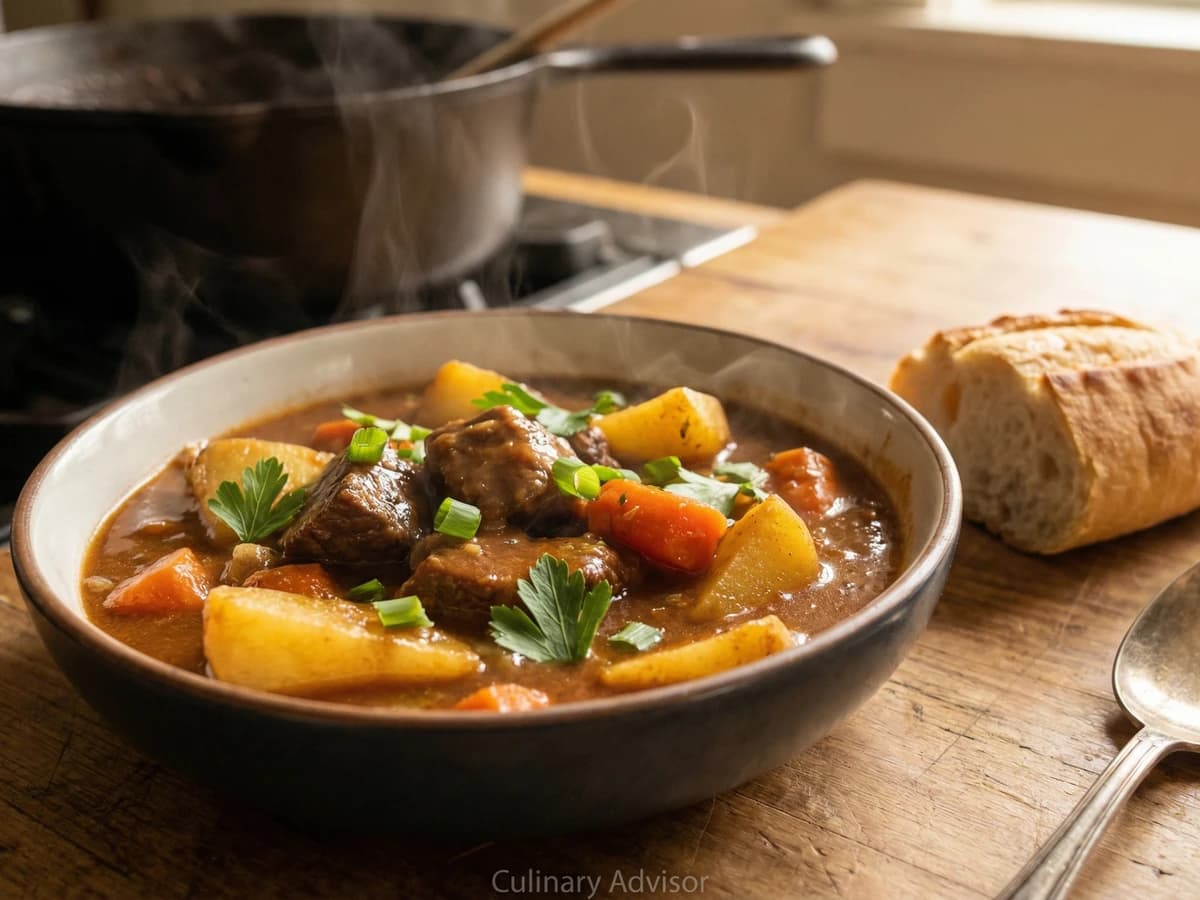
Fork-tender beef chunks swimming in a dark roux gravy with potatoes and carrots, seasoned bold the way we do it in Louisiana, the kind of stew that makes you close your eyes and forget your troubles.

Chef Remy
Humble butter beans transformed by smoky tasso ham, the holy trinity, and patient simmering into a velvety stew that warms you from the inside out, the kind of bowl that makes you want seconds before you've finished firsts.

Chef Remy
Tender bone-in chicken simmered low and slow in a rich peanut-butter roux gravy with Yukon Gold potatoes and the holy trinity, the kind of simple Cajun supper that's been warming Louisiana families for generations.