
Chef Thomas
A Proper Chicken Broth
Sunday's roast chicken, simmered slowly on Monday with carrots, celery, leeks, and thyme into a bowl of clear, golden broth that smells like the kitchen is paying attention.
A cooking platform built around craft, culture, and the stories behind what we eat.
Created by Chef Thomas
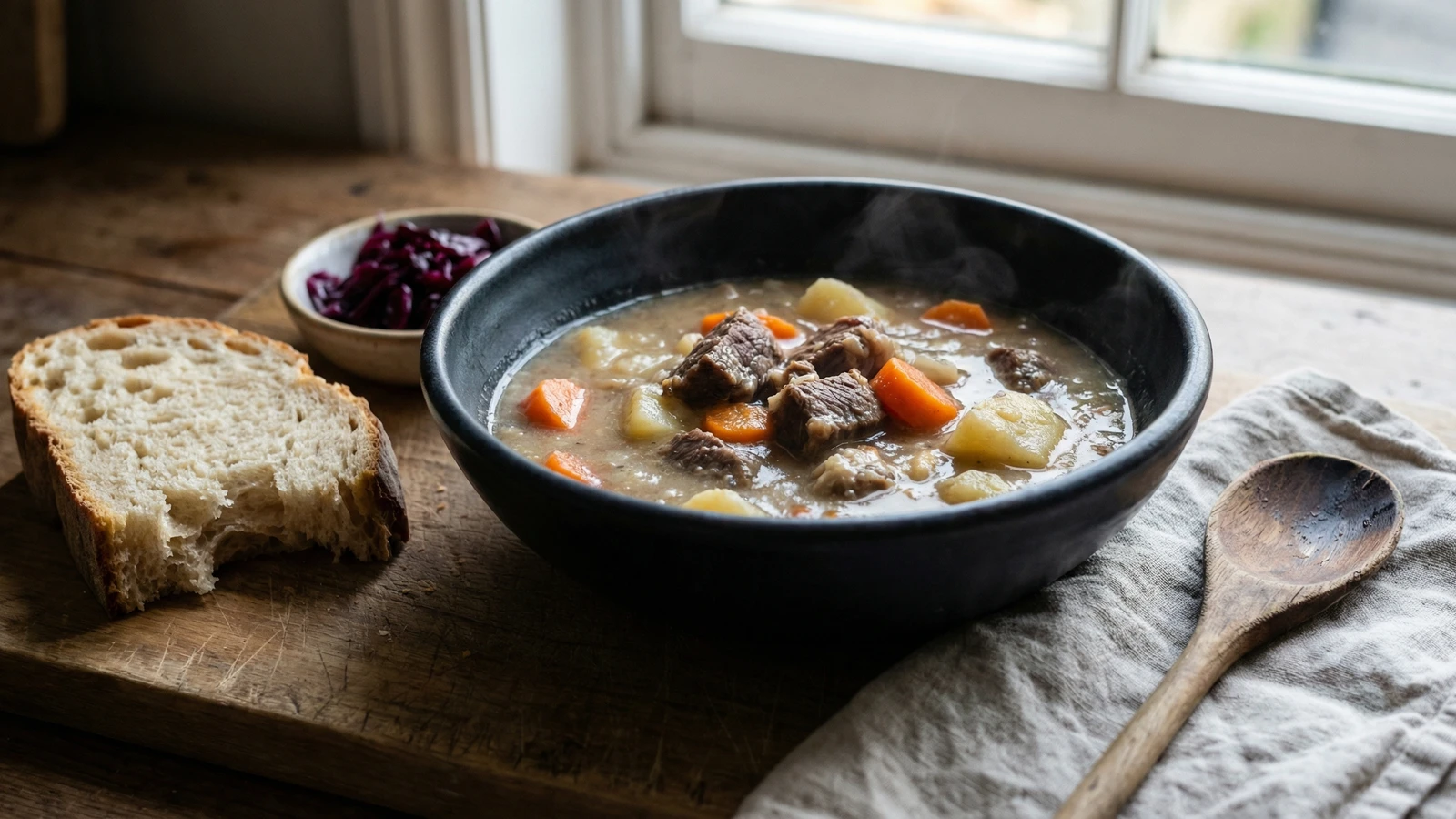
A slow, thrifty stew of beef and root vegetables, simmered until the potatoes dissolve into the broth and the kitchen smells like it has been looking after you all afternoon.
January rain on the window. The heating doing its best. There's a pan on the hob that's been ticking over for two hours, filling the kitchen with a smell that makes the cold outside feel almost useful, because without it, you wouldn't need this bowl of stew, and that would be a loss.
Scouse is Liverpool's dish, so much so that the city named itself after it. Or rather, the people did. A Scouser is someone who eats scouse, and the name stuck because the dish was everywhere: cheap, filling, made from whatever the week could afford. Beef if there was money. Potatoes regardless. Onions, carrots, a bit of swede if one turned up. The potatoes do the work, breaking down into the broth until it thickens into something halfway between a stew and a soup. No flour. No thickening tricks. Just potatoes, time, and patience.
I make this when the temperature drops and the evenings come in early. The notebook entry is always the same: beef shin, potatoes, long afternoon, rain. It's not a recipe that impresses anyone. It feeds them. And on the right evening, with the right company and a jar of pickled red cabbage on the table, that's a far better thing.
Your kitchen, your rules. Some people add a splash of Worcestershire sauce. Some leave out the swede. Some make it without meat entirely, which the city calls blind scouse, and it's just as good if the stock is right. A recipe is a conversation, not a contract. This is the version I come back to.
Quantity
500g
cut into rough 3cm pieces
Quantity
a knob or generous splash
Quantity
2 large
peeled and roughly chopped
Quantity
3 medium
peeled and cut into thick rounds
Quantity
1 small
peeled and cut into chunks
Quantity
700g
peeled and cut into large chunks
Quantity
1 litre
Quantity
2
Quantity
a few sprigs
Quantity
to taste
Quantity
to taste
Quantity
to serve
Quantity
to serve
| Ingredient | Quantity |
|---|---|
| beef shin or chuck steakcut into rough 3cm pieces | 500g |
| beef dripping or vegetable oil | a knob or generous splash |
| onionspeeled and roughly chopped | 2 large |
| carrotspeeled and cut into thick rounds | 3 medium |
| swedepeeled and cut into chunks | 1 small |
| floury potatoespeeled and cut into large chunks | 700g |
| good beef stock | 1 litre |
| bay leaves | 2 |
| thyme | a few sprigs |
| fine sea salt | to taste |
| black pepper | to taste |
| pickled red cabbage (optional) | to serve |
| crusty bread | to serve |
Get a heavy-bottomed pan or casserole properly hot. Add the dripping or oil. Pat the beef dry and season it well with salt and pepper. Brown the pieces in batches, giving each one enough room to colour rather than steam. You want deep, dark edges, almost catching, the kind that leave sticky bits on the bottom of the pan. That's flavour. Don't rush it. Set the browned meat aside on a plate.
Turn the heat down. Add the onions to the same pan with its sticky, dark residue. A pinch of salt. Let them cook gently for eight to ten minutes, stirring now and then, scraping up all those caramelised bits from the beef. The onions will go soft and start to take on colour. This is the foundation of everything that follows.
Return the beef to the pan. Add the carrots and swede. Pour in the stock, enough to just cover everything. If you're a little short, top it up with water. It doesn't need to be swimming. Tuck the bay leaves and thyme in amongst the meat. Bring it to a gentle simmer, not a boil, put the lid on slightly ajar, and let it murmur away for an hour and a half. The beef needs that time to go from tough to tender. Check it occasionally. Adjust the heat so it barely bubbles.
After an hour and a half, add the potatoes. They go in late because you want two things to happen: some of the chunks should hold their shape, giving you something to bite into, but the edges and smaller pieces should break down and thicken the broth into something that coats the back of a spoon. Stir them in, put the lid back on, and give it another forty-five minutes to an hour. The stew is ready when the beef pulls apart with no resistance and the broth has gone thick and cloudy from the dissolved potato.
Fish out the bay leaves and thyme stalks. Taste it. It will need more salt than you expect. Season it properly. Stir gently, letting some of the potato break up further if you want a thicker stew. Ladle it into warm bowls. The proper accompaniment is pickled red cabbage, sharp and vinegary against all that slow, savoury warmth, and a thick piece of crusty bread to mop the bowl clean. There are few better feelings than putting this in front of someone on a dark evening.
1 serving (about 450g)
Culinary guides, cultural storytelling, and the editorial depth that makes cooking meaningful.
Discover Culinary ExplorerChef Thomas
Sunday's roast chicken, simmered slowly on Monday with carrots, celery, leeks, and thyme into a bowl of clear, golden broth that smells like the kitchen is paying attention.

Chef Thomas
Braising steak surrendered to dark ale and slow time, with onions and mushrooms, until the gravy turns thick and malty and the kitchen smells like the kind of evening you want to stay in for.

Chef Thomas
Beef shin and pearl barley simmered low and slow with root vegetables until the meat gives way and the broth thickens into something between a soup and a stew, the kind of bowl that steadies you on a cold night.

Chef Thomas
Thin slices of beef rolled around a stuffing of sausage meat and herbs, browned in butter, and braised for two patient hours until the meat yields and the gravy turns dark and rich and worth mopping up with bread.