Chef Graziella
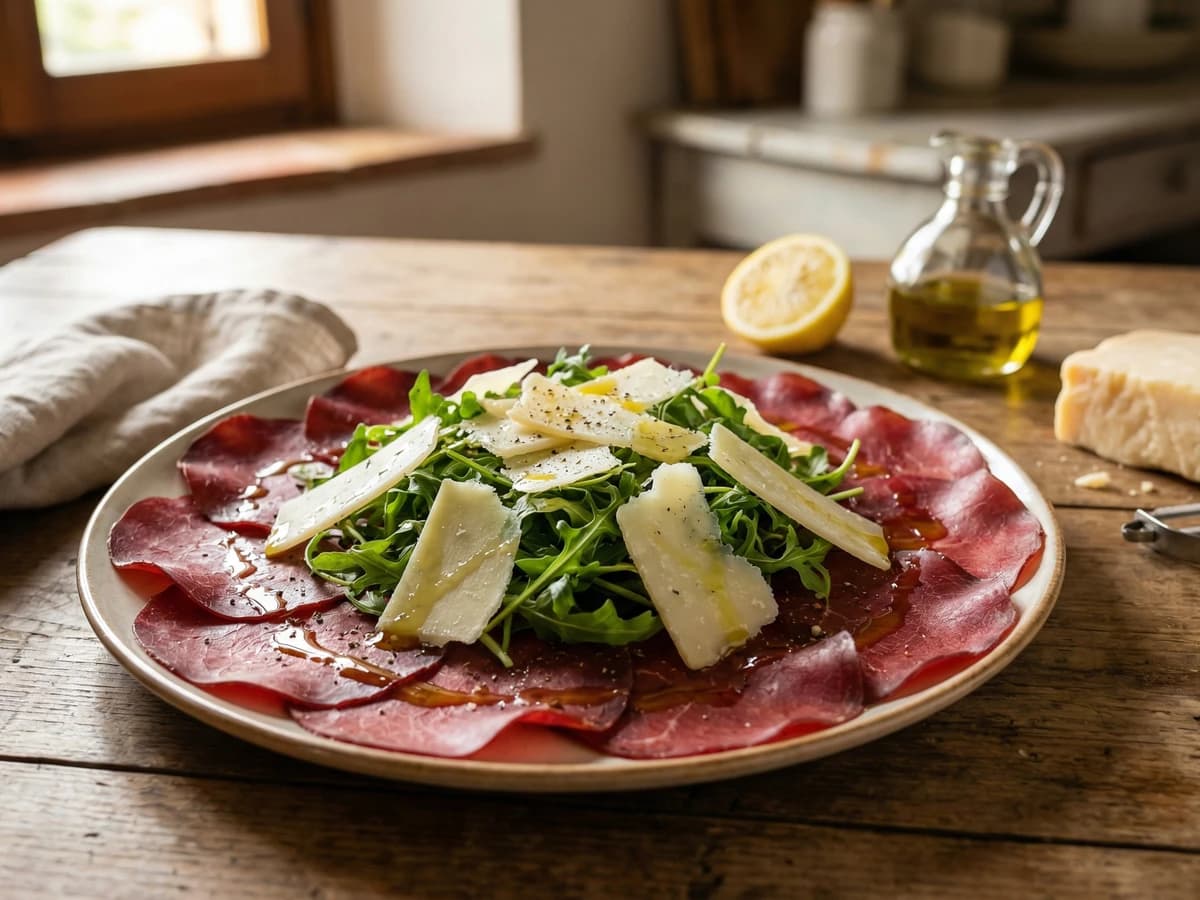
Bresaola con Rucola e Scaglie di Grana
The classic antipasto of Lombardy, where air-dried beef from the Alpine valleys meets peppery wild arugula and thin curls of aged cheese. Nothing more. Nothing less.
A cooking platform built around craft, culture, and the stories behind what we eat.

Created by
The 'little toads' of Valtellina, where buckwheat batter meets molten alpine cheese. Rustic mountain cooking that proves the Alps have their own genius, distinct from the rest of Italy.
Sciatt means 'toads' in the dialect of Valtellina, and the name is apt. These fritters emerge from the oil lumpy and irregular, with the mottled brown color of creatures that live near mountain streams. They are not pretty. They are, however, perfect.
Valtellina sits in the far north of Lombardy, pressed against Switzerland, where buckwheat grows in terraced fields and alpine cattle produce the milk for Bitto cheese. The cooking here has nothing to do with the risottos of Milan or the filled pastas of Bergamo. It is mountain food, shaped by cold winters and what grows at altitude. Buckwheat is the foundation, as it is throughout this region, giving sciatt their distinctive earthy, slightly bitter character.
The technique is simple but demands attention. The batter must be thin enough to flow around the cheese but thick enough to hold it captive. The oil must be hot enough to seal the exterior quickly, trapping the cheese inside where it melts into strings. You eat them immediately, while the outside shatters and the inside pulls. They do not wait. They do not reheat. They exist for the moment between the fryer and your mouth.
Sciatt emerged from the agriturismos and mountain rifugi of Valtellina, where buckwheat cultivation dates to the 16th century. The dish showcases the marriage of grano saraceno with Bitto, an ancient cheese whose production is documented in valley records from the year 1500. These fritters were farmhouse food, made when cheese needed using and grappa flowed freely.
Quantity
150g
Quantity
50g
Quantity
1/2 teaspoon
Quantity
200ml
Quantity
30ml
Quantity
200g
cut into 1-inch cubes
Quantity
about 1 liter
for frying
Quantity
for serving
| Ingredient | Quantity |
|---|---|
| buckwheat flour | 150g |
| all-purpose flour (tipo 00) | 50g |
| fine sea salt | 1/2 teaspoon |
| cold sparkling water | 200ml |
| grappa | 30ml |
| Bitto cheesecut into 1-inch cubes | 200g |
| vegetable oilfor frying | about 1 liter |
| chicory or bitter greens | for serving |
Cut the Bitto into cubes roughly one inch across. They need not be precise. Irregular shapes are traditional. Set them aside at room temperature while you make the batter. Cold cheese straight from the refrigerator will not melt properly in the brief time the fritter spends in the oil.
In a bowl, whisk together the buckwheat flour, tipo 00 flour, and salt. Make a well in the center. Pour in the sparkling water and grappa. Whisk from the center outward, incorporating the flour gradually until you have a smooth batter the consistency of heavy cream. It should coat a spoon but flow easily off it. Let the batter rest for 15 minutes.
Pour oil into a heavy pot or Dutch oven to a depth of at least three inches. Heat over medium-high until the oil reaches 180°C (356°F). Use a thermometer. Guessing will not serve you. Oil too cool produces greasy fritters. Oil too hot burns the exterior before the cheese melts.
Working in batches, drop the cheese cubes into the batter. Use a fork to turn them, ensuring each piece is completely coated. The batter should cling in an uneven layer. This is correct. You are making toads, not spheres.
Lift each battered cheese cube with a fork and lower it carefully into the hot oil. Do not crowd the pot. Fry four or five at a time. They will sink, then rise. Turn them once or twice with a slotted spoon. They are done when deep golden brown and crisp all over, about 2 to 3 minutes. The timing matters. Longer and the cheese escapes. Shorter and the batter is pale and soft.
Transfer the finished sciatt to a plate lined with paper towels. Blot briefly. Season with a whisper of salt while hot. Serve within minutes on a bed of dressed bitter greens. The chicory's bite cuts through the richness of the cheese. Do not wait. Do not let them sit. A sciatt more than five minutes old is a disappointment.
1 serving (about 125g)
Culinary guides, cultural storytelling, and the editorial depth that makes cooking meaningful.
Discover Culinary ExplorerChef Graziella
The classic antipasto of Lombardy, where air-dried beef from the Alpine valleys meets peppery wild arugula and thin curls of aged cheese. Nothing more. Nothing less.

Chef Juliette
Tiny éperlans, lightly floured and fried until their tails stand crisp, arrive in a generous heap on a napkin with fried parsley and grooved lemon, a weeknight lesson in heat and restraint.

Chef Juliette
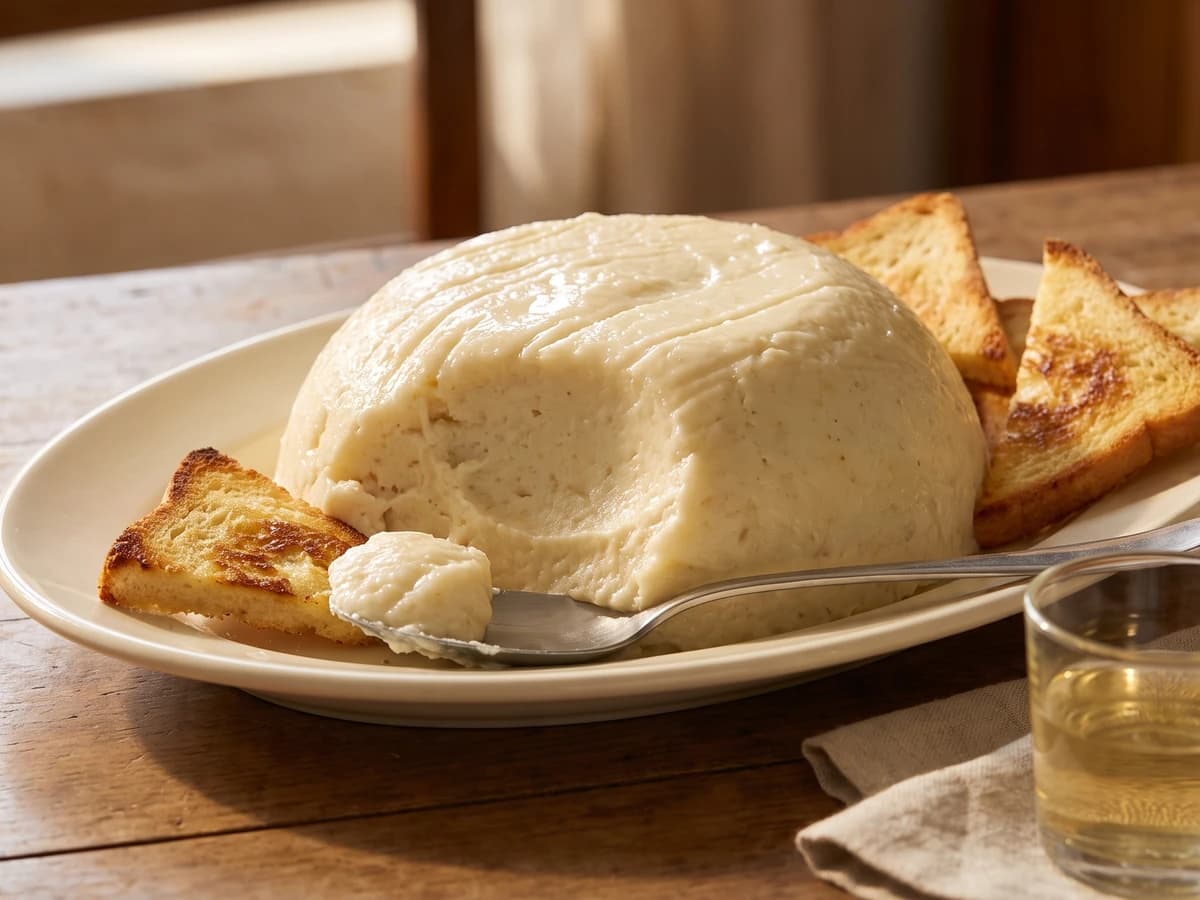
Brandade de Morue turns salt cod, warm olive oil, and milk into a pale, silky emulsion: keep everything warm and add the oil slowly, then crown the generous dome with butter-fried bread.
Chef Juliette
Salt cod worked warm with cream, one patient spoonful at a time, until the rough flakes become a glossy Nîmes paste, domed generously and ringed with butter-fried croutons for the table.