Culinary Explorer
A cooking platform built around craft, culture, and the stories behind what we eat.
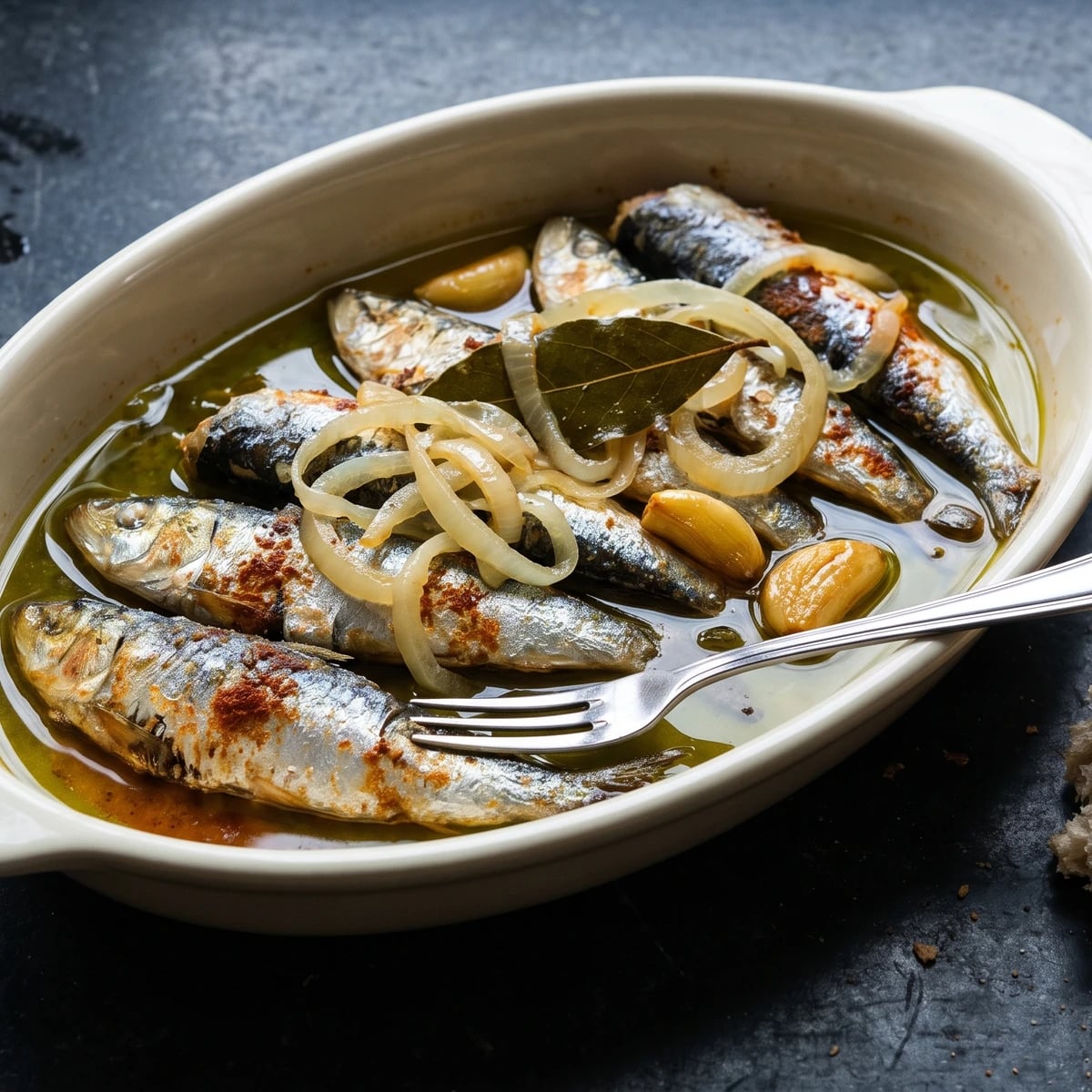
Sardinas en Escabeche
Created by Chef Isabel
On the Cantabrian coast, sardines are lightly floured and fried, then rested overnight beneath onion, garlic, bay, olive oil and sharp vinegar until the flesh turns firm, fragrant and properly seasoned.
Sardinas en escabeche belong to the Cantabrian coast, where an oily fish with a short season is lightly floured, fried and covered with a warm, sharp marinade of olive oil, wine vinegar, onion, garlic and bay. This isn't boquerones en vinagre, the raw anchovy preparation. These sardines are cooked first, and that thin coat of flour gives the escabeche something to cling to without turning the fish heavy.
The overnight rest decides the dish. Straight from the pan, the vinegar sits on the surface and tastes separate from the oil. Leave the sardines covered and cold for a full day, and the flesh firms gently while the onion, bay and vinegar settle into one clean, savoury flavour. Rush that rest and you've made fried sardines with dressing, which is pleasant enough but isn't the same thing.
Buy sardines when their skin is bright, their eyes clear and their flesh firm. If fresh ones aren't good where you're standing, properly thawed frozen sardines work. Dry them very carefully because they soften a little in freezing and spit more in the oil. Small mackerel or horse mackerel can take the same escabeche, tal como se hace allí, but the result is richer and must carry the name of that fish.
Serve them cool, not numb from the refrigerator, with bread for the onion and the sharp green-gold oil. The Margin beside this recipe says only, "Leave them alone until tomorrow." Sensible advice. Siempre sale, si lo sigues.
Ingredients
whole fresh sardines
Quantity
800g, about 12 to 16
headed, gutted and scaled, backbones left in
fine sea salt
Quantity
10g
divided
plain flour
Quantity
75g
| Ingredient | Quantity |
|---|---|
| whole fresh sardinesheaded, gutted and scaled, backbones left in | 800g, about 12 to 16 |
| fine sea saltdivided | 10g |
| plain flour | 75g |
Where cooking meets culture.
Culinary guides, cultural storytelling, and the editorial depth that makes cooking meaningful.
Discover Culinary Explorer