
Chef Makoa
Faiʻai Eleni (Sāmoan Mackerel in Coconut Cream)
Sāmoa's faiʻai eleni turns tinned mackerel, onion, and coconut cream into a quick, generous supper, the pantry fish that feeds the whole ʻaiga beside talo, ʻulu, green banana, or rice.
A cooking platform built around craft, culture, and the stories behind what we eat.
Created by
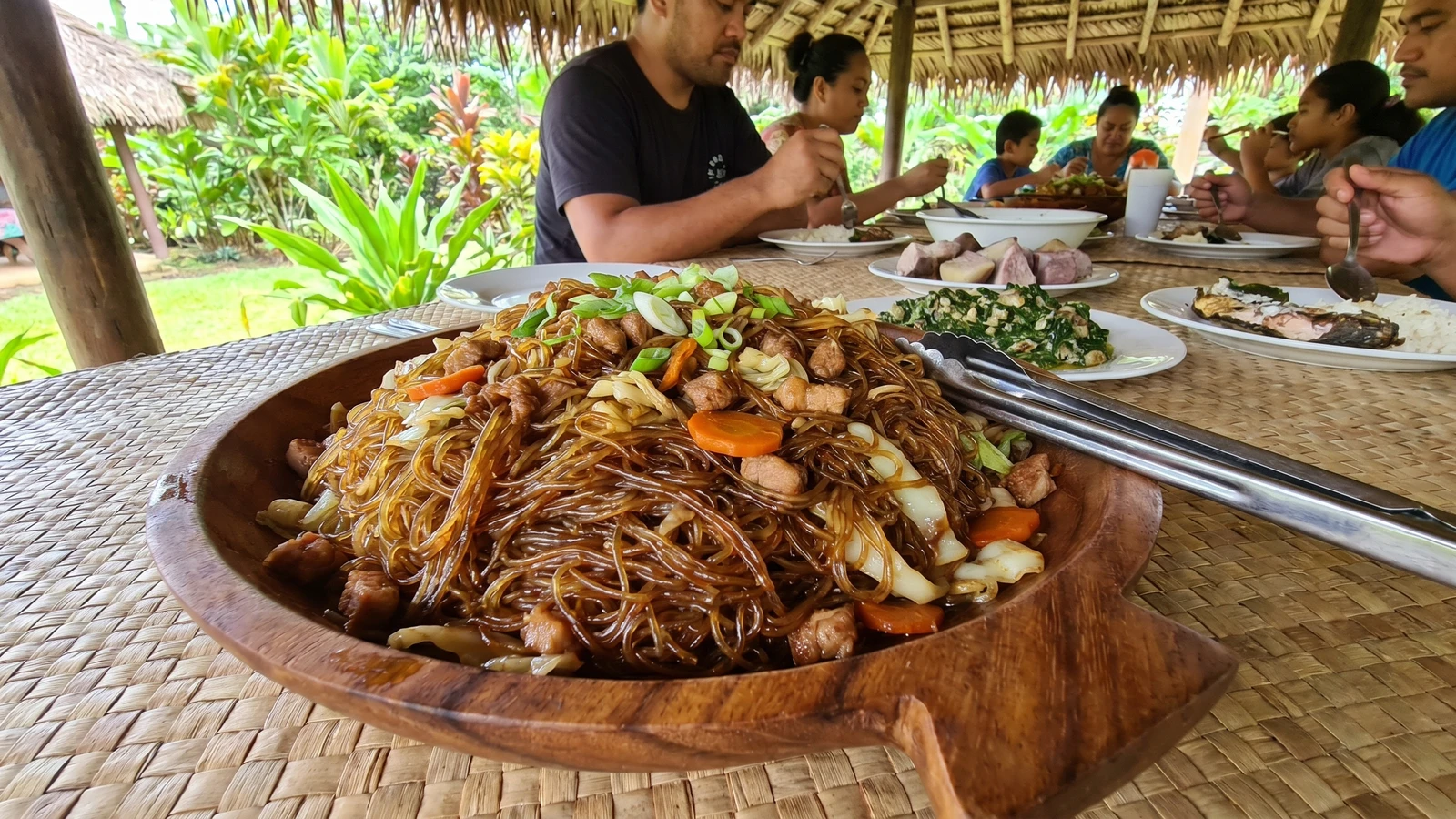
Sāmoa's sapasui, glassy noodles dark with soy and pork, born from Chinese plantation kitchens and carried now to every toʻonaʻi, church hall, potluck pan, and weeknight table.
The canoe foods are our elder line, but the living table has more than one kind of ancestor. Sapasui belongs to Sāmoa, to the aiga, the family, and to the church hall pans where one auntie says, "put more noodles, plenty people coming," and somehow the pot stretches. That is a kind of kinship too.
This dish came through hard history, Chinese laborers brought into Sāmoa under empire, cooks making chop suey with what they had, Sāmoan hands taking those glassy bean-thread noodles and making them part of toʻonaʻi, the Sunday meal after church. It isn't palusami in the umu, and it isn't the old deep food of talo and ʻulu, taro and breadfruit, but don't talk down to it. The islands eat now as well as then. Corned beef, rice, sapasui, grilled meat, plate lunch, all of that sits beside the canoe crops.
The why here is simple: build flavor first, then let the noodles drink it. Brown the pork until it gives you fond, bloom the ginger and garlic, make the broth dark with soy, then fold the soaked vermicelli through until every strand turns glossy brown. No need make it precious. Just keep it generous.
Across the Triangle, every island has everyday foods that came by ship, mission, plantation, trade, and love, then got remade at home. This one is Sāmoa's. Cook it that way, name the hand, feed the room.
In 1903, the German colonial administration brought Chinese indentured laborers to Sāmoa for plantation work, and later New Zealand rule continued that labor system after World War I. Sapasui comes from chop suey filtered through those Chinese-Sāmoan kitchens, then made fully Sāmoan in the way it is served: beside talo, rice, palusami, and meat at toʻonaʻi and family gatherings. It is not pre-contact deep food, but it is living food, proof that Sāmoa's table absorbed rupture and still fed the aiga.
Quantity
10 ounces
cellophane or glass noodles
Quantity
2 tablespoons
Quantity
1 1/2 pounds
trimmed and cut into small bite-size pieces
Quantity
1 medium
thinly sliced
Quantity
4 cloves
minced
Quantity
1 tablespoon
grated
Quantity
1 large
cut into thin matchsticks
Quantity
2 cups
shredded
Quantity
2
thinly sliced
Quantity
1/2 cup
plus more to taste
Quantity
2 tablespoons
for deeper color
Quantity
1 tablespoon
Quantity
2 teaspoons
Quantity
2 cups
Quantity
1/2 teaspoon
Quantity
3
thinly sliced
| Ingredient | Quantity |
|---|---|
| dried bean-thread noodlescellophane or glass noodles | 10 ounces |
| neutral oil | 2 tablespoons |
| pork shoulder or pork butttrimmed and cut into small bite-size pieces | 1 1/2 pounds |
| onionthinly sliced | 1 medium |
| garlicminced | 4 cloves |
| fresh gingergrated | 1 tablespoon |
| carrotcut into thin matchsticks | 1 large |
| cabbageshredded | 2 cups |
| celery ribsthinly sliced | 2 |
| soy sauceplus more to taste | 1/2 cup |
| dark soy sauce (optional)for deeper color | 2 tablespoons |
| oyster sauce (optional) | 1 tablespoon |
| sugar | 2 teaspoons |
| low-sodium chicken stock or water | 2 cups |
| freshly ground black pepper | 1/2 teaspoon |
| green onionsthinly sliced | 3 |
Put the bean-thread noodles in a wide bowl and cover with warm water for 10 to 15 minutes, just until they bend without snapping. Drain them well and cut once or twice with kitchen shears so they don't pull through the whole pot like one long rope. They should be pliable, not mushy.
Heat the oil in a heavy pot over medium-high heat. Add the pork in a single layer and let it brown before you stir, so the bottom of the pot gets those dark sticky bits. That is where the pot starts talking. If the pork crowds, do it in two batches.
Add the onion and cook until it softens and picks up the brown from the pot, about 4 minutes. Stir in the garlic and ginger for one minute, just until they smell sharp and warm, then add the carrot, cabbage, and celery. Cook until the vegetables shine and begin to soften but still have some backbone.
Pour in the soy sauce, dark soy if using, oyster sauce if using, sugar, stock, and black pepper. Scrape the bottom clean with your spoon, then simmer 5 to 7 minutes, until the pork is cooked through and the broth tastes a little stronger than you want the finished dish. The noodles will drink it down.
Add the drained noodles and turn them through the sauce with tongs or two spoons. Keep folding until the strands go from clear to glossy brown and most of the liquid is absorbed, 4 to 6 minutes. If they tighten too much, splash in a little water. If they look pale, add soy by the spoon. Eat what you have, but make the pot honest.
Take the pot off the heat and let it sit 5 minutes so the noodles settle and the sauce clings instead of pooling. Fold in most of the green onion, scatter the rest over the top, and serve family-style with rice, talo, green banana, or whatever is on the table. Sapasui feeds a room. That's its job.
1 serving (about 280g)
Culinary guides, cultural storytelling, and the editorial depth that makes cooking meaningful.
Discover Culinary ExplorerChef Makoa
Sāmoa's faiʻai eleni turns tinned mackerel, onion, and coconut cream into a quick, generous supper, the pantry fish that feeds the whole ʻaiga beside talo, ʻulu, green banana, or rice.

Chef Makoa
Sāmoa's faiʻai feʻe is reef octopus simmered patient in fresh coconut cream, rich and glossy enough to eat beside talo at toʻonaʻi, with the ocean feeding the whole aiga.

Chef Makoa
Sāmoa's taro-leaf parcel made generous with pisupo, coconut cream, and time: a toʻonaʻi kind of comfort, with Tonga's lū pulu and Hawaiʻi's laulau sitting close as cousins.

Chef Makoa
Sāmoa’s oka iʻa bathes fresh fish in citrus and peʻepeʻe, fresh coconut cream, then runs tomato, cucumber, and onion through it cold. Same fish as Tahiti’s ʻia ota, different bowl.