
Chef Joost
Aardappelgratin
A French name, a Dutch potato, and a Sunday table: aardappelgratin is what happens when a frugal kitchen borrows richness and behaves as if it had always belonged.
A cooking platform built around craft, culture, and the stories behind what we eat.
Created by
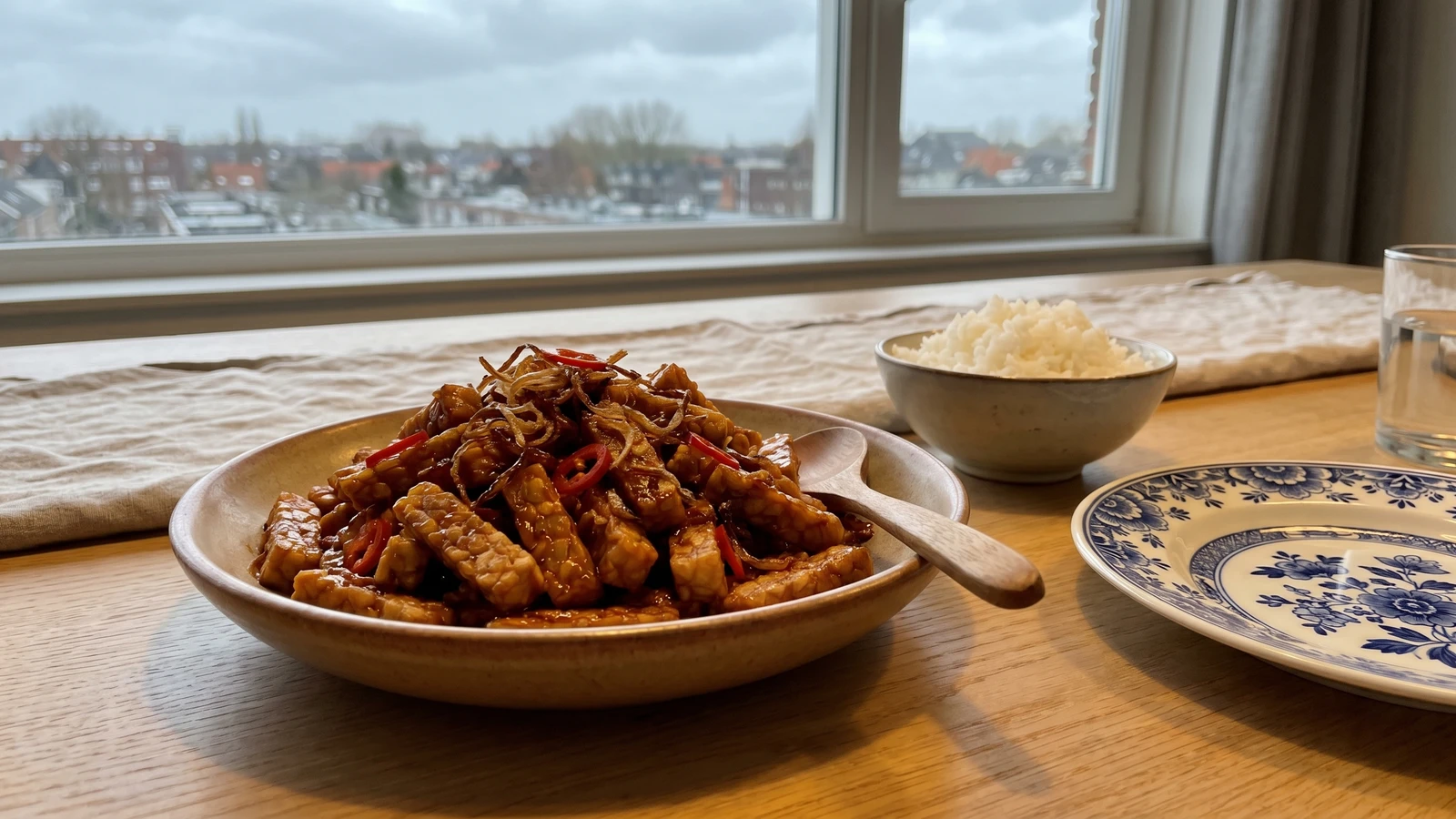
Fermented soybean tempeh, fried crisp and lacquered with sweet chili, ketjap, and coconut, carries the Indo-Dutch table's most practical wisdom: make it ahead, then pass it generously.
Some dishes arrive in the Netherlands by ship, and then refuse to leave the family table. Sambal goreng tempeh is one of them: Indonesian in origin, Indo-Dutch in its Dutch afterlife, the kind of small dish that sits among the bowls of a rijsttafel and quietly steals the meal. But let me tell you a secret. The best rijsttafel dishes are not the grand ones. They are the ones people reach for twice.
The name already tells you the method, without asking us to invent romance for it. Sambal is the chili relish and goreng means fried; tempeh is the fermented soybean cake from Java, nutty, firm, and far more interesting than its pale reputation abroad. First you fry it until the edges turn crisp, then you tumble it through a sticky sauce of shallot, garlic, chili, ketjap manis, and santen, coconut cream. Crispness first, gloss second. Reverse that order and you have soft cubes wearing a good sauce badly.
History and cookery, they cannot be separated, especially at this table. Dutch households carried these dishes home through colonial history, migration, memory, and the weekly toko, the Indonesian grocer that became part of ordinary Dutch shopping. I prefer to keep it a bit more relaxed, in the Dutch way: one pan for frying, one pan for the sauce, and enough restraint to stop stirring once the tempeh is coated. Serve it warm, at room temperature, or tomorrow. It was made to wait for company.
Tempeh is strongly associated with Java and appears in Javanese food records by at least the early nineteenth century, though the fermentation practice is older in household cooking. Sambal goreng tempeh entered Dutch home cooking through the Indo-Dutch table after centuries of colonial contact and, especially, after Indonesian independence in 1945, when Indo families brought recipes, tastes, and rijsttafel habits to the Netherlands. The dish's staying power comes from its practicality: fried tempeh keeps its bite, the sweet chili sauce improves as it rests, and a small bowl can season an entire table.
Quantity
400g
cut into small batons or cubes
Quantity
500ml, or enough for 2cm depth
Quantity
3 tablespoons
Quantity
4
thinly sliced
Quantity
3
finely chopped
Quantity
2
thinly sliced
Quantity
1 tablespoon
Quantity
2cm piece
bruised
Quantity
2
Quantity
1
Quantity
2 tablespoons
Quantity
1 tablespoon
Quantity
1 teaspoon
Quantity
80ml
Quantity
1/2 teaspoon, plus more to taste
| Ingredient | Quantity |
|---|---|
| tempehcut into small batons or cubes | 400g |
| neutral oil for frying | 500ml, or enough for 2cm depth |
| neutral oil for the sauce | 3 tablespoons |
| shallotsthinly sliced | 4 |
| garlic clovesfinely chopped | 3 |
| red chiliesthinly sliced | 2 |
| sambal oelek | 1 tablespoon |
| galangalbruised | 2cm piece |
| Indonesian bay leaves (daun salam) (optional) | 2 |
| makrut lime leaf (optional) | 1 |
| ketjap manis | 2 tablespoons |
| tamarind water or lime juice | 1 tablespoon |
| palm sugar or dark brown sugar | 1 teaspoon |
| santen or thick coconut cream | 80ml |
| salt | 1/2 teaspoon, plus more to taste |
Cut the tempeh into small batons or cubes, roughly 1cm thick. Keep the pieces even so they fry at the same pace; tempeh is fermented and firm, not a sponge, and it rewards a clean cut with crisp edges.
Heat 2cm of neutral oil in a wide pan to 170C. Fry the tempeh in batches until golden and crisp at the edges, about 4 to 5 minutes per batch, then drain on paper. Do not crowd the pan. If the oil cools, the tempeh drinks instead of crisps, and that is a dull bargain.
Pour off the frying oil and wipe the pan, or use a clean second pan. Warm 3 tablespoons oil over medium heat and fry the shallots for 4 minutes until soft and lightly golden. Add the garlic, sliced chilies, sambal oelek, galangal, daun salam, and makrut lime leaf, and cook for another 2 minutes until the oil turns red and fragrant.
Stir in the ketjap manis, tamarind water or lime juice, sugar, santen, and salt. Let the sauce bubble gently for 3 to 4 minutes until thick, shiny, and reduced enough to cling to a spoon. Taste now: it should be sweet first, chili-warm second, with a small sour note keeping order.
Add the fried tempeh and toss quickly until every piece is lacquered. Stop once coated; too much stirring breaks the crisp edges you worked for. Remove the galangal and leaves before serving, or leave them in and warn the table in the old household way: fragrant, not for eating.
1 serving (about 115g)
Culinary guides, cultural storytelling, and the editorial depth that makes cooking meaningful.
Discover Culinary ExplorerChef Joost
A French name, a Dutch potato, and a Sunday table: aardappelgratin is what happens when a frugal kitchen borrows richness and behaves as if it had always belonged.

Chef Joost
Aardappelpuree is the quiet heart of the Dutch AVG'tje: floury potatoes, warm milk, butter, nutmeg, and a small kuiltje, little well, built for the jus.

Chef Joost
Flower cabbage under old Gouda sauce: the quiet Dutch side dish that turns one boiled vegetable into the reason everyone reaches for the spoon twice.

Chef Joost
White beans peeking through green snijbonen give this old Dutch side its nursery-table joke: bare little children in the grass, sweet garden thrift with butter, nutmeg, and no apology.