
Chef Joost
Aardappelgratin
A French name, a Dutch potato, and a Sunday table: aardappelgratin is what happens when a frugal kitchen borrows richness and behaves as if it had always belonged.
A cooking platform built around craft, culture, and the stories behind what we eat.
Created by
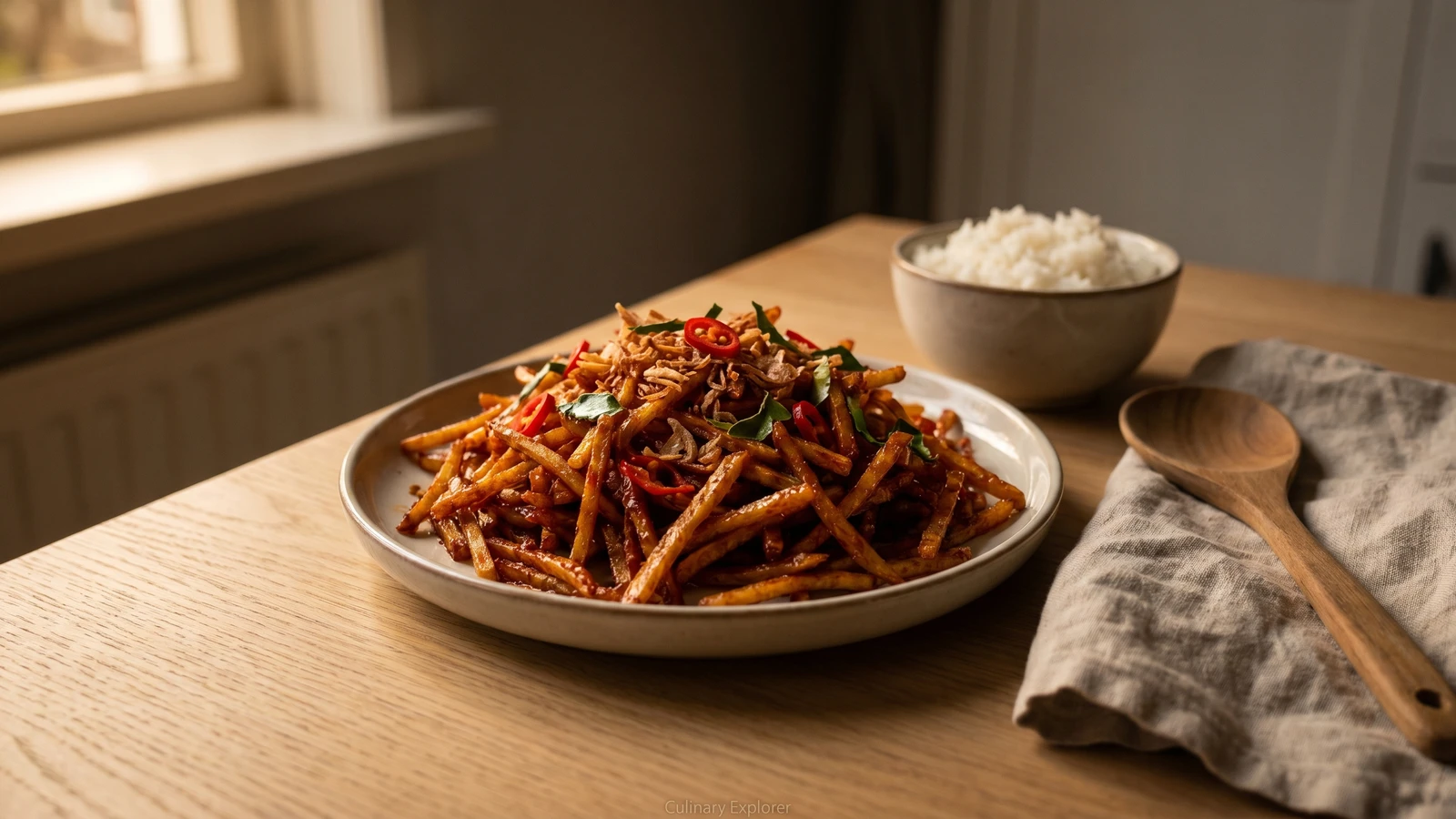
The Indo-Dutch rijsttafel would be poorer without these crisp potato matchsticks, fried first, then lacquered in sambal, ketjap manis, garlic, and tamarind.
The name already tells you almost the whole method, if you listen politely. Sambal is the chili paste, goreng means fried, kentang is potato. No mystery there. But let me tell you a secret: the trick of this dish is that the potato is not fried in the sauce. It is fried first, made crisp and dry, and only then quickly lacquered, so the chili-ketjap clings like varnish instead of turning the whole pan into sweet potato porridge.
This is the Indo-Dutch table speaking in its clearest household voice. Rijsttafel, rice table, became famous as excess: many little dishes, many spoons, the colonial appetite pretending to be hospitality. But in Dutch homes after the war, especially in families who came back from Indonesia with grief, memory, and recipes folded into suitcases, it became something smaller and more tender. A table set with white rice, a few sambals, chicken, beans, eggs, and always something crisp to wake the mouth.
Sambal goreng kentang belongs there. The potato is a New World traveler that found its way into Asian and Dutch kitchens by different roads, then met chili, tamarind, and ketjap manis, sweet soy sauce, at the Indo-Dutch table. History and cookery, they cannot be separated, not when a single bite carries plantation sugar, Javanese chile paste, European potato, and the Dutch talent for making a side dish do the work of a conversation.
Hou het altijd simpel. Cut the potatoes thin, rinse away their starch, dry them as if your reputation depends on it, and fry them until they sound crisp when stirred. The sauce comes last and fast. You're not stewing here; you're glazing. That is the difference between kentang kering, dry crisp potatoes, and sadness with chili.
Sambal goreng kentang entered Dutch domestic cooking through the Indo-Dutch rijsttafel tradition, which developed under Dutch colonial rule in the Indonesian archipelago during the nineteenth century and became common in the Netherlands after Indonesian independence in 1949, when Indo-European families repatriated in large numbers. The dish reflects a documented colonial table rather than a simple national category: potato, chili paste, ketjap manis, and tamarind meet in the small side dishes served around rice. In Dutch homes it is often called kentang kering, dry potato, because the potatoes are fried crisp before being coated, a practical detail that explains the whole dish.
Quantity
750g
peeled and cut into fine matchsticks
Quantity
1 liter
for frying
Quantity
3 tablespoons
for the sambal sauce
Quantity
3
finely sliced
Quantity
3
minced
Quantity
2
finely sliced
Quantity
2 tablespoons
Quantity
2 tablespoons
Quantity
1 tablespoon
Quantity
1 tablespoon
Quantity
2
torn
Quantity
1/2 teaspoon
plus more to taste
Quantity
2 tablespoons
| Ingredient | Quantity |
|---|---|
| waxy potatoespeeled and cut into fine matchsticks | 750g |
| neutral oilfor frying | 1 liter |
| neutral oilfor the sambal sauce | 3 tablespoons |
| shallotsfinely sliced | 3 |
| garlic clovesminced | 3 |
| red chiliesfinely sliced | 2 |
| sambal oelek | 2 tablespoons |
| ketjap manis | 2 tablespoons |
| tamarind paste | 1 tablespoon |
| palm sugar or dark brown sugar | 1 tablespoon |
| makrut lime leavestorn | 2 |
| saltplus more to taste | 1/2 teaspoon |
| fried shallots (optional) | 2 tablespoons |
Cut the potatoes into fine matchsticks, about 3mm thick. Rinse them in two or three changes of cold water until the water runs mostly clear. This is not fussiness. The loose starch is what makes potatoes cling together in the oil, and here each little stick must keep its independence.
Drain the potatoes very well, then spread them on a clean tea towel and pat them completely dry. Wet potato lowers the oil temperature and spits back at you, for obvious reasons. Give them ten minutes in the towel if you can; dry potatoes fry crisp, damp ones sulk.
Heat the frying oil in a deep pan to 170C. Fry the potatoes in small batches, stirring gently at first so they don't clump, until pale golden and crisp, 5 to 7 minutes per batch. Lift them out with a spider or slotted spoon and drain on a rack or paper. Salt lightly while still warm.
Warm 3 tablespoons oil in a wide frying pan over medium heat. Add the shallots and cook until soft and lightly golden, then add the garlic and sliced chilies for another minute. The garlic should smell sweet and sharp, not brown and bitter.
Stir in the sambal oelek, ketjap manis, tamarind paste, sugar, torn lime leaves, and salt. Cook for 2 to 3 minutes, stirring, until the sauce thickens, darkens, and leaves a glossy trail when you drag the spoon through the pan. Taste it now: it should be hot, sweet, salty, and sour in one small argument.
Turn the heat low and add the fried potatoes. Toss quickly and gently until the matchsticks are thinly coated, then take the pan off the heat at once. You want a lacquer, not a bath. Scatter fried shallots over the top if using, and serve warm or at room temperature beside rice, chicken, eggs, or a proper rijsttafel spread.
1 serving (about 115g)
Culinary guides, cultural storytelling, and the editorial depth that makes cooking meaningful.
Discover Culinary ExplorerChef Joost
A French name, a Dutch potato, and a Sunday table: aardappelgratin is what happens when a frugal kitchen borrows richness and behaves as if it had always belonged.

Chef Joost
Aardappelpuree is the quiet heart of the Dutch AVG'tje: floury potatoes, warm milk, butter, nutmeg, and a small kuiltje, little well, built for the jus.

Chef Joost
Flower cabbage under old Gouda sauce: the quiet Dutch side dish that turns one boiled vegetable into the reason everyone reaches for the spoon twice.

Chef Joost
White beans peeking through green snijbonen give this old Dutch side its nursery-table joke: bare little children in the grass, sweet garden thrift with butter, nutmeg, and no apology.