Chef Takumi
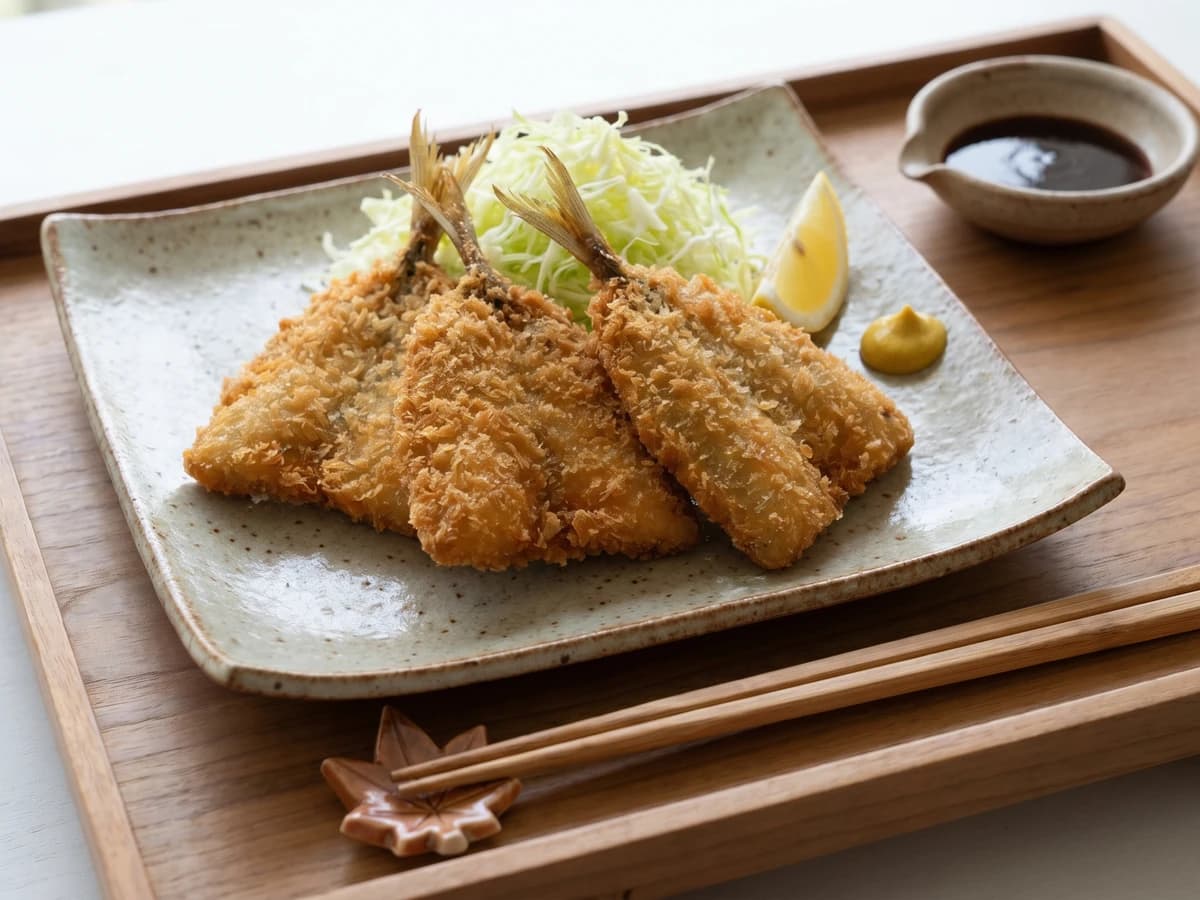
Aji Fry (アジフライ, panko-fried horse mackerel)
Aji fry is weeknight fish with no mystery: fresh horse mackerel opened cleanly, breaded lightly, and fried until the panko crackles while the flesh stays sweet.
A cooking platform built around craft, culture, and the stories behind what we eat.

Created by
Roe-bellied shishamo asks for almost nothing: a light hand with salt, a hot grill, and enough patience for the skin to blister while the tiny bones soften.
Awhole fish on the plate can make a new cook pause, especially when it is meant to be eaten head to tail. Shishamo is small enough to forgive you. The work is not carving or filleting. It is buying the right little fish, drying it well, and letting salt and fire do their plain work.
The best shishamo is an autumn fish from Hokkaidō, at its 旬 (shun), when the females carry roe. Most cooks outside Japan will meet capelin sold as karafuto shishamo. It grills well and gives that same quiet pop of eggs between the teeth, but it isn't hon-shishamo. Say that plainly and cook it honestly. Nothing is hidden here, not even the bones.
Shioyaki is the method, not the menu: salt and grill. The one detail that decides it is dryness. Pat the fish dry, salt it lightly, let the salt draw out surface water, then pat it dry again before it meets the grill. Wet skin turns limp and clings. Dry skin blisters, browns, and releases.
On the table this is not a grand centerpiece. It is the fish dish beside rice, miso soup, pickles, and a small mound of grated daikon with citrus. Three or five fish on a plate, heads lined left, plenty of empty stoneware showing around them. Leave it room, and the little fish looks exactly as it should: plain, direct, and a little braver than the cook needed to be.
Shishamo is a true Hokkaidō fish, Spirinchus lanceolatus, found along the island's Pacific coast and in rivers where it returns to spawn in autumn; the name is usually traced to Ainu words for willow-leaf fish, echoed by the kanji 柳葉魚. Mukawa in Iburi, Hokkaidō, is the best-known producing town, and its autumn catch became the standard for hon-shishamo. Because the native catch is small, capelin imported from the North Atlantic has been sold in Japan since the late twentieth century as karafuto shishamo, a useful stand-in but a different fish.
Quantity
6 to 8 small fish (about 250 to 300g)
thawed if frozen
Quantity
1/2 teaspoon
use less if fish is already salted
Quantity
1 teaspoon
for the grate or foil
Quantity
1/2 cup grated
lightly squeezed
Quantity
1 sudachi or 1/2 lemon
cut into wedges
Quantity
a few drops
for the grated daikon
| Ingredient | Quantity |
|---|---|
| whole shishamo or komochi shishamothawed if frozen | 6 to 8 small fish (about 250 to 300g) |
| fine sea saltuse less if fish is already salted | 1/2 teaspoon |
| neutral oil (optional)for the grate or foil | 1 teaspoon |
| daikonlightly squeezed | 1/2 cup grated |
| sudachi or lemon (optional)cut into wedges | 1 sudachi or 1/2 lemon |
| soy sauce (optional)for the grated daikon | a few drops |
Look for whole shishamo, preferably komochi shishamo, the roe-bellied females. True hon-shishamo from Hokkaidō is an autumn treat; outside Japan you'll usually find frozen karafuto shishamo, capelin, and it is a sensible stand-in if you name it honestly. The fish should smell clean and cold, with tight skin and rounded bellies, not torn ones. Thaw frozen fish overnight in the refrigerator on a rack so meltwater drains away.
Pat the fish dry with paper towels. Sprinkle the salt lightly over both sides and let the fish rest for 10 minutes, then pat dry again. Salt draws out surface water and lightly firms the skin, so the grill can blister it instead of making it cling to the grate. If your fish was sold pre-salted, skip the rest and simply dry it well.
Heat a Japanese fish grill (yakizakana grill) or an oven broiler until fully hot. Set a rack 5 to 6 inches from the broiler element and oil the grate very lightly, or lay down crumpled, then flattened, lightly oiled foil. The small ridges keep the fish from lying in its own moisture, and the hot surface seizes the skin before it sticks.
Lay the fish in a single layer with a little space between them. Grill for 3 to 4 minutes, until the skin has brown freckles, the fins crisp at the edges, and the fish releases when nudged. Leave them alone while they cook. Small fish tear when fussed over, and torn bellies spill the roe.
Turn each fish once with a thin spatula or long cooking chopsticks. Grill for 2 to 4 minutes more, until the second side is blistered, the body feels firm but not hard, and any roe visible at the belly looks set and granular. Pull the fish before the belly bursts wide. A small split is ordinary; a gaping split means the eggs stayed on the grill instead of your plate.
Set three fish per plate, heads to the left and bellies facing you, with grated daikon and a wedge of sudachi or lemon at the side. Touch the daikon with a few drops of soy sauce if you like. Eat the fish whole, head to tail, while the skin is still crisp; the bones have softened because the fish is small and cooked dry. If a head or fin feels too firm, leave it. The table is not a courtroom.
1 serving (about 145g)
Culinary guides, cultural storytelling, and the editorial depth that makes cooking meaningful.
Discover Culinary ExplorerChef Takumi
Aji fry is weeknight fish with no mystery: fresh horse mackerel opened cleanly, breaded lightly, and fried until the panko crackles while the flesh stays sweet.
Chef Takumi
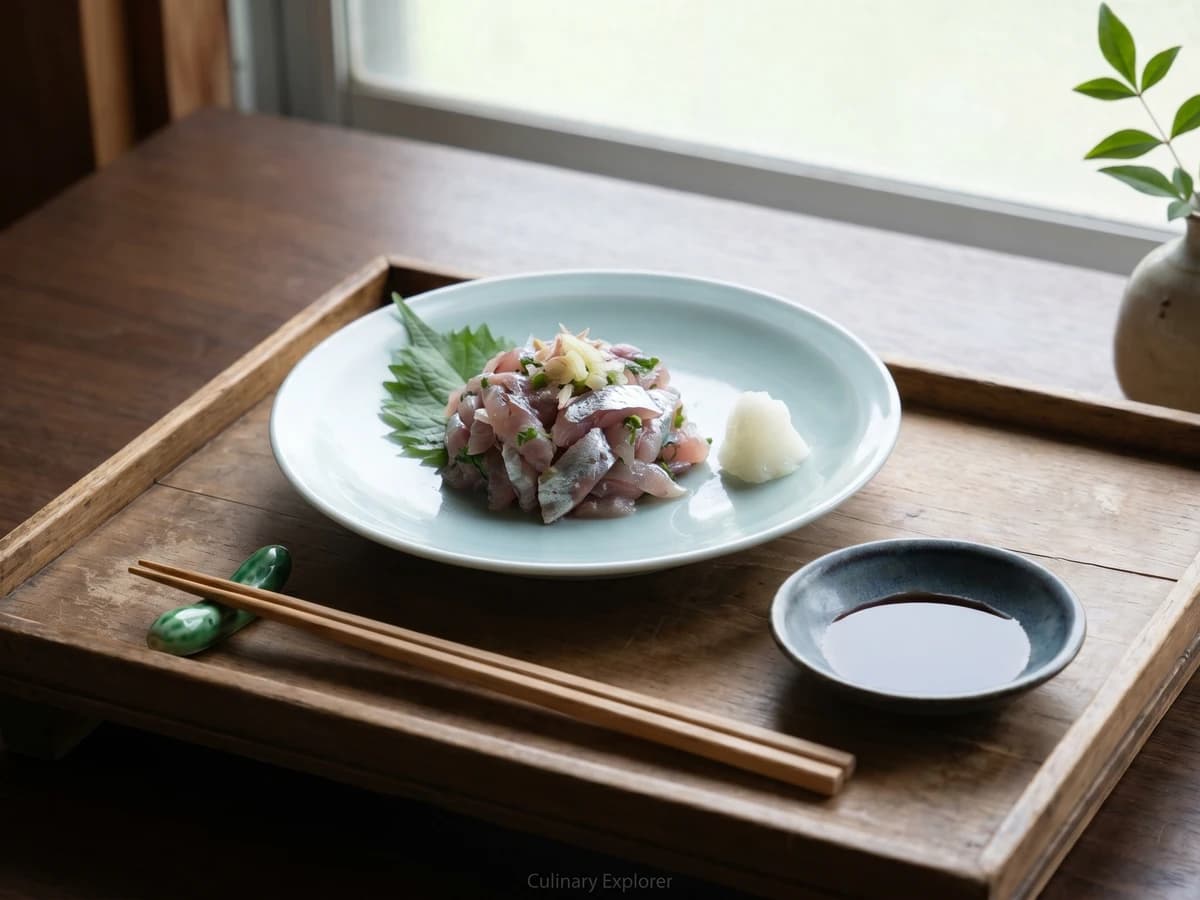
Summer horse mackerel, chopped just enough to catch ginger and scallion, becomes a cool, clean main dish with rice. The secret is fresh fish and a knife that does not bruise it.

Chef Takumi
Akashi-yaki is not sauced takoyaki. It is egg-rich batter, tender octopus, and clear dashi, cooked pale and soft so each ball can be dipped like a small custard dumpling.
Chef Takumi
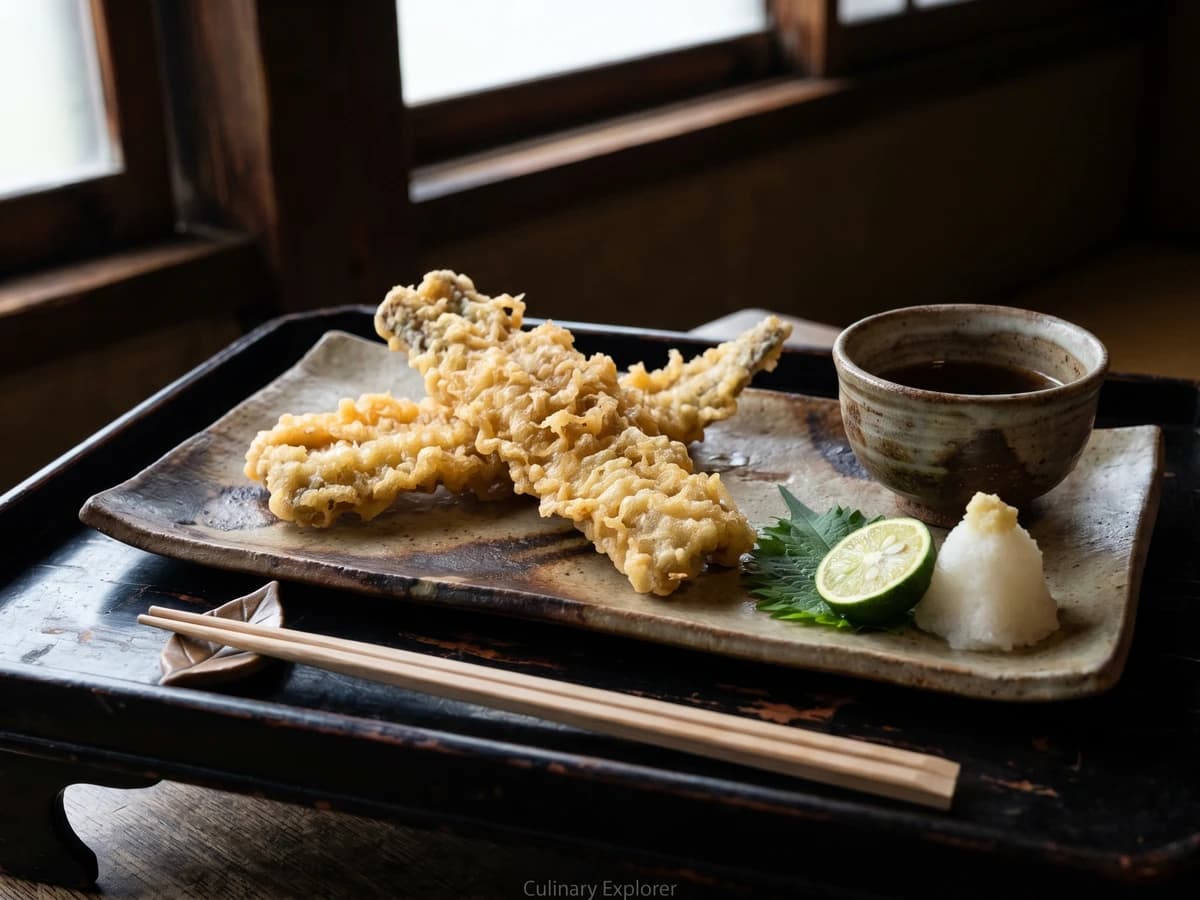
A whole anago looks like a test of nerve. It is mostly good sourcing, a dry skin, cold batter, and oil hot enough to leave the eel sweet under its lace.