Chef Takumi
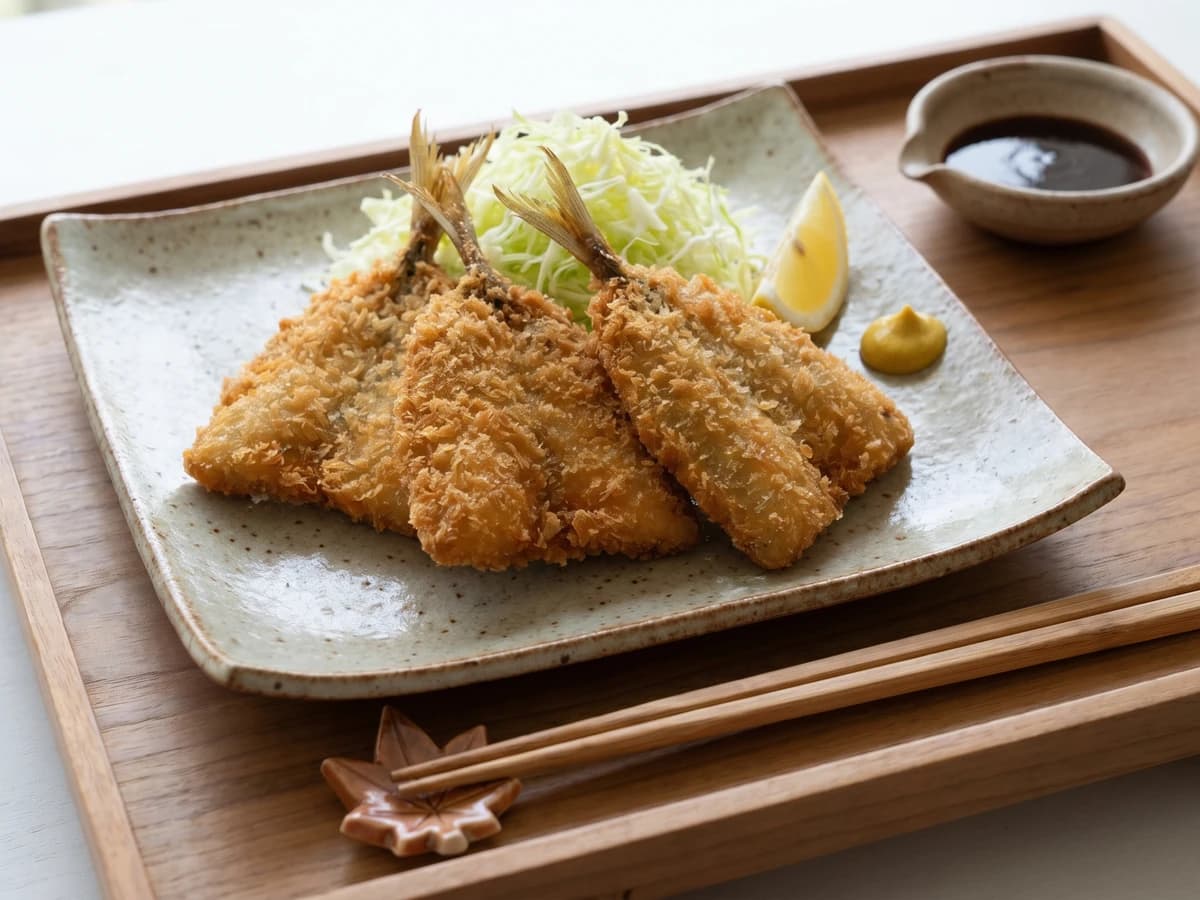
Aji Fry (アジフライ, panko-fried horse mackerel)
Aji fry is weeknight fish with no mystery: fresh horse mackerel opened cleanly, breaded lightly, and fried until the panko crackles while the flesh stays sweet.
A cooking platform built around craft, culture, and the stories behind what we eat.
Created by
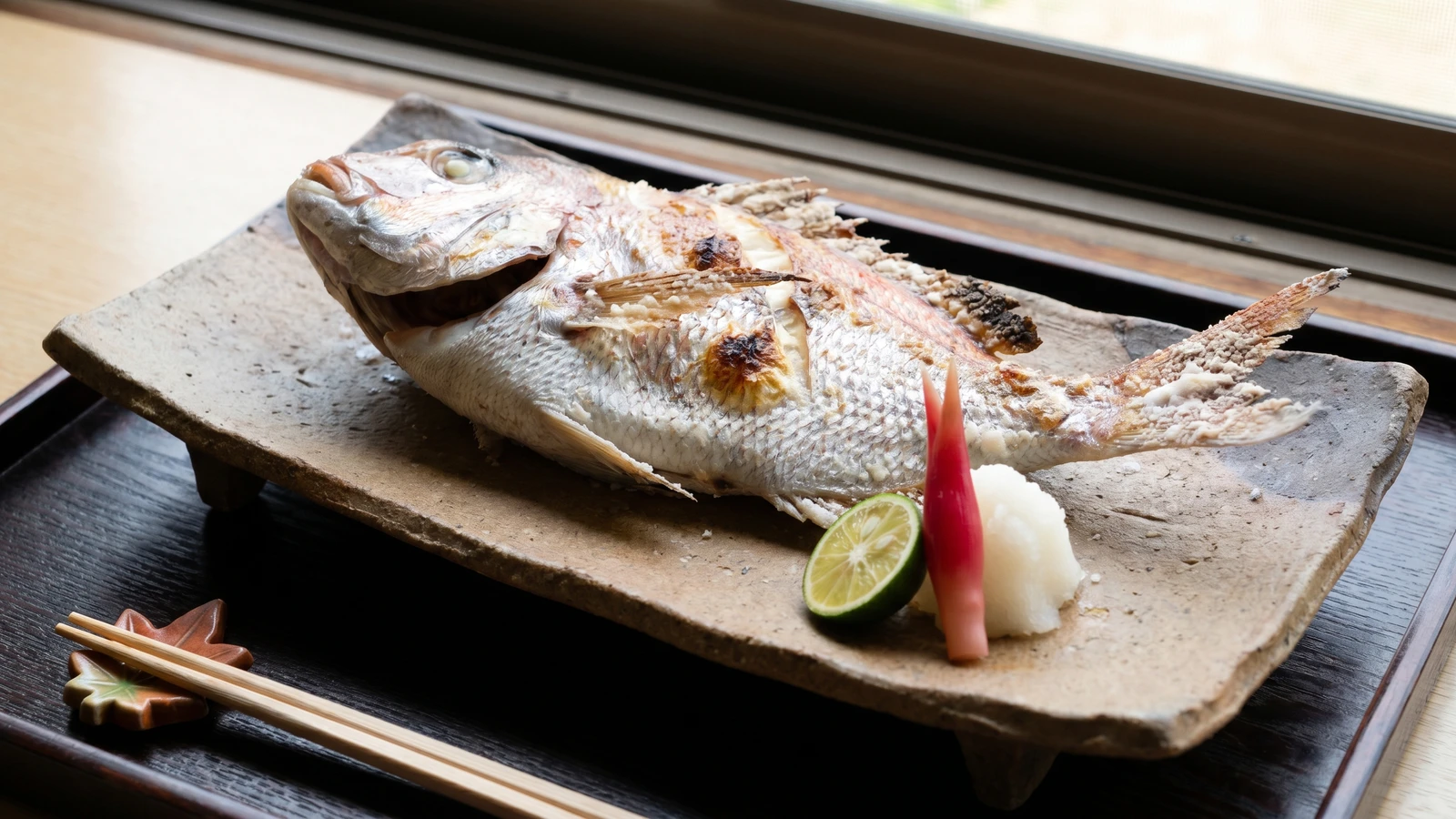
A whole tai looks ceremonial because it is, but the cooking is plain: good fish, enough salt, steady heat, and the patience to keep the fins from burning.
Awhole sea bream on the table changes the meal before anyone lifts a chopstick. Tai has that power in Japan, partly because the name leans toward medetai, meaning auspicious, but mostly because the fish itself looks complete. Head, tail, silver skin, red back. Nothing hidden.
This is not a difficult dish. It is only a fish, salted well and grilled with care. The part that worries people is the whole shape, as if the head and tail make the cooking more advanced. They don't. They only ask you to respect the fish as one piece and let the salt do its small, necessary work.
The one detail that decides it is kazarijio, the decorative salt pressed thickly onto the fins and tail. It isn't decoration first. The salt shields those thin parts from scorching before the flesh has cooked through, so the fish arrives at the table still whole and dignified. A torn, blackened fin makes even good fish look as if it lost an argument with the grill.
Choose madai, red sea bream, at its prime if you can, glistening fresh with clear eyes and firm flesh. Salt it early enough for the surface moisture to draw out, wipe it dry, then grill it until the skin tightens and the flesh lifts cleanly from the bone. Serve it with grated daikon and a squeeze of citrus, no heavy sauce. The fish has already told you what it needs.
Tai has been associated with celebration in Japan for centuries, helped by the wordplay between tai and medetai, meaning auspicious or worthy of congratulation. Whole grilled sea bream appears at New Year, weddings, and other formal meals because its unbroken head-to-tail form represents completeness and good fortune. The use of kazarijio, a thick white coating of salt on the fins and tail, belongs to the presentation grammar of celebratory grilled fish as much as to practical heat protection.
Quantity
1 fish (about 800g to 1kg)
scaled and gutted, head and tail intact
Quantity
2 teaspoons
for salting the fish
Quantity
2 tablespoons
for protecting the fins and tail
Quantity
1 tablespoon
for moistening the coarse salt
Quantity
1 cup
grated and lightly drained
Quantity
1
cut into wedges
Quantity
2
| Ingredient | Quantity |
|---|---|
| whole red sea bream (madai)scaled and gutted, head and tail intact | 1 fish (about 800g to 1kg) |
| fine sea saltfor salting the fish | 2 teaspoons |
| coarse sea saltfor protecting the fins and tail | 2 tablespoons |
| waterfor moistening the coarse salt | 1 tablespoon |
| daikongrated and lightly drained | 1 cup |
| sudachi, yuzu, or lemoncut into wedges | 1 |
| hajikami pickled ginger shoots (optional) | 2 |
Choose a whole madai with clear eyes, bright red skin, firm flesh, and a clean sea smell. If the fish smells strong or the flesh feels slack, change the dish and cook something fresher. Shioyaki has nothing to hide behind.
Rinse the fish quickly inside and out, then dry it thoroughly with towels, especially inside the belly. Make two shallow diagonal cuts through the skin on each side, down to the bone but not through it. The cuts help heat reach the thick flesh near the backbone and give the salt a path in.
Sprinkle the fine salt evenly over both sides and inside the belly. Let the fish rest on a rack for 20 minutes. The salt draws out surface moisture and seasons the flesh lightly, which helps the skin grill cleanly instead of steaming against the heat.
Pat the fish dry again. Do not rinse it. You are removing the moisture the salt pulled out, not washing away the seasoning. A dry surface browns neatly; a wet one sticks, tears, and makes you say unkind things to an innocent fish.
Mix the coarse salt with the water until it feels like damp sand. Press it thickly onto the tail, dorsal fin, pectoral fins, and any thin edges. This is kazarijio, decorative salt, and its first job is protection: the fins are too thin to survive the grill without a shield.
Heat a fish grill, broiler, or charcoal grill to medium-high. Oil the grate lightly if using an open grill. You want enough heat to tighten and brown the skin, but not such fierce heat that the salt-covered fins burn before the flesh cooks.
Set the fish on the grill presentation side first, head to the left if you plan to serve it in the Japanese manner. Grill without moving it for 10 to 12 minutes, until the skin is browned in patches and releases cleanly. Moving it too soon tears the skin; wait until the fish lets go.
Turn the fish carefully with two spatulas or a fish basket, then grill the second side for 8 to 10 minutes more. The flesh is done when a skewer pushed into the thickest part meets little resistance and comes out warm, and the meat near the backbone flakes cleanly.
Lift the fish onto a long platter with the head turned toward the diner, usually head to the left and belly toward the front. Leave space around it. Set grated daikon and citrus to one side, not on top, so the crisp skin stays crisp and the whole fish can be seen.
1 serving (about 135g)
Culinary guides, cultural storytelling, and the editorial depth that makes cooking meaningful.
Discover Culinary ExplorerChef Takumi
Aji fry is weeknight fish with no mystery: fresh horse mackerel opened cleanly, breaded lightly, and fried until the panko crackles while the flesh stays sweet.
Chef Takumi
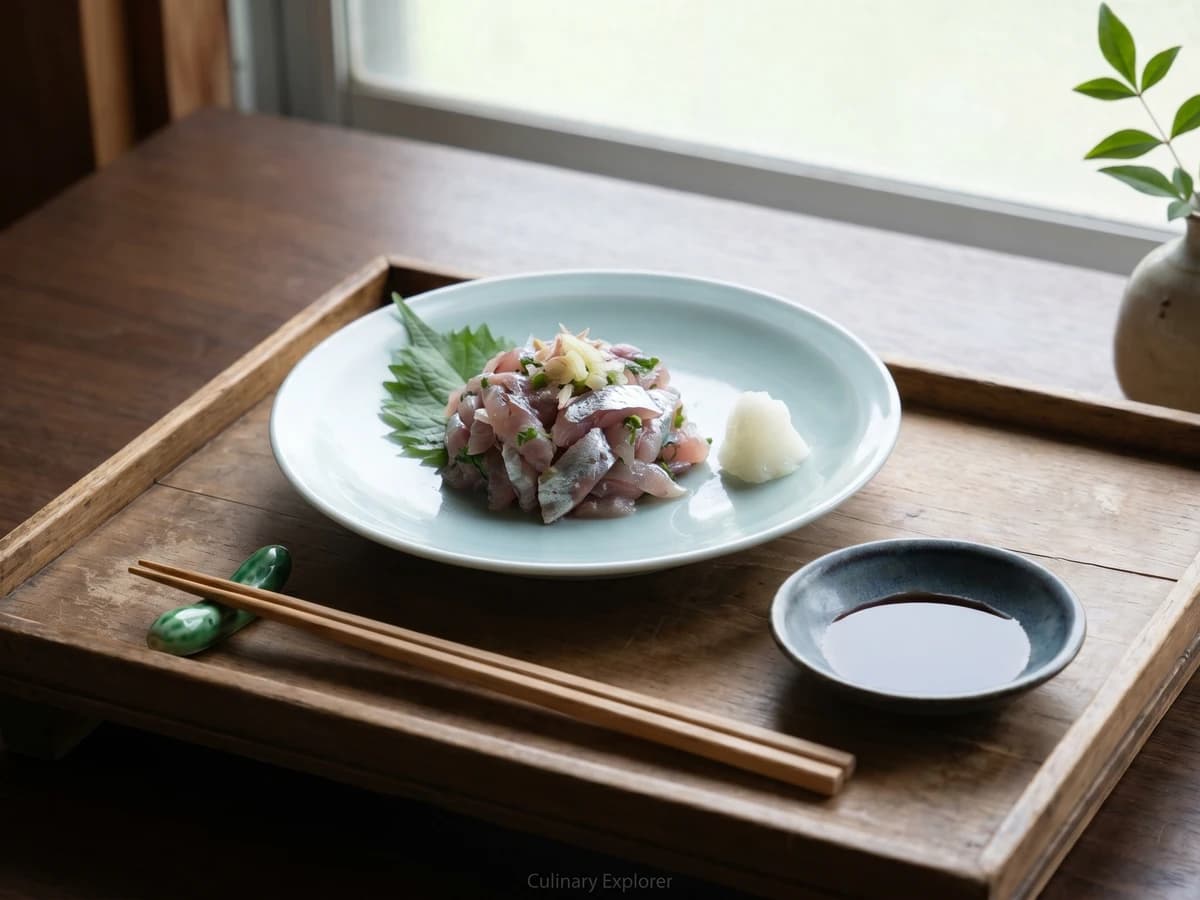
Summer horse mackerel, chopped just enough to catch ginger and scallion, becomes a cool, clean main dish with rice. The secret is fresh fish and a knife that does not bruise it.

Chef Takumi
Akashi-yaki is not sauced takoyaki. It is egg-rich batter, tender octopus, and clear dashi, cooked pale and soft so each ball can be dipped like a small custard dumpling.
Chef Takumi
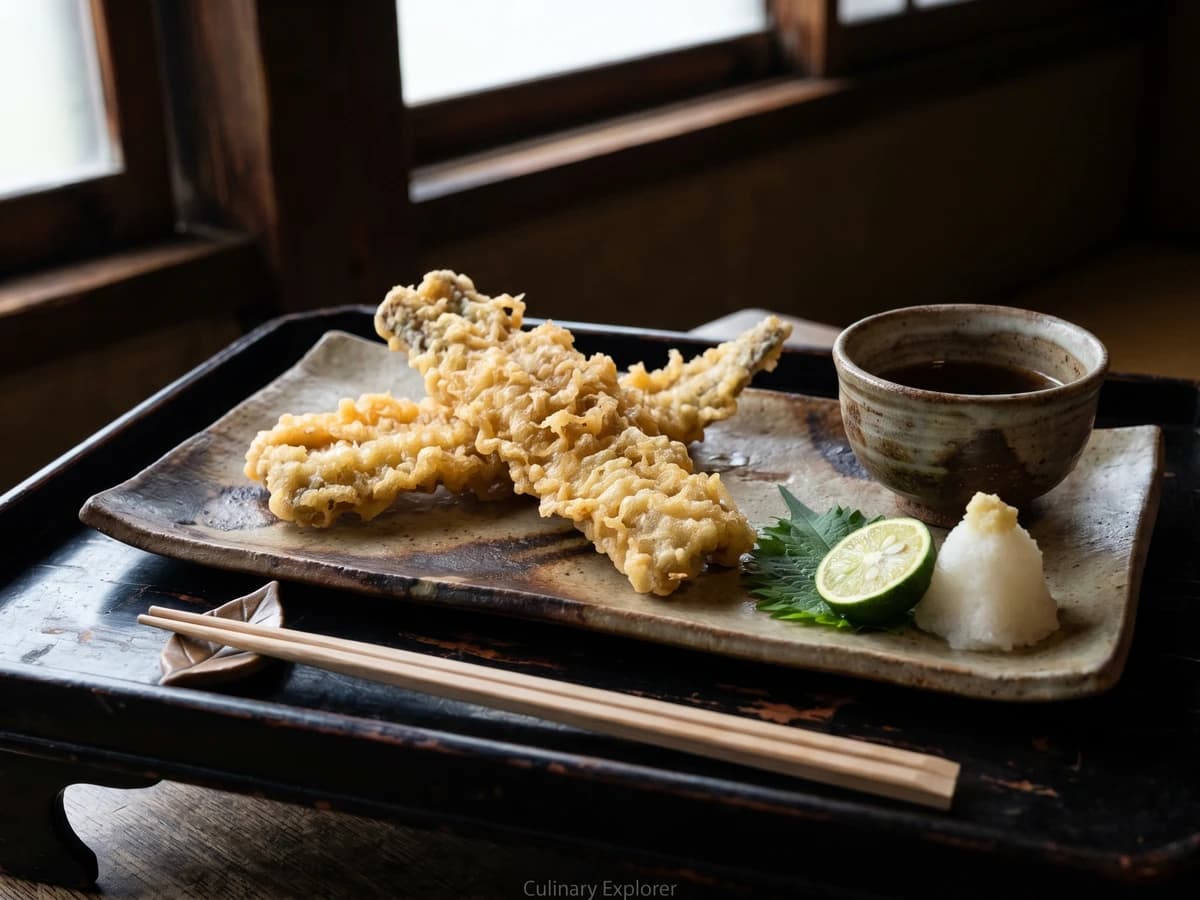
A whole anago looks like a test of nerve. It is mostly good sourcing, a dry skin, cold batter, and oil hot enough to leave the eel sweet under its lace.