Chef Takumi
Aji Fry (アジフライ, panko-fried horse mackerel)
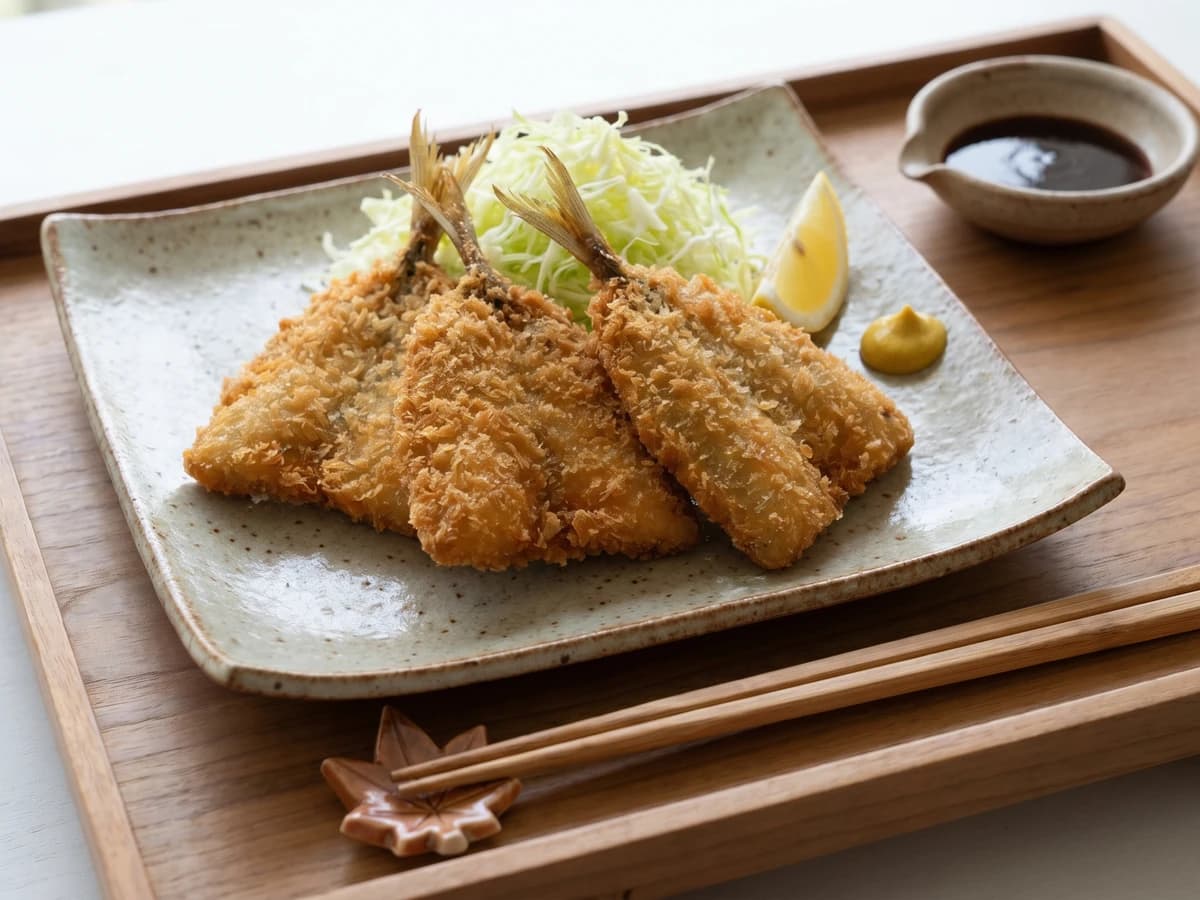
Aji fry is weeknight fish with no mystery: fresh horse mackerel opened cleanly, breaded lightly, and fried until the panko crackles while the flesh stays sweet.
A cooking platform built around craft, culture, and the stories behind what we eat.

Created by
This is the fish that teaches honesty: fresh sardines, salt, fierce heat, and no hiding place. Grill them quickly and the skin crisps while the small bones soften.
Sardines make nervous cooks suspicious before the grill is even hot. They are small, bony, and honest about freshness, which is exactly why they teach so well. When iwashi are glistening fresh, especially the fat rainy-season fish called nyūbai iwashi, they need almost nothing from you.
The first secret is salt with a little time. Salt pulls surface moisture from the skin and firms the flesh, so the fish browns cleanly instead of steaming in its own wetness. Wipe that moisture away before grilling. Don't rinse it off, unless you enjoy undoing your own work, a hobby I cannot recommend.
Shioyaki means salt-grilled, and the name tells you the whole method. This is yakimono, the grilled dish in the Japanese meal, set beside rice, soup, and pickles without ceremony. Serve it with grated daikon and a cut citrus, not to hide the fish but to clear its rich oil. If the sardine is good, let it stand plainly. Nothing hidden.
Salt-grilled fish, yakizakana, is one of the old workhorse methods of the Japanese table, placed beside rice and soup rather than treated as special occasion food. Sardines were abundant around Edo Bay and the Inland Sea in the Edo period; they were eaten fresh, dried, and also processed into hoshika, dried fish fertilizer, which shows how ordinary and plentiful they once were. The character 鰯 is a Japanese-made character combining fish with weak, a blunt comment on how quickly the fish softens and spoils after it leaves the water.
Quantity
4, about 80-100g each
scaled and gutted
Quantity
1 1/2 teaspoons
Quantity
1 teaspoon
for the grate or rack
Quantity
1/2 cup
grated and lightly drained
Quantity
1 sudachi, halved, or 1 lemon wedge
Quantity
1 teaspoon
for the grated daikon
| Ingredient | Quantity |
|---|---|
| whole fresh sardines (iwashi)scaled and gutted | 4, about 80-100g each |
| fine sea salt | 1 1/2 teaspoons |
| neutral oilfor the grate or rack | 1 teaspoon |
| daikongrated and lightly drained | 1/2 cup |
| sudachi or lemon | 1 sudachi, halved, or 1 lemon wedge |
| soy sauce (optional)for the grated daikon | 1 teaspoon |
Use the sardines the day you buy them. Look for bright eyes, tight bellies, and blue-silver skin that shines rather than dulls. Scrape off any loose scales, rinse the belly cavity quickly under cold water, and pat the fish very dry inside and out. Water on the skin delays browning, and sardines are too tender to wait around for our indecision.
Set the sardines on a rack over a tray. Sprinkle the salt over both sides and a little inside the belly cavity, using more than a timid pinch. Leave them for 10 to 15 minutes, until beads of moisture appear on the skin. That moisture is the salt doing its work: drawing out surface water, seasoning the fish, and firming the flesh just enough for the grill.
Heat a charcoal konro, Japanese fish grill, or oven broiler until very hot. If using a broiler, set the rack about 4 inches below the element. Brush the grate or wire rack lightly with oil. The heat must be ready before the fish lands, because quick browning helps the delicate skin release instead of tearing.
Place the sardines on the hot grate. Under a broiler, set the side you want facing up on the plate toward the heat first; over charcoal, put that side down first. Grill for 3 to 4 minutes, until the skin blisters in patches, the fins brown, and the smell changes from raw sea to roasted fish.
Turn each sardine once, gently, with a fish spatula or long cooking chopsticks. Cook the second side for 2 to 3 minutes more. Don't keep turning. The fish is done when the flesh is opaque at the thickest part and flakes away from the spine. The fine bones soften; the central spine of a larger sardine may still be lifted away at the table.
Set the sardines on a long plate with the heads to the left and the bellies toward the diner. Add a small mound of grated daikon and a cut sudachi or lemon. If using soy sauce, drip it onto the daikon, not across the fish. The radish and citrus clear the oil while leaving the salted fish to speak for itself. Leave the plate room.
1 serving (about 185g)
Culinary guides, cultural storytelling, and the editorial depth that makes cooking meaningful.
Discover Culinary ExplorerChef Takumi
Aji fry is weeknight fish with no mystery: fresh horse mackerel opened cleanly, breaded lightly, and fried until the panko crackles while the flesh stays sweet.
Chef Takumi
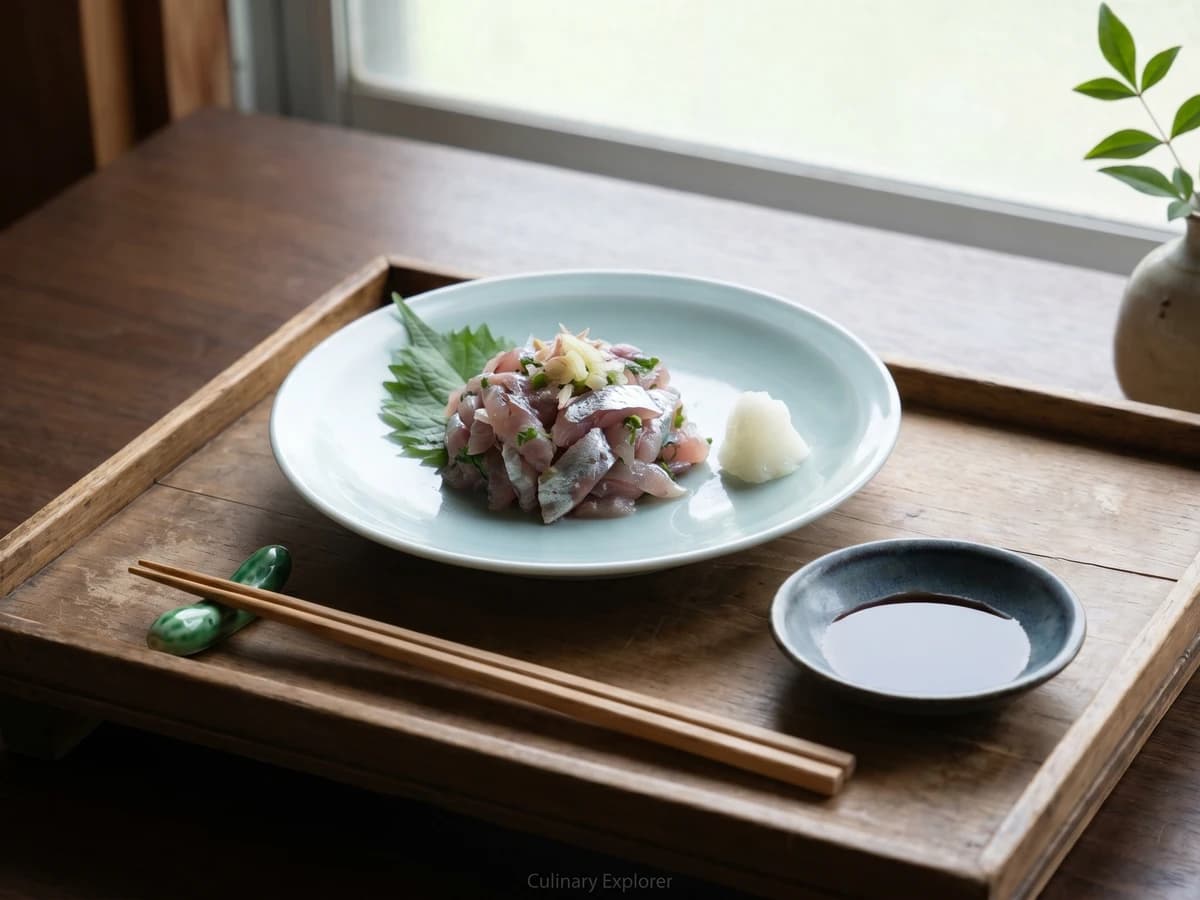
Summer horse mackerel, chopped just enough to catch ginger and scallion, becomes a cool, clean main dish with rice. The secret is fresh fish and a knife that does not bruise it.

Chef Takumi
Akashi-yaki is not sauced takoyaki. It is egg-rich batter, tender octopus, and clear dashi, cooked pale and soft so each ball can be dipped like a small custard dumpling.
Chef Takumi
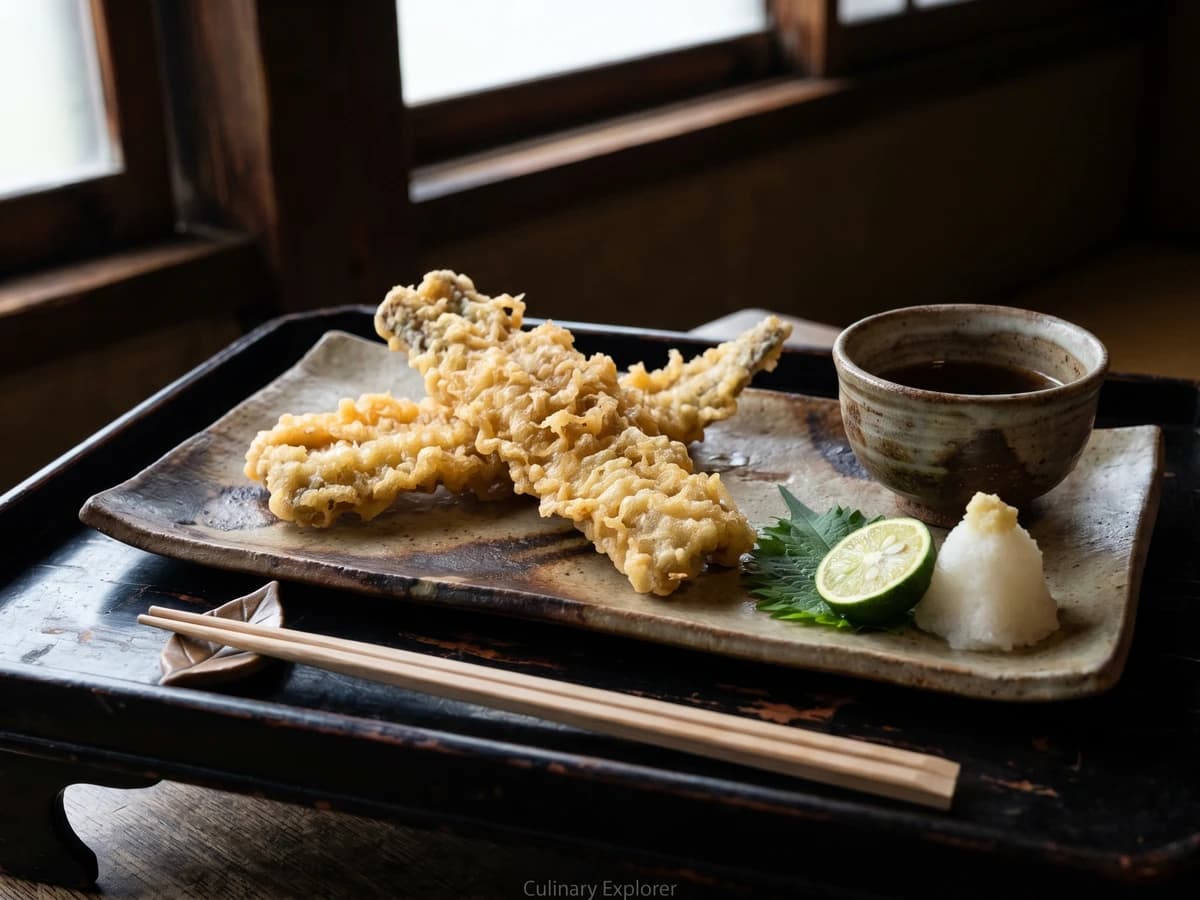
A whole anago looks like a test of nerve. It is mostly good sourcing, a dry skin, cold batter, and oil hot enough to leave the eel sweet under its lace.