Chef Takumi
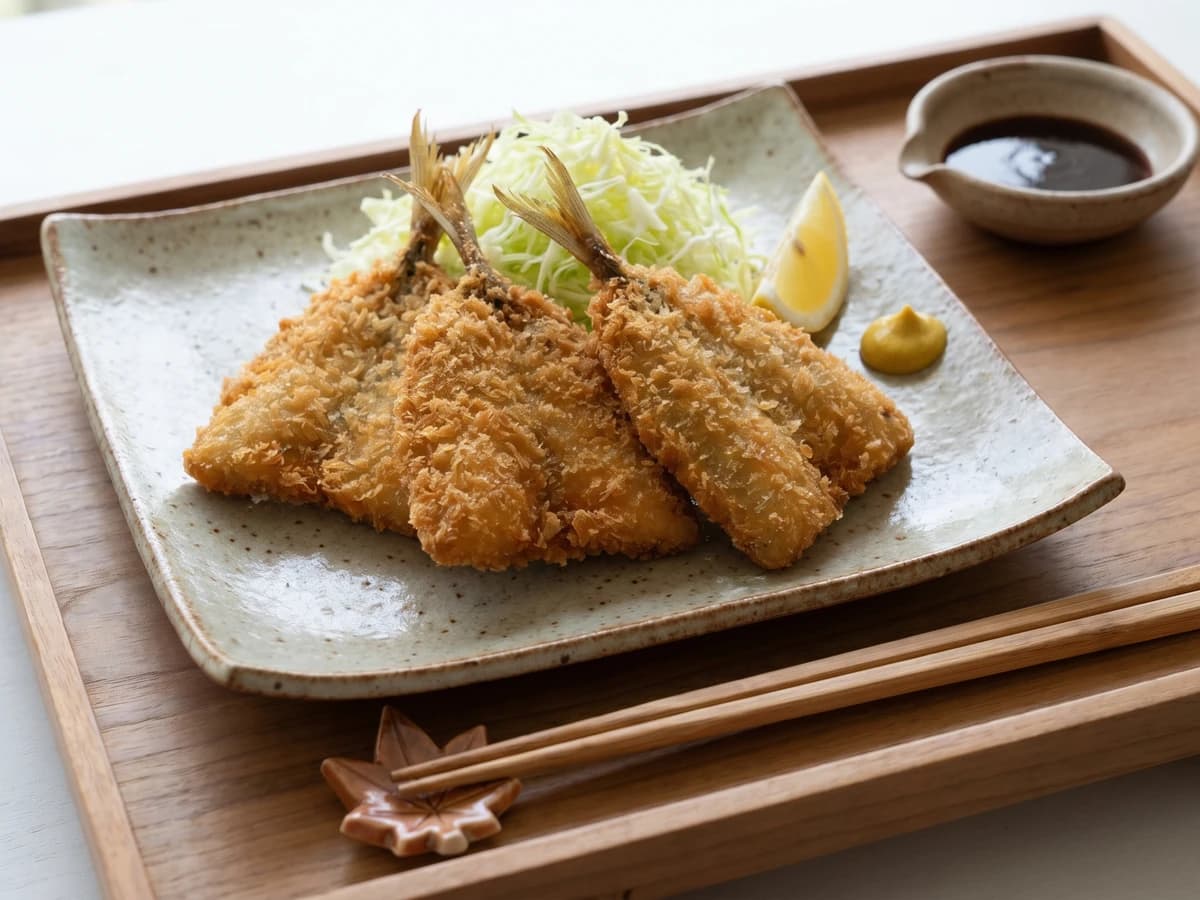
Aji Fry (アジフライ, panko-fried horse mackerel)
Aji fry is weeknight fish with no mystery: fresh horse mackerel opened cleanly, breaded lightly, and fried until the panko crackles while the flesh stays sweet.
A cooking platform built around craft, culture, and the stories behind what we eat.
Created by
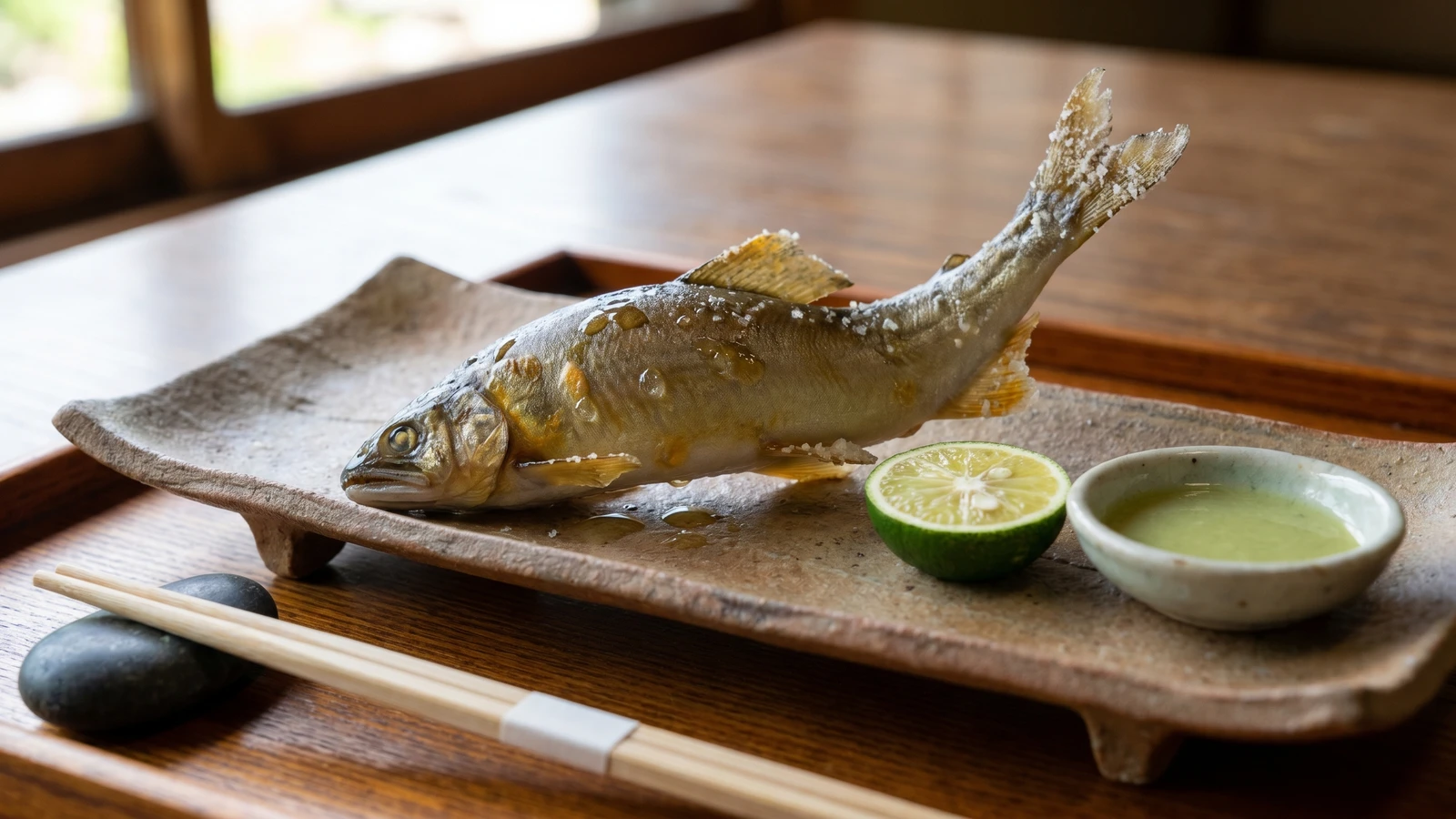
The river fish of summer asks for almost nothing: salt, steady heat, and the patience to let its cucumber fragrance rise from the skin.
Ayu is a fish with a season written plainly into its body. In early summer it smells faintly of cucumber and clean river stones, because it feeds on river algae when the water warms. That scent is the dish. Miss the season and no clever hand will put it back.
People hesitate over this one because the fish is served whole, skewered in a swimming curve, fins salted white like little flags. It looks ceremonial. It isn't difficult, only unfamiliar. The first secret is distance from the fire: strong heat, but not so close that the skin burns before the flesh cooks. We grill it whole because the bones, belly, and skin carry the bitter-sweet river flavor that makes ayu itself.
Salt does two jobs here. A light coat seasons the skin and helps it dry into a crisp surface, while extra salt on the fins and tail protects them from scorching. That decorative salt, kazarijio, is not vanity, though cooking has its harmless little costumes. It keeps the fish beautiful and edible.
Serve ayu as the center of a summer meal, with rice, a clear soup, and one vinegared or simmered dish beside it. Eat from the head toward the tail if the fish is small and fresh, or lift the flesh from the bone if you prefer. Nothing is hidden. Shun decides this one, and the grill only keeps faith with it.
Ayu has been prized in Japan since at least the Nara period, when river fish appeared in court records and offerings. The most famous public tradition is ukai, cormorant fishing on the Nagara River in Gifu, which has been protected by official patronage for centuries and is still performed in summer. Tadezu, a sharp green vinegar made with water pepper, became the classic accompaniment because its bitterness answers the ayu's own clean, faintly bitter belly.
Quantity
4 fish (100-150g each)
very fresh, cleaned
Quantity
2 teaspoons, plus more for fins and tail
Quantity
1 tablespoon
for wiping the fish
Quantity
2 tablespoons
Quantity
1 tablespoon
finely chopped
Quantity
1 teaspoon
Quantity
1/2 teaspoon
Quantity
1
cut into wedges
| Ingredient | Quantity |
|---|---|
| whole ayuvery fresh, cleaned | 4 fish (100-150g each) |
| fine sea salt | 2 teaspoons, plus more for fins and tail |
| sake (optional)for wiping the fish | 1 tablespoon |
| rice vinegar | 2 tablespoons |
| fresh tade leavesfinely chopped | 1 tablespoon |
| grated daikon with a pinch of sanshō (optional) | 1 teaspoon |
| usukuchi (light soy sauce) (optional) | 1/2 teaspoon |
| sudachi or lemoncut into wedges | 1 |
Choose ayu at its summer peak, with clear eyes, bright skin, red gills, and a clean smell like river water, never a strong fishy smell. Sourcing comes first. This dish has no sauce to hide behind, so a tired fish should become something else, not shioyaki.
Pat the fish very dry. If the surface feels slippery, wipe lightly with sake, then dry again. Sprinkle a thin, even coat of salt over both sides and inside the belly. Leave the fish for ten minutes, then blot off any moisture that beads on the skin. Salt draws out surface water, and dry skin browns cleanly instead of steaming against the grill.
Press extra salt onto the tail, dorsal fin, and belly fins. This is kazarijio, decorative salt, but it earns its keep. The fins are thin and burn first, so the salt shields them and leaves the finished fish with those white, crisp edges we expect.
Thread each ayu onto a long metal or bamboo skewer, entering through the mouth, passing along the backbone, and bringing the skewer out near the tail so the fish curves slightly as if swimming. This odori-gushi, or dancing skewer, is not only for looks. The curve exposes more skin to the heat and helps the fish stand proudly rather than slump.
Heat a charcoal grill to a steady medium-high heat, then set the fish a little away from the fiercest coals. The old phrase is strong fire from a distance. Too close and the skin blackens before the backbone area cooks; too gentle and the fish dries before the skin crisps. Brush the grate clean and oil it lightly.
Grill the ayu for about five to six minutes on the first side, then turn once and grill four to five minutes more. Listen for a quiet crackle and watch the skin tighten, bronze, and crisp. The belly should feel just firm when pressed with chopsticks. Turn only once if you can, because every extra move risks tearing the skin you worked to dry.
Stir the chopped tade leaves into the rice vinegar, adding the usukuchi if you want a rounder saltiness. Tadezu should be sharp, green, and a little bitter. It is there to cut the richness of the belly, not to cover the fish. If you cannot find tade, serve grated daikon with a pinch of sanshō and a citrus wedge, and say plainly that it is a stand-in.
Lay each fish on its plate with the curve intact, head to the left and belly toward the diner in the usual Japanese setting. Add a small dish of tadezu and one wedge of sudachi or lemon. Eat while the skin is still crisp. Small ayu may be eaten head to tail; with larger fish, lift the top fillet from the bone, then turn to the other side.
1 serving (about 115g)
Culinary guides, cultural storytelling, and the editorial depth that makes cooking meaningful.
Discover Culinary ExplorerChef Takumi
Aji fry is weeknight fish with no mystery: fresh horse mackerel opened cleanly, breaded lightly, and fried until the panko crackles while the flesh stays sweet.
Chef Takumi
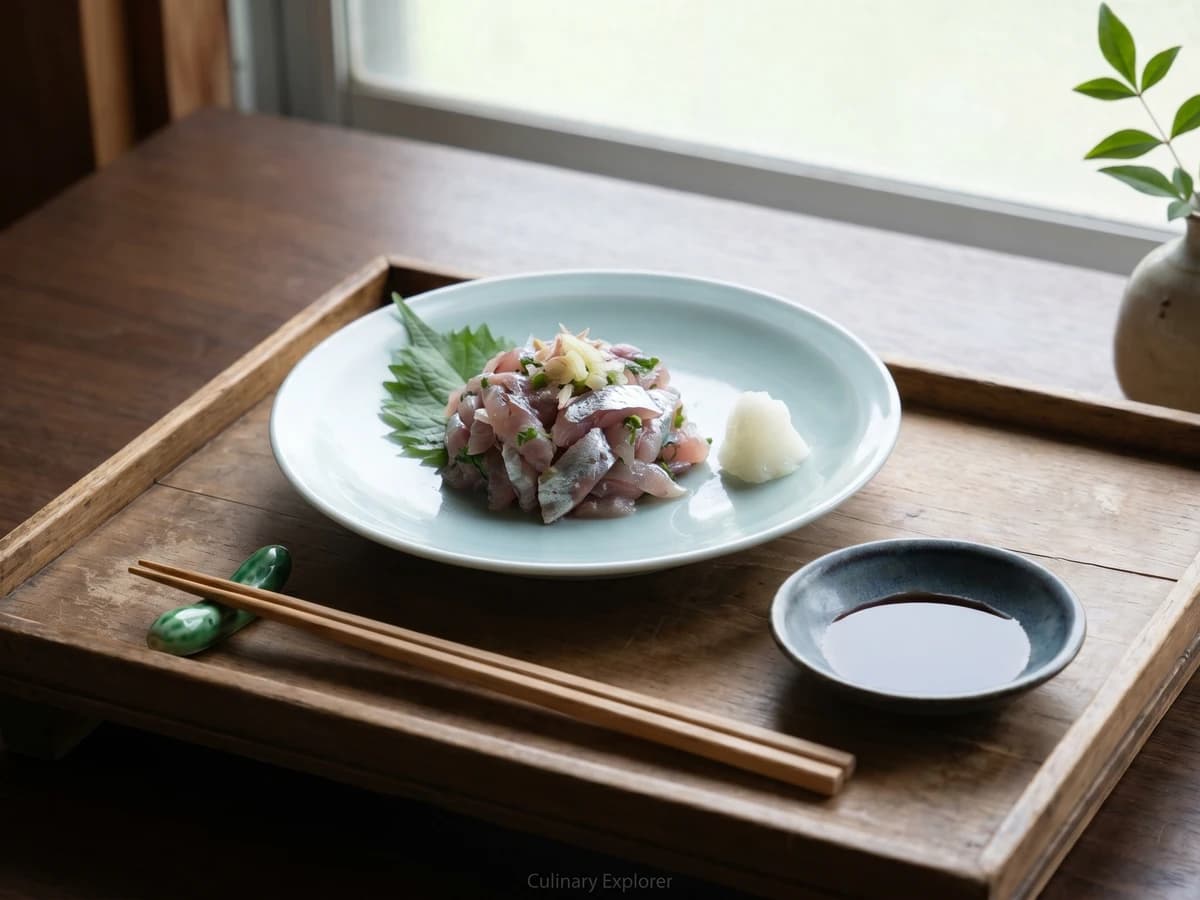
Summer horse mackerel, chopped just enough to catch ginger and scallion, becomes a cool, clean main dish with rice. The secret is fresh fish and a knife that does not bruise it.

Chef Takumi
Akashi-yaki is not sauced takoyaki. It is egg-rich batter, tender octopus, and clear dashi, cooked pale and soft so each ball can be dipped like a small custard dumpling.
Chef Takumi
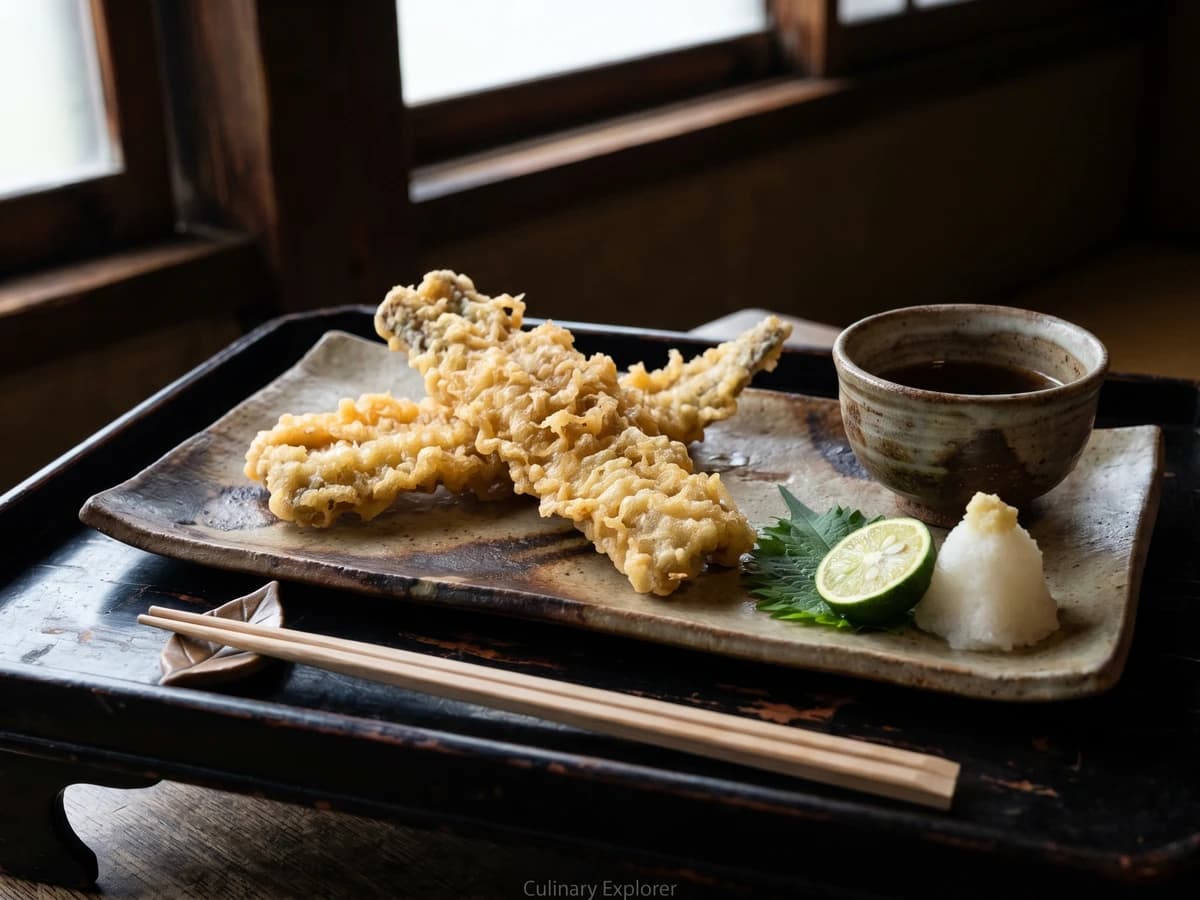
A whole anago looks like a test of nerve. It is mostly good sourcing, a dry skin, cold batter, and oil hot enough to leave the eel sweet under its lace.