Chef Lupita
Aceite de Chiltepin Bajacaliforniano
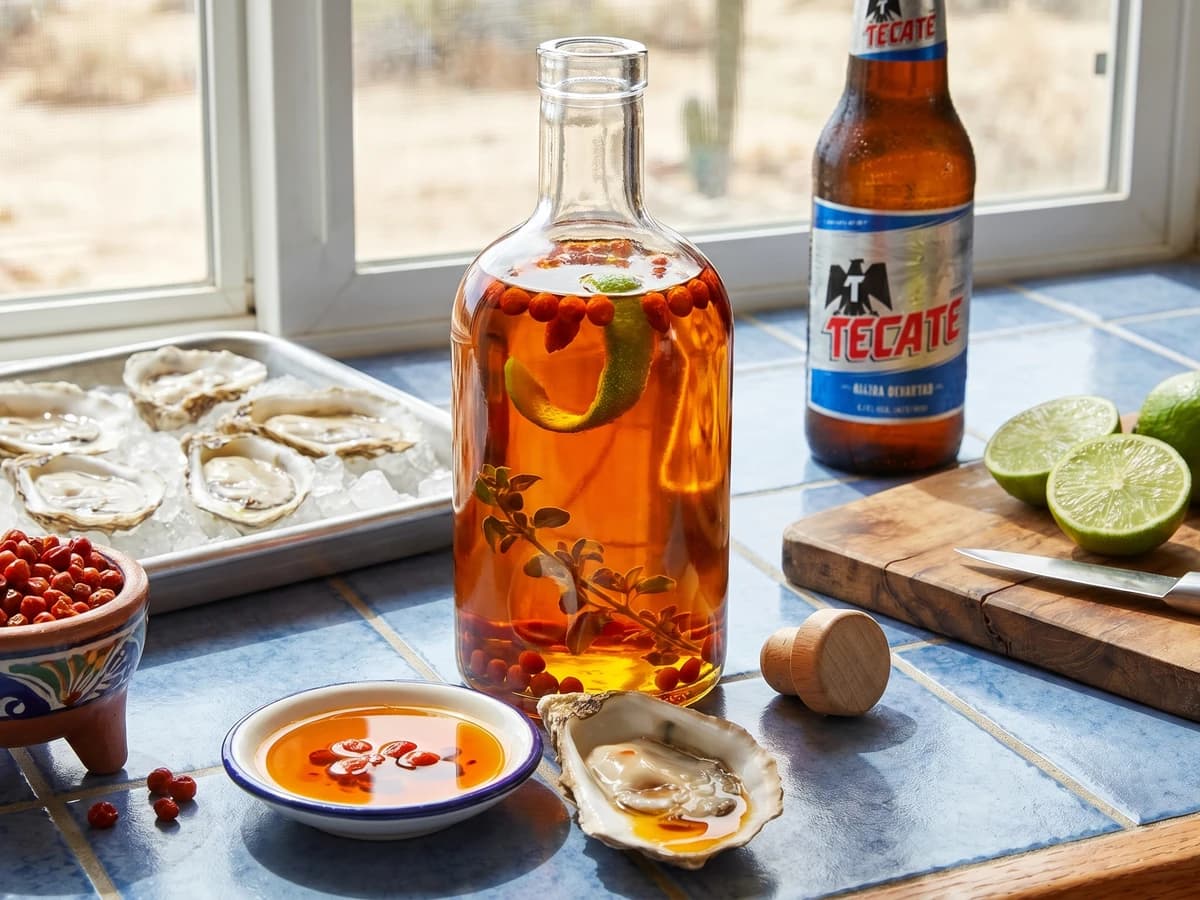
Baja California's wild chiltepin steeped in olive oil with garlic, orejon, and lime peel, until the oil turns ruby-amber and carries the slow, sneaky burn of the desert coast.
A cooking platform built around craft, culture, and the stories behind what we eat.
Created by
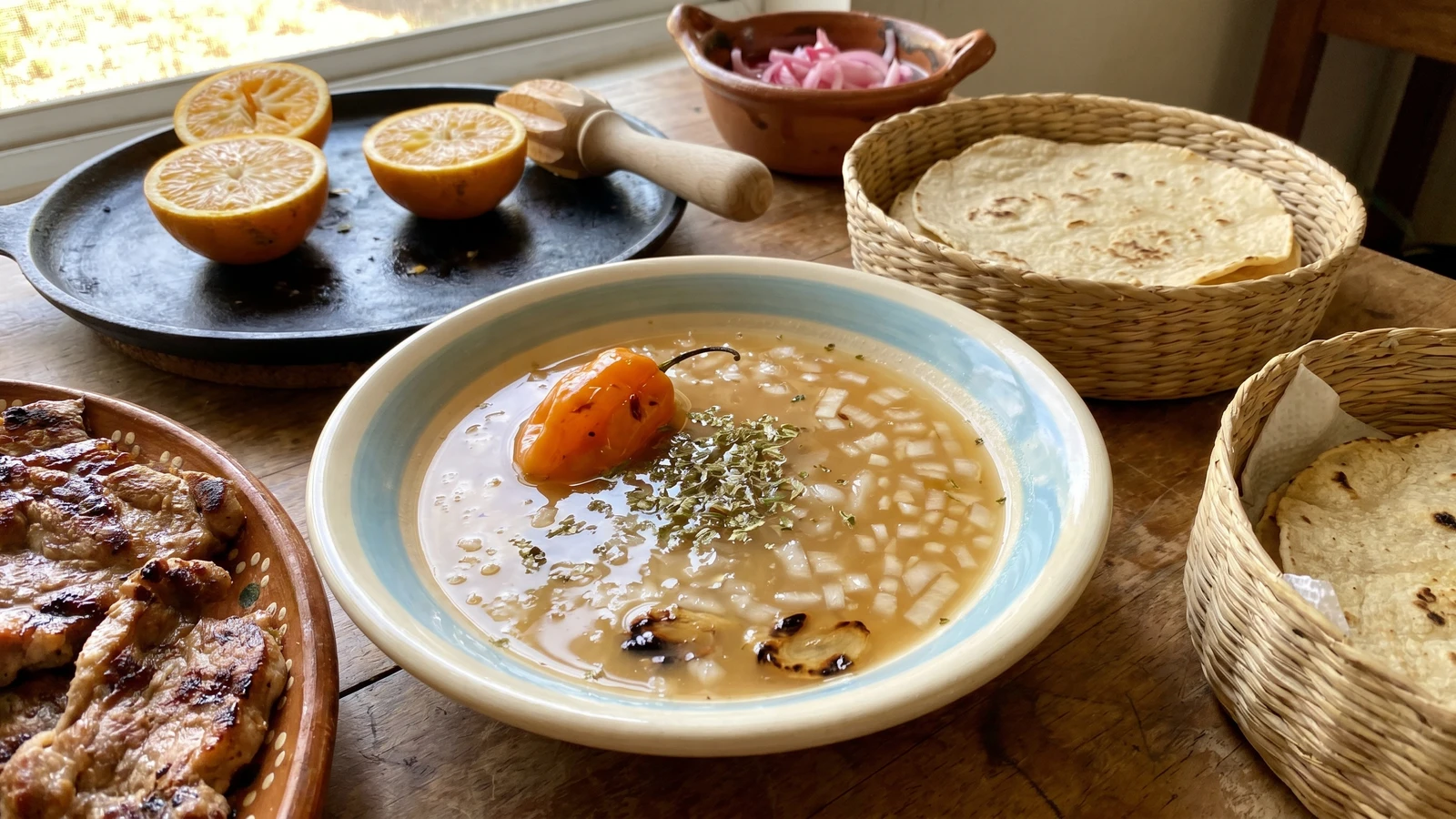
Yucatan's table acid, sour orange juice sharpened with charred garlic, toasted oregano yucateco, and a whole habanero perfuming the bowl. The drizzle that finishes poc chuc, grilled fish, and every honest plate in Merida.
This is from Yucatan. The Peninsula. The cooking of Merida, Valladolid, Izamal, and the small towns of Campeche and Quintana Roo that share its kitchen vocabulary. Yucatecan food is not Mexican food the way most foreigners imagine Mexican food. It has its own chiles, its own herbs, its own acid, and this salsa is the acid.
Naranja agria is the sour orange. Not lime. Not regular orange. A bitter, fragrant citrus brought by the Spanish, planted in Peninsula soil, and adopted so thoroughly by Maya cooks that today you cannot imagine Yucatecan food without it. It is the marinade for cochinita pibil. It is the cure in escabeche. And it is the drizzle in this salsa, the brightness that lands on every poc chuc, every pescado tikin xic, every plate of beans and rice in a Merida home.
The ingredients are short. The grammar is everything. Char the garlic on a comal until the skin blisters. Toast the habanero whole until it perfumes the kitchen, then drop it into the bowl without chopping it. Toast the oregano yucateco between your palms. The oregano is not Mediterranean oregano, it is a Lippia from the Verbenaceae family and it tastes like citrus and anise and nothing like what comes in a supermarket jar labeled oregano. If your supplier does not know the difference, find another supplier.
My mother had a recipe in her notebook for poc chuc that ended with three words underlined: naranja agria. She had eaten it once in Merida and never forgot. Pregúntale a las señoras del mercado de Santa Ana and they will all tell you the same thing. The salsa is the dish. The poc chuc is just the vehicle. Saber cocinar es saber vivir.
Naranja agria, Citrus aurantium, the bitter or Seville orange, arrived in the Yucatan Peninsula with Spanish colonizers in the 16th century and was rapidly integrated into Maya cooking as a substitute for the pre-Columbian indigenous acids derived from chaya and local bitter fruits. By the 17th century, sour orange had displaced these earlier souring agents almost entirely in the Peninsula's kitchens and became the defining acid of the regional cuisine, distinguishing Yucatecan cooking from the lime-driven cuisines of central and western Mexico. Yucatecan oregano, Lippia graveolens, is not botanically related to Mediterranean oregano (Origanum vulgare) at all; it belongs to the verbena family, was used medicinally and culinarily by the Maya long before European contact, and its citrus-anise profile is what gives recados and Peninsula salsas their distinctive aromatic backbone.
Quantity
3/4 cup (about 4 sour oranges)
Quantity
6
unpeeled
Quantity
1
left whole and pricked twice with a knife
Quantity
1 teaspoon
Quantity
1 teaspoon, plus more to taste
Quantity
2 tablespoons
very finely diced
Quantity
see notes
| Ingredient | Quantity |
|---|---|
| fresh naranja agria juice | 3/4 cup (about 4 sour oranges) |
| garlic clovesunpeeled | 6 |
| fresh chile habaneroleft whole and pricked twice with a knife | 1 |
| dried Yucatecan oregano (oregano yucateco) | 1 teaspoon |
| flaky sea salt | 1 teaspoon, plus more to taste |
| white onionvery finely diced | 2 tablespoons |
| naranja agria substitute (lime, orange, grapefruit, white vinegar) (optional) | see notes |
Heat a dry comal or heavy skillet over medium-high. Lay the unpeeled garlic cloves on the hot surface and let them blister. Turn them every couple of minutes until the skins are blackened in patches and the cloves inside feel soft when you press them, about six to eight minutes total. This is how it is done across the Peninsula. The char is the seasoning. Raw garlic in this salsa tastes harsh and the acid will not tame it.
Place the whole pricked habanero on the same comal. Roll it around for one to two minutes until the skin blisters in a few spots and the kitchen fills with that floral, sharp habanero perfume that anybody who has cooked in Merida knows by heart. Do not blacken it. You want the perfume, not a burned skin. Set it aside whole. The habanero infuses the salsa. It does not get chopped into it.
Crumble the Yucatecan oregano between your palms and drop it onto the comal for about fifteen seconds, moving it constantly. It will smell sweeter, greener, almost like a different herb. Yucatecan oregano is not Mediterranean oregano. It is from a different plant family entirely, and the toasting wakes up its citrus-anise side. No me vengas con atajos. Skip this and the salsa tastes flat.
When the garlic is cool enough to handle, slip the cloves out of their charred skins. Drop them into a molcajete with the salt. Grind to a rough paste, not a smooth puree. You want texture. The salt acts as the abrasive. If you do not have a molcajete, mince and smash the garlic with the flat of a knife on a cutting board with the salt.
Scrape the garlic paste into a glass or ceramic bowl. Pour in the naranja agria juice and add the toasted oregano and the diced white onion. Drop the whole toasted habanero in the bowl. Stir. Taste. The balance should be sharp, sour, salty, and you should catch the habanero perfume on the back of your nose without feeling heat on your tongue yet. Adjust salt if needed. Do not add sugar. This salsa is supposed to be bracing.
Let the salsa sit at room temperature for fifteen minutes before serving. The habanero will give up its perfume and a gentle heat to the juice. If you want more heat, press the chile against the side of the bowl with a spoon to release more capsaicin. If you want it tamer, leave the chile whole and lift it out before serving. Drizzle over poc chuc, grilled fish, panuchos, salbutes, or a plate of black beans and rice. Asi se hace y punto.
1 serving (about 30g)
Culinary guides, cultural storytelling, and the editorial depth that makes cooking meaningful.
Discover Culinary ExplorerChef Lupita
Baja California's wild chiltepin steeped in olive oil with garlic, orejon, and lime peel, until the oil turns ruby-amber and carries the slow, sneaky burn of the desert coast.

Chef Lupita
Puebla's Lenten convent adobo, a brick-red vinegar chile paste of ancho, guajillo, garlic, oregano, and comino made to dress fish for the meatless calendar.
Chef Lupita
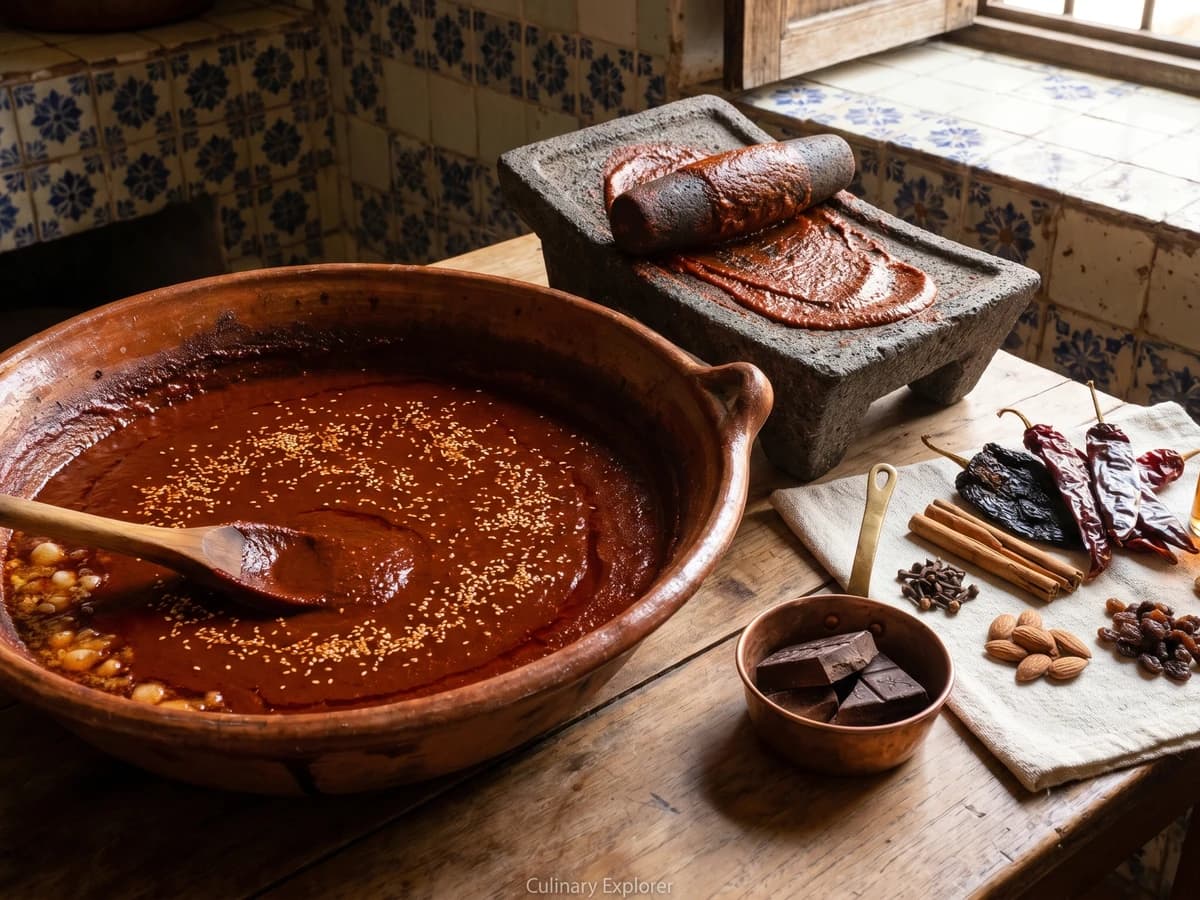
Zacatecas' wedding-table adobo, built from toasted guajillo and ancho, piloncillo, sour orange, chocolate, canela, clavo, almonds, sesame, and lard.

Chef Lupita
Puebla's convent kitchens built this adobo with ancho, guajillo, jerez, almonds, raisins, clove, and lard, a baroque marinade that stains pork loin and finishes as the sauce.