Chef Lupita
Aceite de Chiltepin Bajacaliforniano
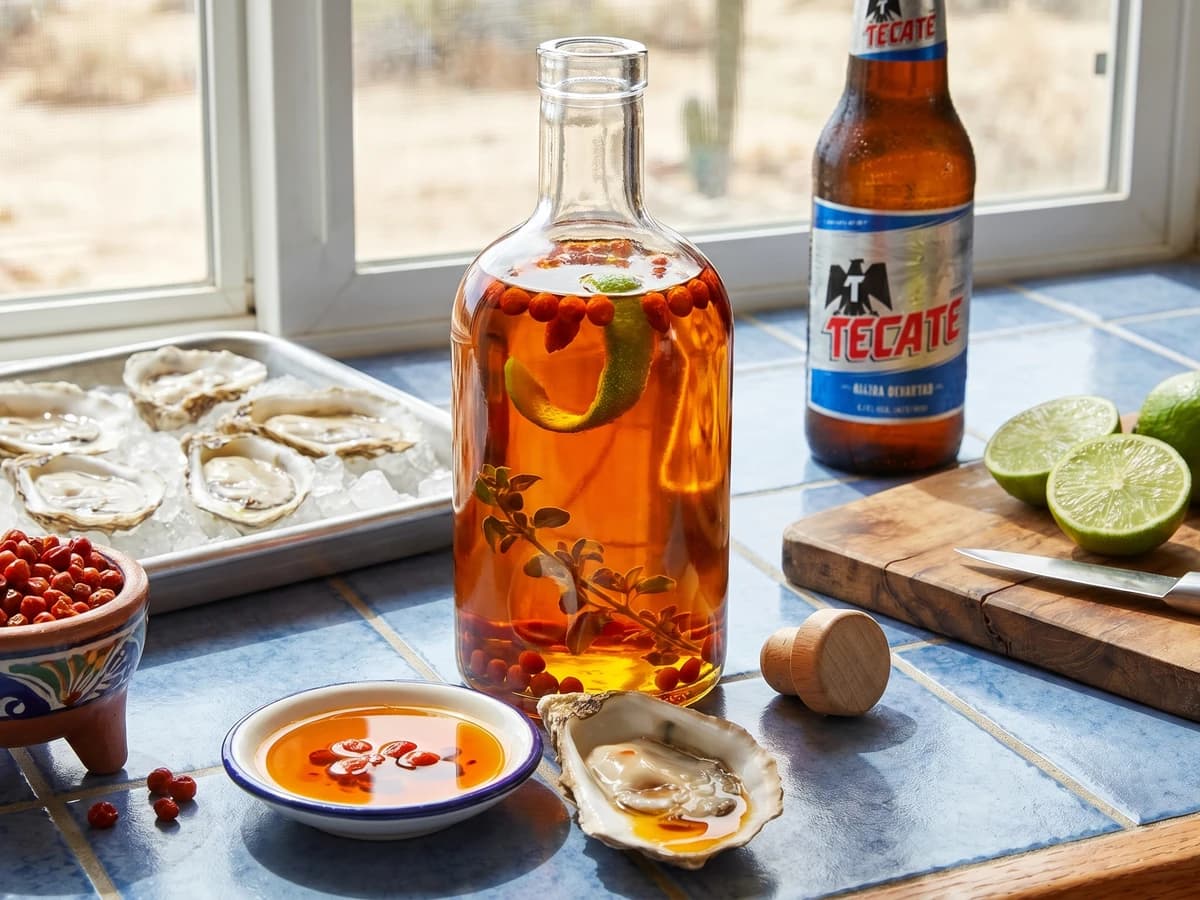
Baja California's wild chiltepin steeped in olive oil with garlic, orejon, and lime peel, until the oil turns ruby-amber and carries the slow, sneaky burn of the desert coast.
A cooking platform built around craft, culture, and the stories behind what we eat.

Created by
The Papaloapan basin's working salsa, charred tomato, ancho, and guajillo cooked down with hoja santa and fried in lard, the sauce that goes inside piltes wrapped in banana leaf and steamed until the kitchen smells like the river.
This salsa belongs to the Papaloapan, the river basin that runs through southern Veracruz and crosses into northern Oaxaca. Cosamaloapan, Tlacotalpan, Tuxtepec. This is humid, lowland, banana-leaf country, not the highland kitchens of Xalapa or Coatepec. The salsa is a working salsa, not a table salsa. It goes inside the piltes, the meat parcels wrapped in banana leaf and steamed over wood fire until the leaf perfumes the meat and the salsa soaks into everything.
The leaf that makes this dish is hoja santa, called acuyo by the women in Tlacotalpan who guard this recipe. Its flavor has no English equivalent and any cook who tells you to substitute basil or anise has not eaten the real thing. Anise, sassafras, black pepper, the ghost of root beer. The leaf goes into the salsa twice: blended in for body, stirred in at the end for brightness. If the leaf is not in your market this week, do not make this salsa. Cook what the mercado is selling today.
The chile combination is ancho and guajillo. Not chipotle. Not pasilla. The Papaloapan version stays away from smoke because the banana leaf and the wood fire bring smoke of their own when the piltes go to steam. The ancho gives sweetness and dark body, the guajillo gives the red note and a little heat. They are toasted on a comal, soaked in hot water, blended with charred tomato, and fried in pork lard until the salsa darkens from red to brick and the fat beads at the edges.
My mother's notebook does not have this recipe. She was from Jalisco and Jalisco has no hoja santa. I learned this salsa in a kitchen in Tlacotalpan from a senora named Dona Concha who ran a comedor by the river and would not let me leave until I had ground the spices in her molcajete and tasted the salsa at three different stages so I could tell the difference. Saber cocinar es saber vivir, and learning takes the time it takes.
Hoja santa, known scientifically as Piper auritum and called acuyo or tlanepa across southern Mexico, has been used in Mesoamerican cooking since pre-Columbian times, predating the arrival of tomatoes in Veracruz cuisine by centuries. The piltes tradition itself, meat or fish wrapped in fragrant leaves and cooked by steam or coals, is documented in Sahagun's 16th-century Florentine Codex as a Nahua cooking method common across the Gulf coast lowlands. The Papaloapan basin's particular version, which marries pre-Columbian leaf-wrapping and indigenous chiles with the colonial spice trio of clove, canela, and black pepper that came through the port of Veracruz, is one of the clearest examples in Mexican cuisine of mestizo cooking written into a single dish.
Quantity
1.5 pounds
Quantity
4
stemmed and seeded
Quantity
2
stemmed and seeded
Quantity
4
unpeeled
Quantity
1/2 medium
in one chunk
Quantity
6 large
center rib removed
Quantity
2
Quantity
4
Quantity
1/2 inch stick
Quantity
3 tablespoons
Quantity
1 teaspoon, plus more to taste
Quantity
1/2 cup, as needed
| Ingredient | Quantity |
|---|---|
| ripe roma tomatoes | 1.5 pounds |
| dried chile anchostemmed and seeded | 4 |
| dried chile guajillostemmed and seeded | 2 |
| garlic clovesunpeeled | 4 |
| white onionin one chunk | 1/2 medium |
| fresh hoja santa leavescenter rib removed | 6 large |
| whole cloves | 2 |
| black peppercorns | 4 |
| canela (Mexican cinnamon) | 1/2 inch stick |
| manteca de cerdo (pork lard) | 3 tablespoons |
| kosher salt | 1 teaspoon, plus more to taste |
| water or light pork broth | 1/2 cup, as needed |
Heat a comal or heavy skillet over medium-high until a drop of water bounces and disappears. Lay the whole tomatoes, the unpeeled garlic, and the onion chunk on the dry surface. Turn them every few minutes until the tomato skins blister and split, the garlic skins blacken in patches, and the onion is dark on every face. This takes about 10 to 12 minutes for the tomato, less for the garlic. The char is the foundation. A boiled tomato gives you a flat salsa.
Lower the comal heat to medium. Toast the ancho and guajillo separately, opened flat against the hot surface, about 20 to 30 seconds per side. They should puff slightly and release their oil. The kitchen will smell like a chile vendor's stall in Cosamaloapan. Pull them the second they shift from leathery to fragrant. Burned chile is bitter chile and there is no fixing it later.
Place the toasted chiles in a heatproof bowl and cover with hot tap water. Hot, not boiling. Let them soften for 15 minutes while you handle the spices. Boiling water cooks the skin and turns the salsa bitter. Hot water softens the flesh and lets the chile speak clean.
On the same comal, toast the cloves, peppercorns, and canela for about 30 seconds, until fragrant. Tip them into a molcajete or a spice grinder and grind to a fine powder. These are the colonial spices that traveled up the Papaloapan from the port of Veracruz, and they belong in this salsa. Do not skip them and do not substitute pre-ground.
Wipe the hoja santa leaves with a damp cloth. Run a knife along the thick center rib of each leaf and remove it, the rib is fibrous and will give the salsa a stringy texture. Stack the trimmed leaves and slice them into wide ribbons. The leaf is the soul of this salsa. Anise, sassafras, root beer, black pepper, all in one leaf. Nothing substitutes for it. If you cannot find fresh hoja santa, do not make this salsa today. Make it when the leaf comes back to your market.
Peel the charred garlic. Drain the chiles, reserving the soaking water. In a blender, combine the charred tomatoes (with skin), garlic, onion, drained chiles, ground spices, and salt. Add a quarter cup of the chile soaking water to get things moving. Blend on high until completely smooth, about two minutes. Add four of the hoja santa ribbons in the last 20 seconds of blending. Save the other two ribbons for the finish. Strain through a medium sieve, pressing on the solids. You want body, not pulp.
Heat the manteca in a wide cazuela or heavy skillet over medium until it shimmers. Pour in the strained puree all at once. It will sputter loudly. Stand back. Lower the heat to medium-low and cook for 18 to 20 minutes, stirring often with a wooden spoon, until the salsa darkens from bright red to brick, thickens enough to coat the back of the spoon, and the fat starts to bead at the edges. La manteca es el sabor. The fry is what turns a blended puree into a salsa. Skip it and you are eating raw chile in tomato water.
Stir in the reserved hoja santa ribbons. Taste for salt. Loosen with a few tablespoons of water or pork broth if the salsa has tightened too much, you want a coating consistency, thick enough to cling to a piece of meat inside a banana-leaf parcel but loose enough to soak into the masa around it. Pull off the heat. Asi se hace y punto.
1 serving (about 60g)
Culinary guides, cultural storytelling, and the editorial depth that makes cooking meaningful.
Discover Culinary ExplorerChef Lupita
Baja California's wild chiltepin steeped in olive oil with garlic, orejon, and lime peel, until the oil turns ruby-amber and carries the slow, sneaky burn of the desert coast.

Chef Lupita
Puebla's Lenten convent adobo, a brick-red vinegar chile paste of ancho, guajillo, garlic, oregano, and comino made to dress fish for the meatless calendar.
Chef Lupita
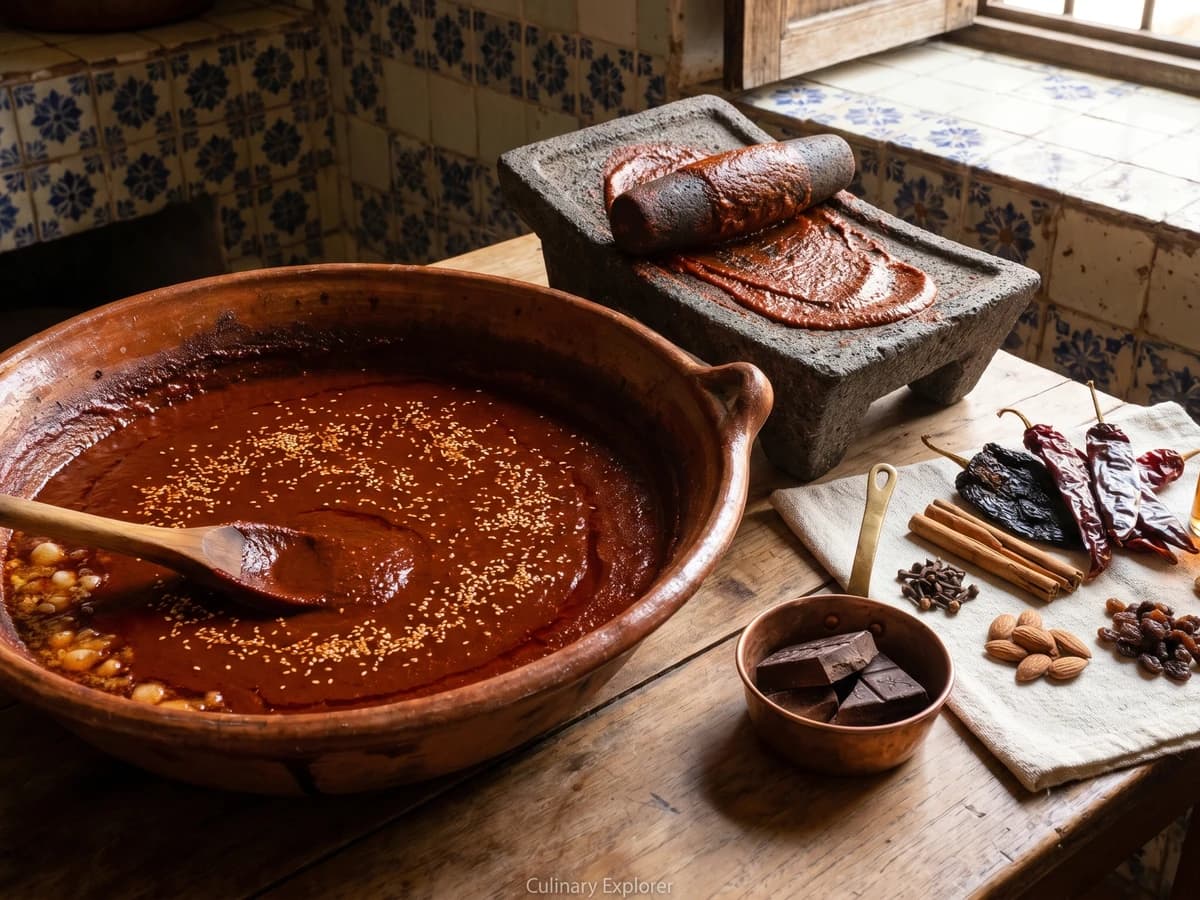
Zacatecas' wedding-table adobo, built from toasted guajillo and ancho, piloncillo, sour orange, chocolate, canela, clavo, almonds, sesame, and lard.

Chef Lupita
Puebla's convent kitchens built this adobo with ancho, guajillo, jerez, almonds, raisins, clove, and lard, a baroque marinade that stains pork loin and finishes as the sauce.