Chef Lupita
Aceite de Chiltepin Bajacaliforniano
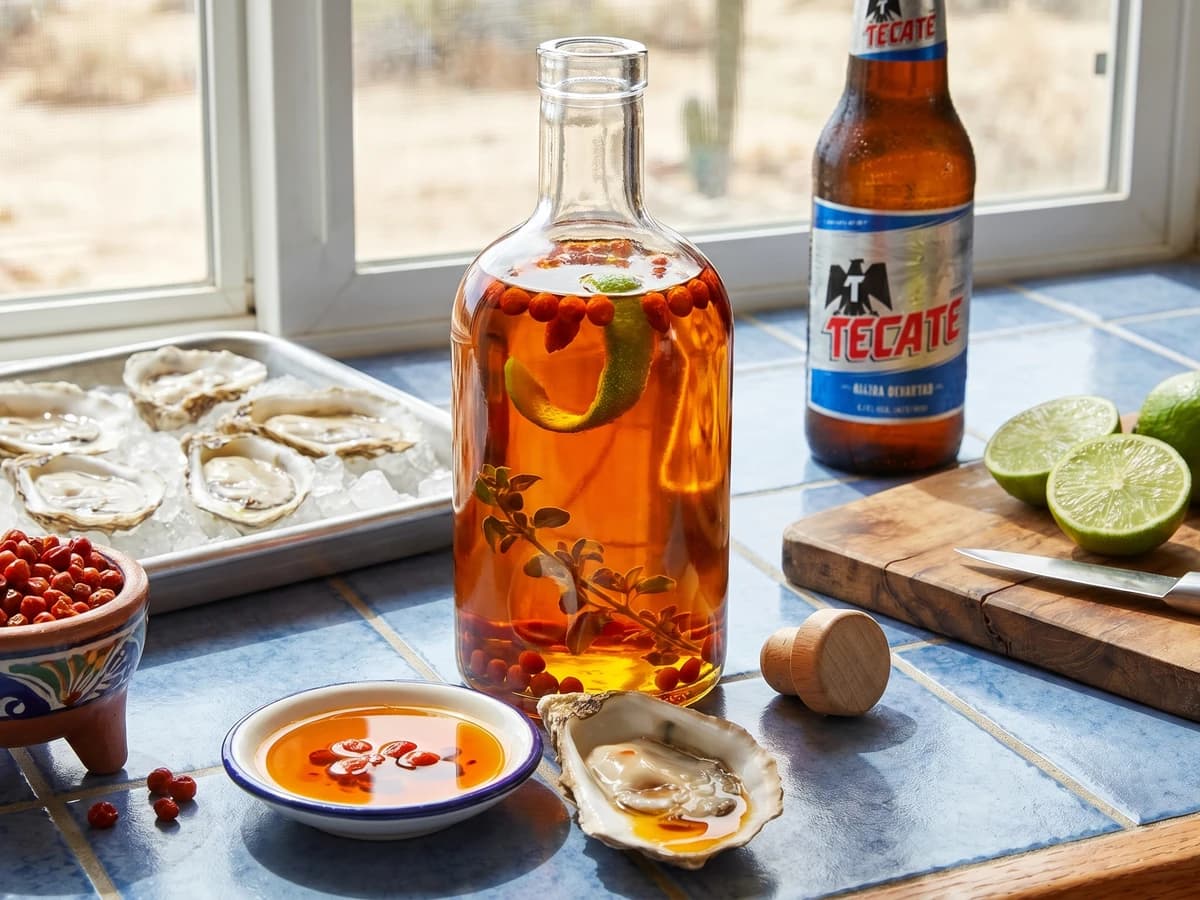
Baja California's wild chiltepin steeped in olive oil with garlic, orejon, and lime peel, until the oil turns ruby-amber and carries the slow, sneaky burn of the desert coast.
A cooking platform built around craft, culture, and the stories behind what we eat.
Created by
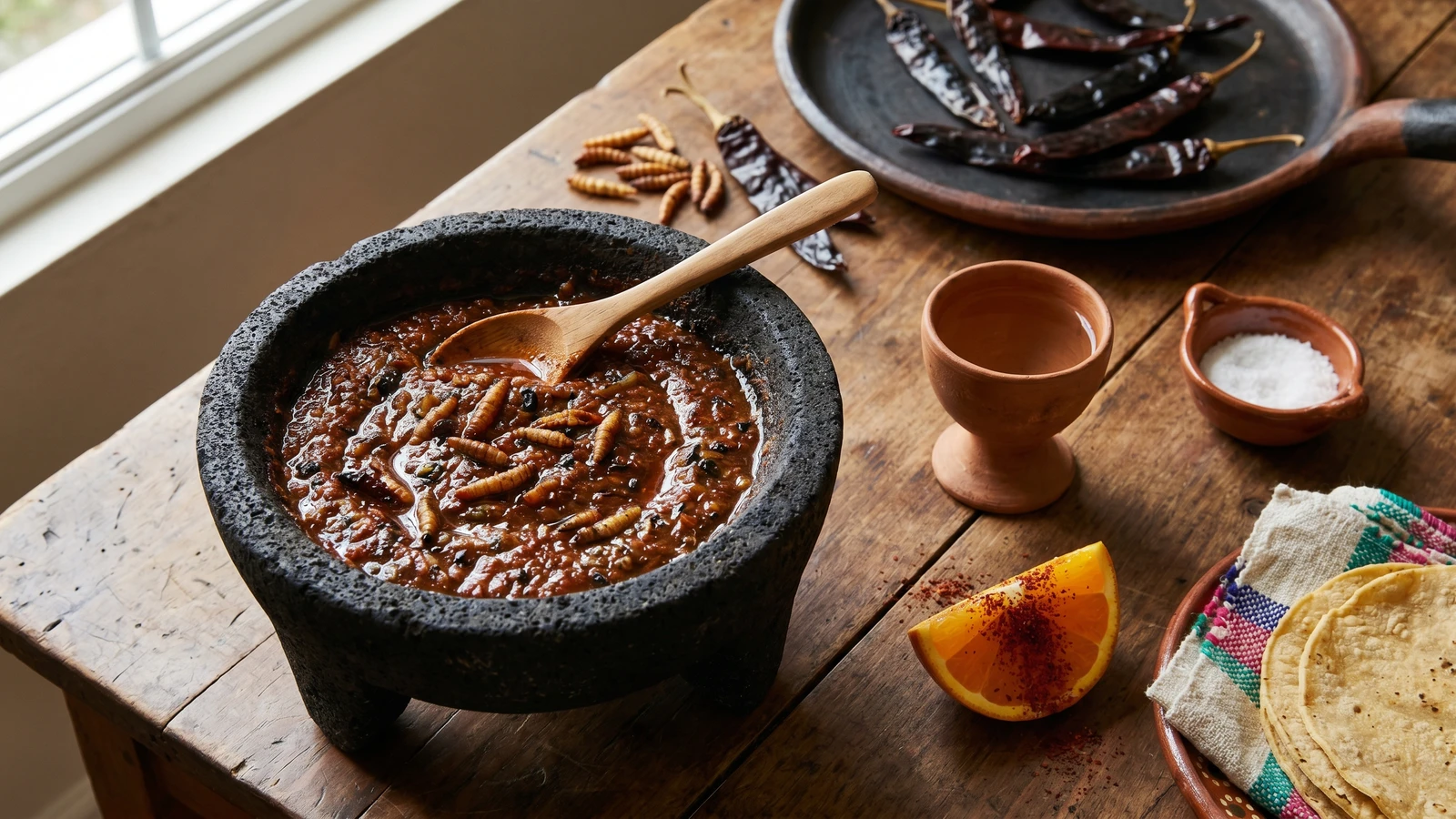
Oaxaca's smoky salsa of toasted gusanos de maguey ground in the molcajete with chile pasilla oaxaqueño, charred garlic, and lime. The umami partner that makes mezcal taste like home.
This is from Oaxaca. Not from a generic Mexico, not from some idea of what Mexican food is supposed to be. From the Valles Centrales and the Sierra Mixe, where the agave grows and where the gusano rojo, the red worm that feeds on the maguey, has been ground into salsa for as long as anyone has been making mezcal. If your first reaction is to flinch at the worm, that is the wrong reaction. Sit with it. The Mexica ate insects. The Mixe people eat insects. The protein and the flavor are reasons that have nothing to do with novelty.
The chile is what defines the version. Chile pasilla oaxaqueño, also called pasilla mixe, is smoke-dried over wood in the Sierra Mixe. It is not the pasilla mexicano you find in most US markets and you cannot substitute one for the other. If your salsa is going to taste like Oaxaca, you need the smoke from that specific chile. Pair the smoke of the chile with the toasted gusano and the agave the worm fed on, and you understand why this salsa exists alongside mezcal and not alongside anything else. They are talking to each other.
My mother never made this. She was from Jalisco and gusanos were not part of her vocabulary. The first time I had this salsa was in a small mezcaleria in the Centro of Oaxaca de Juárez, in 1998, with a senora who had been grinding it in the same molcajete for thirty years. She watched me eat it and asked what I tasted. I said earth, smoke, salt, agave. She nodded and said, that is Oaxaca. Cada estado, su propia cocina, and Oaxaca is a world inside that.
The gusano de maguey is the larva of two distinct moths, the chinicuil (Comadia redtenbacheri, the red worm) and the meocuil (Aegiale hesperiaris, the white worm), both of which infest the agave plant; the red worm is the one used in salsas and in sal de gusano, while the white is the worm historically dropped into mezcal bottles. Pre-Hispanic codices including the Florentine Codex document the consumption of agave-dwelling larvae among the Mexica and the broader Mesoamerican world, where insects were a routine and respected source of protein long before European livestock arrived. Sal de gusano, the ground mixture of dried worms, salt, and chile that traditionally rims the copita of mezcal, is a Oaxacan invention codified in the 20th century but rooted in a much older practice of grinding edible insects with chile and salt in the molcajete.
Quantity
1/2 cup
Quantity
4
stemmed and seeded
Quantity
2
stemmed
Quantity
3
unpeeled
Quantity
1
quartered, skin on
Quantity
2 tablespoons
Mexican limes preferred
Quantity
1 teaspoon, plus more to taste
Quantity
2 tablespoons
only if needed
Quantity
for serving
Quantity
for serving
Quantity
for the rim of the copita
| Ingredient | Quantity |
|---|---|
| dried gusanos de maguey (red agave worms, chinicuiles) | 1/2 cup |
| dried chile pasilla oaxaqueño (pasilla mixe)stemmed and seeded | 4 |
| dried chile de árbol (optional)stemmed | 2 |
| garlic clovesunpeeled | 3 |
| small white onionquartered, skin on | 1 |
| fresh lime juiceMexican limes preferred | 2 tablespoons |
| sea salt or sal de gusano | 1 teaspoon, plus more to taste |
| water (optional)only if needed | 2 tablespoons |
| mezcal joven (optional) | for serving |
| orange slices (optional) | for serving |
| sal de gusano (worm salt) (optional) | for the rim of the copita |
Heat a dry comal over medium. Place the unpeeled garlic and the onion quarters directly on the hot iron. Let them blacken in spots, turning every couple of minutes, until the garlic skins are dark and the cloves inside have gone soft and the onion edges are charred and sweet. About eight to ten minutes. The char is the seasoning. Pull them off, peel the garlic, and set everything aside.
On the same comal, toast the chile pasilla oaxaqueño for about 20 to 30 seconds per side. This chile is thin and smoke-cured already, so it darkens fast. You are waking up the oils, not cooking the chile. The kitchen will smell like a fire pit and dried fruit. That smoke is what makes pasilla mixe what it is. If you are using chile de árbol, toast those for ten seconds a side and pull them off. They scorch in a blink.
Lower the heat on the comal to medium-low. Spread the dried gusanos in a single layer and toast them for two to three minutes, shaking the comal so they do not stick or scorch. They will turn a deeper red, crisp up between your fingers, and release a smell that is somewhere between toasted nuts, cured chorizo, and the agave plant they fed on. That smell is the entire reason this salsa exists. Pull them off the moment they are crisp.
In a seasoned volcanic-stone molcajete, pound the salt and the charred garlic into a coarse paste. The salt is your abrasive. The garlic surrenders fast against the rough basalt. This is the foundation. La cocina no es decoracion, es trabajo, and a molcajete salsa is not a blender salsa. The stone bruises the ingredients instead of slicing them, and the texture you get is one a blade cannot give you.
Tear the toasted pasilla oaxaqueño into pieces and add them to the molcajete with the chile de árbol if using. Grind in a circular motion, working the chile into the garlic paste. The pasilla mixe will release its smoky oils and the salsa will start to take on its dark color. Keep going until the chile is broken down into a coarse paste. You will feel it shift under the tejolote.
Drop the toasted gusanos into the molcajete and grind them into the chile paste. They break down quickly and turn the mixture a deeper, almost black-red. The flavor at this point is what people are trying to describe when they say umami. Earthy, smoky, slightly funky, with the sweetness of agave underneath. Reserve a small pinch of toasted gusanos whole if you want to scatter them on top at the end.
Chop the charred onion fine and stir it into the salsa with a spoon. Do not grind the onion. You want its texture to stand out against the smooth chile and gusano paste. Add the lime juice and stir. If the salsa feels too tight, add a tablespoon of water at a time until it loosens to a spoonable consistency. Taste for salt. Pasilla mixe carries a lot of flavor on its own, so the salt should support, not lead.
Bring the molcajete to the table. Set a copita of mezcal joven beside it, an orange slice rimmed in sal de gusano, and warm hand-pressed corn tortillas. The salsa is eaten in small spoonfuls on tortilla, between sips of mezcal. The smoke in the chile, the smoke in the mezcal, and the agave the worms fed on are the same conversation. Asi se hace y punto.
1 serving (about 27g)
Culinary guides, cultural storytelling, and the editorial depth that makes cooking meaningful.
Discover Culinary ExplorerChef Lupita
Baja California's wild chiltepin steeped in olive oil with garlic, orejon, and lime peel, until the oil turns ruby-amber and carries the slow, sneaky burn of the desert coast.

Chef Lupita
Puebla's Lenten convent adobo, a brick-red vinegar chile paste of ancho, guajillo, garlic, oregano, and comino made to dress fish for the meatless calendar.
Chef Lupita
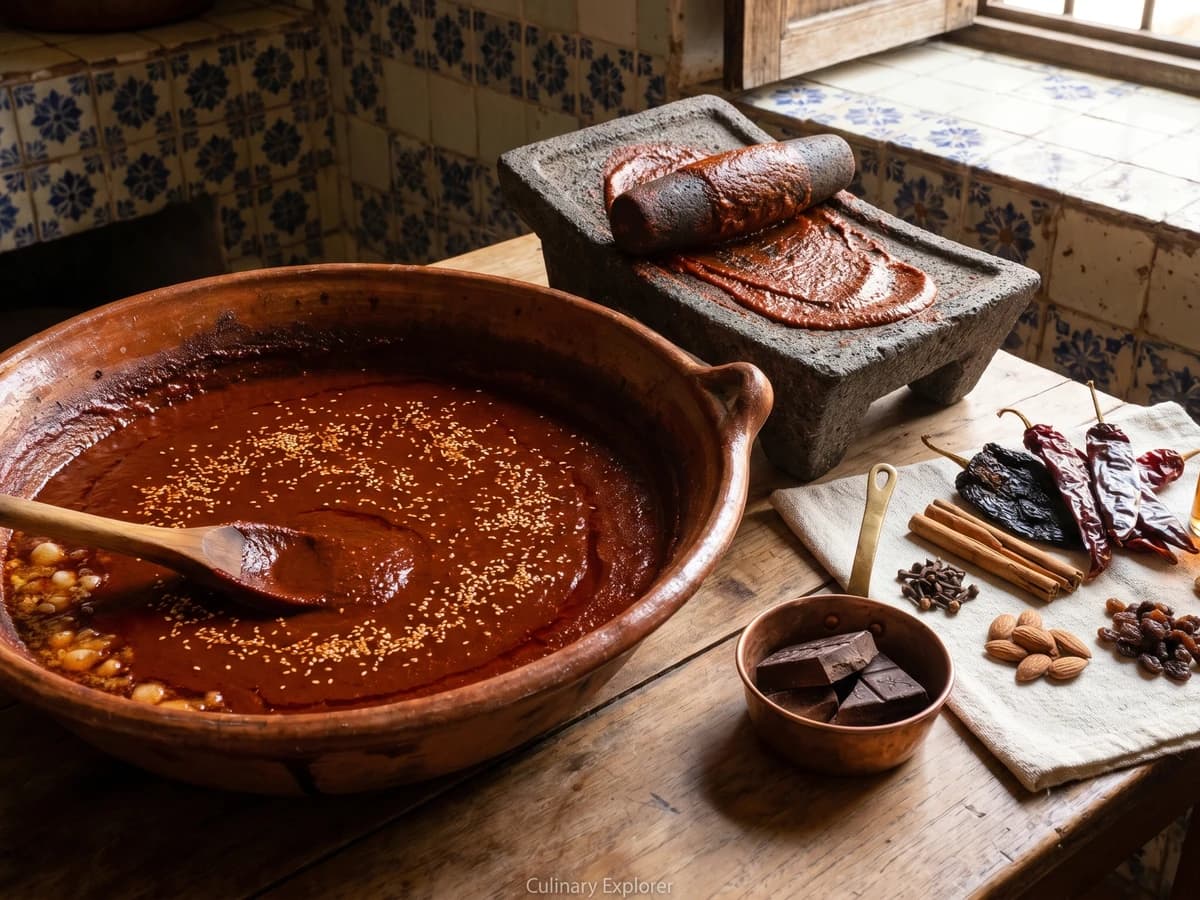
Zacatecas' wedding-table adobo, built from toasted guajillo and ancho, piloncillo, sour orange, chocolate, canela, clavo, almonds, sesame, and lard.

Chef Lupita
Puebla's convent kitchens built this adobo with ancho, guajillo, jerez, almonds, raisins, clove, and lard, a baroque marinade that stains pork loin and finishes as the sauce.