Chef Lupita
Aceite de Chiltepin Bajacaliforniano
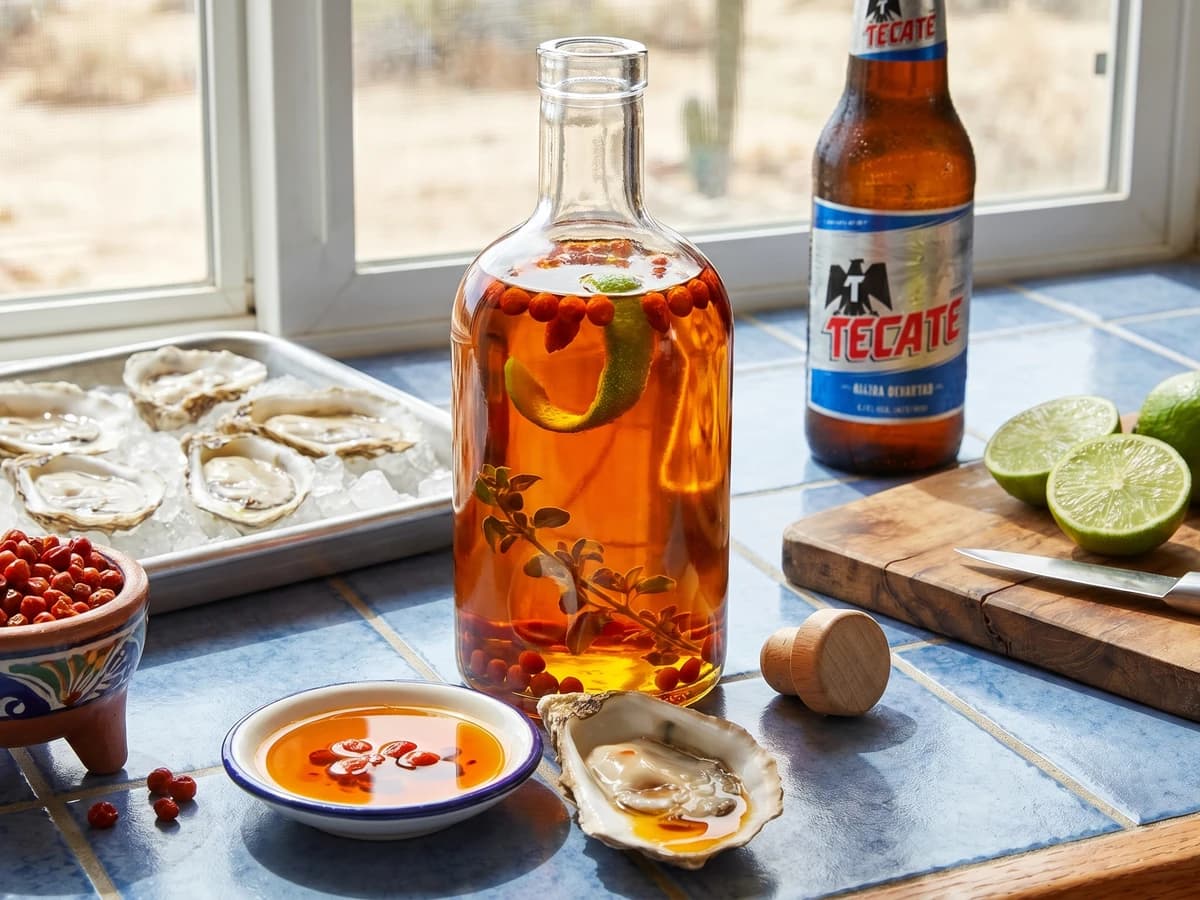
Baja California's wild chiltepin steeped in olive oil with garlic, orejon, and lime peel, until the oil turns ruby-amber and carries the slow, sneaky burn of the desert coast.
A cooking platform built around craft, culture, and the stories behind what we eat.
Created by
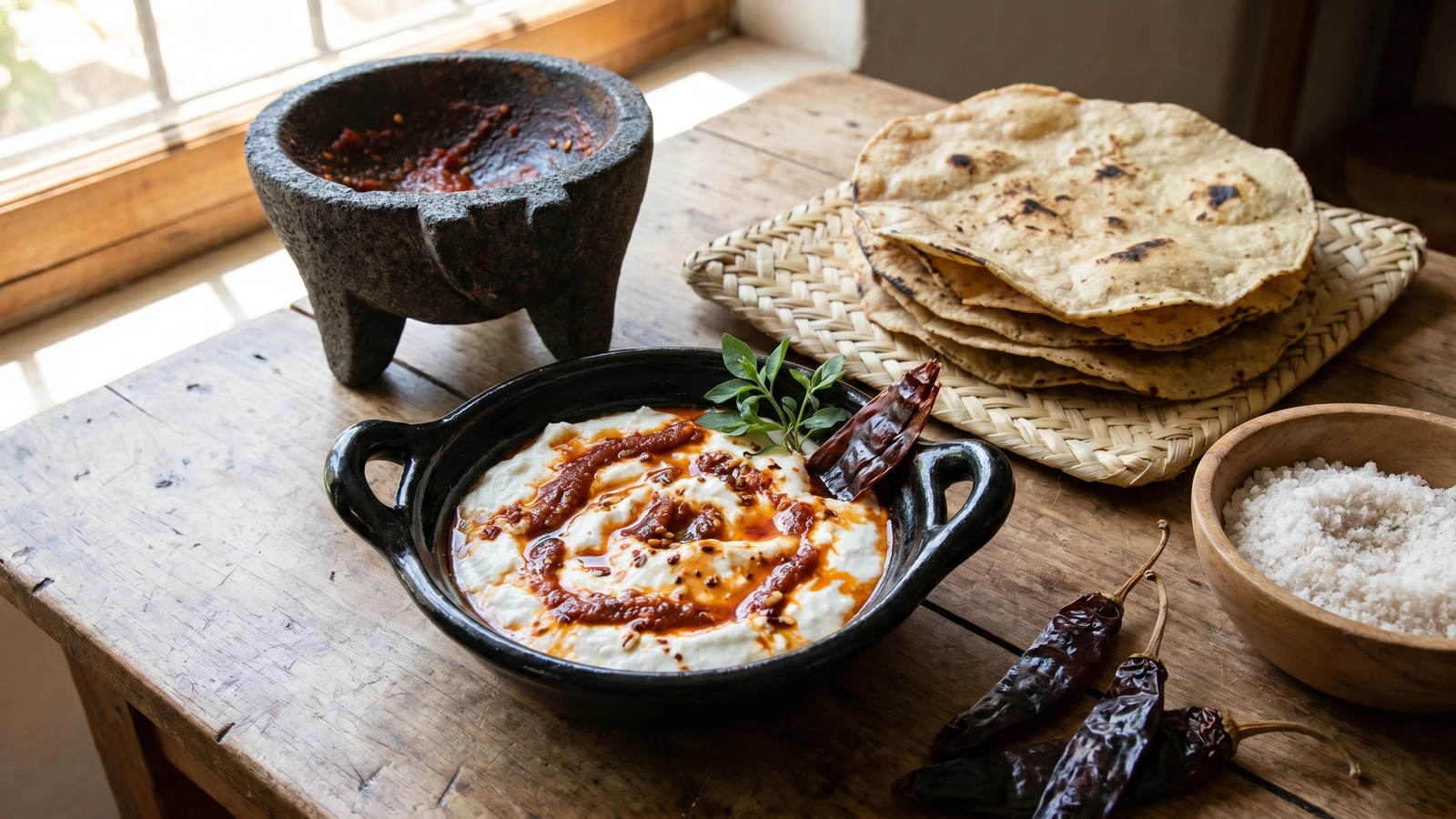
From Juchitan in the Istmo de Tehuantepec: fresh cuajada folded with sun-dried chile pasado and coarse salt, ground on the metate and spread on the great toasted corn discs the Zapotec call totopos del Istmo.
This salsa is from the Istmo de Tehuantepec, the narrow waist of Oaxaca where the Pacific almost touches the Gulf, and specifically from Juchitan, the Zapotec city where the women run the markets and the kitchens and most of the visible economy. It is not a salsa from Oaxaca de Juarez. It is not a salsa from the Sierra. It is istmena, and within Oaxaca that distinction matters.
Two ingredients carry the dish. Cuajada is a fresh, lightly pressed curd cheese, mild and slightly tangy, made in the ranchos around Juchitan and sold in the Mercado 5 de Septiembre wrapped in banana leaf. It is not queso fresco and it is not requeson. The texture is its own. Chile pasado is a fresh chile that has been laid out on a rooftop and dried whole in the istmeno sun until the skin shrivels and the flavor concentrates into something between fresh and dried, with a faint smoke that has nothing to do with fire. You will not find chile pasado at most US markets. If you cannot get it, chile costeno rojo from the Oaxacan coast is the honest substitute. A smoked chipotle is not. Do not come to me with chipotle.
The technique is the metate, or the molcajete if you do not have a metate. The chile and salt are ground to a coarse paste, then folded by hand into the cuajada. No blender. The texture of the stone-ground chile against the soft cheese is the entire reason the dish exists. My mother never made this. She was from Jalisco. I learned it in 2009 from a woman named Na Berta who sold cuajada at a corner of the Juchitan market and who watched me grind for ten minutes before she nodded once and said, ya. That nod is what I am trying to teach you. Cada estado, su propia cocina, and within Oaxaca, the Istmo is its own country.
The cuisine of the Istmo de Tehuantepec is rooted in a Zapotec matriarchal market culture that predates the Spanish conquest and that survived colonization with unusual continuity, in part because the istmenas controlled the food economy through the markets of Juchitan, Tehuantepec, and Salina Cruz. Cuajada, while Spanish in origin as a method of cheesemaking, was adopted into Zapotec cooking by the 18th century and integrated with pre-Columbian condiments built around chile, salt, and the metate. The practice of sun-drying fresh chiles into chile pasado is documented in istmeno households into the colonial period and remains a household-level preservation method, not an industrial one, which is why the chile rarely leaves the region.
Quantity
1 1/2 cups
drained of excess whey
Quantity
4 to 6
sun-dried fresh chiles, or substitute 4 dried chiles costenos rojos
Quantity
1 small
peeled
Quantity
1 teaspoon, plus more to taste
Quantity
1 to 2 tablespoons
only if needed
Quantity
for serving
the large oven-baked corn discs from Oaxaca's coast
Quantity
a few
for serving
| Ingredient | Quantity |
|---|---|
| fresh cuajada (curd cheese)drained of excess whey | 1 1/2 cups |
| chiles pasados del Istmosun-dried fresh chiles, or substitute 4 dried chiles costenos rojos | 4 to 6 |
| garlic clovepeeled | 1 small |
| sal de Zapotitlan or coarse sea salt | 1 teaspoon, plus more to taste |
| warm water (optional)only if needed | 1 to 2 tablespoons |
| totopos del Istmo (optional)the large oven-baked corn discs from Oaxaca's coast | for serving |
| fresh chepil or epazote sprigs (optional)for serving | a few |
Heat a dry comal over medium heat. Place the chiles pasados on the comal for 20 to 30 seconds per side, no more. They are already sun-dried and fragile. You are not toasting them the way you toast a guajillo. You are warming them just enough to wake the smoke and the sweetness the sun left behind. The kitchen will smell faintly grassy, faintly sweet, like a Juchitan rooftop in May. If they char, you have lost the dish.
Pull the stems off the warmed chiles. Tear the bodies open and shake out most of the seeds. Leave a few seeds if you want more heat. The Juchitecan cooks I learned from leave them all in. Whether you do depends on who is sitting at your table.
Place the salt and garlic in a molcajete and grind to a wet paste. Add the torn chiles a few pieces at a time and grind in slow circles, working the chile against the stone until you have a coarse, ruddy paste with visible flecks of skin and seed. This is not a smooth puree. The texture is the dish. Asi se hace y punto. If you are doing this on a metate, work the chiles down the slope of the stone with the mano in long strokes, the way the Zapotec women do it. It takes ten minutes. It is worth it.
Place the drained cuajada in a wide clay bowl. Add the chile paste in two additions, folding gently with a wooden spoon or with your hand. Do not whip it. You want streaks of red running through the white, not a uniform pink. The Juchitecan cooks call this aspect of the dish important: the salsa should look like it was just put together at the table, because that is exactly what it is. Taste for salt. Cuajada from different makers carries different amounts of salt, so adjust now.
If the cuajada is very firm, add a tablespoon of warm water and fold it in to loosen. The salsa should be spreadable but not runny. Transfer to a small clay cazuelita from San Bartolo Coyotepec or Atzompa if you have one. Set it on the table with a stack of totopos del Istmo, the large oven-baked corn discs from the Oaxacan coast. Each person breaks off a piece of totopo and scoops. This is botana, the food you eat standing up in someone's kitchen in Juchitan while the women finish making the comida. Saber cocinar es saber vivir.
1 serving (about 55g)
Culinary guides, cultural storytelling, and the editorial depth that makes cooking meaningful.
Discover Culinary ExplorerChef Lupita
Baja California's wild chiltepin steeped in olive oil with garlic, orejon, and lime peel, until the oil turns ruby-amber and carries the slow, sneaky burn of the desert coast.

Chef Lupita
Puebla's Lenten convent adobo, a brick-red vinegar chile paste of ancho, guajillo, garlic, oregano, and comino made to dress fish for the meatless calendar.
Chef Lupita
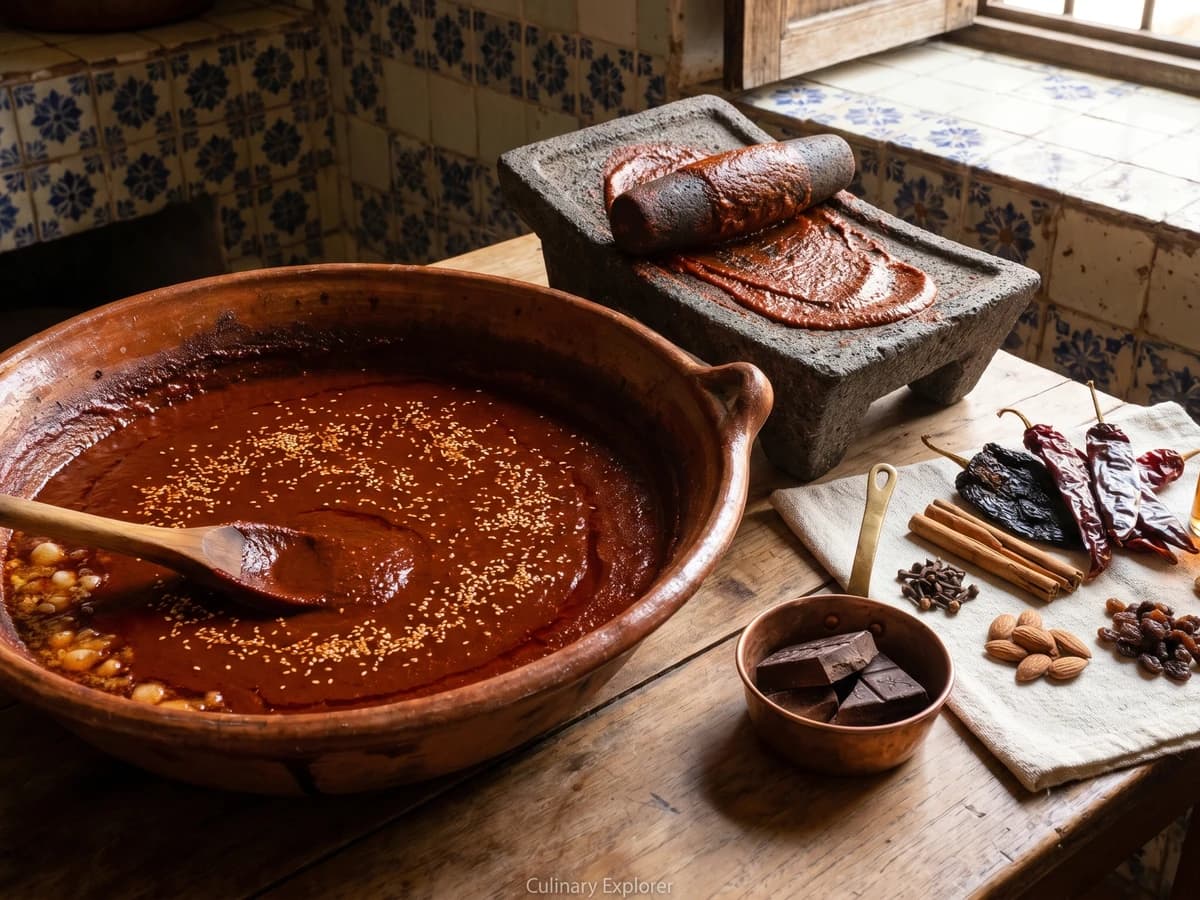
Zacatecas' wedding-table adobo, built from toasted guajillo and ancho, piloncillo, sour orange, chocolate, canela, clavo, almonds, sesame, and lard.

Chef Lupita
Puebla's convent kitchens built this adobo with ancho, guajillo, jerez, almonds, raisins, clove, and lard, a baroque marinade that stains pork loin and finishes as the sauce.