Chef Lupita
Aceite de Chiltepin Bajacaliforniano
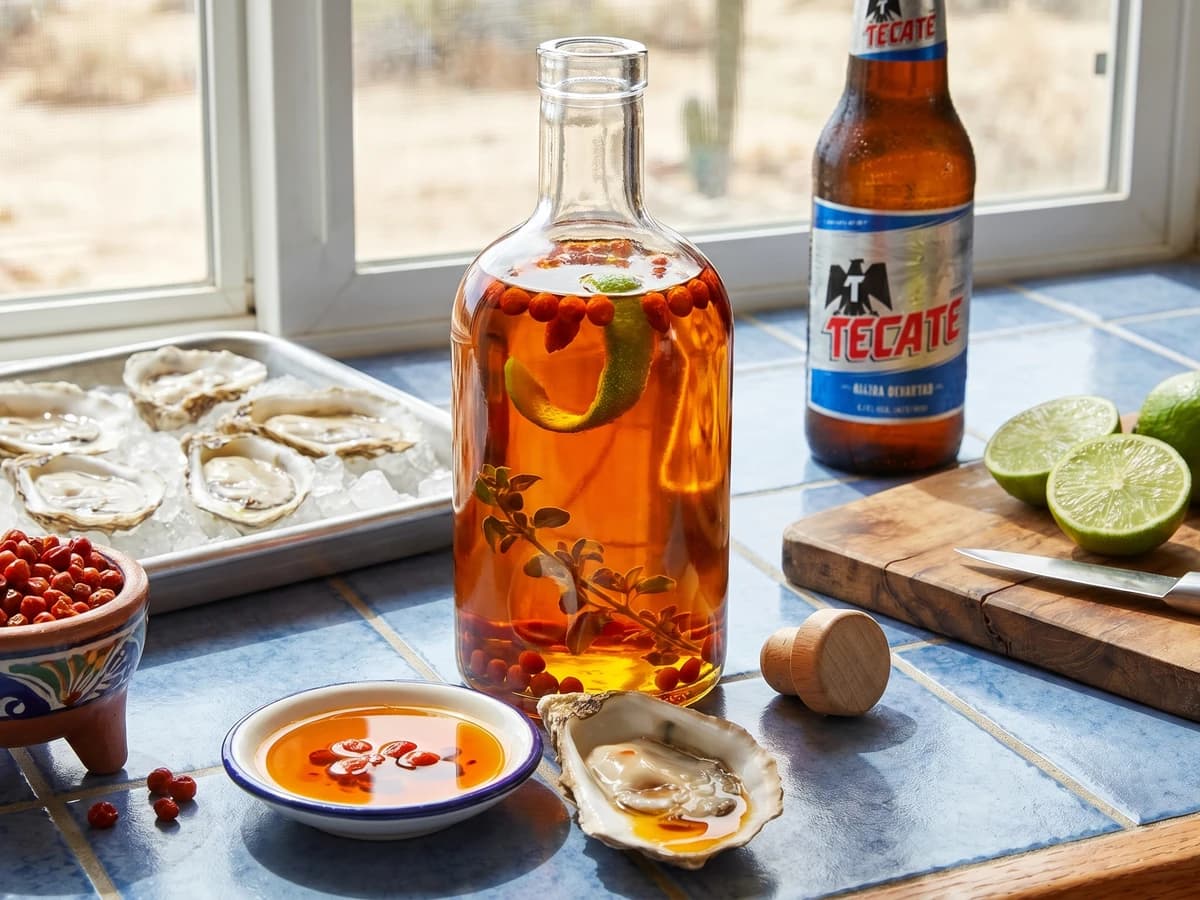
Baja California's wild chiltepin steeped in olive oil with garlic, orejon, and lime peel, until the oil turns ruby-amber and carries the slow, sneaky burn of the desert coast.
A cooking platform built around craft, culture, and the stories behind what we eat.
Created by
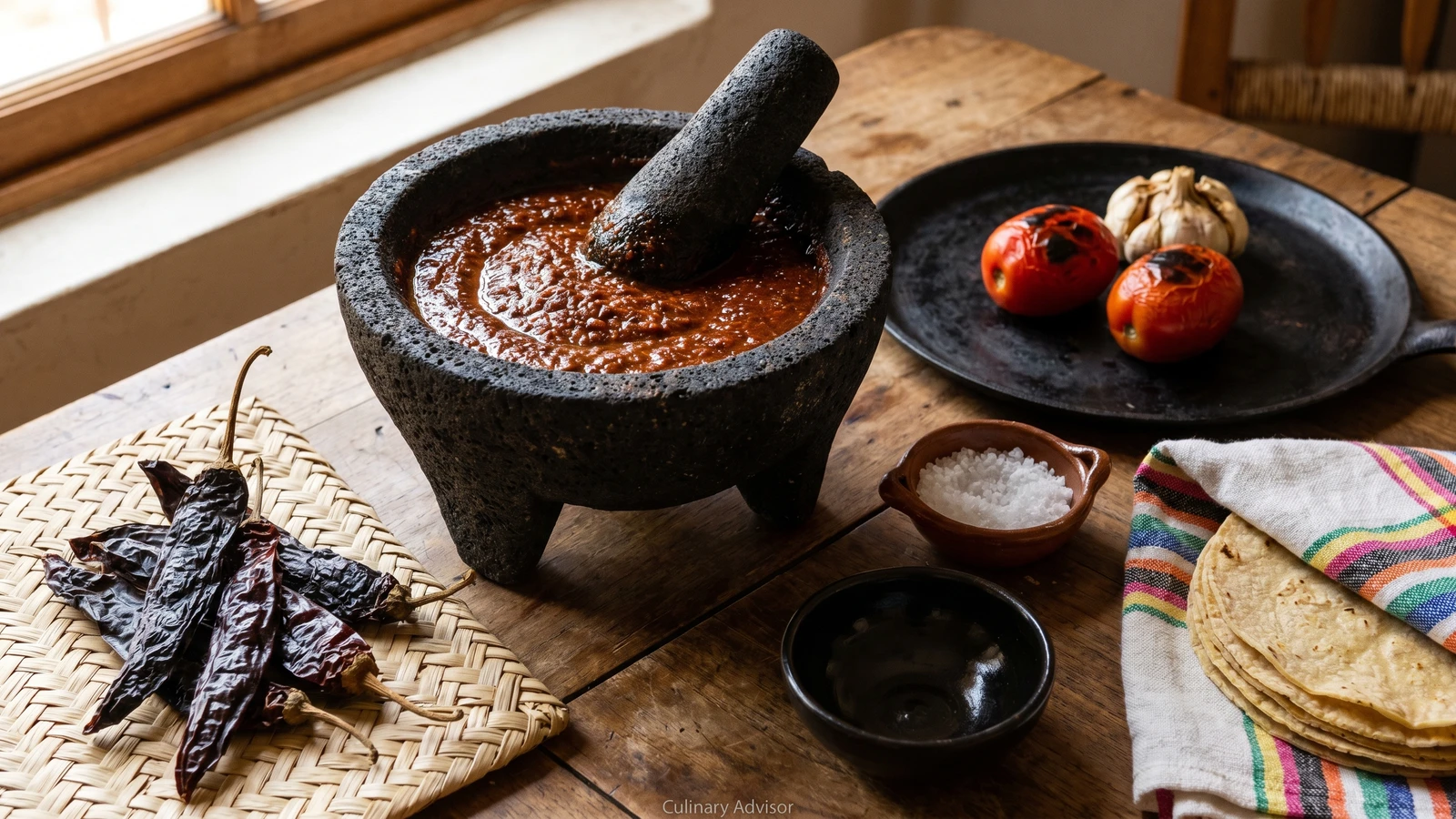
From the Sierra Mixe of Oaxaca: the endemic chile pasilla oaxaqueño, smoke-dried over oak, ground in the molcajete with charred tomate and garlic. Raisiny, smoky, the soul of Oaxacan salsas.
This salsa is from the Sierra Mixe, in the highlands of Oaxaca, where the chile pasilla oaxaqueño grows and is dried over oak smoke until it carries the flavor of the fire that made it. The chile is endemic. It is grown almost nowhere else, and the small producers in San Juan Cotzocon and Santa Maria Tlahuitoltepec sell most of their harvest to the cooks of Oaxaca City, who turn it into the salsa that anchors every serious Oaxacan table.
First, settle this: the chile pasilla you find in most US markets is not this chile. That one is the dried chilaca, long, black, smooth, faintly raisiny. It is from central Mexico and it is a fine chile for its own purposes. Pasilla oaxaqueño is shorter, wrinkled, brick-red to deep brown, and it carries the smoke of the oak fires it was dried over. The two share a name and almost nothing else. If your salsa does not taste of smoke, you have the wrong chile.
The technique is the technique. You toast briefly on a comal, soak in hot water, char the tomate and garlic on that same comal, and grind everything in a molcajete. Not a blender, if you can help it. The volcanic stone breaks the chile differently. The salsa stays coarse, the texture catches on the tortilla, and you taste each ingredient instead of a smooth puree where everything dissolves into the same note.
My notebook has a page from a senora at the Mercado 20 de Noviembre in Oaxaca City who sold me chiles for three years before she would tell me her ratio. Eight chiles, four tomates, three garlic, salt, manteca if you want it on a tlayuda, no manteca if it is for memelas. She wrote it on a torn corner of butcher paper. I keep it pinned above my comal. Saber cocinar es saber vivir.
The chile pasilla oaxaqueño, known locally as chile pasilla mixe, is endemic to the Sierra Mixe and Sierra Norte regions of Oaxaca and is one of the few Mexican chiles that is smoke-dried rather than sun-dried, a tradition tied to the cool, humid microclimate of the highlands where sun-drying is unreliable. The chile is produced by small-scale Mixe and Zapotec farmers who hang the fresh pods over oak-fueled fires for several days, a method documented in colonial records from the 17th century but almost certainly pre-Columbian in origin. In 2010, when UNESCO recognized Traditional Mexican Cuisine as Intangible Cultural Heritage, Oaxaca's smoke-dried chile traditions were cited specifically as an example of the regional biodiversity and artisanal practices the inscription was meant to protect.
Quantity
8
stemmed, seeds reserved if you want more heat
Quantity
4 medium (about 12 ounces)
Quantity
3
unpeeled
Quantity
1/4 medium
Quantity
1 teaspoon, plus more to taste
Quantity
1/4 cup, as needed
Quantity
1 tablespoon
| Ingredient | Quantity |
|---|---|
| dried chile pasilla oaxaqueño (chile pasilla mixe)stemmed, seeds reserved if you want more heat | 8 |
| ripe red tomates | 4 medium (about 12 ounces) |
| garlic clovesunpeeled | 3 |
| white onion | 1/4 medium |
| kosher salt | 1 teaspoon, plus more to taste |
| hot water from soaking the chiles | 1/4 cup, as needed |
| manteca de cerdo (optional) | 1 tablespoon |
Before you turn on the comal, look at the chile in your hand. Pasilla oaxaqueño is wrinkled, dark brick-red, slightly sticky, and it smells like dried fruit and woodsmoke. It is not the long black pasilla you find in most US markets. That one is a different chile from a different state. If yours is smooth, glossy, and smells like raisins without smoke, you have the wrong chile. Send someone to a Oaxacan market or a serious importer. No me vengas con atajos.
Heat a dry comal or heavy skillet over medium. Toast the pasilla mixe one or two at a time, pressing them flat with a spatula for five seconds, then flipping. They puff slightly and the smoke deepens. Twenty seconds per side is plenty. The chile is already smoke-dried; you are waking the oils, not cooking it again. Burned pasilla mixe turns the salsa acrid and there is no fixing it later.
Move the toasted chiles to a heatproof bowl and cover with hot water from the kettle. Hot, not boiling. Place a small plate on top to keep them submerged and let them soften for ten to fifteen minutes. They should be pliant but not falling apart. Reserve the soaking liquid. The water tastes of smoke and chile and you will use a little of it later.
On the same comal, lay the whole tomates, the unpeeled garlic, and the piece of onion over medium heat. Turn them every few minutes. The tomates will blister, char in places, and start to collapse. The garlic skins will darken and the cloves inside will go soft. The onion will mark dark on the cut sides. Fifteen minutes total. You want char, not ash. The black spots on the tomate skin are the flavor. Do not peel them off.
Pull the cloves out of their papery skins. In a volcanic stone molcajete, grind the garlic and salt together until they break down into a paste. Add the drained chiles a few at a time, working them against the stone until you have a coarse, dark paste flecked with chile skin. Add the charred tomates last, smashing them into the paste with the tejolote. The salsa should be rough, not smooth. The texture is part of what makes it Oaxacan. La cocina no es decoracion, es trabajo.
Stir in a tablespoon or two of the chile soaking water if the salsa is too thick to spoon. Taste for salt. The pasilla mixe is naturally a little sweet, so the salsa should lean savory and smoky, with the tomate balancing the chile. If you want a richer salsa de mesa for tlayudas or memelas, warm the manteca in a small skillet and stir the salsa into the hot fat for two minutes. Otherwise, leave it raw. Let it rest for ten minutes before serving. The flavors marry quickly. Asi se hace y punto.
1 serving (about 45g)
Culinary guides, cultural storytelling, and the editorial depth that makes cooking meaningful.
Discover Culinary ExplorerChef Lupita
Baja California's wild chiltepin steeped in olive oil with garlic, orejon, and lime peel, until the oil turns ruby-amber and carries the slow, sneaky burn of the desert coast.

Chef Lupita
Puebla's Lenten convent adobo, a brick-red vinegar chile paste of ancho, guajillo, garlic, oregano, and comino made to dress fish for the meatless calendar.
Chef Lupita
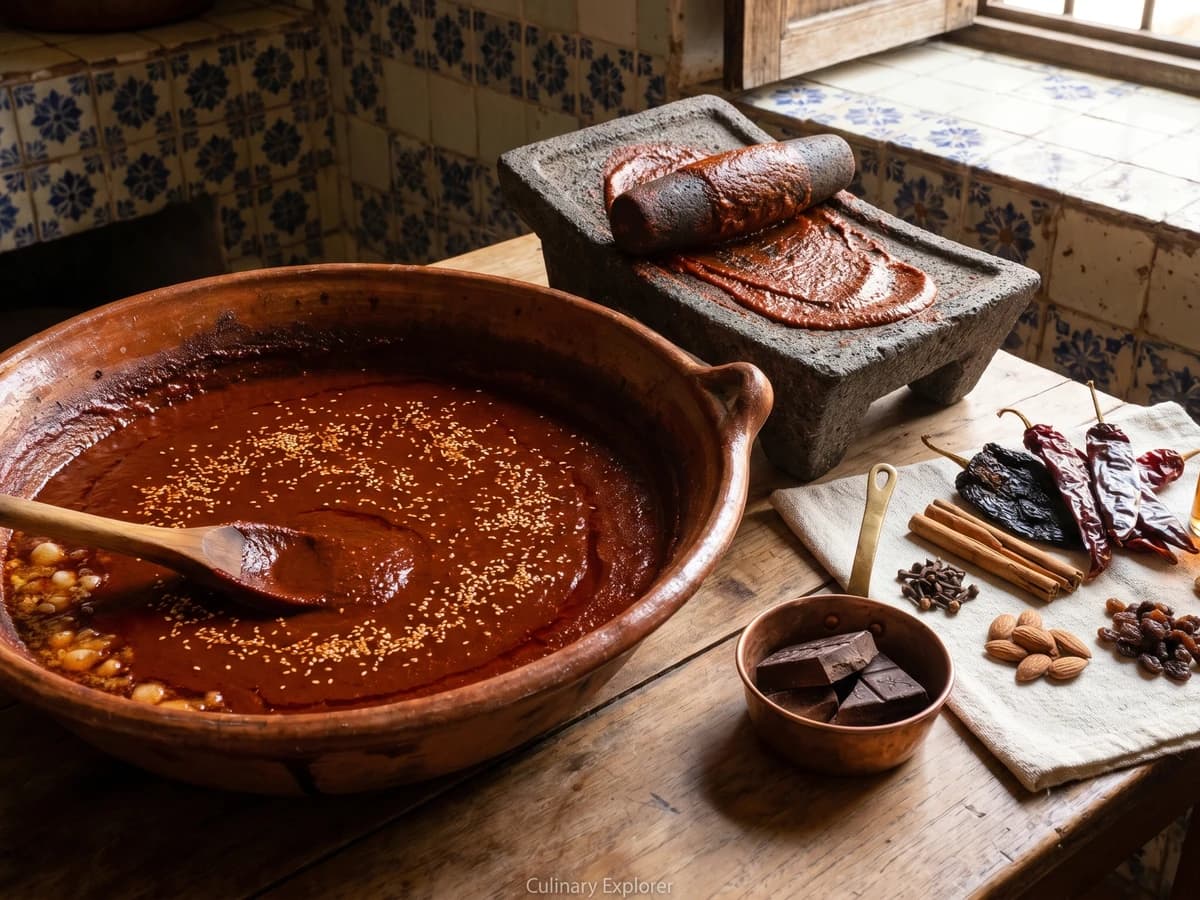
Zacatecas' wedding-table adobo, built from toasted guajillo and ancho, piloncillo, sour orange, chocolate, canela, clavo, almonds, sesame, and lard.

Chef Lupita
Puebla's convent kitchens built this adobo with ancho, guajillo, jerez, almonds, raisins, clove, and lard, a baroque marinade that stains pork loin and finishes as the sauce.